
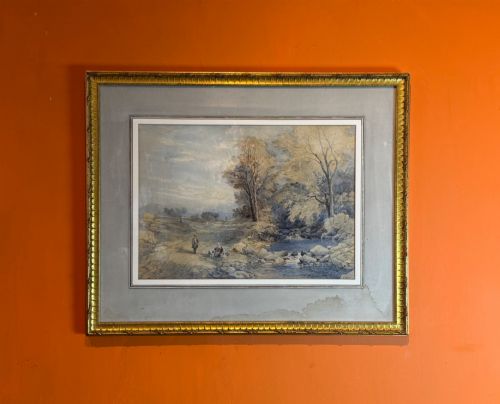


English Watercolour School Artwork
An English watercolour school artwork brings traditional British landscapes and figure studies into focus through transparent pigment on paper.
English Watercolour School Artwork
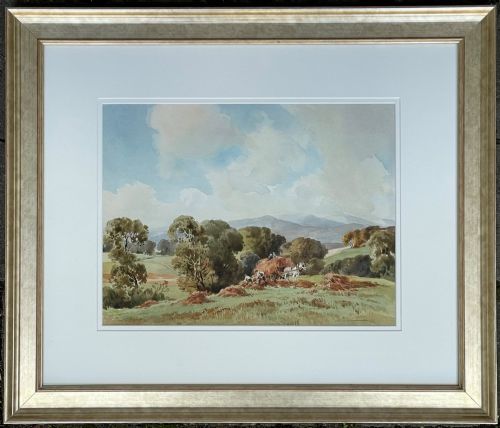
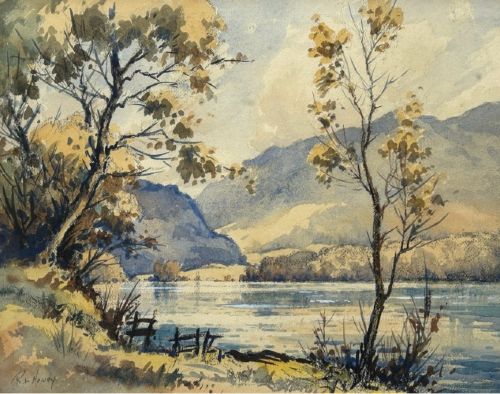
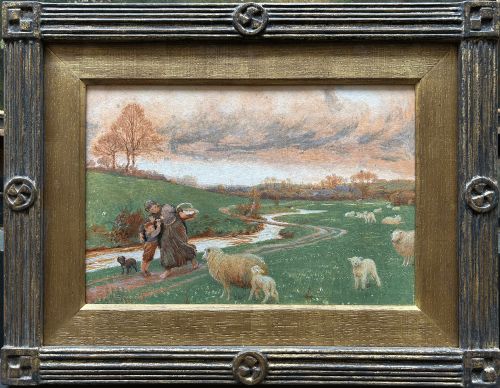
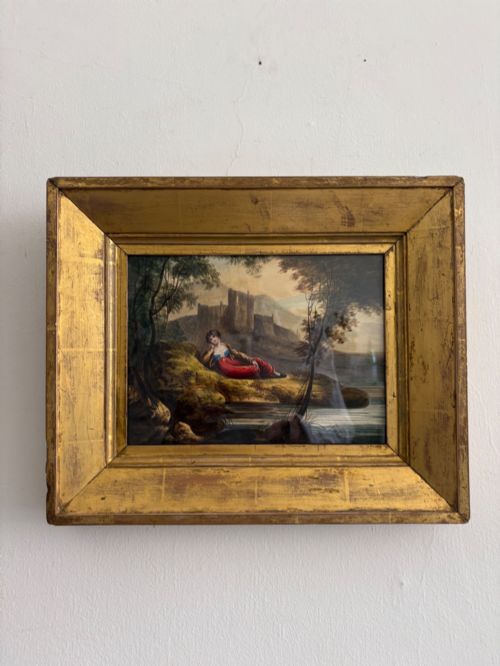
An English watercolour school artwork represents a tradition of painting on paper that spans from the Georgian era through the Victorian period into the twentieth century. These pieces capture landscape views, botanical studies, coastal scenes and domestic figures created by named artists or anonymous practitioners of the English School. The works on this page appear in various formats, frequently preserved behind glass within gilt wood frames.
Buyers seeking this phrase encounter topographical watercolours of the Lake District or Yorkshire alongside rural cottage scenes and floral still lifes. Victorian examples often display detailed narrative compositions, while mid twentieth century pieces reflect Impressionist or regional British styles. Framed watercolours range from intimate botanical studies to large landscape paintings designed for wall display.
How They Were Made
These works rely on watercolour pigment applied to paper, occasionally combined with bodycolour, gouache or pencil to build opacity and linear detail. Artists built up transparent washes to achieve luminous effects, particularly for skies, lakes and atmospheric light.
Finished paintings were placed behind glass and secured within wooden frames, frequently finished with gilt leaf, to protect the delicate paper surface from atmospheric moisture and handling.
Listings feature works spanning the Georgian, Victorian, Edwardian and mid twentieth century periods.
What Varies in Quality
The distinction between works rests upon the surety of the brushwork, the subtlety of atmospheric tone and the preservation of the pigment against fading. Master practitioners command perspective and light with economy, whereas lesser examples rely on heavy outlines and overworked washes.
Original framing and secure mounting beneath glass preserve the integrity of the paper support, distinguishing works that retain their original tonal depth from those compromised by damp or light exposure.
Percy Lancaster·Robert Leslie Howey·Frederick Walker·David Cox·James Hayllar·Thomas Cooper Moore·Alice Anne Renshaw·Arthur Tucker·J Laporte·William Egley·Harry Bright·Edward Horace Thompson·William Hough·A. G. Hayward·William Wyld·Will Anderson·Henry Barlow Carter·Frederick Mayor·Percy Brooke·Thomas Bush Hardy·Robert Winchester Fraser·William Henry Hunt·Angus Rands·Edith Alice Andrews·Charles Branwhite
The English Watercolour School Artwork Glossary
- Watercolour pigment
- Finely ground colour suspended in a water-soluble binder, applied to paper to create transparent washes.
- Gouache
- An opaque watercolour paint containing white pigment, used alongside transparent washes to add highlights and solid areas of colour.
- Gilt wood
- Timber framing coated with a thin layer of gold leaf or metallic gilt, commonly used on nineteenth century frames.
- English School
- A designation for works produced by British artists sharing stylistic traditions without belonging to a formal academy.
- Bodycolour
- Watercolour paint mixed with a dense white base to make the application opaque rather than translucent.
English Watercolour School Artwork: Frequently Asked Questions
How should I hang watercolour paintings?
Hang watercolours away from direct sunlight to prevent the pigments from fading over time. Protect the paper from damp environments such as kitchens or unheated exterior walls.
Ensure each piece remains securely glazed behind glass within its frame to guard against atmospheric dust and physical damage.
What subjects are typical in this tradition?
Landscapes form a major part of the tradition, featuring locations such as the Lake District, Yorkshire and river valleys. Botanical studies, coastal scenes with shipping fleets and rural cottage views also appear frequently.
Portraiture and still life compositions with flowers represent the domestic side of nineteenth and twentieth century production.
How do I distinguish Victorian from later works?
Victorian examples often display highly finished narratives, detailed botanical precision or dramatic landscape lighting. They frequently employ ornate gilt framing appropriate to the nineteenth century taste.
Twentieth century pieces tend toward looser brushwork influenced by British Impressionism or regional modernism, reflecting a shift in artistic priorities.
Why are these works on paper framed?
Framing provides essential structural support for works executed on paper, which lack the rigidity of canvas. Glazing prevents airborne pollutants and moisture from staining or degrading the delicate pigments.
Period frames also contribute historical context, matching the aesthetic standards of the era in which the artwork was created.