

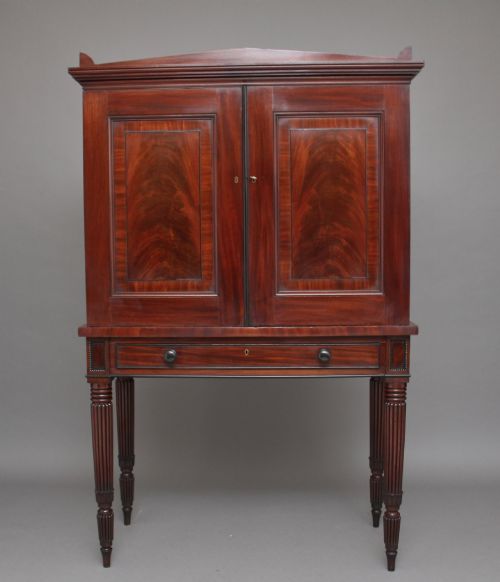
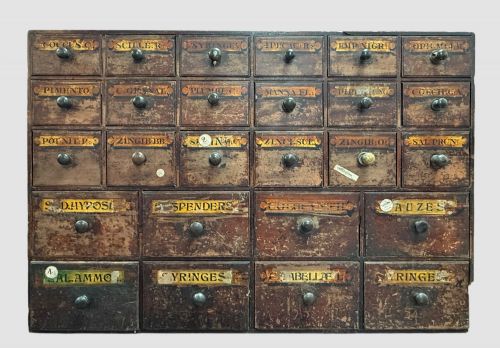
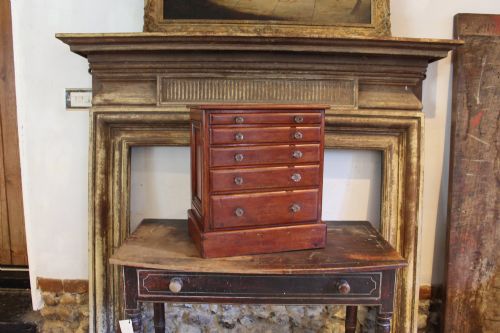
Brown Specimen Cabinet
A brown specimen cabinet holds the curiosities of the natural world, offering deep drawers and small compartments to house collections safely.
Brown Specimen Cabinet
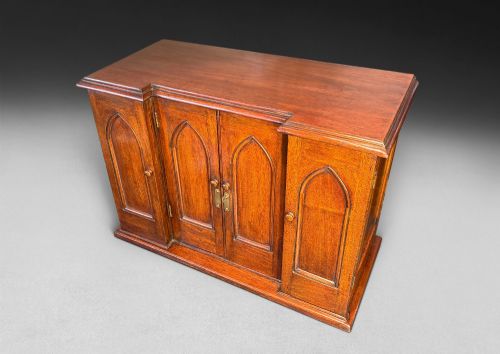
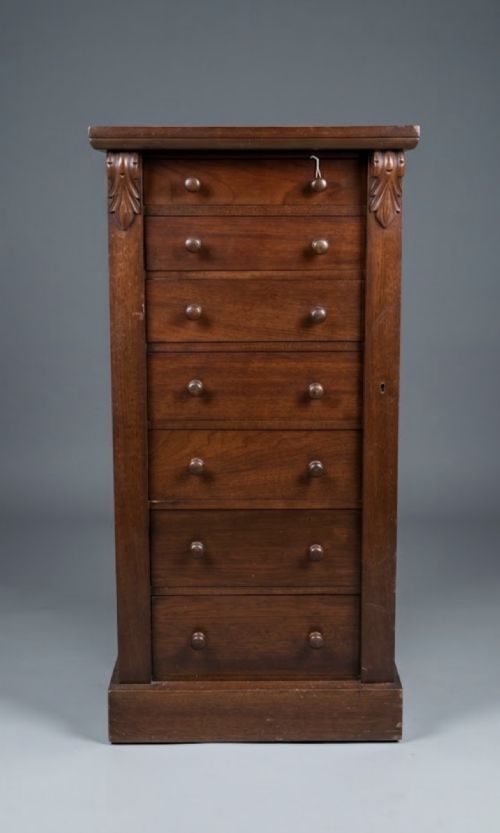
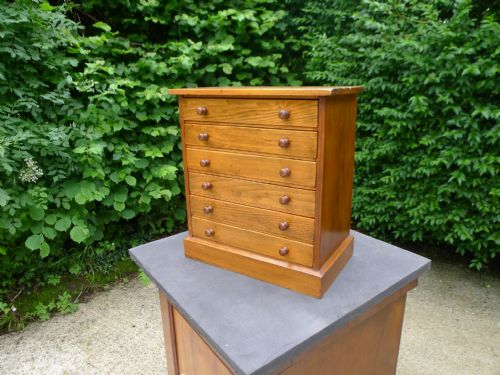
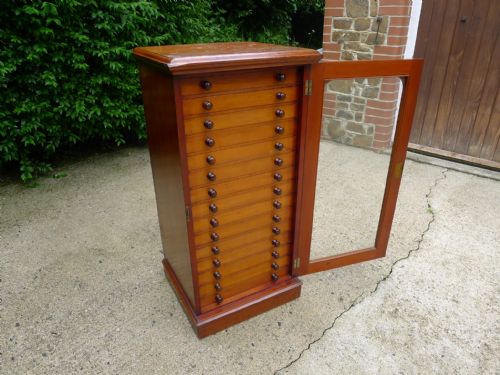
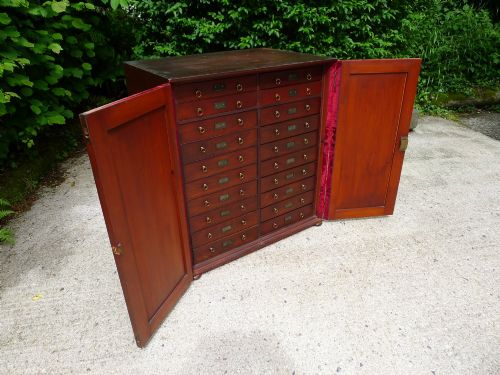
A brown specimen cabinet is designed for the orderly storage of natural history items, insects, or small curiosities. The pieces on this page appear primarily in forms such as collectors cabinets, Wellington chests, and banks of drawers dating from the nineteenth and early twentieth centuries.
Makers utilised dense timbers like mahogany, walnut, and oak to construct these functional pieces, often incorporating numerous shallow drawers to protect delicate contents. Styles range from plain utilitarian pine and deal to architectural Gothic oak and refined Victorian designs.
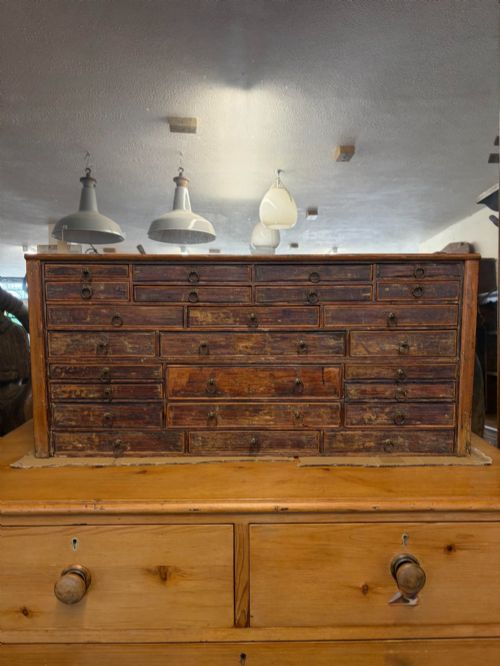
Buyers will encounter table-top examples alongside larger floor-standing chests and miniature apprentice pieces. Each configuration serves the primary purpose of classification and display, reflecting the intense scientific and collecting interests of the Georgian, Victorian, and Edwardian eras.
How they were made
Cabinet makers relied heavily on hardwoods such as mahogany and walnut, alongside utilitarian softwoods like deal and pine for internal structures. Drawers were built with tight joints to keep dust and pests away from fragile contents.
Brass fittings, including flush handles, locking mechanisms, and label holders, were standard additions to secure and identify the contents of each drawer. Glass was frequently incorporated into panelled doors or tabletop lids to allow viewing while maintaining protection.
Surfaces were polished, stained, or left in natural grain finishes, depending on whether the cabinet was intended for a formal study or a utilitarian workspace.
Cabinets span the Georgian, Regency, Victorian, Edwardian, and Arts & Crafts periods, dating from the eighteenth century into the 1920s.
What varies in quality
The precision of the drawer construction determines much of the quality, seen in smooth gliding actions and closely fitted internal partitions designed for specific specimens. Superior examples use finely figured timbers and retain original brass hardware or turned knobs.
Specialised cabinets made by known scientific outfitters demonstrate a higher grade of craftsmanship in their locking mechanisms and numbering systems. Simpler pine or deal pieces show a more straightforward vernacular construction intended strictly for practical storage.
Rowland Ward Ltd·Brady·Luxmore's of Ilfracombe·D Napier & Sons
The Brown Specimen Cabinet Glossary
- Wellington chest
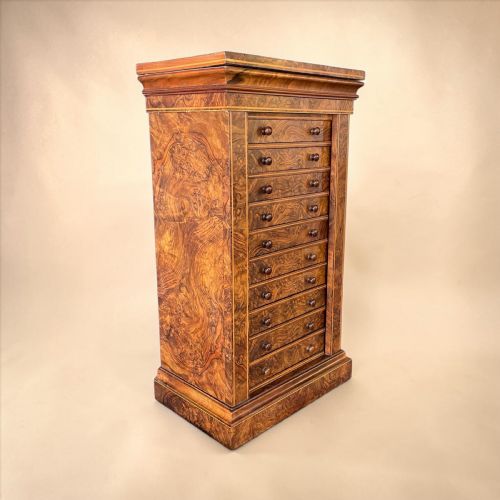
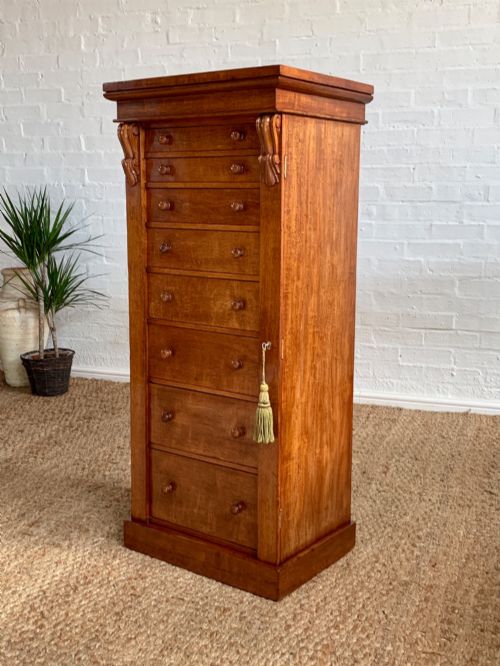
- A tall, narrow chest of drawers secured by a hinged locking stile that fastens down the right-hand side. This design gained popularity during the nineteenth century for organising papers and small items.
- Specimen case
- A shallow glazed box used for displaying natural history items such as butterflies, birds, or botanical samples. These cases protect fragile specimens from dust and handling.
- Bank of drawers
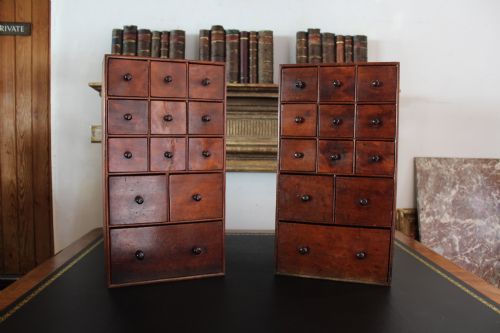
- A utilitarian set of multiple small drawers stacked vertically or horizontally, commonly used in pharmacies, apothecaries, and workshops. They provide systematic storage for numerous small components.
- Apothecary chest
- A set of small drawers or compartments originally intended for storing medicinal ingredients and remedies. They often feature tightly fitted wooden drawers with small bone or turned wooden knobs.
- Table-top cabinet
- A compact cabinet designed to sit on a desk or table rather than stand on the floor. These pieces offer portable storage for delicate collections.
Brown Specimen Cabinet: Frequently Asked Questions
What were brown specimen cabinets originally used for?
These cabinets were built to store and protect natural history collections, including insects, botanical specimens, and geological samples. Naturalists and collectors relied on the shallow drawers to keep delicate items organised and safe from light and dust.
Over time, many of these pieces also found use in pharmacies and surgeries as apothecary chests for holding dry ingredients, remedies, and small medical tools.
How do I tell a Victorian specimen cabinet from a Georgian one?
Georgian cabinets often feature simpler, classical proportions with mahogany solids and straightforward bracket feet or stands. They tend to have a heavy architectural presence.
Victorian examples frequently display darker figured veneers, more complex locking mechanisms like Wellington stiles, and specialised internal partitions tailored for specific scientific disciplines.
Can I use these cabinets for modern jewellery or small collections?
The shallow drawers and compartmentalized layouts make these pieces well suited for organising modern items such as wristwatches, fountain pens, coins, or jewellery. The enclosed wooden environment helps protect delicate items from tangling and tarnish.
Ensure the internal dimensions and drawer depths match the specific items you plan to store before arranging your collection inside.
What is the difference between a Wellington chest and a standard chest of drawers?
A Wellington chest is typically taller and narrower than a standard chest, featuring a locking bar on the right edge that secures every drawer simultaneously. This hinged locking flap was originally designed to keep valuable or sensitive contents secure.
Standard chests of drawers rely on individual drawer locks or open freely without a locking stile, offering wider proportions suited for larger garments or bulkier storage.