
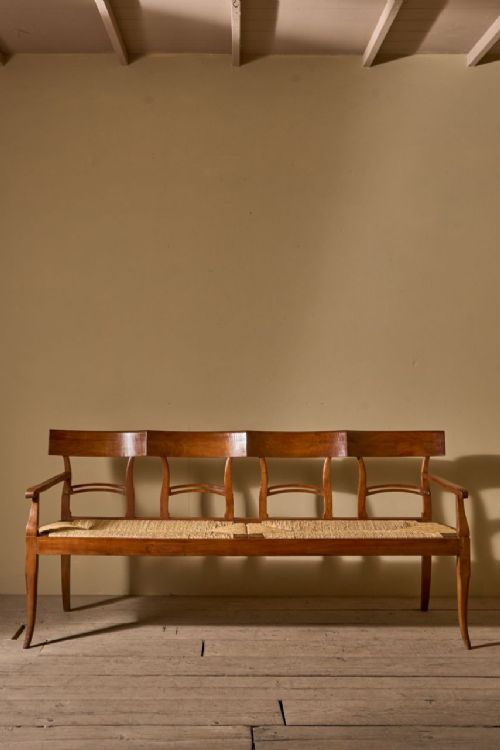
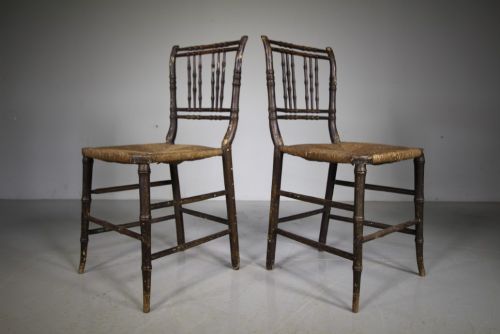
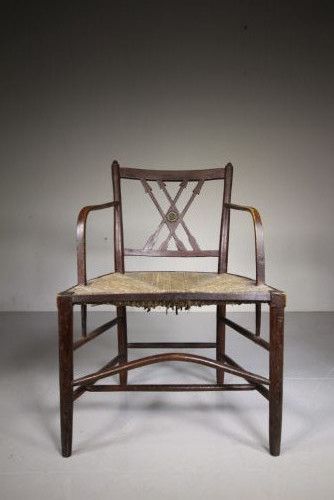

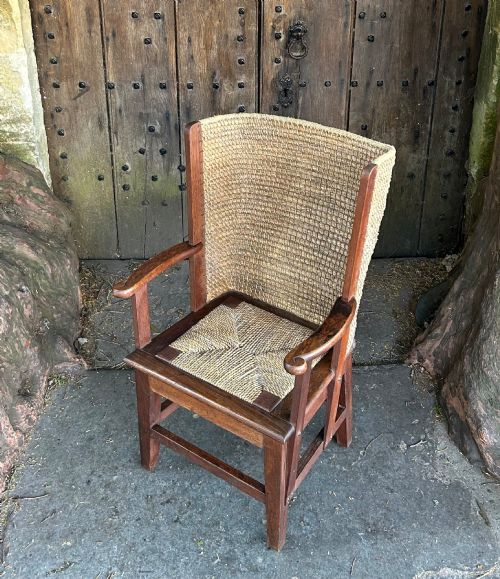
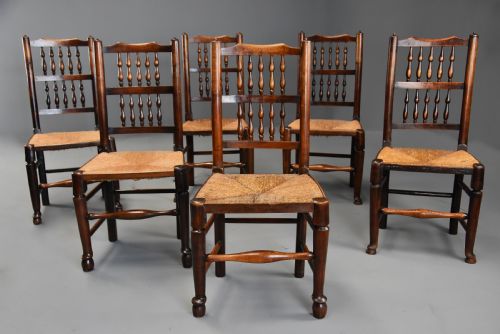
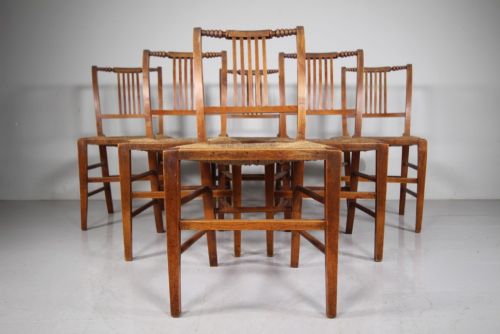
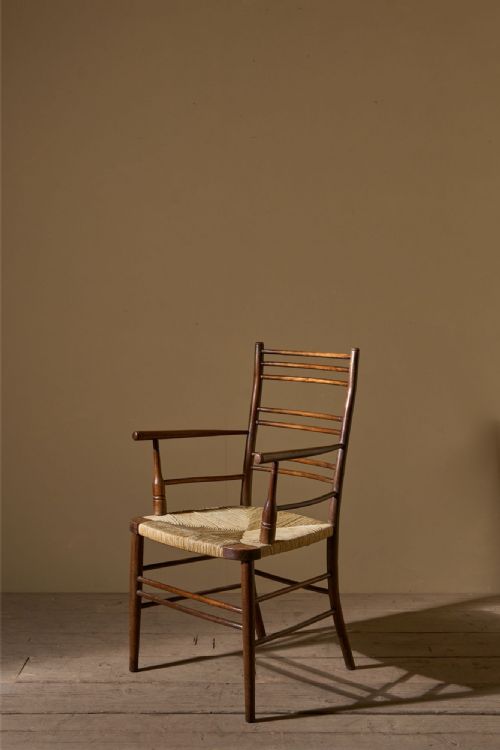
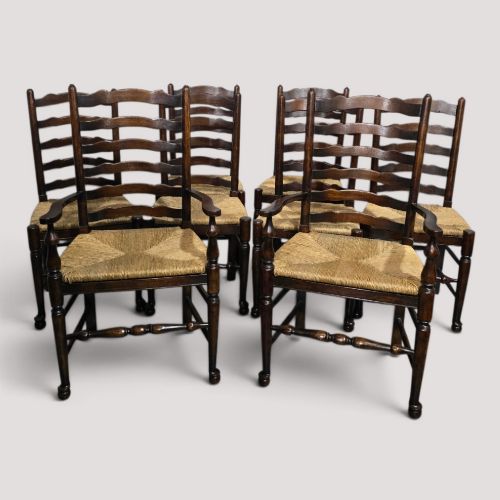
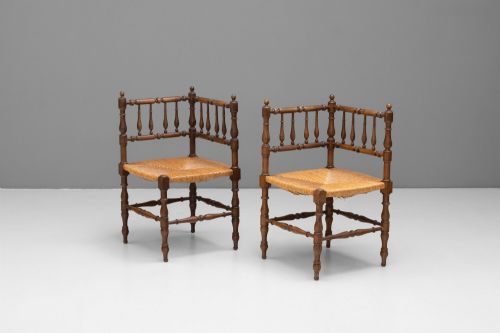
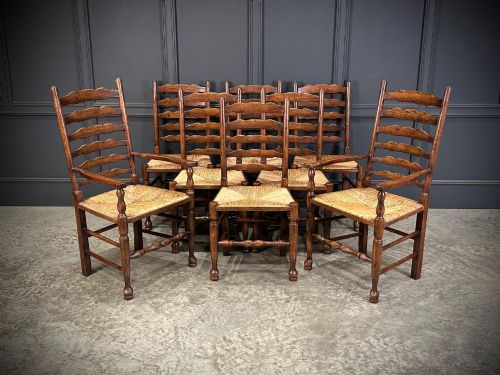
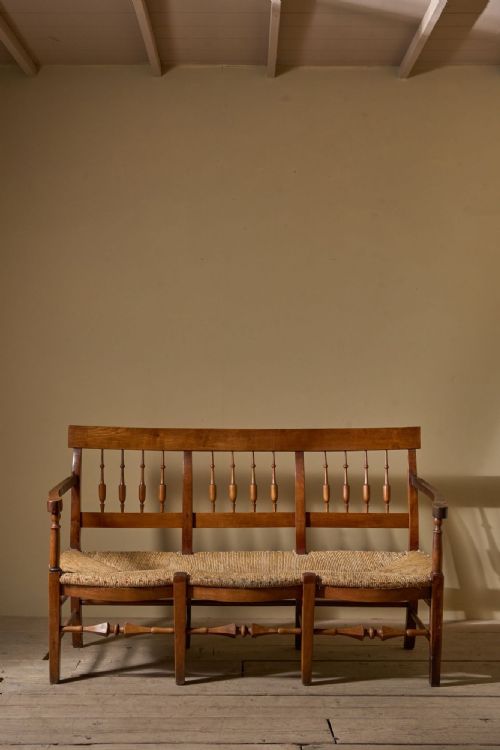
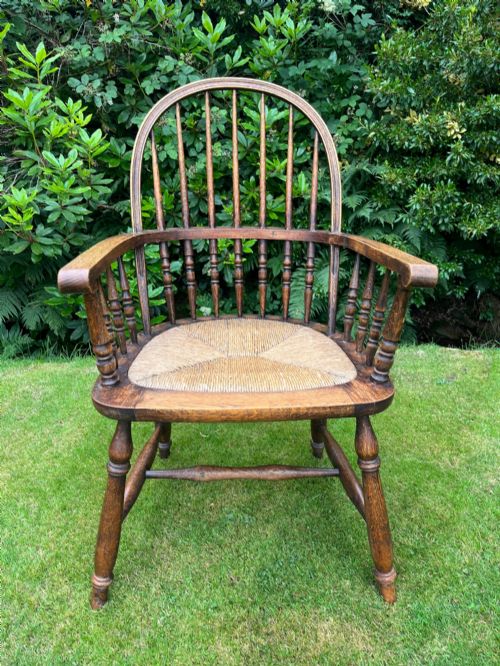
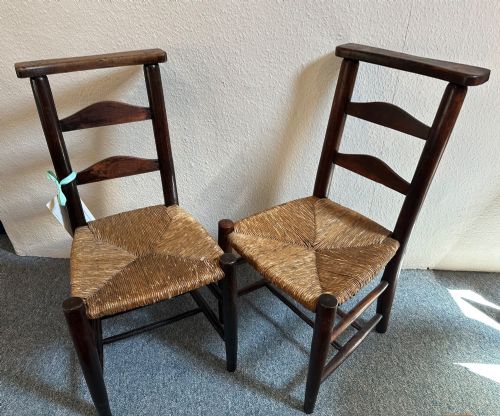
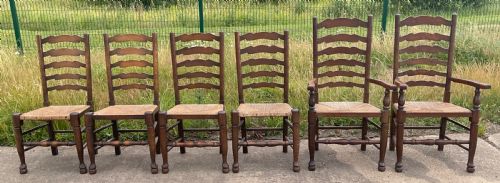
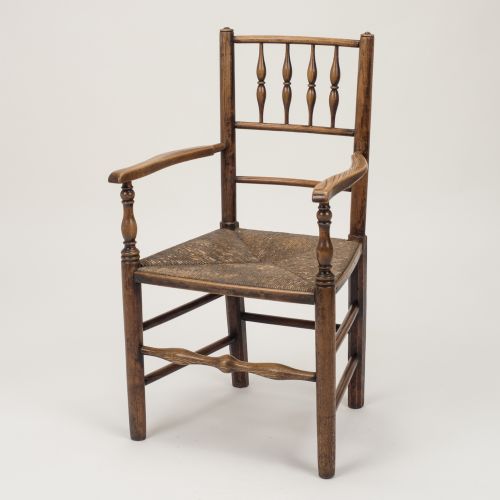
Brown Rush Seat Chairs
These brown rush seat chairs bring centuries of vernacular craftsmanship into modern interiors through durable natural materials and honest construction.
How they were made
Local artisans constructed these frames using traditional green woodworking techniques, turning regional timbers such as beech, fruitwood, and alder on pole lathes. Joinery relied on mortise and tenon methods alongside steam bending for curved components like ladder back slats and crest rails.
The characteristic seats utilise dried marsh rush or straw twisted into strong cords and tightly hand-woven around a wooden frame in traditional patterns. Makers often finished these wooden skeletons with plain wax, clear polish, or historical painted surfaces including faux bamboo or simple coloured coats.
What varies in quality
The integrity of the frame construction and the tightness of the woven rush determine the grading of each piece. Superior examples retain their original timber surfaces, patination, and robust structural joints without excessive modern intervention or replaced structural components.
Matching sets display greater consistency in timber selection and turning detail across every chair, whereas assembled groups show subtle variations in height and rush tension. The complexity of the back design, such as multiple wavy rungs or delicate spindle work, elevates the sophistication of individual pieces.
Brown Rush Seat Chairs Retail Price Guide 2026
Typical asking prices for brown rush seat chairs among the pieces listed under this phrase on Sellingantiques today, from the lower quarter to the upper quarter. They describe what is for sale here now, not the wider market.
Listings feature regional English and French forms spanning the 18th, 19th, and early 20th centuries, constructed from native elm, ash, and oak.
Morris and Co·E W Godwin
The Brown Rush Seat Chairs Glossary
- Rush
- Dried marsh grass woven into strong cords for chair seating. It provides a flexible, hard-wearing surface that develops a rich golden-brown hue with age.
- Ladder back
- A chair frame featuring horizontal wooden slats resembling a ladder between the rear uprights. This regional design became standard across English country workshops.
- Spindle back
- A chair back filled with thin turned wooden rods rather than solid splats. These lightweight uprights offer structural support while keeping the frame airy.
- Vernacular furniture
- Everyday objects made by local tradesmen for regional use rather than high-style urban pieces. These chairs prioritize utility and local materials over academic design rules.
- Patina
- The surface sheen and colour acquired by wood and rush through decades of handling and natural ageing. Original patination confirms the historical surface remains intact.
Brown Rush Seat Chairs: Frequently Asked Questions
How do I clean a rush seat?
Dust the woven rush regularly using a soft brush attachment on a vacuum cleaner operating at low suction. Avoid soaking natural straw fibres with excess water during cleaning to prevent the material from becoming brittle.
Treat occasional spills immediately by blotting with a dry cloth rather than rubbing. Maintain household humidity levels to keep the dried marsh fibres flexible over decades of daily use.
Can broken rush seats be repaired?
Professional craftspeople can completely re-weave damaged rush seats using traditional marsh grasses and techniques identical to the original creation. This restoration process preserves the antique frame while returning the seating surface to full structural utility.
Partial repairs on intact older seats remain difficult due to colour variations between aged and newly spun rush. Selecting pieces with sound weaving avoids immediate restoration work.
Are these chairs suitable for daily dining?
Most country ladder backs and spindle chairs were engineered specifically for robust everyday domestic seating. Their sturdy hardwood frames and flexible woven bottoms comfortably withstand regular use around a kitchen or dining table.
Ensure that joints remain rigid and uprights show no structural movement before placing heavy daily demands on antique frames. Adding simple felt pads protects wooden feet from modern flooring wear.
How do I date a rush seat chair?
Examine the turning marks on the wooden stretchers and legs to identify hand-lathe work typical of 18th and 19th-century regional workshops. Early pieces often feature irregular components shaped by drawknife and pole lathe rather than uniform industrial machining.
Check for assembly clues like handmade pegs securing the mortise and tenon joints instead of modern metal screws. Wear patterns on the footrest stretchers also indicate long-term domestic use across specific historical periods.