




Brown Rosewood Chest
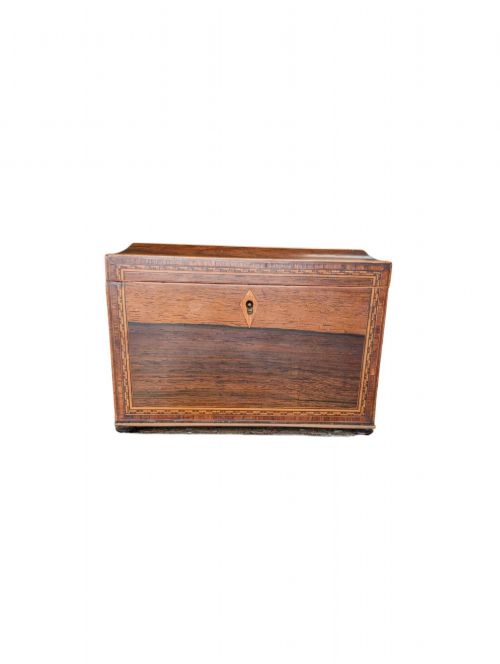
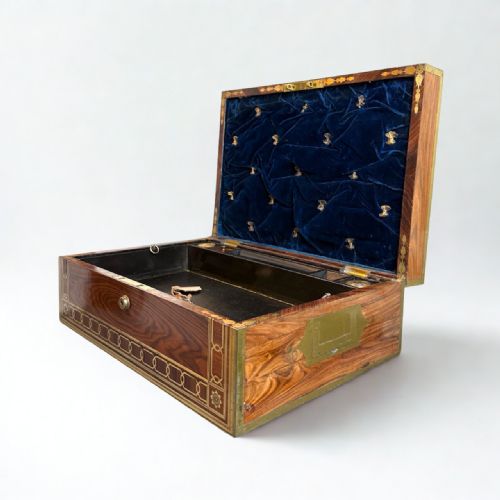
These brown rosewood chest pieces include tea caddies, bedside cabinets, and writing boxes from the Regency and Victorian periods.
Brown Rosewood Chest
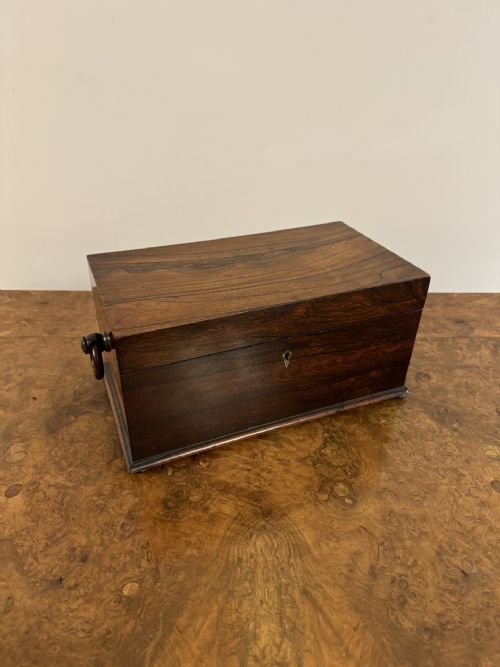
A brown rosewood chest covers a diverse group of containers and cabinets found across the Regency, Victorian, and Georgian eras. Buyers looking for this phrase most frequently encounter tea caddies, alongside bedside cabinets, filing cabinets, and small boxes.
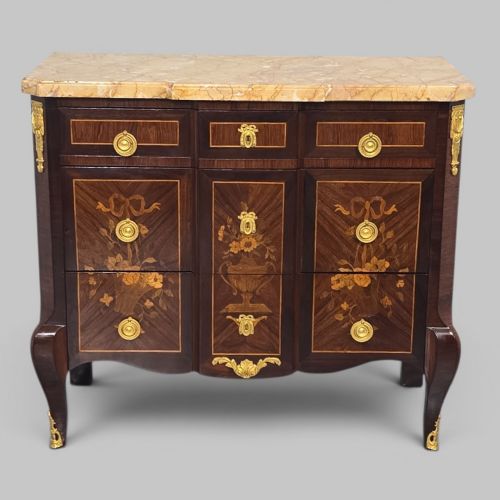
The selection spans formal English Regency and Victorian examples through to French commodes and Chinese writing boxes. Tunbridge ware and sarcophagus shapes appear often among the smaller lidded containers.
Makers utilised dense tropical timbers alongside native boxwood, brass, and marble to construct these items. The forms range from simple lidded tea receptacles to large music boxes and tall bedside chests.
Markers of standard
The refinement of the surface decoration separates standard examples from exceptional pieces. Finely executed brass inlay, intricate Tunbridge ware mosaic work, and complex marquetry indicate superior craftsmanship.
The integrity of the rosewood grain and the crispness of the secondary timber framing determine the structural merit. Pieces that retain their original fitted interiors, working locks, and complete internal compartments command greater appreciation.
Current listings feature rosewood combined with brass, marble, boxwood, and bone across Regency and Victorian pieces.
Henry Hollamby
The Brown Rosewood Chest Glossary
- Teapoy
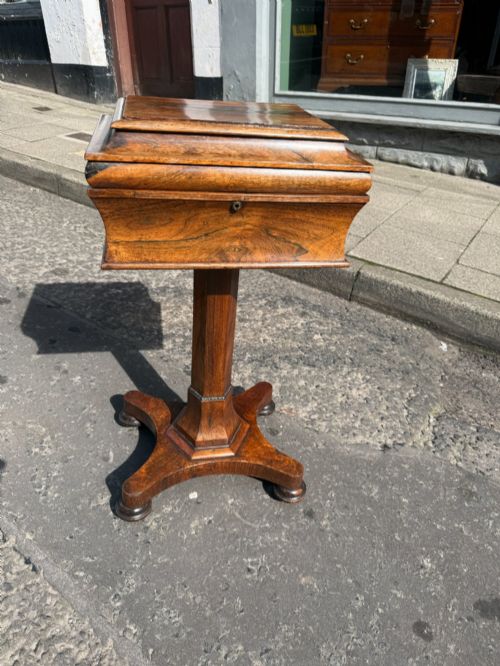
- A pedestal table fitted with internal compartments for storing tea. These pieces often feature rosewood construction and date to the Regency period.
- Tunbridge Ware
- Woodware decorated with mosaic patterns formed from thousands of tiny tinted wood blocks. This technique originated in Kent and appears on Victorian boxes and caddies.
- Sarcophagus
- A container shape featuring a domed or sloping lid resting on a rectangular base. Cabinet makers frequently used this design for tea caddies during the Georgian and Regency eras.
- Parquetry
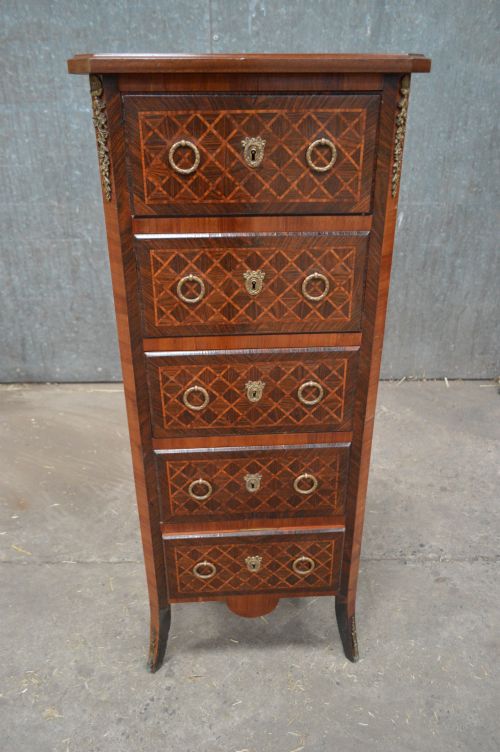
- Geometric wood mosaic work used to pattern the exterior surfaces of furniture. French commodes frequently utilise this technique alongside marquetry.
Brown Rosewood Chest: Frequently Asked Questions
What is a brown rosewood chest?
A brown rosewood chest encompasses various lidded containers, tea caddies, and small cabinets made from rosewood. These items span periods from the Georgian era through to the late nineteenth century.
They serve primarily as decorative storage for tea, documents, jewellery, or musical movements. The group includes both English Tunbridge ware and continental French commodes.
How were tea caddies used?
Tea caddies stored precious loose leaf tea under lock and key in the drawing room. Servants prepared the brew using the internal canisters provided within the caddy.
Many examples feature multiple compartments to separate different tea varieties alongside a central mixing bowl. The locked lid protected the expensive contents from household staff.
How do I date a rosewood box?
Dating relies on examining the construction methods, hardware, and decorative styles present on the piece. Regency and Georgian examples often feature sarcophagus shapes with brass ring handles and paw feet.
Victorian pieces frequently incorporate Tunbridge ware mosaics or elaborate marquetry inlay. The interior fittings and secondary woods also provide clues to the manufacturing decade.
Where were Tunbridge ware boxes made?
Tunbridge ware items originated in the spa town of Tunbridge Wells in Kent. Local craftsmen specialised in creating intricate mosaic patterns from native and foreign woods.
These pieces feature distinctive pictorial or geometric lid designs composed of thousands of tiny wood blocks. Makers such as Henry Hollamby produced notable examples during the Victorian period.