


Rosewood Collector Chest
A rosewood collector chest brings denseness of grain and disciplined compartmentalisation to small-scale storage, offering a tangible link to Regency and Victorian precision.
Rosewood Collector Chest
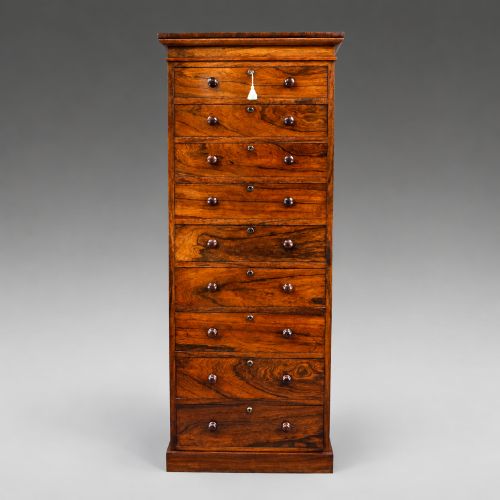
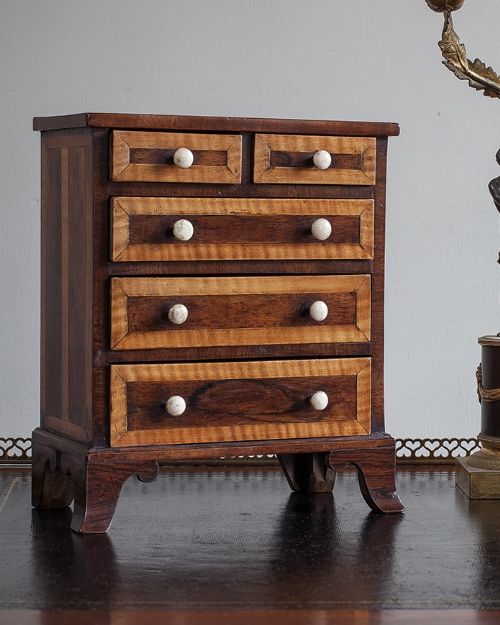
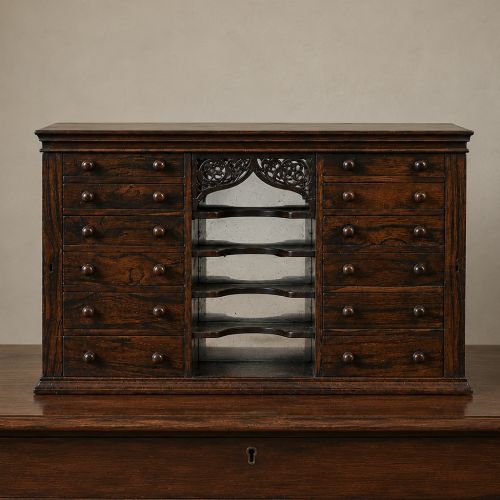
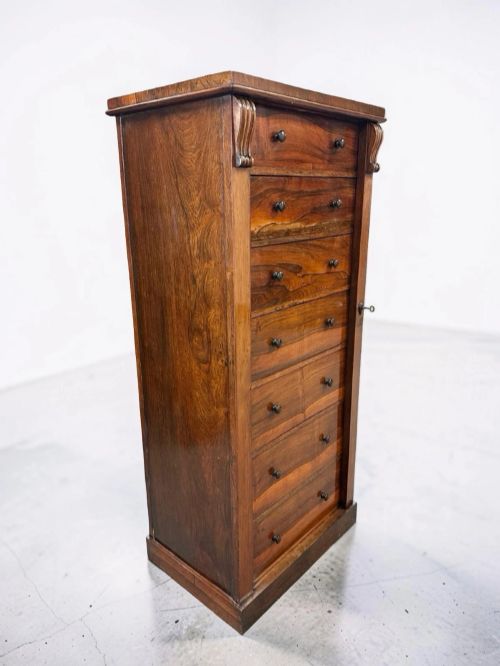
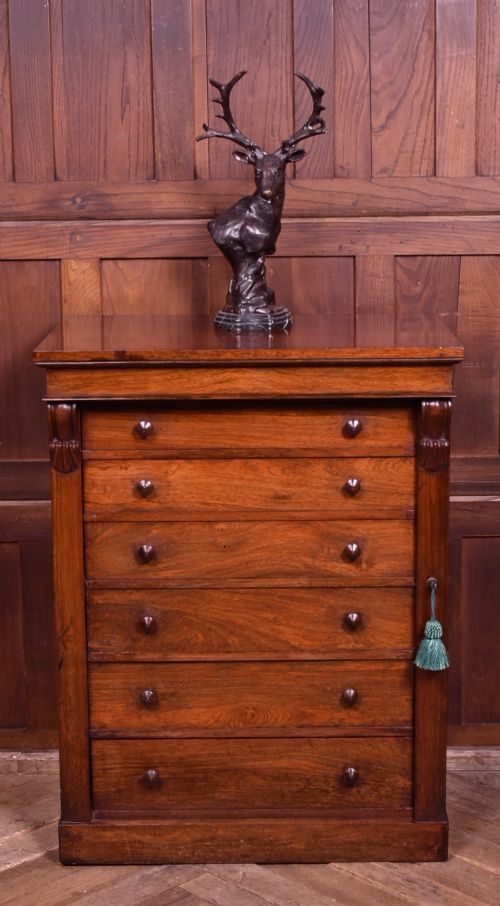
A rosewood collector chest combines dense dark timber with specialised internal arrangements designed to hold small specimens, jewellery, or documents. When you search for a rosewood collector chest, you encounter forms ranging from miniature chests of drawers and table cabinets to tall Wellington chests and elaborate cabinets on stands.
The pieces appearing on this page span the Georgian, Regency, and Victorian periods, alongside specific examples from Portuguese Baroque and the Chinese Republic Period. The most common manifestations are Wellington chests and tabletop cabinets equipped with multiple internal drawers.
Makers designed these items for domestic studies, dressing rooms, and scientific collections, utilising rich timbers to display wealth and refined taste. Each object balances exterior decorative presence with functional internal storage for prized possessions.
How they were made
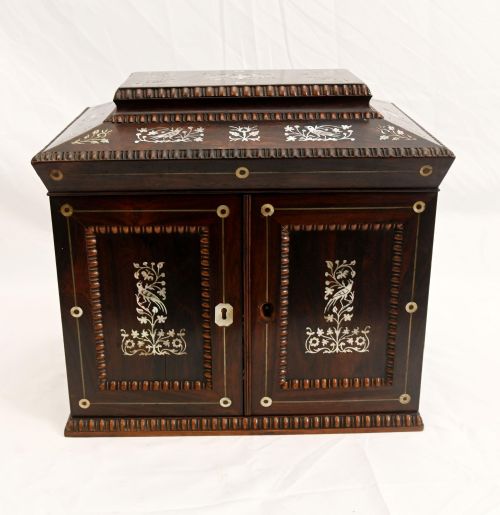
Cabinet makers constructed these pieces primarily using solid or veneered rosewood, often enhanced with contrasting stringing and inlays of boxwood, satinwood, and mother of pearl. Brass mounts, handles, and locking mechanisms provided structural security and decorative contrast to the dark timber ground.
Specialised interiors frequently incorporated mirror glass panels, bone details, and tortoiseshell to line drawers and compartments designed for delicate specimens. The integration of these disparate materials required high levels of joinery skill to ensure stability across seasonal temperature changes.
Materials recorded across current inventory include rosewood, brass, mother of pearl, mirror glass, boxwood, satinwood, bone, and tortoiseshell.
What varies in quality
Quality resides in the selection and matching of rosewood veneers, the precision of boxwood or satinwood stringing, and the integrity of internal drawer construction. Superior examples maintain crisp architectural mouldings and smooth mechanical actions in locking stiles or secret compartments.
The finesse of secondary decorative elements, such as engraved mother of pearl inlay or well-fitted brass hardware, distinguishes standard production from exceptional cabinet work. Preservation of original surface finishes and complete internal configurations further elevate the standing of an individual piece.
The Rosewood Collector Chest Glossary
- Wellington chest
- A tall, slender chest of drawers secured by a locking side pilaster or stile that fastens over the drawer edges. This form originated in the early nineteenth century and frequently appears in rosewood.
- Collector cabinet
- A specialised piece of furniture fitted with multiple shallow drawers for storing coins, shells, minerals, or insects. These interiors often feature numbered or lined compartments.
- Table cabinet
- A compact cabinet designed to sit upon a desk, table, or chest rather than stand directly on the floor. They provide secure, portable storage for jewellery or small documents.
- Gonçalo-alvez
- A dense tropical hardwood with distinctive contrasting grain patterns, often referred to as zebra wood. It appears on select Regency furniture items.
- Stringing
- A narrow strip of contrasting timber, such as boxwood or satinwood, inlaid into channels on the furniture surface to create geometric borders.
Rosewood Collector Chest: Frequently Asked Questions
What were rosewood collector chests used for?
These chests served primarily to organise and protect small, valuable items such as coins, gemstones, scientific specimens, and fine jewellery. Their fitted internal drawers kept delicate objects separated and secure.
Owners kept them in private studies, libraries, or drawing rooms where guests could inspect the contents. They combined utility with a display of personal refinement and intellectual curiosity.
How do I identify a Regency period piece?
Regency pieces typically exhibit classical restraint, clean architectural lines, and precise brass or lightwood inlay. The proportions draw inspiration from classical antiquity.
Makers of this era favoured rich rosewood grains and often incorporated sophisticated locking mechanisms or concealed drawers into the design.
Are all these chests made of solid rosewood?
Most pieces utilise rosewood veneers applied over secondary structural timbers like mahogany or pine to prevent warping. Veneering allowed cabinet makers to display dramatic grain patterns across wide drawer fronts and top surfaces.
Solid rosewood was generally reserved for smaller elements, mouldings, or miniature furniture where structural stability could be maintained without a core substrate.
How should I care for rosewood furniture?
Protect rosewood from direct sunlight and extreme fluctuations in humidity to prevent timber splitting and veneer lifting. Dust regularly with a dry, soft cloth and avoid silicone-based polishes.
Maintaining a stable indoor climate preserves the natural oils in the timber and keeps delicate inlays of mother of pearl or boxwood secure in their channels.