


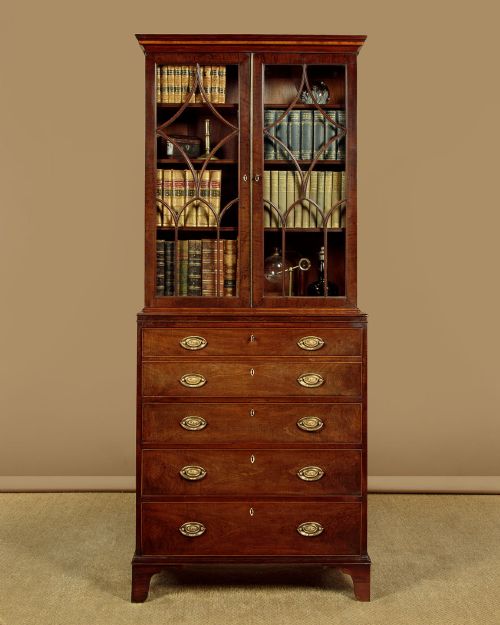
Antique Tall Drawers
When you search for antique tall drawers, you are looking for vertical storage solutions that combine practical capacity with period craftsmanship.

Antique Tall Drawers
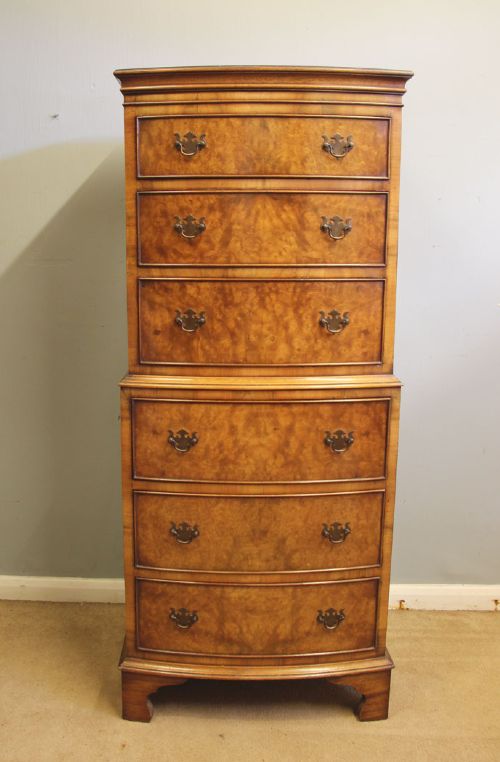
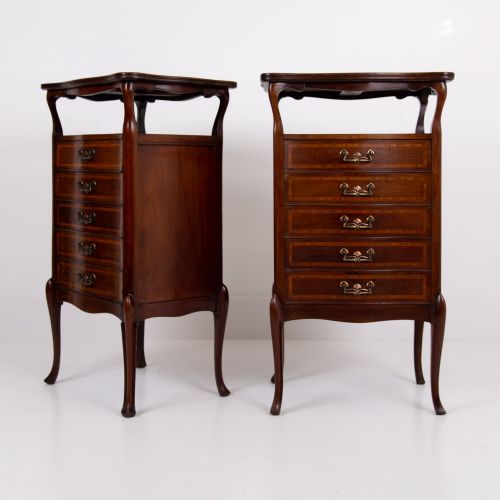
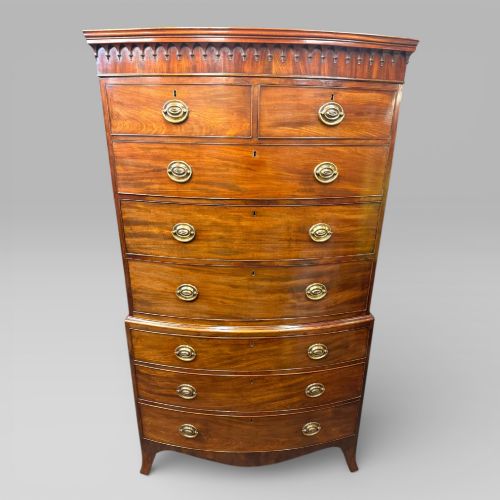
The search for antique tall drawers leads buyers to pieces designed to maximise vertical storage without occupying excessive floor space. These items range from Georgian tallboys and chest-on-chest formations to Victorian Wellington chests and narrow Edwardian examples.
Most pieces encountered on this page originate from the eighteenth, nineteenth, and early twentieth centuries. They appear frequently in mahogany, oak, and burr walnut, fulfilling the domestic need for organised clothing or document storage.
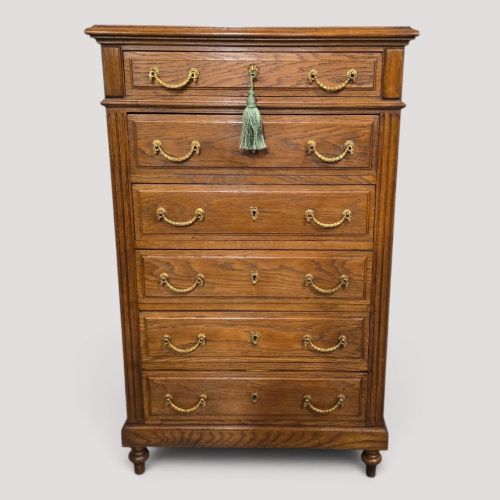
Forms vary from stately George III double-section cabinets to slender French semainiers and provincial pine units. Each configuration offers a distinct vertical presence suited to traditional bedrooms or studies.
How they were made
Cabinet makers utilised dense hardwoods such as mahogany and oak for structural integrity, often applying figured veneers like burr walnut or flame mahogany to primary surfaces. Drawer linings typically employed secondary timbers such as deal or pine.
Construction relied on tight dovetail joints for drawer assembly and sturdy mortise and tenon framing for the carcass. Brass drop handles, escutcheons, and locking mechanisms completed the hardware.
Surface finishes involved hand-applied wax or French polish to nourish the grain. Carved cockbeading, satinwood stringing, and subtle crossbanding frequently accented the facades.
Antique Tall Drawers Retail Price Guide 2026
Typical asking prices for tall drawers among the pieces listed under this phrase on Sellingantiques today, from the lower quarter to the upper quarter. They describe what is for sale here now, not the wider market.
Listings feature eighteenth-century pieces alongside nineteenth-century mahogany tallboys and early twentieth-century oak cabinets.
What varies in quality
Quality separates along the harmony of timber selection and the precision of veneer matching across multiple stacked drawers. Superior examples display continuous grain patterns across the facade and intact original brass hardware.
Internal construction reveals the maker's hand through finely cut, thin dovetails and solid secondary wood drawer bases. Lesser pieces may show heavy alterations, replaced feet, or mismatched drawer configurations.
Proportion and restraint in decorative carving distinguish exceptional workshops from mass-produced equivalents. The retention of original locks, keys, and backboards further elevates the standing of a piece.
Gillows·Heals·J.Maple
The Antique Tall Drawers Glossary
- Tallboy
- A two-section chest of drawers where a wider base supports a narrower upper chest. This form originated in the eighteenth century to provide ample storage within a compact footprint.
- Wellington chest
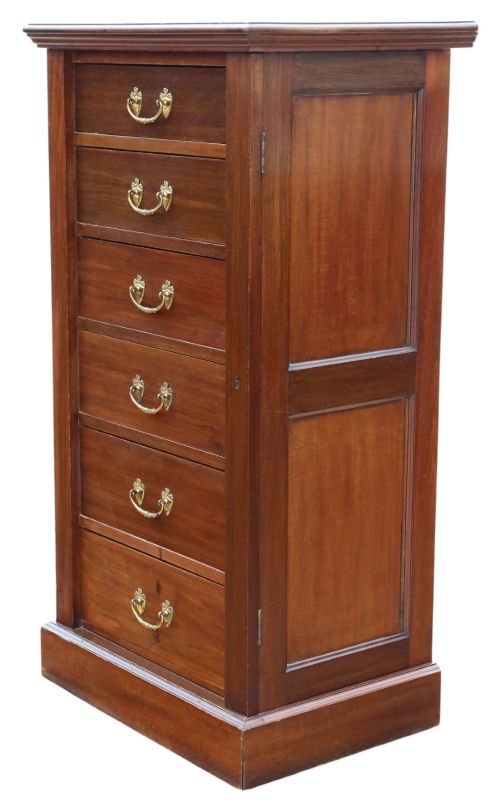
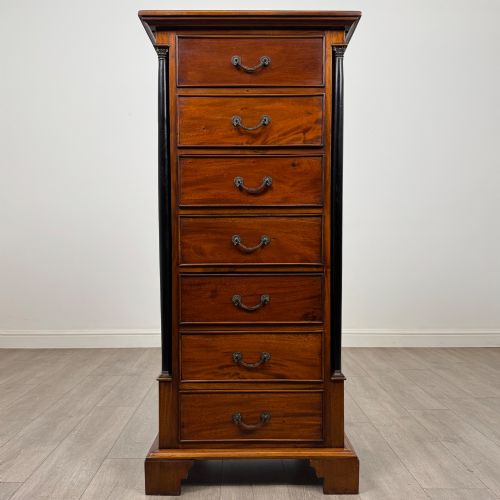
- A tall, narrow chest of seven drawers secured by a hinged locking stile on one side. The design stems from the nineteenth century and traditionally served for linen or documents.
- Chest on chest
- An alternative term for a tallboy comprising a lower chest and a smaller upper chest stacked directly together. These pieces often feature graduated drawers and elaborate cornices.
- Semainier
- A tall, narrow French chest typically containing seven drawers, one for each day of the week. They emerged during the eighteenth century in fine veneers.
- Cockbeading
- A narrow half-round moulding applied to the edges of drawer openings. This detail protects the drawer edges from chipping and frames the facade.
Antique Tall Drawers: Frequently Asked Questions
What is the difference between a tallboy and a chest on chest?
A tallboy generally refers to a tall chest of drawers, while a chest on chest specifically describes a two-part unit where a smaller upper section sits atop a larger base.
Both forms developed to maximise vertical storage in bedrooms, though the chest on chest often incorporates more architectural cornice work and graduated drawer depths.
How do I secure tall drawers in a modern home?
Tall furniture benefits from discreet wall tethering to prevent tipping, particularly on uneven historic flooring. Many period pieces include built-in mounting points or allow for subtle brackets attached through the upper backboards.
Ensuring the heaviest items remain in the lower drawers also improves overall stability.
How do I date an antique chest of drawers?
Dating relies on examining construction techniques, drawer dovetailing, timber species, and hardware styles. Hand-cut dovetails, secondary pine linings, and original brasses generally point towards Georgian or Victorian periods.
Machine-sawn timber and standardised screws typically indicate later nineteenth or twentieth-century production.
Can I use a tall chest in a small room?
Tall drawers provide substantial storage volume while consuming minimal floor space. Their vertical rise draws the eye upward, making them practical for compact bedrooms or hallways.
Narrow formats such as Wellington chests or Edwardian slim chests fit particularly well into tight alcoves.