

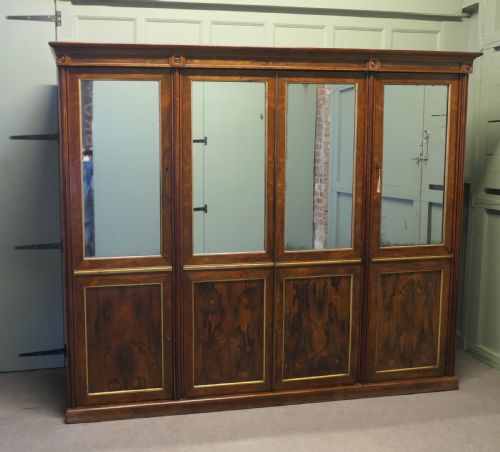


Rosewood Bedroom Furniture
Rosewood bedroom furniture brings rich grain and deep colour to sleeping quarters, offering substantial storage and seating crafted in diverse nineteenth-century styles.
Rosewood Bedroom Furniture
When searching for rosewood bedroom furniture, collectors encounter a selection of nineteenth-century forms including wardrobes, chests of drawers, dressing tables, and nursing chairs. These pieces originate from various periods such as the Regency, Victorian, and Edwardian eras, alongside distinct international styles like French Louis XVI Revival and Chinese Qing Dynasty.
The items listed on this page range from large breakfront fitted wardrobes to compact Wellington chests, side cabinets, and upholstered window seats. Buyers frequently meet pieces combining rosewood with contrasting timbers like satinwood and mahogany, often featuring detailed inlays or carved elements.
Origins span British workshops, French ateliers, and Anglo-Indian makers, reflecting a broad geographic spread in how these dense tropical hardwoods were utilised for domestic quarters. Each piece serves a functional purpose in a bedroom or dressing room, combining utility with decorative presence.
Materials and construction methods
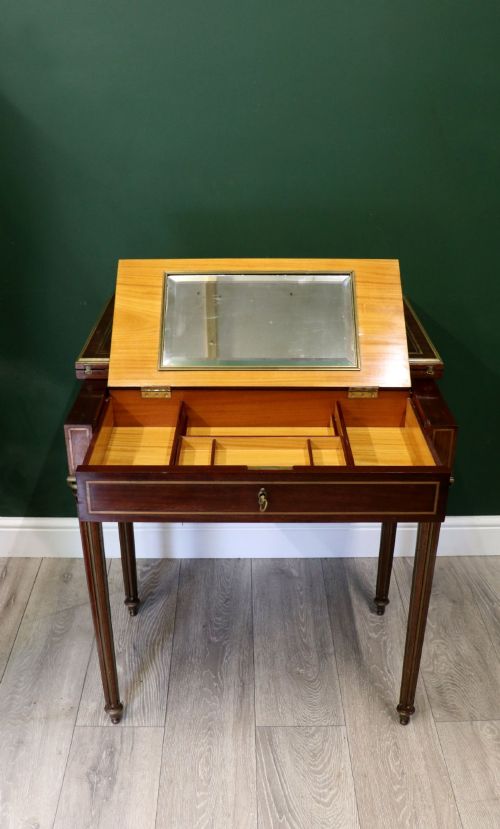
Makers utilised solid rosewood and decorative veneers applied to secondary timbers like pine and mahogany, pairing the rich dark wood with contrasting satinwood inlays. Brass hardware, glass elements, and mirror plates were integrated into wardrobes, commodes, and dressing pieces.
Seating and bed components incorporate textile upholstery, cane work, and intricate hand-carved details, particularly evident in Qing Dynasty hardwood pieces and French revival designs. Structural integrity relies on traditional joinery methods suited to dense exotic hardwoods.
Rosewood Bedroom Furniture Retail Price Guide 2026
Typical asking prices for rosewood bedroom furniture among the pieces listed under this phrase on Sellingantiques today, from the lower quarter to the upper quarter. They describe what is for sale here now, not the wider market.
Listings feature items from the Regency, Victorian, and Edwardian periods, utilising rosewood, satinwood, glass, and brass.
Distinctions in craftsmanship
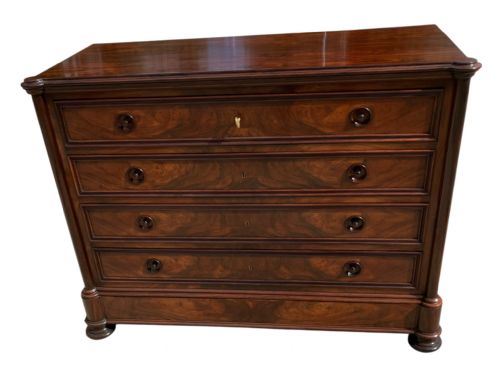
Quality separates through the selection and matching of rosewood veneers, where grain patterns align harmoniously across large surfaces like breakfront wardrobe doors and commode drawer fronts. Finer examples display crisp hand-carving and precise contrasting inlay work rather than painted imitation details.
The integration of secondary timbers and the stability of internal construction, from drawer linings to wardrobe carcases, dictate the lasting standard of each piece. Original brass fittings, intact glass, and well-executed upholstery further distinguish higher-tier items.
The Rosewood Bedroom Furniture Glossary
- Wellington chest
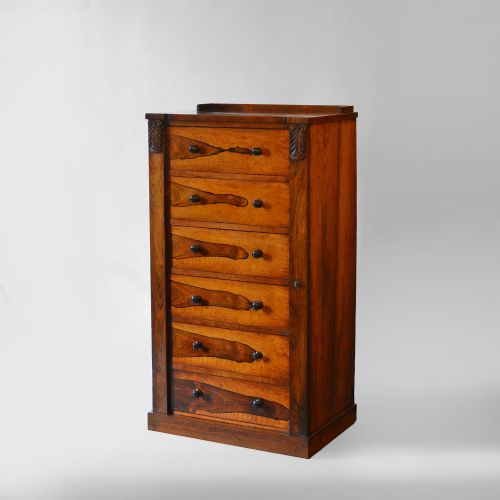
- A tall, narrow chest of drawers secured by a locking side flap that fastens over the drawer edges. This form originated in the nineteenth century for compact storage.
- Breakfront
- A piece of furniture whose central section projects forward from the flanking wings. It is frequently seen on large wardrobes and side cabinets.
- Compactum
- A large fitted wardrobe or combination piece containing hanging space, sliding trays, and drawers. It provides multi-purpose storage within a single footprint.
- Huali
- A prized Chinese hardwood utilised for traditional seating and furniture. It possesses a distinctive grain and density.
- Satinwood
- A pale, lustrous timber used for contrasting stringing, banding, and marquetry on dark woods like rosewood. It highlights borders and architectural details.
Rosewood Bedroom Furniture: Frequently Asked Questions
What pieces are included in rosewood bedroom furniture?
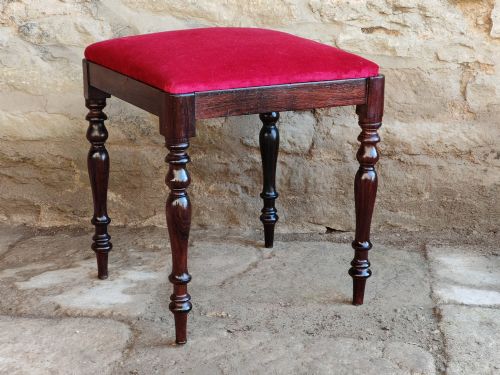
The category encompasses wardrobes, commodes, Wellington chests, and dressing stools. Seating such as salon chairs and nursing seats also appears.
Items span multiple nineteenth-century periods and international design traditions.
How do I care for antique rosewood surfaces?
Maintain rosewood by keeping pieces away from direct sunlight and extreme temperature fluctuations. Regular dusting with a soft, dry cloth preserves the polished finish.
Avoid silicone-based polishes that can degrade nineteenth-century polishes over time.
Are these pieces strictly British in origin?
No, manufacturing origins vary widely across the listings. Pieces include French commodes, Chinese Qing Dynasty seating, and Anglo-Indian items alongside British examples.
Design styles reflect these diverse geographic sources, including French revival and Regency aesthetics.
How do I identify a Wellington chest?
A Wellington chest stands as a tall, slender set of drawers featuring a hinged vertical locking stile on one side. This wooden flap secures all drawers simultaneously with a single key.
It was designed for efficient storage in nineteenth-century bedrooms.