


Rosewood Narrow Chest
A rosewood narrow chest is a slender, timber-rich storage piece that brings deep grain and vertical utility to compact spaces.
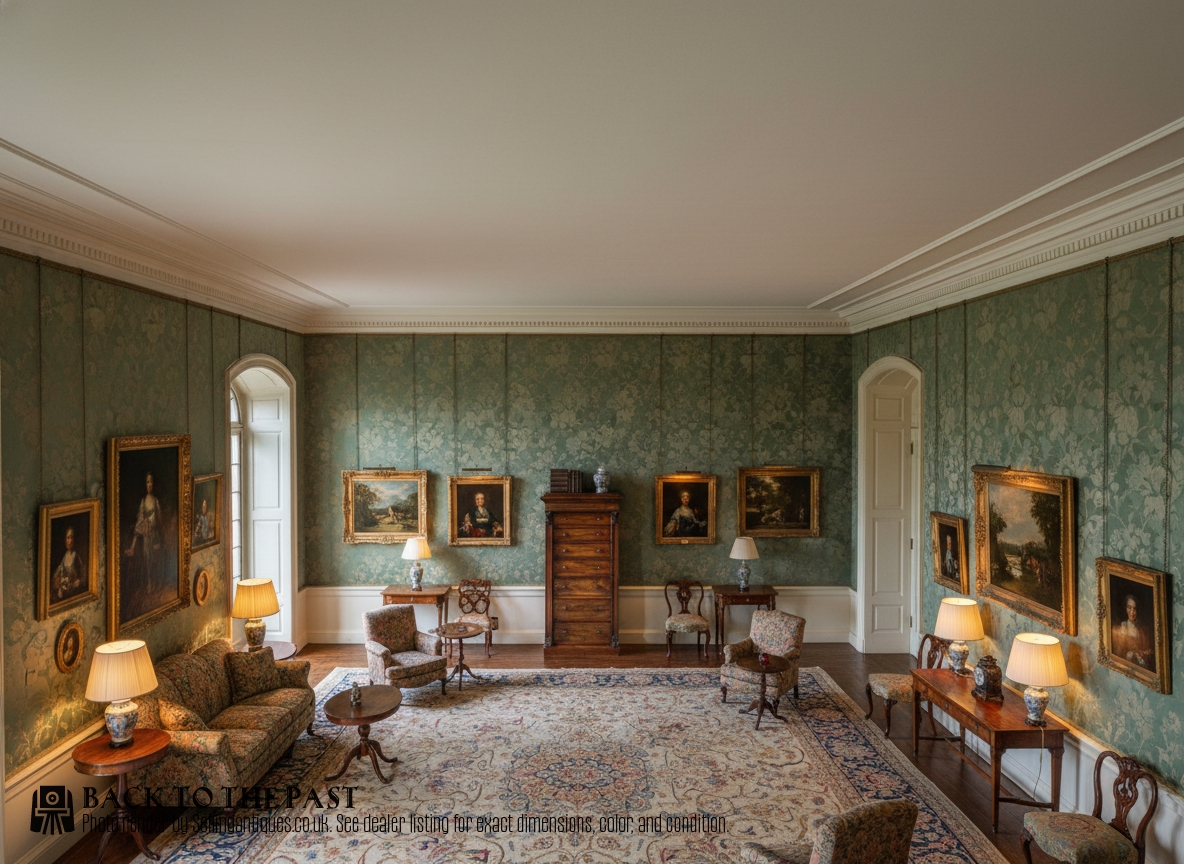
Rosewood Narrow Chest
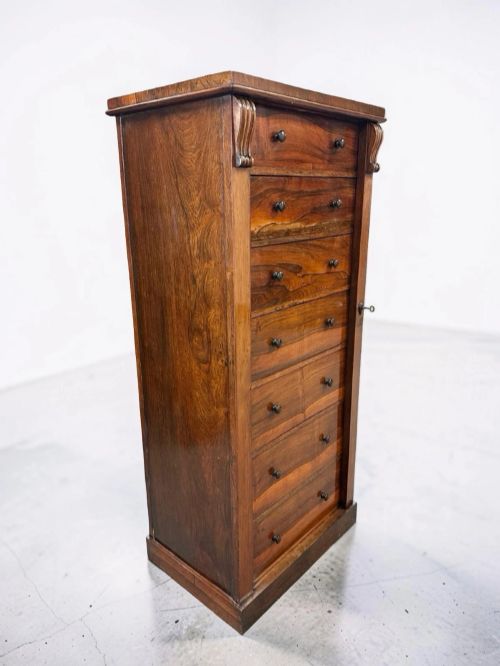
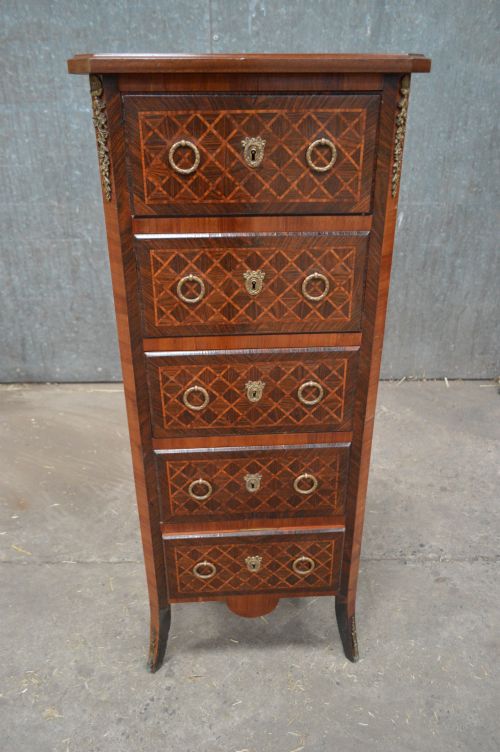
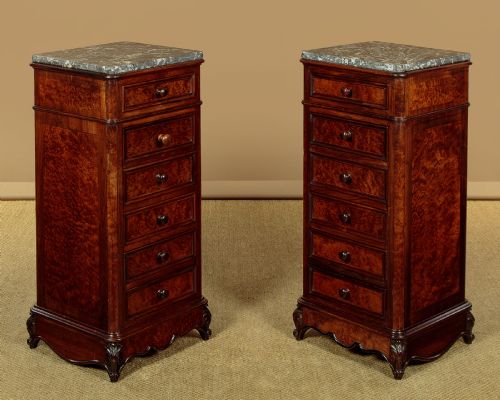
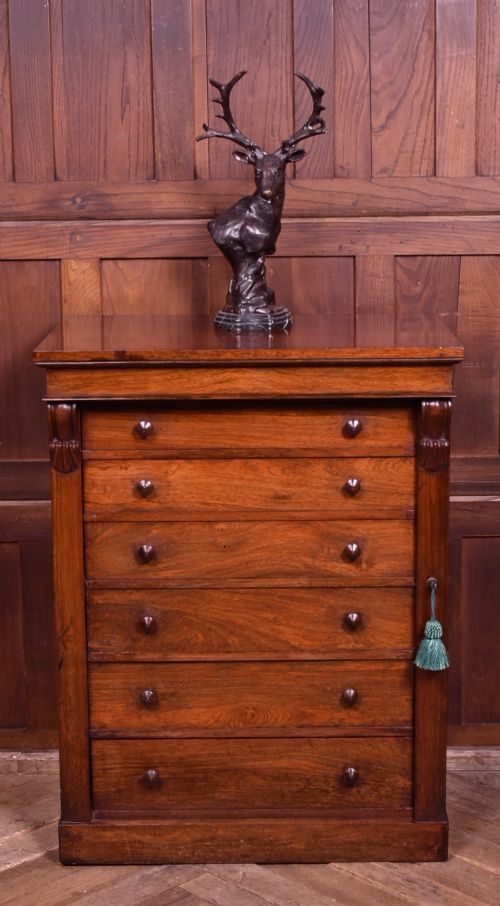
The versions most commonly met on this page include Wellington chests, semainiers, bedside pedestals, and tall cabinets. These objects range from six-drawer formats to French marquetry seven-drawer chests topped with marble.
Makers and makers' workshops of the Victorian and later eras utilised the dense grain of rosewood alongside amboyna, walnut, and kingwood. The forms remain resolutely vertical, designed to maximise drawer space without dominating a room.
Construction and materials
Cabinet-makers built these narrow chests around sturdy carcases, applying rosewood veneers to achieve rich surface patterns across the drawer fronts. They incorporated brass inlay, bronze mounts, and intricate marquetry or parquetry to ornament the exterior.
Many examples feature contrasting timbers such as amboyna and kingwood, paired with heavy marble tops on French-influenced pieces. The structural joinery supports tall, narrow proportions, particularly in locking Wellington chests and seven-drawer semainiers.
Semainiers were built with seven drawers so owners could dedicate one exact compartment to each day of the week.
Assessing quality
Quality rests on the depth of the rosewood grain and the precision of the parquetry or marquetry inlay. Finer examples display seamless matching of timber veneers across multiple narrow drawers.
The integration of secondary materials, such as heavy polished marble tops and crisp brass or bronze details, elevates the piece. Superior construction ensures that tall, slender forms maintain structural integrity and smooth drawer operation over decades.
The Rosewood Narrow Chest Glossary
- Wellington chest
- A tall, narrow chest of drawers traditionally secured by a locking side flap that fastens over the drawer edges. This form originated in the nineteenth century and maximises storage while occupying a minimal footprint.
- Semainier
- A tall seven-drawer chest designed originally to hold a week's worth of linen or clothing. French makers frequently topped these slender pieces with marble.
- Parquetry
- Geometric wood inlay work creating patterned surfaces across drawer fronts and tops. Artisans used contrasting timbers like kingwood and walnut within the rosewood ground.
- Marquetry
- Pictorial or ornamental inlay using various coloured woods and veneers to form floral or scroll motifs. It appears extensively on French revival pieces.
- Amboyna
- A highly prized exotic wood featuring rich, swirling burl patterns used for contrasting panels. Cabinet-makers paired it with rosewood on Victorian bedside pedestals.
Rosewood Narrow Chest: Frequently Asked Questions
What is a Wellington chest?
A Wellington chest is a tall, narrow set of drawers distinguished by a hinged locking stile on the right side. This vertical locking bar secures all the drawers simultaneously with a single key.
Cabinet-makers designed this form in the nineteenth century to store valuables securely within a compact footprint.
How do I style a narrow chest?
These slender chests fit easily into alcoves, hallways, and beside beds where floor space is limited. Their vertical orientation draws the eye upward without overcrowding the room.
Pair them with simple surroundings to let the figured rosewood grain and brass details stand out.
What is a semainier?
A semainier is a traditional French tall chest featuring seven distinct drawers, one for each day of the week. They share the slender proportions seen in Wellington chests.
Many examples feature decorative marquetry and heavy marble slabs fitted to the top surface.
How do I date these chests?
Dating relies on stylistic clues, construction methods, and materials such as Victorian rosewood or 1920s brass inlay. French revival and Louis XV influences point towards specific continental workshop traditions.
Examining the secondary timbers inside the drawers also helps establish the period of manufacture.