
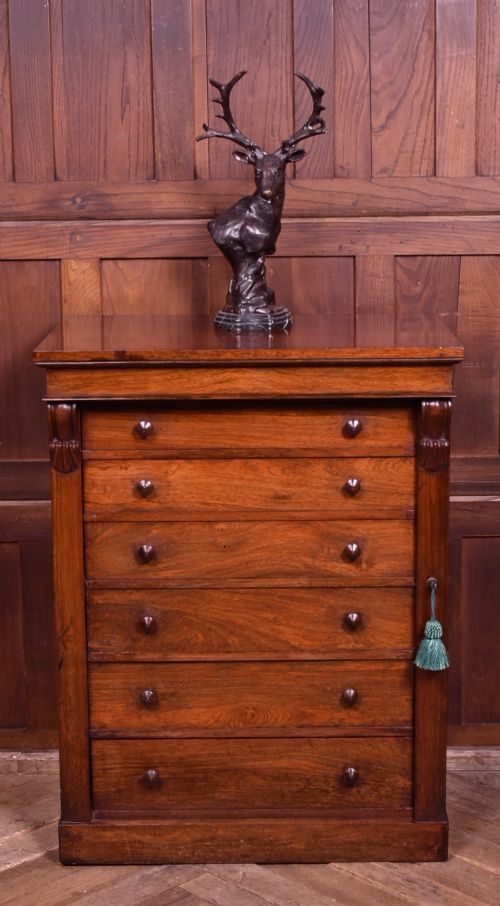


Dark Rosewood Tallboy
A dark rosewood tallboy brings heavy timber and height to a room, offering tall drawers for storage.
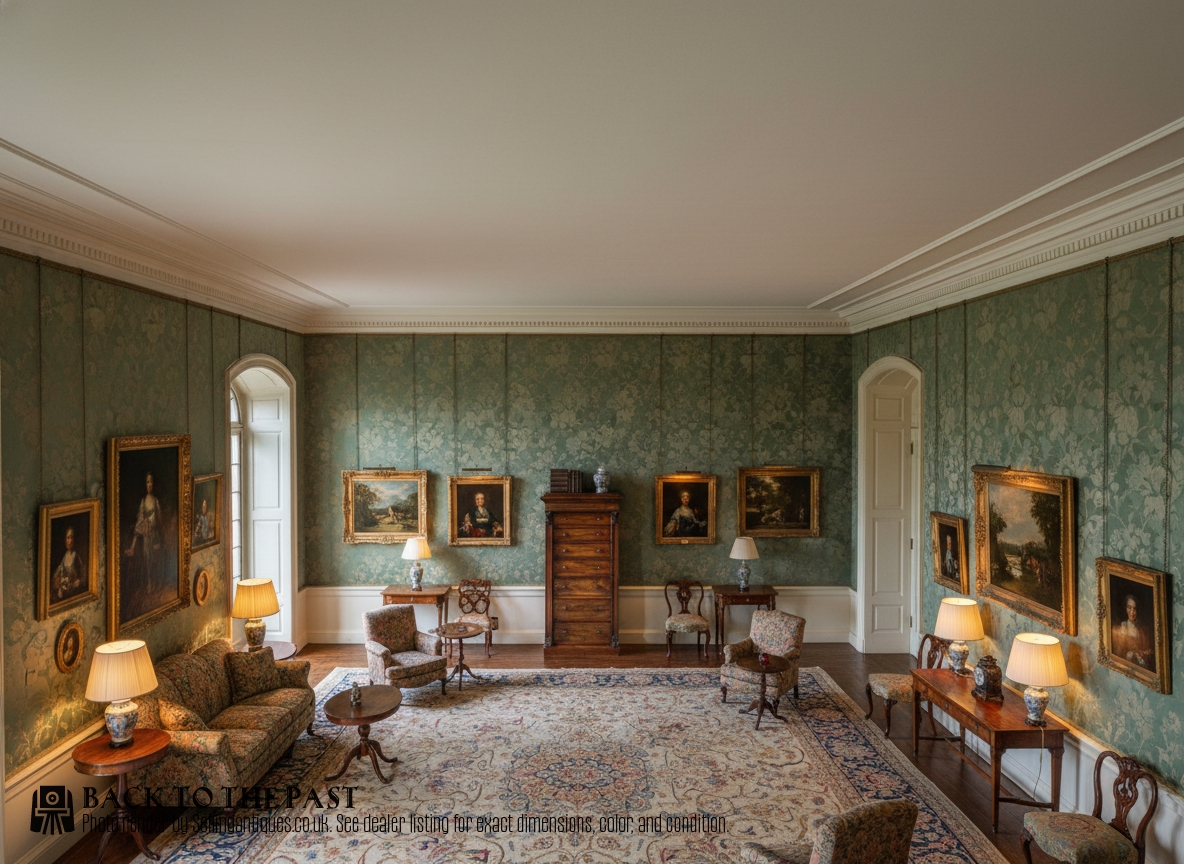
Dark Rosewood Tallboy
When you search for a dark rosewood tallboy, you meet tall chests of drawers, writing cabinets, and Wellington chests spanning the Georgian, Regency, Victorian, and Edwardian periods.
The versions most likely to be met on this page are Victorian Wellington chests and tall cabinets built from rosewood, often featuring crossbanding, satinwood, or intricate inlay.
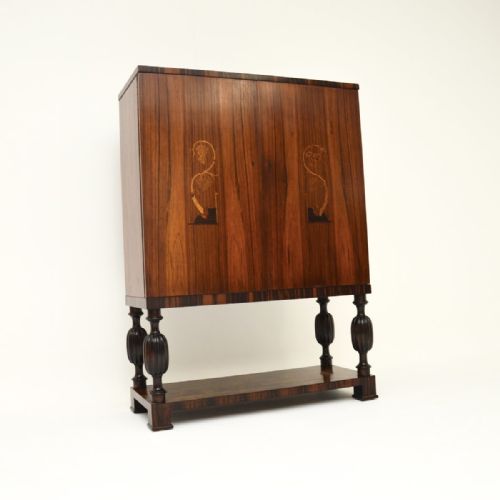
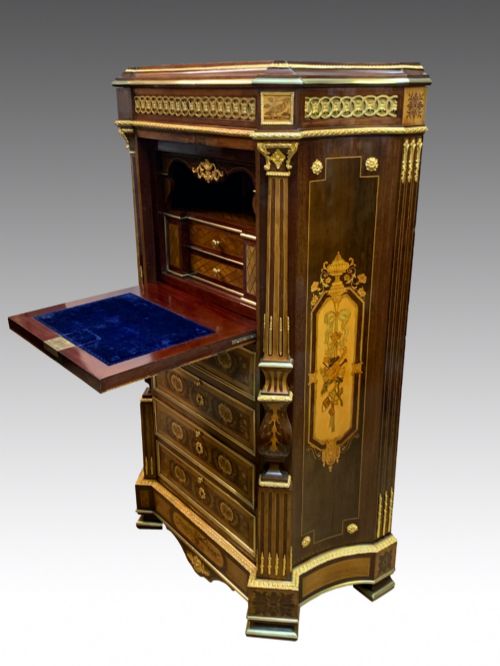
These pieces combine deep timber tones with practical vertical storage, spanning forms from French secretaire semaniers to Swedish vintage inlaid cabinets.
How they were made
Cabinet makers utilised dark rosewood timbers, frequently incorporating satinwood, mahogany, and kingwood veneers over structural woods to build these tall forms.
Surface decoration relies on marquetry inlay, brass mounts, ormolu, and crossbanding, which frame the grain of the wood across multiple drawers.
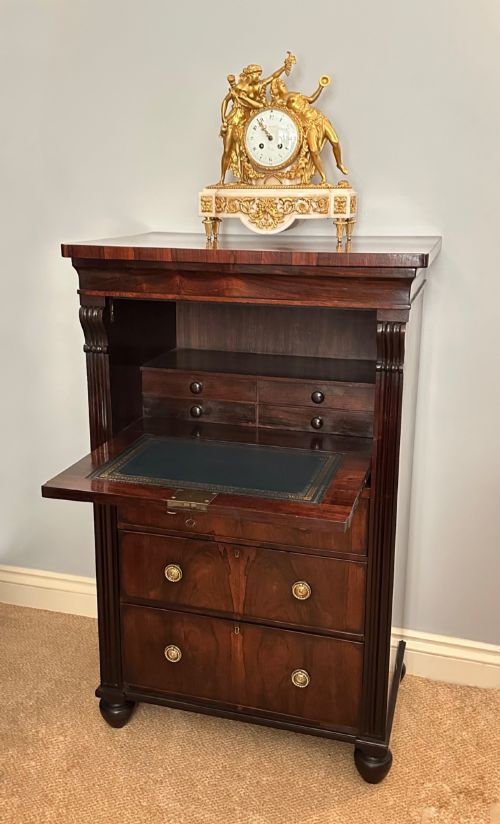
Writing cabinets and secretaire models integrate folding desks and internal drawers behind secure locking mechanisms characteristic of the period.
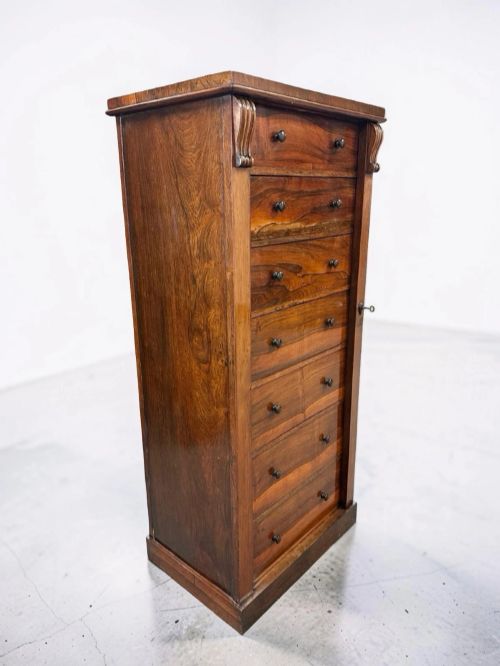
A hinged locking bar on a Wellington chest secures every drawer with a single turn of a tiny key.
What varies in quality
The standard of timber selection and the precision of the veneer work dictate the visual depth of the surface, distinguishing standard production from finer workshop output.
The intricacy of the inlay, whether satinwood banding or French marquetry, shows the hand of the maker and the time invested in decoration.
The integrity of internal mechanisms, such as the locking stile on a Wellington chest or the action of a secretaire drawer, marks the distinction in daily utility.
Maison Krieger
The Dark Rosewood Tallboy Glossary
- Wellington chest
- A tall, narrow chest of drawers secured by a hinged locking bar on one side. This design originated in the nineteenth century.
- Secretaire
- A cabinet or chest incorporating a pull-down writing flap that conceals small drawers and pigeonholes. It combines desk space with vertical storage.
- Crossbanding
- A border of veneer laid around the perimeter of a drawer front or top with the grain running perpendicular to the centre panel. This technique frames the primary timber.
- Marquetry
- Decorative patterns formed by fitting together thin slices of various coloured woods and veneers onto a ground. It creates pictorial or geometric designs.
- Ormolu
- Gilt-bronze mounts applied to furniture for decoration. It provides metallic contrast against dark timbers.
Dark Rosewood Tallboy: Frequently Asked Questions
What is a Wellington chest?
A Wellington chest is a tall, narrow set of drawers featuring a hinged locking stile that fastens down the side to secure all drawers at once. This practical form became popular during the nineteenth century for gentlemen's dressing rooms and studies.
These chests provide deep vertical storage while occupying a minimal footprint on the floor. The locking mechanism added a layer of security for private papers and valuables.
How do I spot a secretaire?
A secretaire incorporates a hinged writing flap that drops forward to reveal a fitted interior of small drawers and pigeonholes. When closed, it maintains the appearance of a standard set of drawers or a cabinet.
This dual function makes the piece suitable for rooms where a dedicated desk would take up too much space. The internal compartments often feature contrasting woods like satinwood.
What periods are represented here?
The pieces span the Georgian, Regency, Victorian, and Edwardian eras, extending into later twentieth-century Swedish and Art Deco designs. Each period brings distinct decorative traits to the tall form.
Victorian examples often favour plain rosewood grains or simple locking stiles, while Edwardian pieces lean towards profuse inlay. Earlier Regency pieces incorporate crossbanding and brass details.
How do I care for rosewood?
Rosewood benefits from stable indoor humidity and protection from direct sunlight to prevent the dark timber from fading. Regular dusting with a soft, dry cloth preserves the finish.
Avoid placing these items near heat sources that could dry out the wood or crack the veneer. Wax can be applied sparingly to maintain the lustre of the polished surface.