


Rosewood Wellington Chest
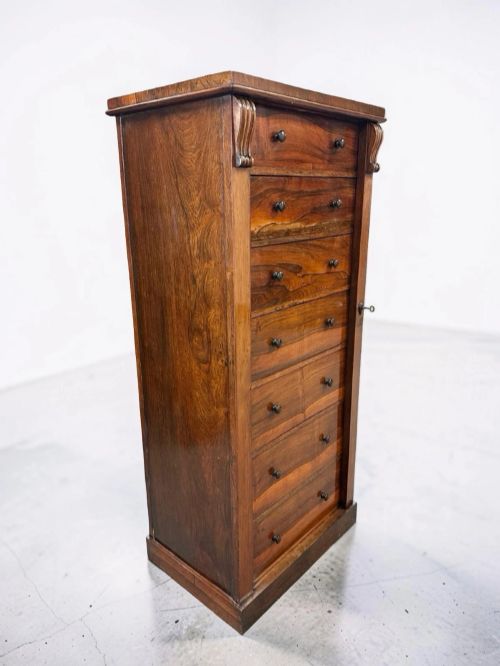
A rosewood wellington chest is a tall, narrow set of drawers secured by a locking side pilaster, valued for combining a generous drawer count with a remarkably compact footprint.
Rosewood Wellington Chest
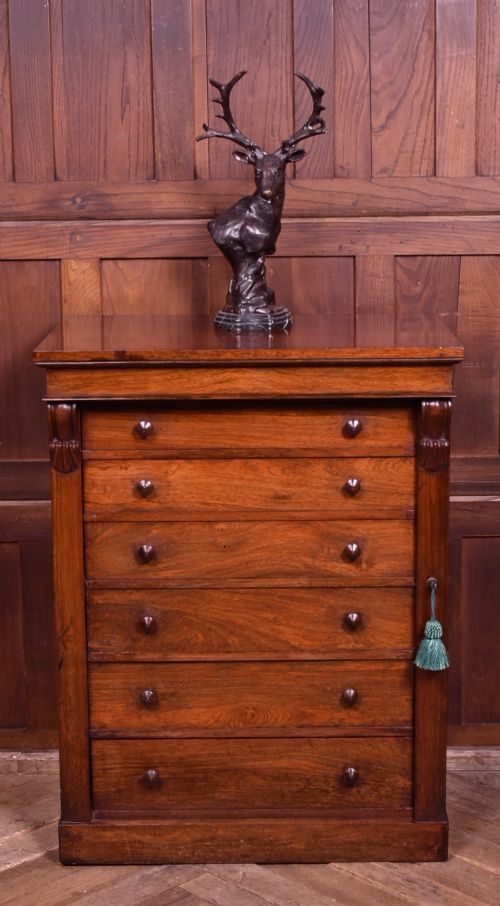
A rosewood wellington chest typically stands tall and narrow, featuring a stack of graduated drawers secured on one side by a hinged locking pilaster. The pieces on this page span the Regency, William IV, and Victorian eras, alongside general nineteenth-century examples and specific dates like eighteen-fifty and eighteen-ninety.
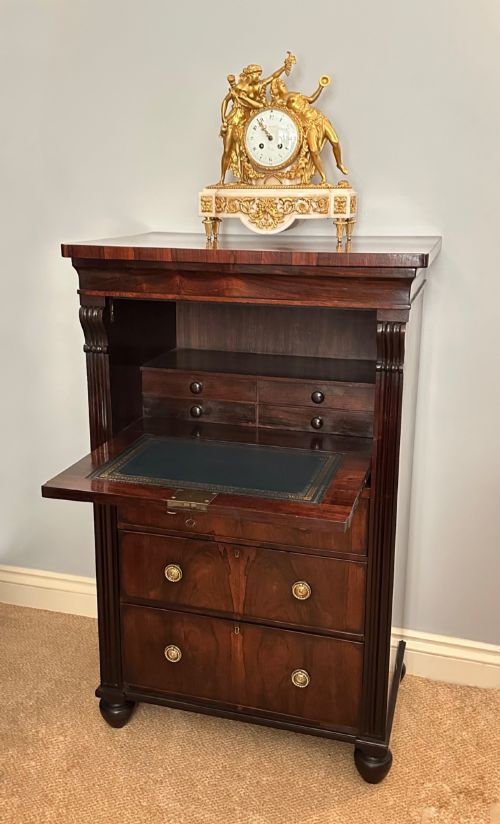
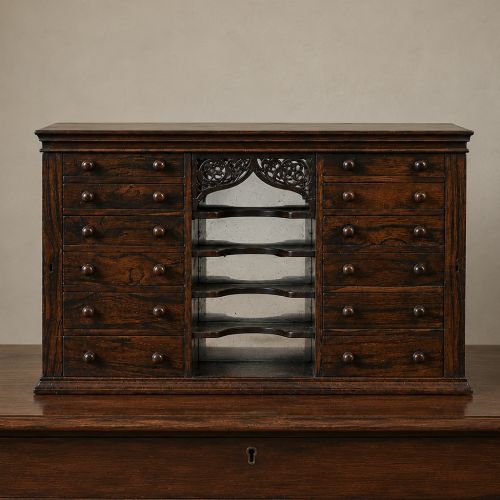
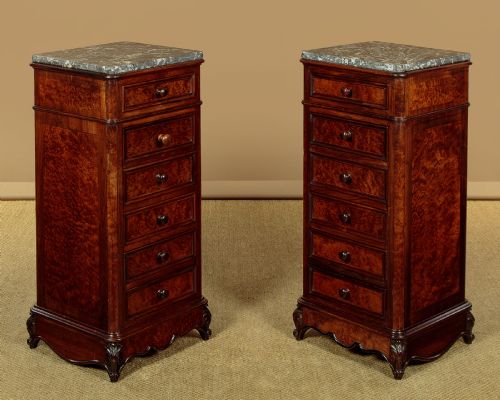
Beyond standard chests of drawers, variations in the evidence include writing cabinets, secretaire wellington chests, collector cabinets, bedside tables, bedside cabinets, and mirrored examples. Formats range from miniature versions and desktop pieces to substantial six and seven-drawer specimen chests.
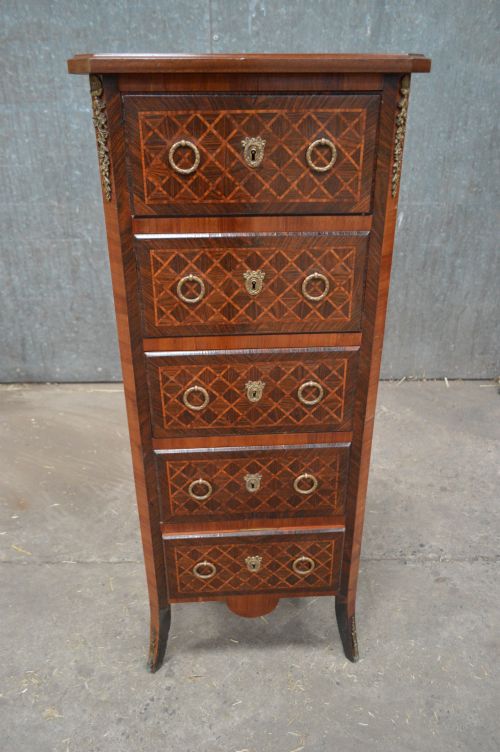
Most examples originate from the nineteenth century, encompassing George IV styles, French transitional pieces, and late Victorian designs. Buyers encounter both plain veneered timber and variations enhanced by marquetry and parquetry.
Materials and Construction
Makers utilised rosewood as the primary visible timber, frequently applied as veneers over secondary woods, sometimes paired with kingwood, amboyna, maple, or satinwood. Brass hardware provides structural reinforcement and drawer pulls, while leather frequently lines the writing surfaces of secretaire variations.
Construction techniques involve precise cabinetmaking to ensure the signature locking pilaster operates smoothly alongside the drawer tiers. More ornate versions incorporate marquetry and parquetry inlay work, while specific pieces integrate mirror glass into their upper sections or doors.
Rosewood Wellington Chest Retail Price Guide 2026
Typical asking prices for rosewood wellington chest among the pieces listed under this phrase on Sellingantiques today, from the lower quarter to the upper quarter. They describe what is for sale here now, not the wider market.
Listings feature pieces spanning the Regency, William IV, and Victorian periods, alongside specific dates from eighteen-twenty to eighteen-ninety.
Markers of Distinction
Quality rests upon the selection and matching of the rosewood veneers, where well-figured grain patterns elevate the visual presence of the chest. The crispness of the marquetry or parquetry inlay and the precise fitting of the locking side pilaster further separate standard utility pieces from finer examples.
Internal execution also dictates standing, particularly in secretaire variants where fitted writing interiors, leather surfaces, and auxiliary small drawers demand meticulous joinery. The inclusion of secondary luxury timbers such as amboyna, kingwood, or maple points to a higher grade of commission.
The Rosewood Wellington Chest Glossary
- Wellington chest
- A tall, narrow chest of drawers characterised by a hinged locking pilaster on one side that fastens the entire column of drawers. This locking mechanism is the defining structural feature of the type.
- Secretaire
- A cabinet or chest incorporating a pull-out drawer with a drop-front that reveals a fitted writing surface and small pigeonholes or drawers. It transforms a standard drawer stack into a compact desk.
- Pilaster
- A vertical architectural member projecting from the cabinet side that hinges outward to release the drawers. On these chests, it usually bears a lock and key.
- Parquetry
- Geometric mosaic woodwork formed by small veneer pieces laid down in repeating patterns like cubes or herringbone. It creates decorative surface geometry on the carcass.
- Marquetry
- Decorative veneer work forming pictorial or scroll designs using various tinted woods. It appears on drawer fronts and top panels of select Victorian specimens.
Rosewood Wellington Chest: Frequently Asked Questions
What is a wellington chest?
A wellington chest is a tall, narrow set of drawers featuring a hinged locking pilaster down one side. This locking bar secures every drawer simultaneously when closed and locked.
The form was designed to offer substantial storage within a minimal floor space. Nineteenth-century makers produced them in various woods, with rosewood being particularly prominent.
How do secretaire wellington chests work?
A secretaire wellington chest includes a dedicated drawer engineered with a drop-front panel. When unlocked and pulled forward, the front folds down to reveal a writing surface.
Behind this drop-front sit small internal drawers and compartments for correspondence. The remaining drawers in the stack continue to operate beneath or above this writing section.
Where were they placed in a home?
These chests served primarily as compact bedroom or dressing room storage units due to their narrow footprint. Their height allowed them to fit into tight wall spaces where standard wider chests could not go.
Some variants, such as bedside cabinets and desktop pieces, were tailored for immediate bedside or tabletop use. Collector cabinets and specimen chests housed small valuables or natural history items.
How do I distinguish regency from victorian pieces?
Regency and George IV pieces generally display cleaner classical lines and rich, dark rosewood surfaces dating from the early nineteenth century. They often emphasise the natural grain of the timber over surface ornamentation.
Victorian examples span a broader range from plain rosewood to heavily inlaid pieces featuring marquetry, parquetry, and secondary timbers like amboyna. Dates marked around eighteen-fifty to eighteen-ninety typically reflect later Victorian tastes.