



Rosewood Drawer Cabinet
A rosewood drawer cabinet is a refined small-scale storage piece offering figured timber surfaces and functional drawers for domestic interiors.
Rosewood Drawer Cabinet
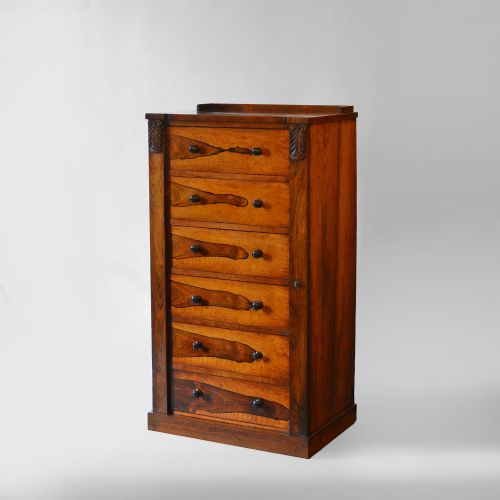
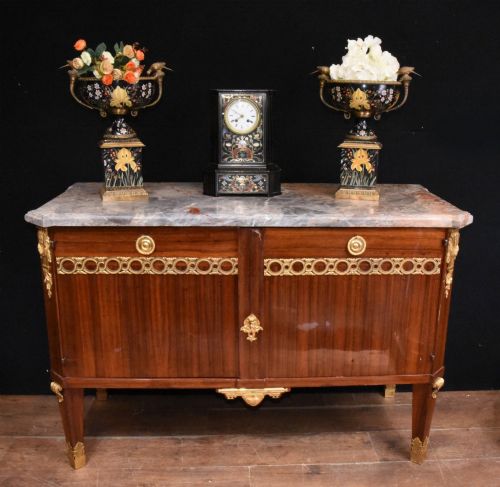
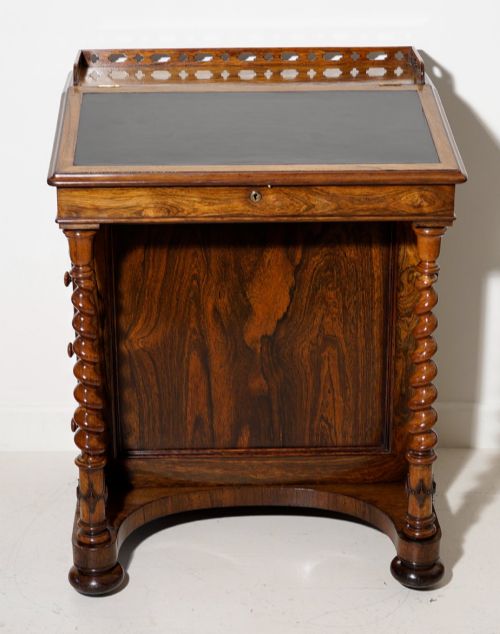
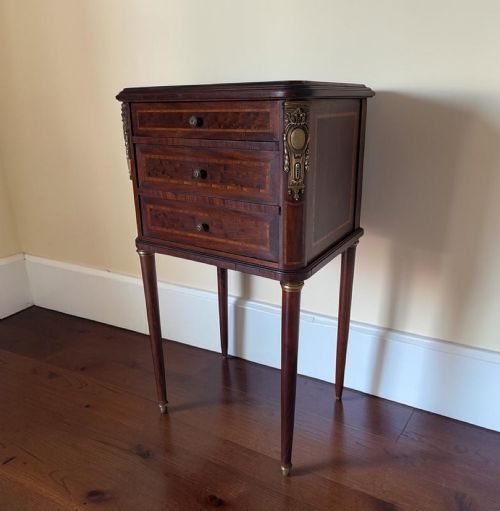
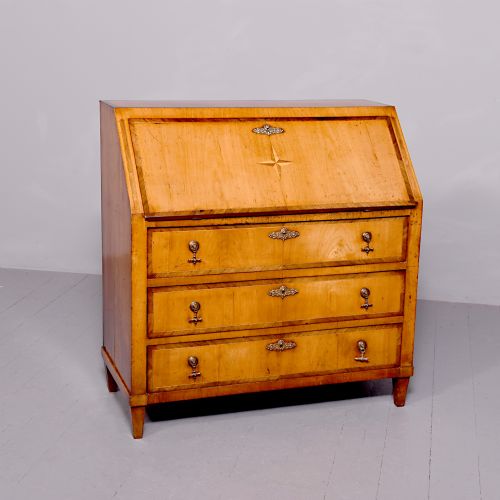
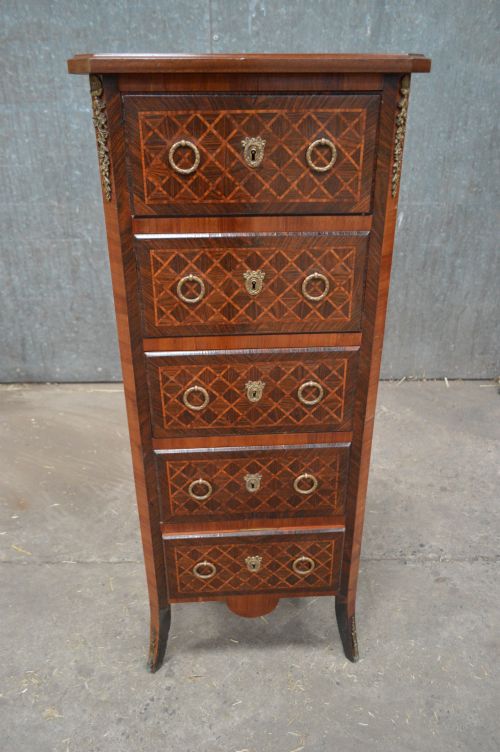
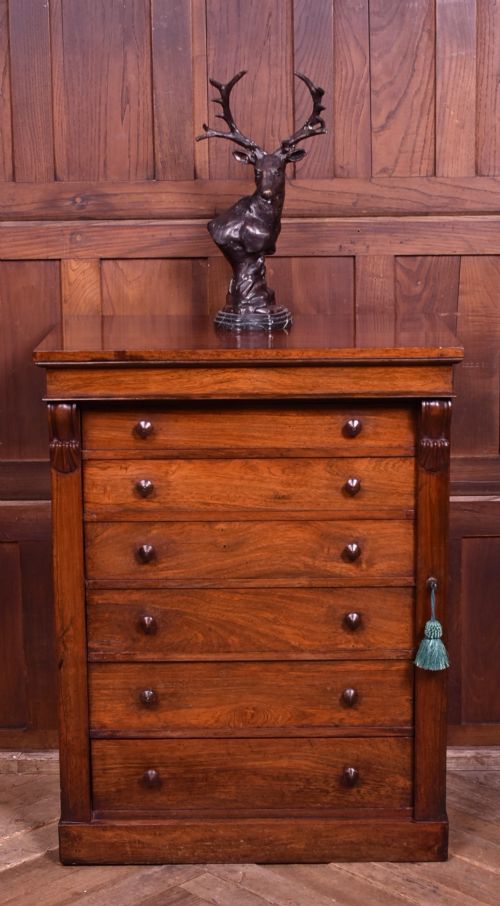
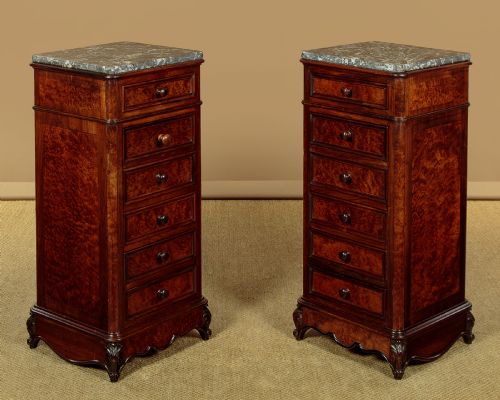
When hunting for a rosewood drawer cabinet, buyers encounter a diverse selection of 19th-century and early 20th-century forms ranging from tall Wellington chests to compact bedside units and Davenport desks. The pieces span Regency, Victorian, and Edwardian eras, alongside Continental revival styles and French marquetry designs.
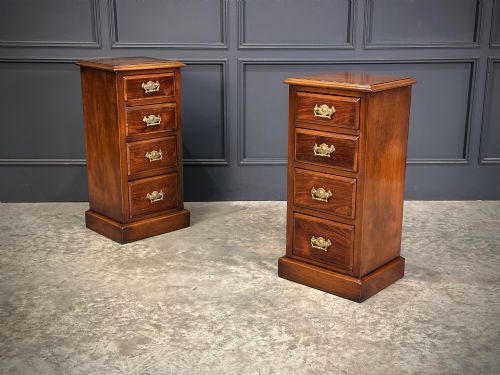
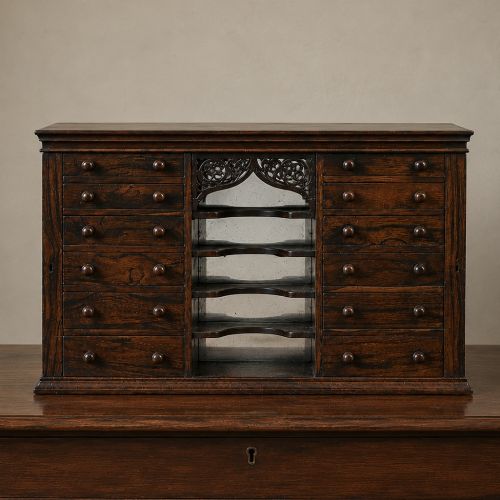
Most examples function as bedside chests, collector's cabinets, or writing desks equipped with internal drawers and compartments. Side cabinets, miniature furniture, and commodes further expand the options available within this category.
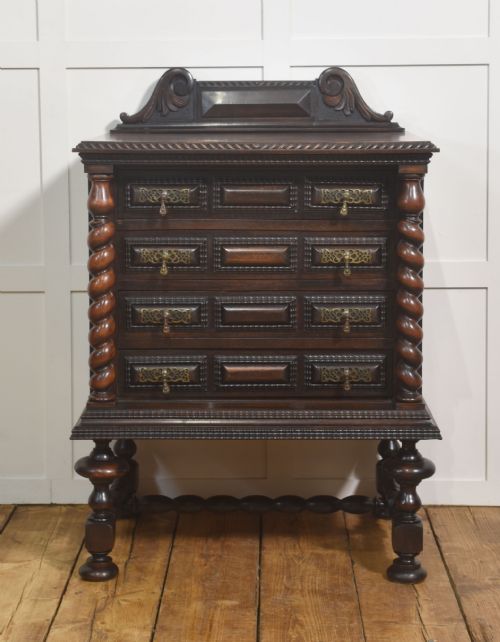
Origins vary from English workshops to French and Portuguese makers, incorporating regional traits like parquetry surfaces or column-locking mechanisms. Buyers frequently find paired bedside pieces alongside single monumental cabinets on stands.
Materials and construction methods
Makers utilised dense rosewood veneers and solid timbers, frequently combining them with contrasting secondary woods such as mahogany, walnut, satinwood, tulipwood, and kingwood. Surface decoration relies heavily on intricate floral marquetry, parquetry patterns, and fine brass inlay.
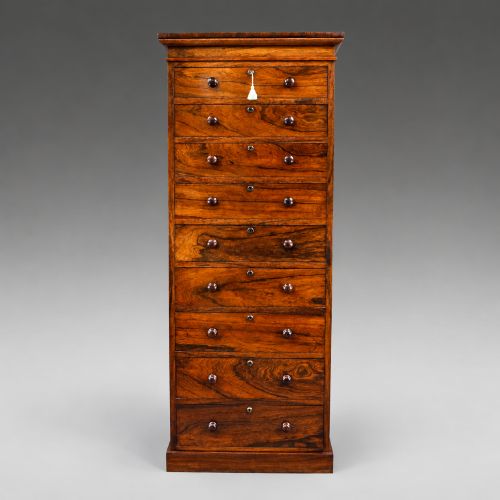
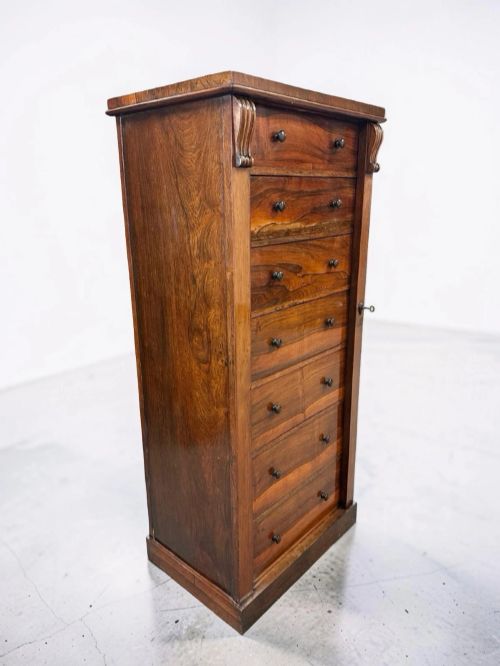
Structural refinement shows in brass handles, marble tops, and specialist mechanisms like sliding desk tops and secret drawers. Wellington chests employ side locking stiles secured by hinged locking arms to keep the stacked internal drawers secure.
Rosewood Drawer Cabinet Retail Price Guide 2026
Typical asking prices for rosewood drawer cabinet among the pieces listed under this phrase on Sellingantiques today, from the lower quarter to the upper quarter. They describe what is for sale here now, not the wider market.
Listings feature 19th-century, Regency, Victorian, and Edwardian pieces incorporating rosewood, mahogany, walnut, marble, and brass.
Distinctions in craftsmanship and design
Quality rests on the selection and grain matching of the rosewood veneer, the crispness of the brass or floral marquetry inlay, and the integration of secondary elements like inset marble tops. Superior pieces display harmonious proportions and seamless mechanical operation across sliding sections, pop-up fittings, and locking drawer stiles.
The sophistication of the internal joinery and the precision of the parquetry patterns separate standard utility storage from exceptional cabinet work.
The Rosewood Drawer Cabinet Glossary
- Davenport
- A compact writing desk featuring a sloping, hinged writing surface above a pedestal of side drawers. Early versions often incorporate sliding tops and interior stationary wells.
- Marquetry
- Decorative veneer work forming pictorial or geometric patterns using various coloured woods, shells, or metals. Artisans carefully cut and fit these thin sections into the cabinet surface.
- Parquetry
- Geometric mosaic woodwork arranged in repeating patterns such as cubes or chequers. It differs from marquetry by relying strictly on geometric tiling rather than pictorial designs.
- Commode
- A low French chest of drawers or cabinet originating in the 18th century, frequently topped with marble. These pieces often showcase elaborate revival marquetry and mounts.
- Canterbury
- A low stand featuring partitions for sheet music or books, usually fitted with a single lower drawer. They appear in rosewood alongside the matching tables and cabinets.
Rosewood Drawer Cabinet: Frequently Asked Questions
How do I identify a Wellington chest?
A Wellington chest stands taller than it is wide, housing a stack of narrow drawers secured by a vertical locking bar on the side. This hinged stile fastens with a key to lock all drawers simultaneously.
Originally designed for secure document storage, these pieces rely on precise cabinetmaking to ensure the locking mechanism operates smoothly alongside the stacked drawer fronts.
What is a Davenport desk used for?
A Davenport functions as a compact writing desk with a sloping top that lifts to reveal storage for paper and pens. Drawers are typically accessed from the side rather than the front.
These pieces suit small studies or bedrooms, offering functional writing space and concealed compartment storage without dominating the floor plan.
How do I care for rosewood furniture?
Rosewood surfaces benefit from stable room temperatures away from direct sunlight and heat sources to prevent timber splitting or veneer lifting. Regular dusting with a soft, dry cloth preserves the polished finish.
Avoid silicone-based polishes and excessive moisture, using traditional wax sparingly only when the timber begins to look dry.
What distinguishes Regency from Victorian pieces?
Regency items generally exhibit cleaner architectural lines, classical brass inlay, and restrained classical proportions dating from the early 19th century. Victorian pieces often introduce heavier proportions, exuberant carving, and elaborate marquetry inlay.
Examining the construction methods, secondary woods, and hardware styles helps confirm the specific period of manufacture.