
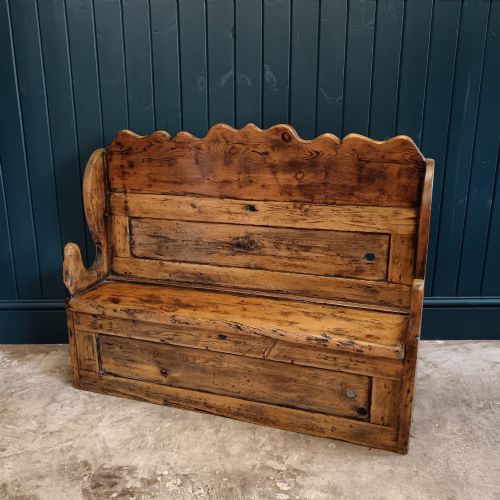
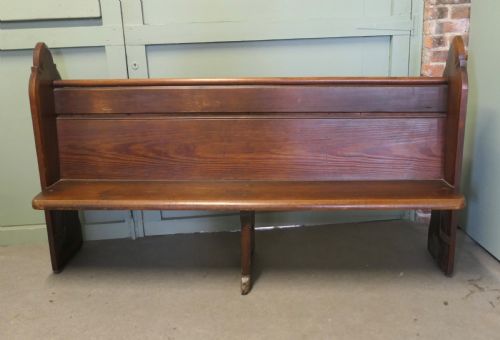
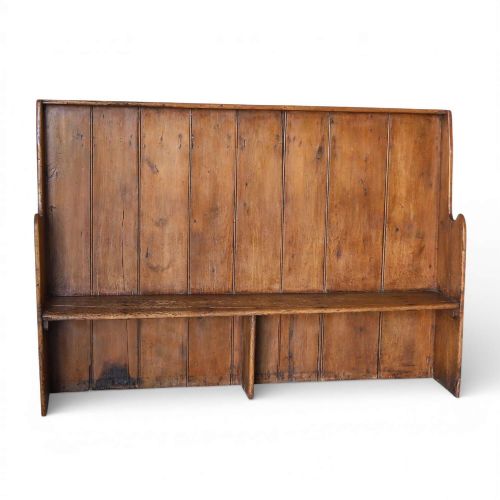
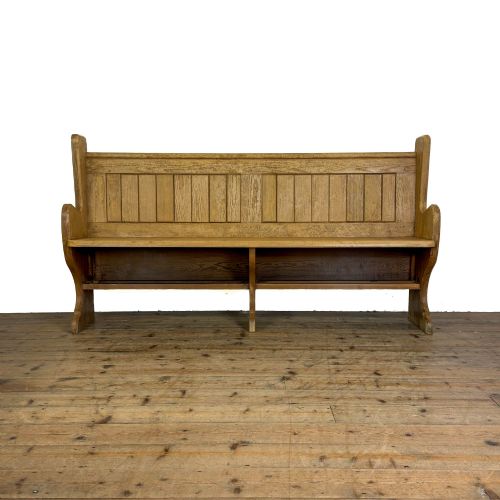


Brown Pine Settle Bench
These brown pine settle bench examples offer solid vernacular seating designed to block draughts and anchor a rustic interior.
Brown Pine Settle Bench
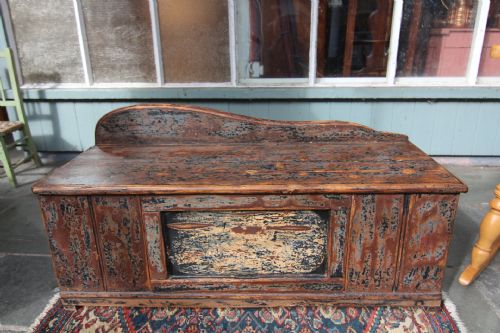
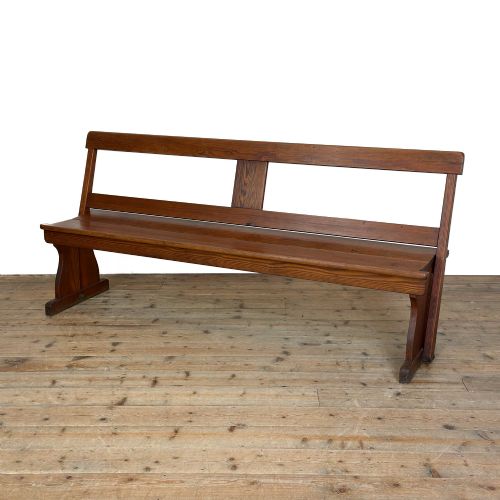
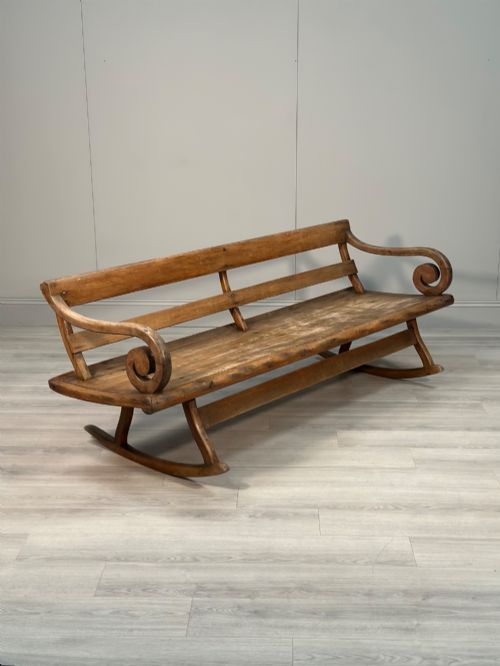
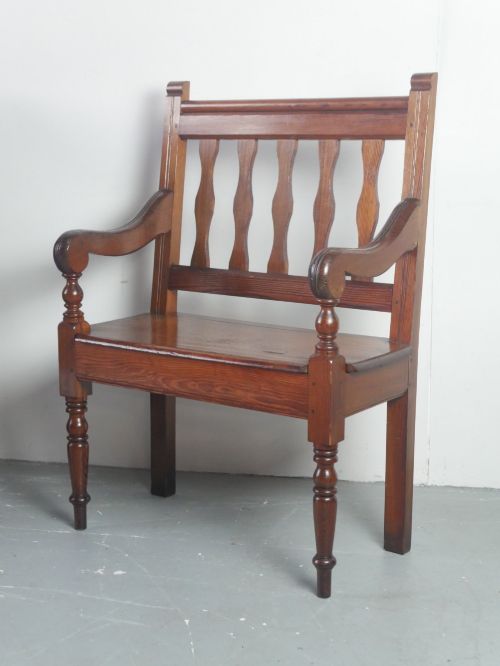
A brown pine settle bench serves as a substantial high-backed seat historically placed near fireplaces to block cold draughts in domestic halls, taverns and churches. These pieces appear in forms such as box seats, panelled hall benches, barrel-backed designs and chair tables from the eighteenth and nineteenth centuries.
The selection here draws primarily upon English, Welsh, Scandinavian, Austrian, Spanish and Italian vernacular traditions. Buyers encounter everything from rustic country styles to Gothic church pews, Arts and Crafts seating and Georgian country pieces fashioned from solid timber.
Materials and construction
Makers utilised native softwoods and hardwoods, predominantly plain pine, pitch pine and elm, sometimes pairing oak elements for structural resilience. Joinery relied on traditional panelled construction, sturdy frame-and-panel techniques and pegged joints capable of supporting heavy daily use.
Many surfaces retain original painted finishes, polychrome details, or warm brown patinas built up through decades of handling and wax polishing. Iron brackets and hinges occasionally reinforce high-stress joints on box seats and pivoting mechanisms.
Several examples double as tables through clever pivoting mechanisms, proving that historical ancestors enjoyed dual-purpose furniture just as much as modern flat-dwellers do.
Distinctions in quality
Quality rests upon the integrity of the original timber and the presence of untouched historical surfaces rather than sterile restoration. Examples featuring original paint, deep patinated wax, and untouched panel construction command greater interest than heavily sanded or stripped equivalents.
Proportion and structural balance also set superior examples apart, particularly in barrel-backed and high-backed forms where the sweep of the timber defines the silhouette. Original hardware, intact storage boxes beneath the seat, and tight joinery elevate the standing of a piece.
The Brown Pine Settle Bench Glossary
- Settle
- A wooden bench with a high back, solid arms and often a closed base designed to keep out cold air. It provides traditional fireside seating.
- Barrel back
- A seating design featuring a curved, enclosing upper back that wraps around the occupant to shield them from draughts. This form appears frequently in Georgian examples.
- Box seat
- A settle variant where the lower portion incorporates a hinged bench lid opening to reveal storage space. It combines seating with domestic utility.
- Vernacular
- Everyday furniture built by local craftsmen using regional materials and traditional methods rather than following high-style academic designs. These pieces reflect distinct local character.
- Patina
- The surface sheen and colour developed by wood over long periods through use, light exposure and polishing. This quality signals age and authentic handling.
Brown Pine Settle Bench: Frequently Asked Questions
Where were settles used historically?
These benches sat in the warmest parts of traditional homes, farmhouses and rural taverns, positioned close to hearths to shield occupants from cold air.
In public houses and churches, they functioned as room dividers and fixed pews, creating semi-private seating areas for patrons and congregants.
How do I care for pine furniture?
Maintain the timber by applying natural beeswax sparingly and buffing it with a soft cloth to preserve the surface sheen without building up sticky residue.
Keep the wood away from direct heat sources and dramatic humidity fluctuations to prevent the pine boards from splitting or warping over time.
Are these benches comfortable to sit on?
Traditional wooden settles feature upright, rigid backs designed for posture rather than lounging, reflecting their historical utilitarian purpose.
Owners frequently add loose squab cushions or sheepskins to the seat bases to increase comfort during extended seating.
How can I tell an older settle apart?
Examine the construction joints, timber movement and surface wear for signs of genuine age, such as hand-planed boards and forged iron fixings.
Older pieces often display subtle asymmetry, tool marks from traditional hand woodworking, and deep patination around the primary touchpoints.