
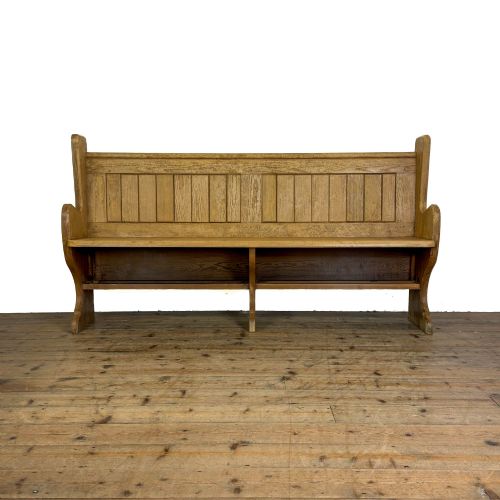
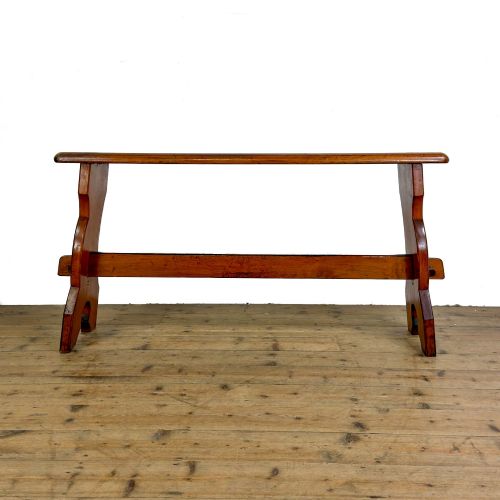
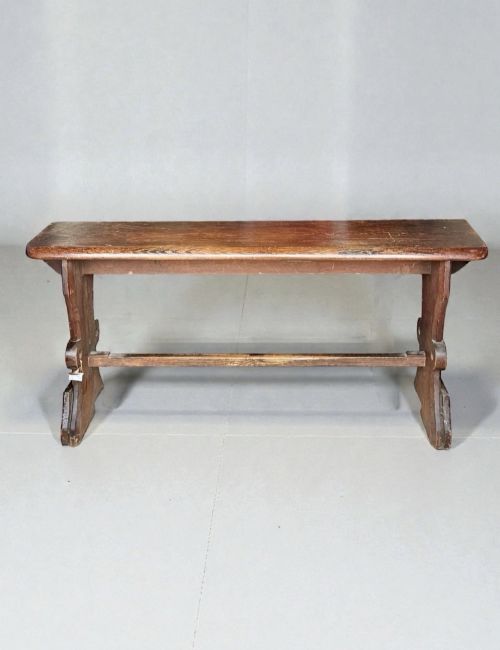


Brown Pine Bench Seat
A brown pine bench seat brings honest grain and sturdy vernacular character straight into a hallway or kitchen.
Brown Pine Bench Seat
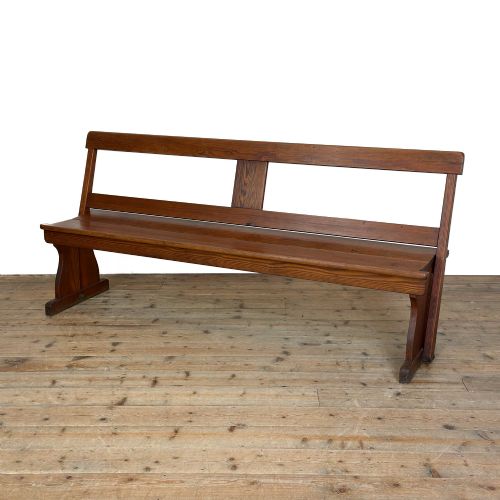
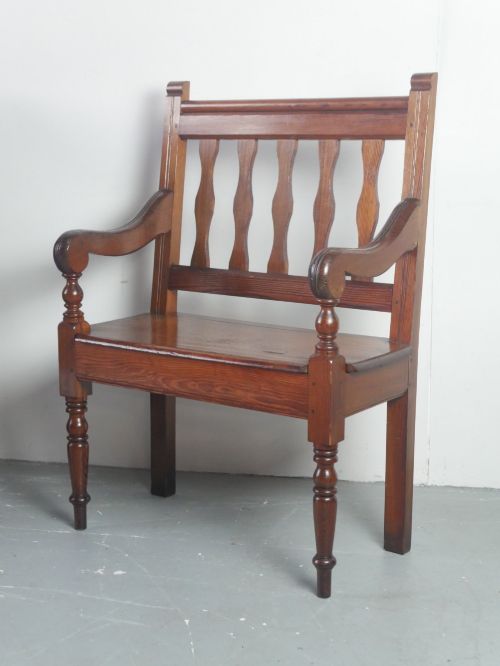
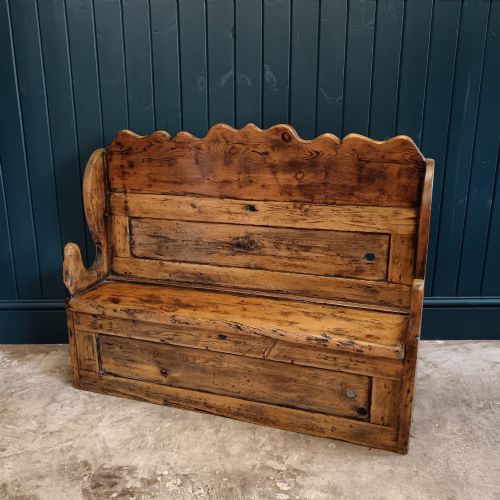
A brown pine bench seat encompasses a wide range of utilitarian seating, from slim hallway benches to high-backed settles and chapel pews. These pieces emerge from domestic, ecclesiastical and transit settings across the eighteenth, nineteenth and early twentieth centuries.
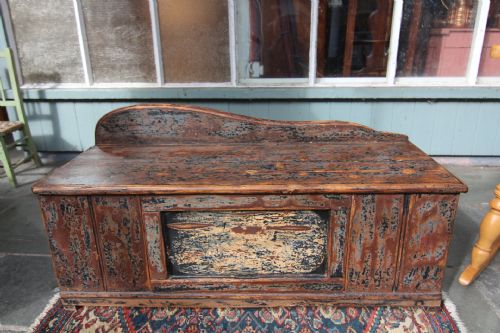
The version most commonly met on this page is the nineteenth century country pine bench, often showing the warmth of a honey brown patina or traces of original painted finishes.
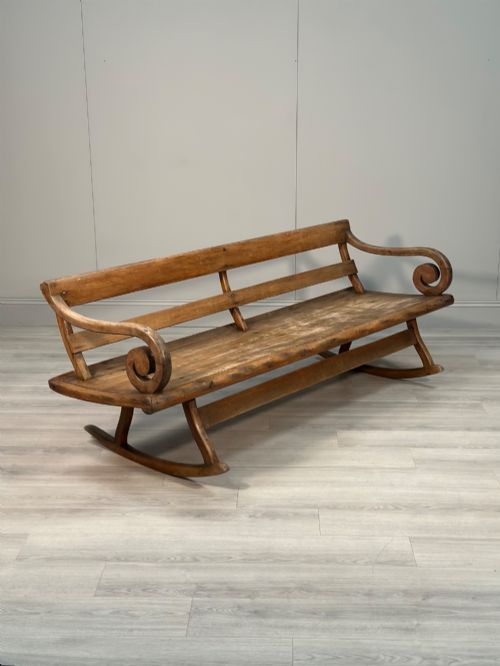
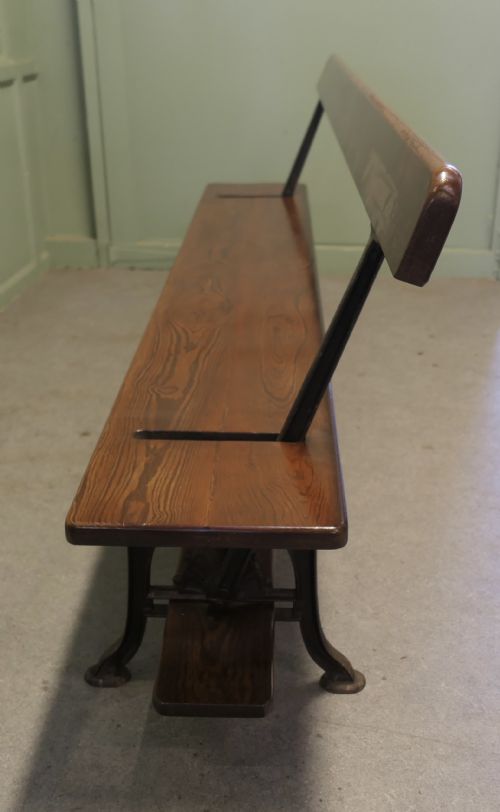
Formations vary from simple long boards on turned legs to enclosed settles with barrel backs or flip-over mechanisms designed for railway coaches and chapels.
Materials and Construction
Makers utilised straight-grained pine and pitch pine alongside secondary timbers such as elm and walnut, fastening structural joints with traditional pegs and iron hardware.
Surfaces were left bare to weather through daily use, treated with clear wax to enrich the natural grain, or coated in layers of paint that now show characteristic crackling and wear.
Listings span the eighteenth, nineteenth and early twentieth centuries, featuring pine, pitch pine, iron, and paint.
Assessing Quality
The distinction between ordinary utility seating and superior examples rests upon the integrity of the timber selection and the retention of untouched surface finishes.
Proportion and structural honesty elevate certain forms, particularly where original painted decoration, deep panelled backs or unusual mechanisms like flip-over seats remain intact.
The Brown Pine Bench Seat Glossary
- Settle
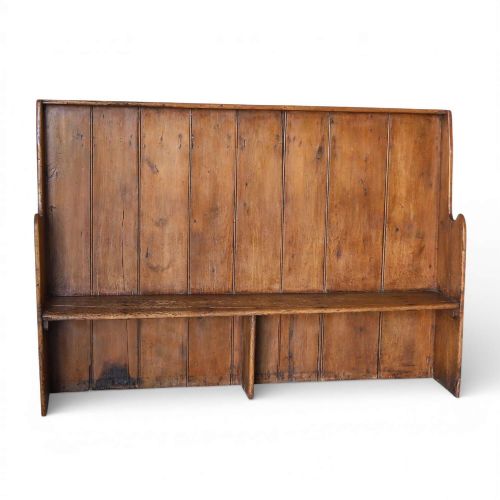
- A wooden bench with a high back, solid arms, and often an enclosed base designed to block draughts in traditional rooms. This form dates back centuries and served as communal seating near the hearth.
- Patina
- The deep sheen and colour developed on wood surfaces over decades of handling and cleaning. It represents the natural ageing process of timber exposed to light and touch.
- Pitch pine
- A dense, resinous variety of pine valued for its durability and strong grain pattern. Nineteenth-century builders frequently selected it for heavy-duty church and institutional furniture.
- Vernacular
- Everyday objects built by local craftspeople using regional traditions rather than high academic styles. These pieces prioritise practical function over ornamental design.
Brown Pine Bench Seat: Frequently Asked Questions
Where should I place a settle?
A high-backed settle works effectively in an entrance hallway to create a defined seating area and block incoming draughts from the door.
Alternatively, position one along a farmhouse dining table to mix relaxed seating with upright chairs.
How do I care for antique pine?
Dust the timber regularly with a dry cloth and apply a traditional beeswax polish sparingly to maintain the surface sheen.
Keep wooden seating away from direct heat sources and strong sunlight to prevent the timber from drying out and splitting.
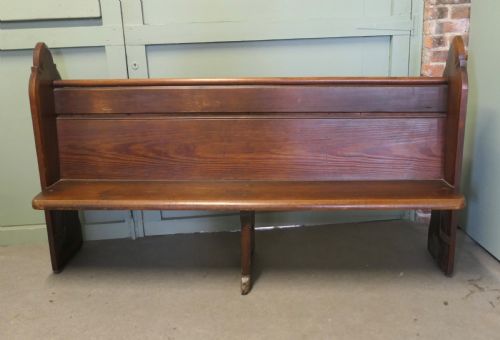
What is a chapel pew?
A chapel pew is a long wooden bench originally built for religious services, often featuring simple panelled backs and open shelving underneath for books.
These linear seats provide straightforward, durable seating suited to long hallways and spacious dining rooms.
Are these benches comfortable?
Many historical wooden benches feature shaped seats and raked backrests designed to support an upright posture during extended sitting.
Adding loose seat cushions or sheepskins softens the timber surface for everyday use.