
Brown Oak Trunk
A brown oak trunk brings deep colour and heavy timber into a room, serving as a robust storage chest that anchors the space.
Brown Oak Trunk
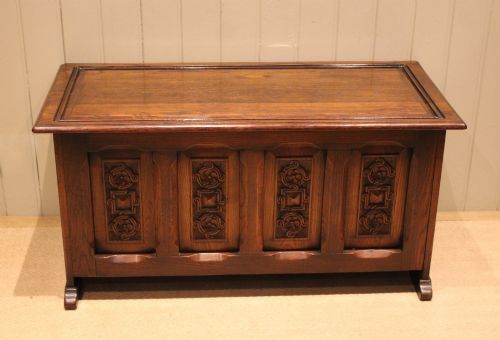
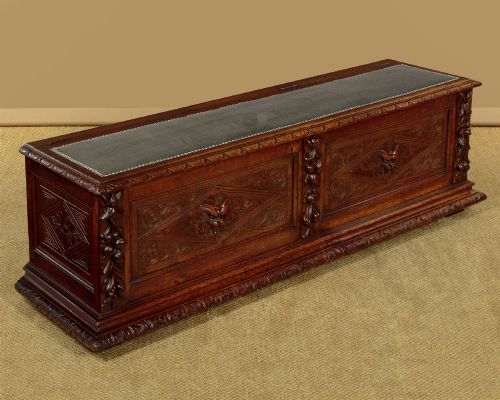
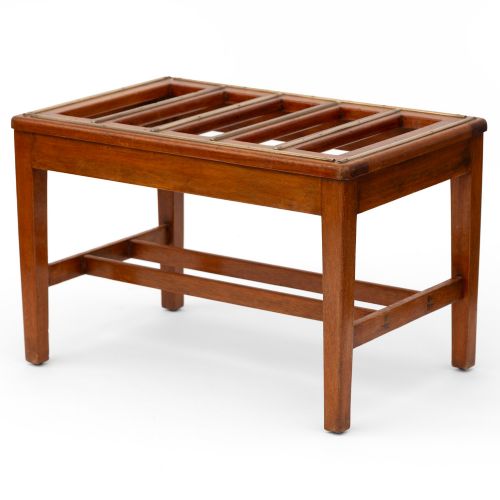
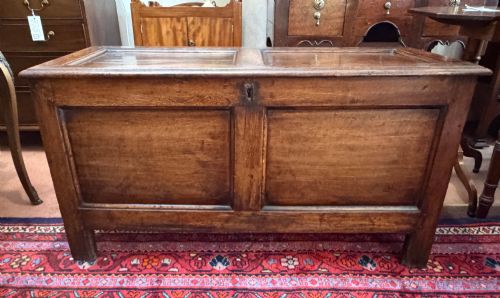
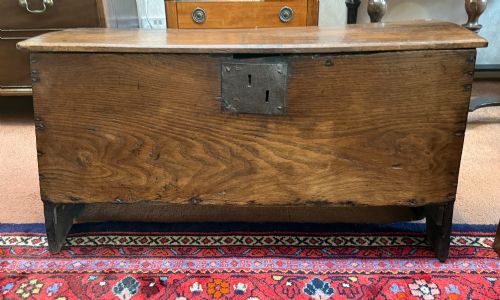
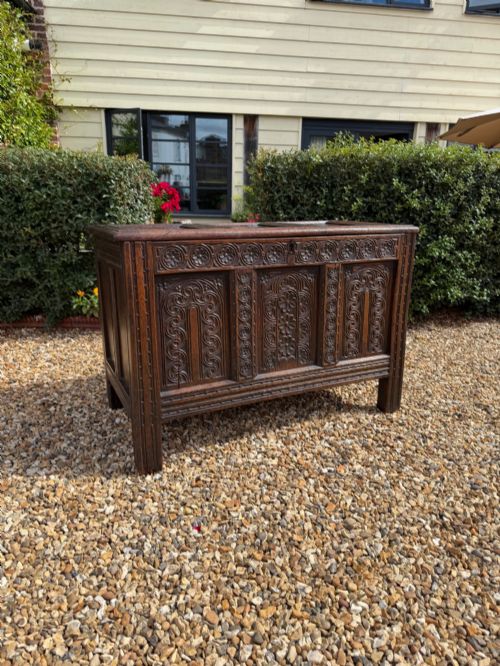
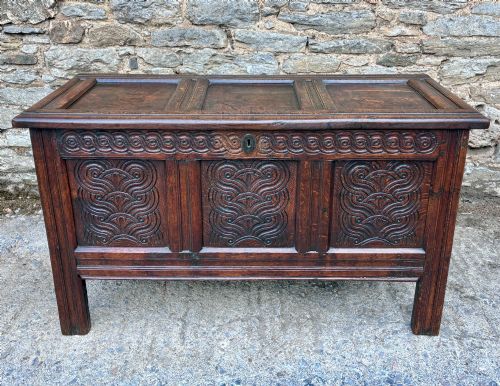
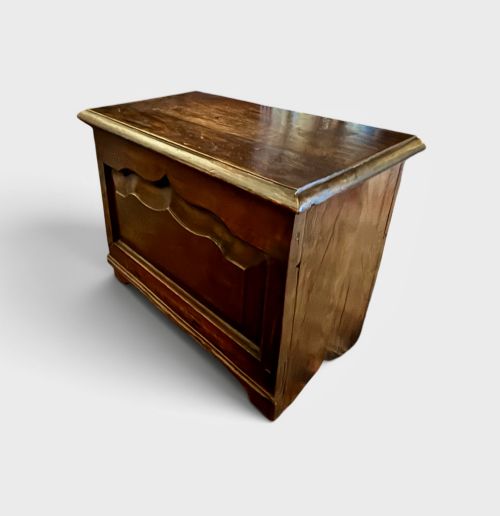
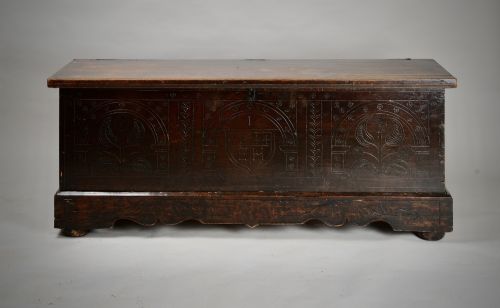
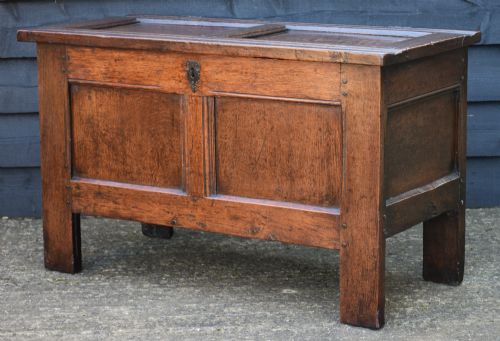
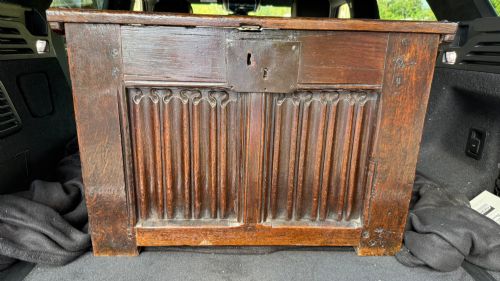
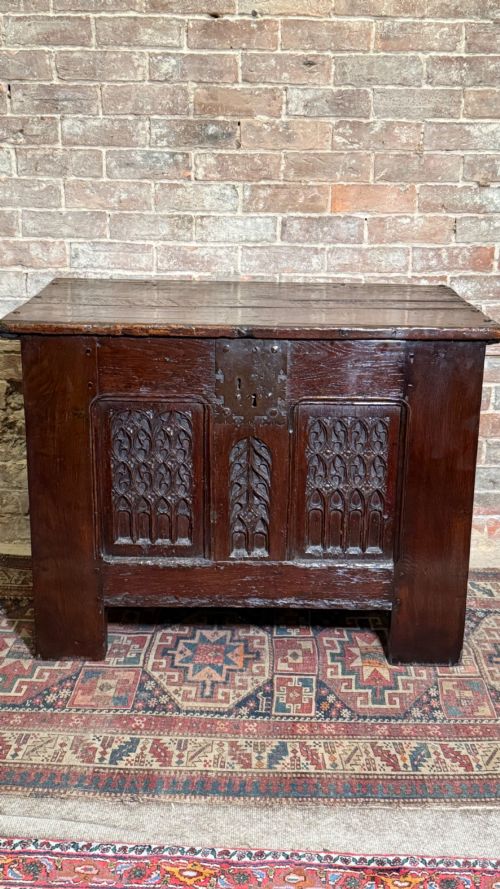
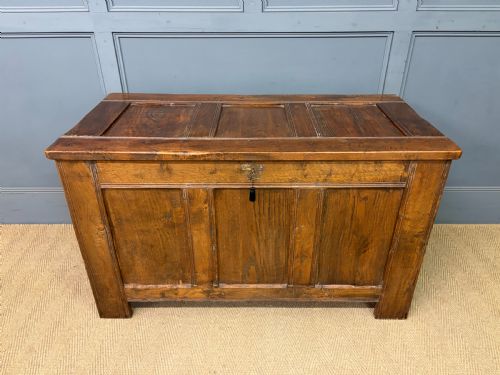
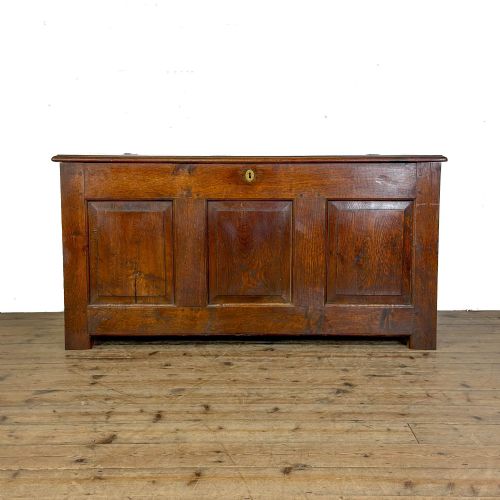
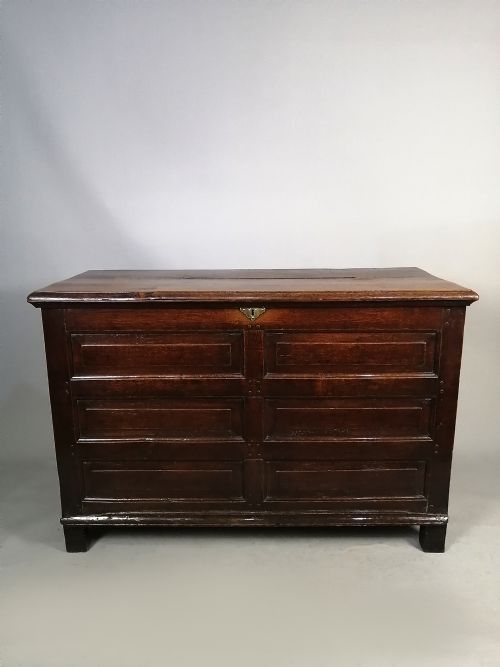
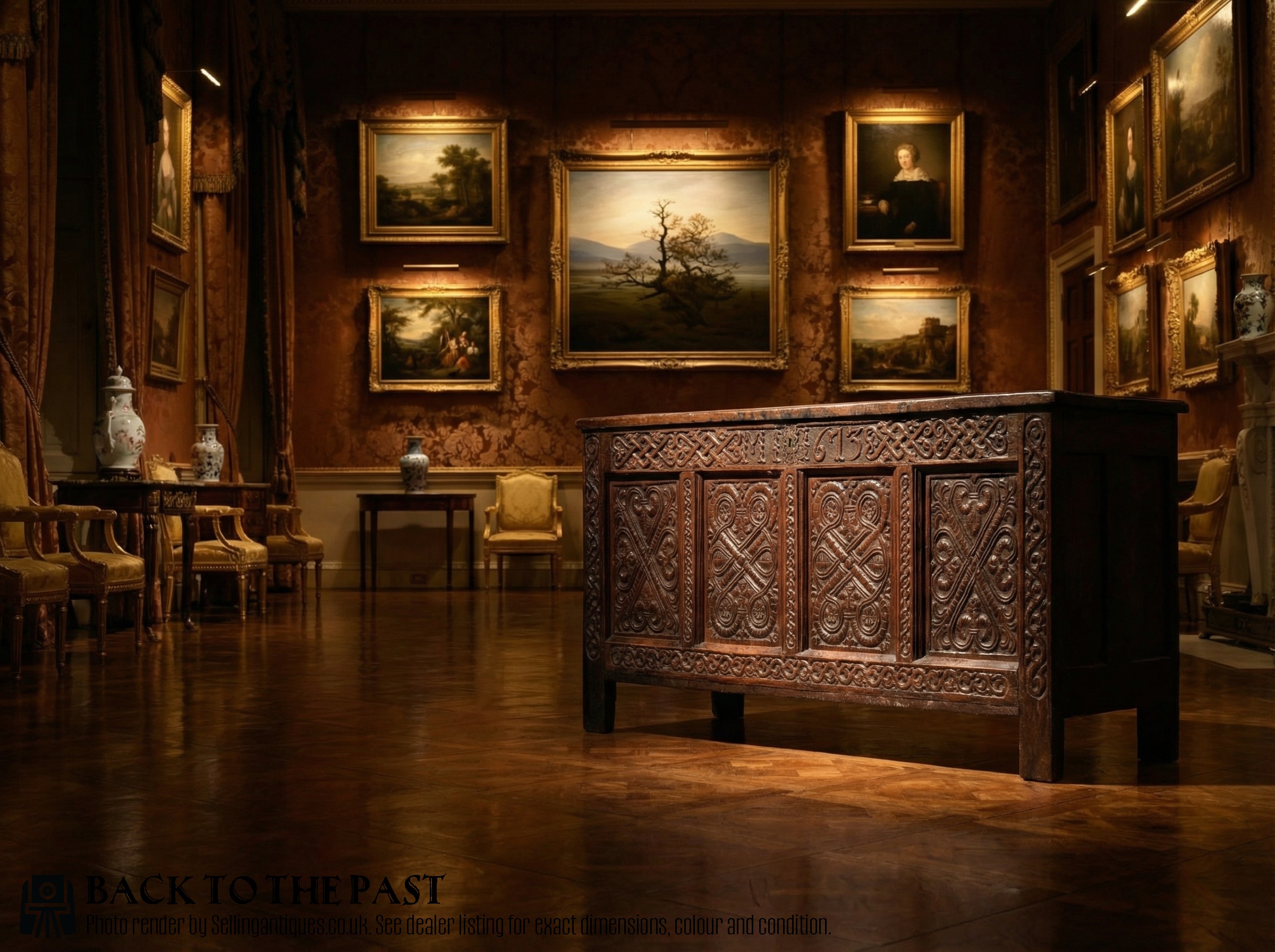
A brown oak trunk encompasses sturdy storage chests, coffers, and blanket boxes built from rich, dark-toned timber across several centuries. Buyers searching for a brown oak trunk encounter forms ranging from medieval and sixteenth-century coffers to seventeenth-century panelled boxes and later Edwardian luggage stands.
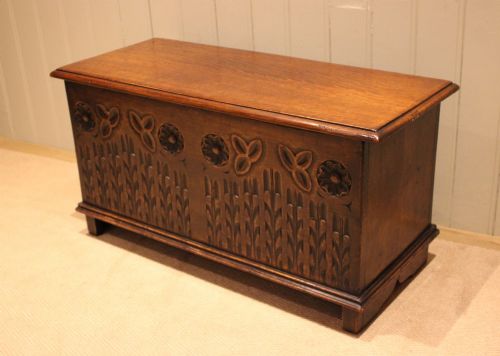
The pieces appearing on this page span the sixteenth, seventeenth, eighteenth, and nineteenth centuries, alongside revival pieces and Edwardian luggage stands. Plain panelled boxes and heavily carved coffers form the core of what is available.
Origins vary from English provincial workshops to continental examples, including Flemish and French pieces. Many function equally well as window seats, ottomans, or heavy storage chests in modern settings.
Materials and construction
Makers utilised solid oak, often complemented by iron hinges, brass fittings, and wrought iron hardware to secure the heavy timber lids and bodies. Wood inlay and ebonised wood details appear on selected examples to accent the panels.
Joinery methods rely on traditional framing and panel construction, allowing the solid oak to expand and contract with seasonal humidity without splitting. Hand-carved fluting and surface details appear on sixteenth and seventeenth-century variants.
Brown Oak Trunk Retail Price Guide 2026
Typical asking prices for brown oak trunk among the pieces listed under this phrase on Sellingantiques today, from the lower quarter to the upper quarter. They describe what is for sale here now, not the wider market.
Some seventeenth-century coffers still carry the faint aroma of the linens stored inside them four hundred years ago.
Assessing quality
Quality rests upon the integrity of the solid timber and the depth of the natural patina accumulated over centuries of use. Untouched surfaces with original hardware stand apart from pieces subjected to extensive later alterations.
The crispness of the hand-carving on seventeenth-century panels distinguishes finer workshop production from simpler vernacular work. Proportions also dictate desirability, with smaller proportions and miniature coffers commanding particular attention.

The Brown Oak Trunk Glossary
- Coffer
- A heavy wooden chest traditionally used for storing valuables, documents, or textiles. These sturdy boxes often feature hinged lids and panelled construction.
- Panelled coffer
- A storage chest constructed with a frame and floating central panels. This traditional technique accommodates wood movement.
- Campaign chest
- A portable trunk or chest designed for travel by military officers. These items typically feature recessed brass handles and reinforced corners.
- Luggage stand
- A raised rack or low bench designed for holding travel trunks or suitcases. Edwardian examples often incorporate slatted wooden tops.
- Patina
- The surface sheen and mellowing developed by wood over long periods of handling and exposure to light. A deep patina indicates age.
Brown Oak Trunk: Frequently Asked Questions
How do I use a brown oak trunk at home?
These trunks serve well as blanket boxes at the foot of a bed or as coffee tables in a living room.
Their sturdy lids also allow them to function as window seats or benches when topped with cushions.
How do I date an old oak trunk?
Examine the construction methods, tool marks, and hardware, as hand-wrought iron hinges differ significantly from later brass mechanisms.
Panel styles and carved motifs typically reflect the prevailing design periods of the sixteenth, seventeenth, or eighteenth centuries.
Are these trunks made of solid oak?
The listings feature substantial solid oak timber across historical periods, supplemented by iron and brass hardware.
Some pieces incorporate secondary woods for internal structures while maintaining solid oak exteriors.
What is the difference between a coffer and a trunk?
A coffer strictly refers to a heavy, panelled chest built with frame-and-panel joinery, often associated with earlier centuries.
Trunks and luggage stands encompass a broader range of travel and storage forms from the Victorian and Edwardian eras.