

Brown Oak Chair
A brown oak chair brings deep timber grain and enduring timber structure into a room, spanning centuries of English cabinet-making and country craftsmanship.

Brown Oak Chair
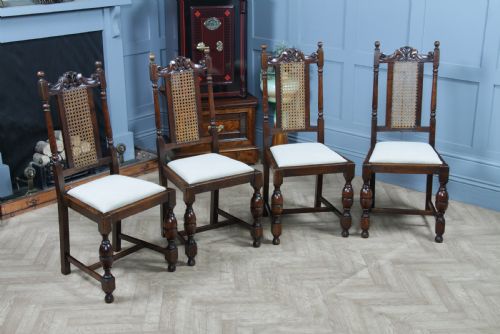
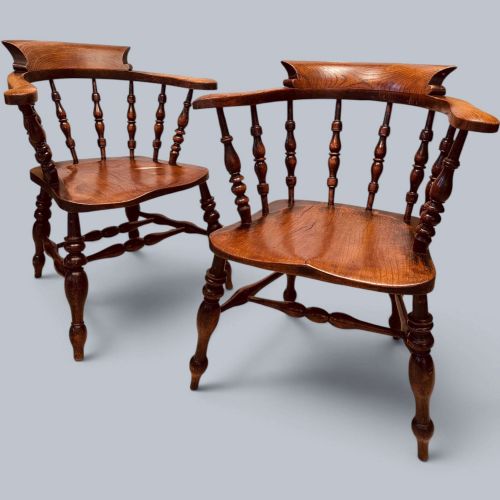
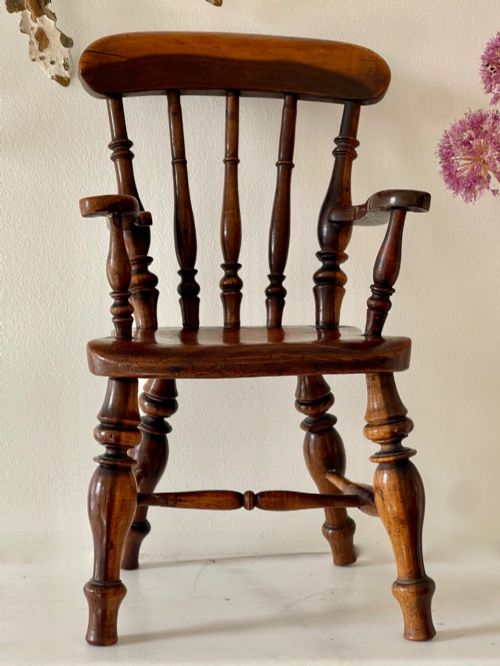
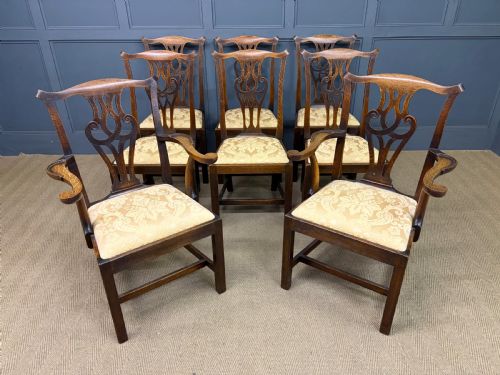
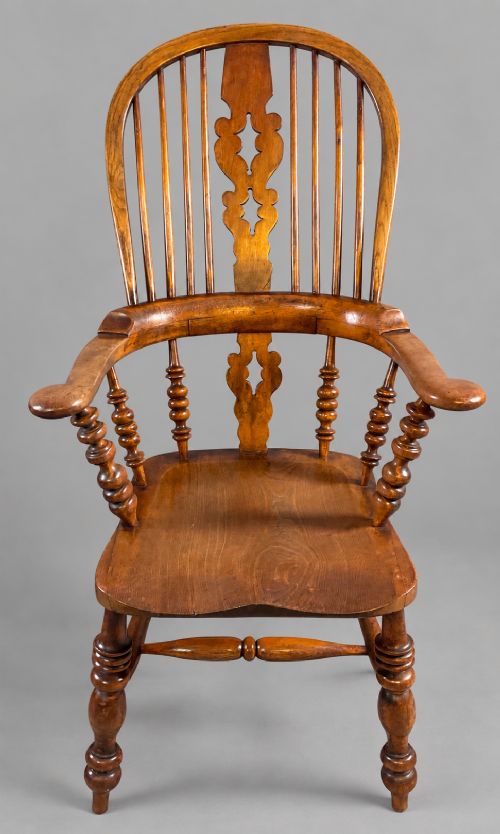
A brown oak chair encompasses a wide range of forms designed for dining, resting, and working, from sturdy kitchen armchairs to formal dining sets. When exploring a brown oak chair selection, you will frequently encounter country Windsor designs, heavy Victorian library seating, and refined Georgian styles.
The material itself defines these pieces, showcasing the rich, deep tones characteristic of seasoned English timber. Makers utilised this dense wood to build enduring furniture that ranges from simple vernacular forms to elaborate revival styles.
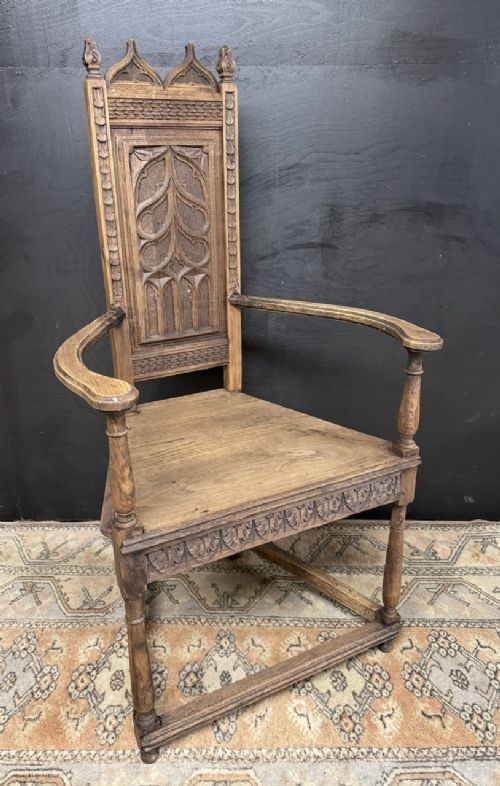
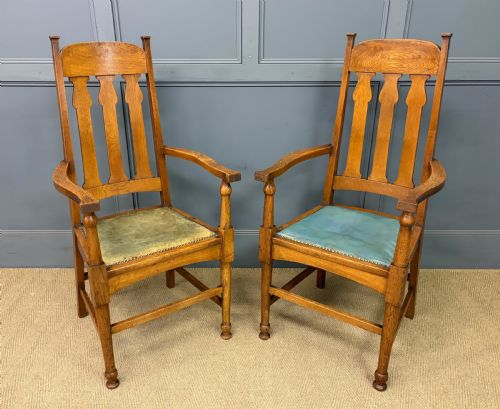
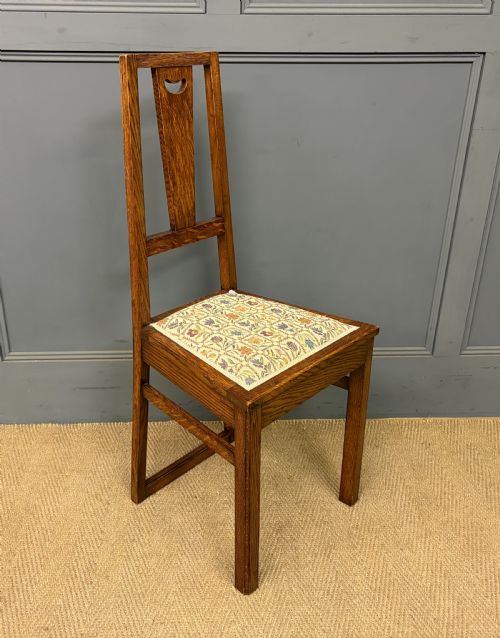
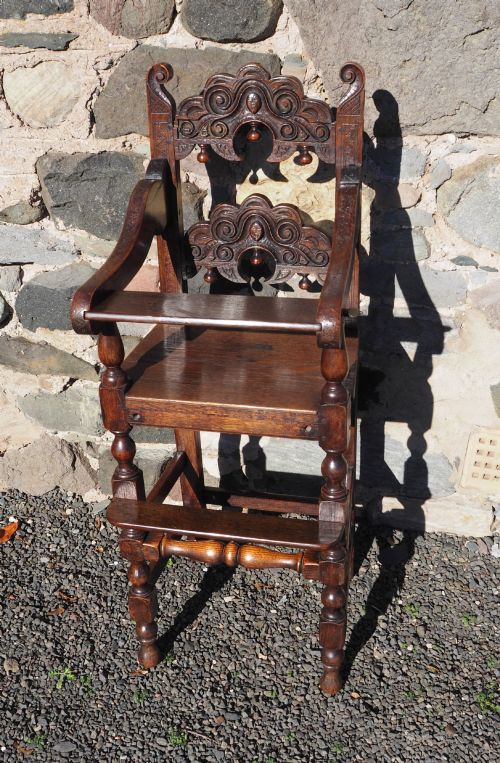
The collection here moves from 17th-century wainscot chairs up to early 20th-century library and desk seating. Pieces span domestic interiors of the Georgian and Victorian eras, demonstrating how vernacular and formal traditions adapted the timber over generations.

How they were made
Carpenters and joiners built these seats using solid timber framing, frequently combining oak with secondary woods such as elm, beech, and ash for structural integrity. Joints were typically pegged or dowelled, ensuring the frames could withstand daily domestic use.
Many vernacular examples feature turned spindles and shaped seats, while others incorporate rush, leather, or fabric upholstery. Makers also applied decorative elements like bobbin turning, carving, and embossed leather to enhance formal dining and library chairs.
Brown Oak Chair Retail Price Guide 2026
Typical asking prices for brown oak chair among the pieces listed under this phrase on Sellingantiques today, from the lower quarter to the upper quarter. They describe what is for sale here now, not the wider market.
The listings span multiple centuries, incorporating 17th, 18th, 19th, and early 20th-century examples alongside Victorian and Georgian periods.
What varies in quality
The distinction between ordinary and superior pieces often lies in the depth of the timber grain and the integrity of the original construction. Better examples retain their structural joinery without excessive timber replacement, displaying crisp turning and balanced proportions.
The presence of integrated elements such as original rush seats, period leather upholstery, or untouched surface finishes elevates a piece. Variations in carving detail and the clever pairing of contrasting timbers like walnut or cherrywood also mark out the finer tiers.
Morris and Co·Liberty
The Brown Oak Chair Glossary
- Windsor chair
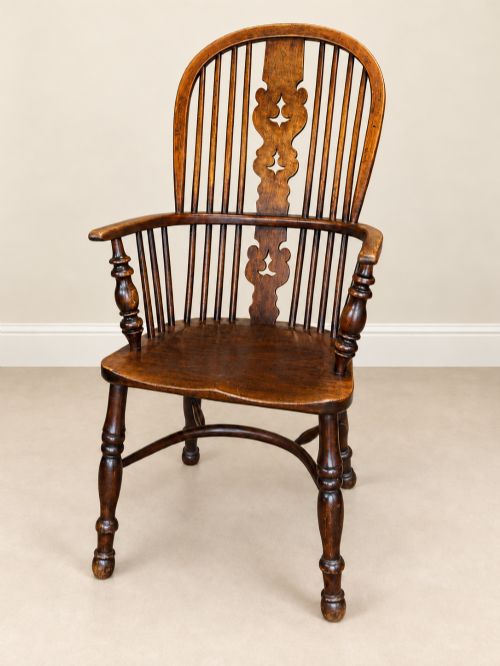
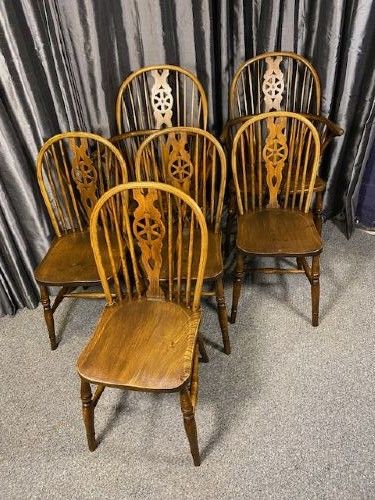
- A wooden chair built with a heavy solid timber seat into which the legs and back spindles are direct-tenoned. These country classics often feature bow backs or comb pieces.
- Wainscot chair
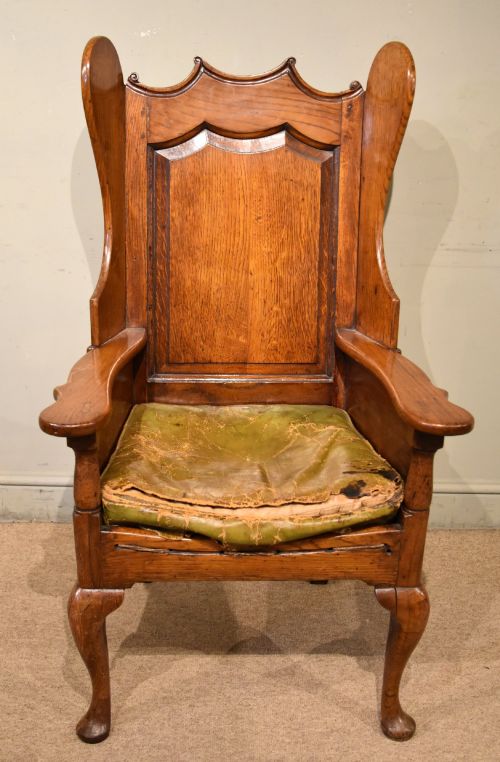
- An early form of heavy wooden armchair constructed with panelled backs and solid armrests. They represent some of the earliest domestic seating found in English interiors.
- Sgabello
- A Renaissance-style hall chair featuring a wooden seat supported by solid vertical slabs rather than traditional legs. They were primarily intended for hallways and formal entryways.
- Bobbin turning
- A form of woodturning characterised by a succession of rounded, bead-like shapes resembling spools of thread. It is commonly found on the legs and stretchers of 17th and 18th-century seating.
- Rush seat
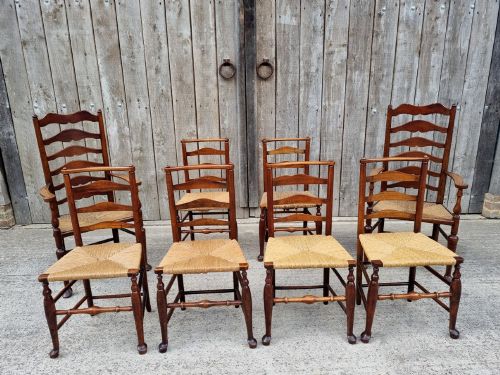
- A seating surface woven from dried marsh rushes tightly wound around a wooden frame. This technique creates a durable, textured base typical of country and Arts and Crafts chairs.
Brown Oak Chair: Frequently Asked Questions
How do I identify a Georgian chair?
Georgian seating from the 18th century often displays restrained classical proportions, elegant cabriole or straight legs, and solid timber construction without excessive ornamentation. Cabinet-makers focused on functional harmony and sturdy joinery during this period.
Look closely at the underside and joints for signs of period hand-tooling, pegged construction, and the dense grain patterns typical of English timber used before industrial manufacturing standardisation.
What is a Windsor chair?
A Windsor chair is a vernacular seating form characterised by a thick wooden seat that acts as the central anchor for turned legs below and slender spindles supporting a curved back above. They originated in English country workshops.
These pieces were built for utility and comfort in kitchens, farmhouses, and cottages, relying on clever mechanical joinery rather than heavy upholstery to provide durable support.
How should I care for timber chairs?
Maintaining vintage wooden seating involves keeping them away from direct heat sources and sudden humidity changes to prevent the timber from splitting or warping. Regular dusting with a soft cloth preserves the natural finish.
Avoid modern silicone polishes, opting instead for traditional beeswax applied sparingly to nourish the wood grain and maintain the historical patina developed over generations of use.
Are rush seats durable?
Rush seating woven from dried marsh grass offers surprising strength and flexibility for daily domestic use. When properly maintained, these woven pads distribute weight evenly across the wooden frame.
To preserve rush seats, keep them in dry environments and avoid placing heavy pointed objects directly onto the woven strands, which can snap the natural fibres over time.