



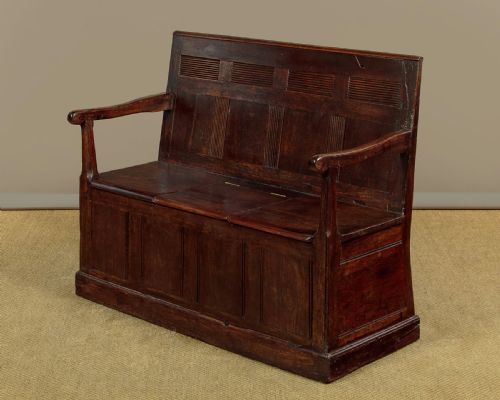

Brown Oak Box Settle
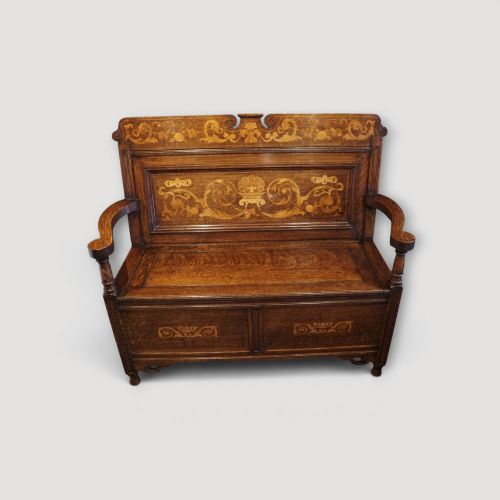
These heavy timber seats bring genuine age into a room, offering high backs and concealed storage beneath.
Brown Oak Box Settle
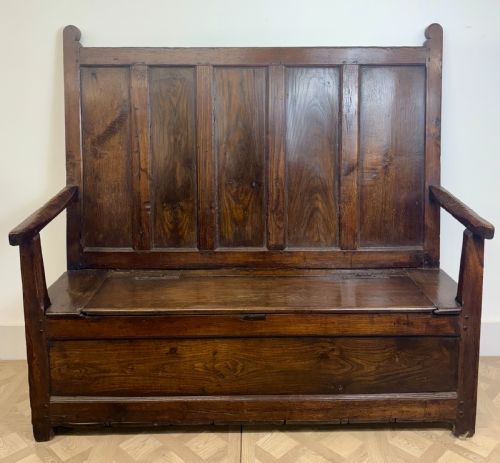
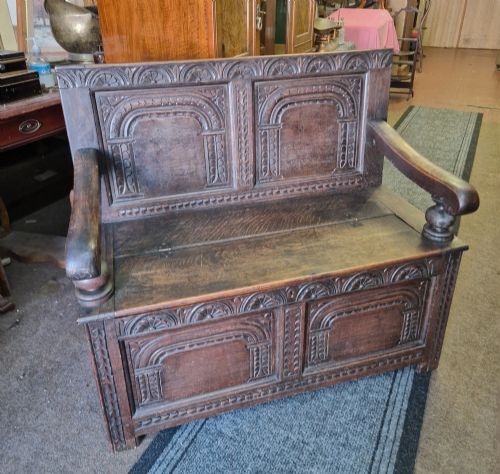
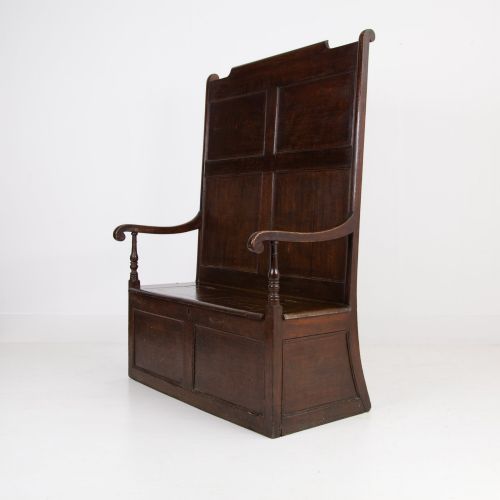
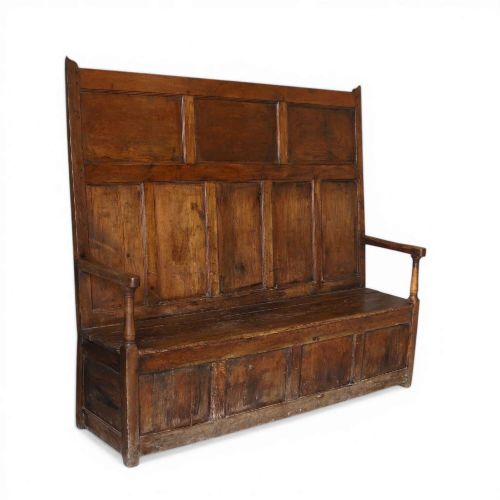
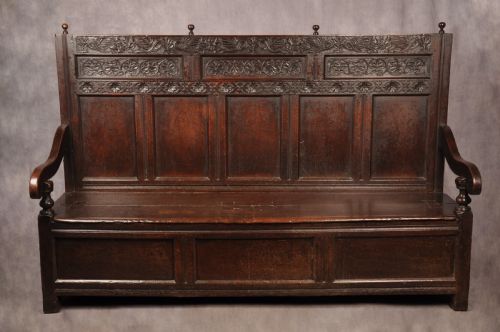
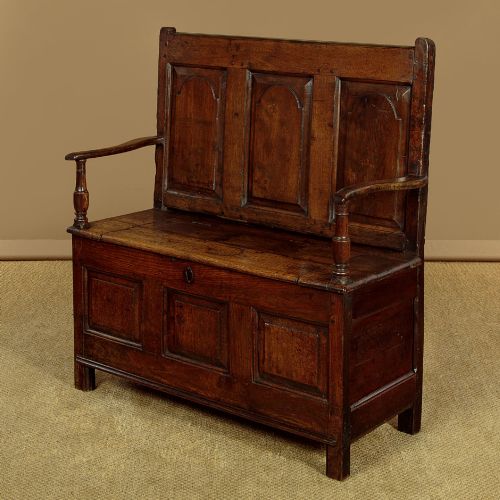
A brown oak box settle combines a high timber back with a enclosed storage chest beneath the seat, serving as both a bench and a compartment. You will encounter forms spanning the seventeenth, eighteenth, and nineteenth centuries, often showing regional country styles.
Many examples incorporate secondary woods such as elm, ash, or iron hardware, reflecting traditional rural construction. The high panelled back was originally designed to block cold draughts in large farmhouse kitchens and halls.
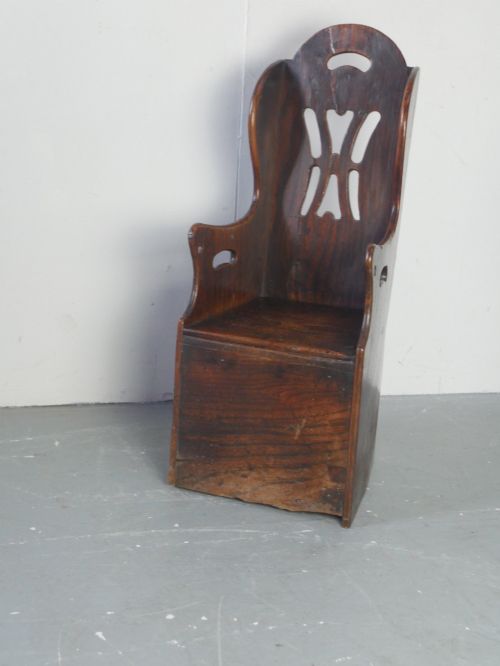
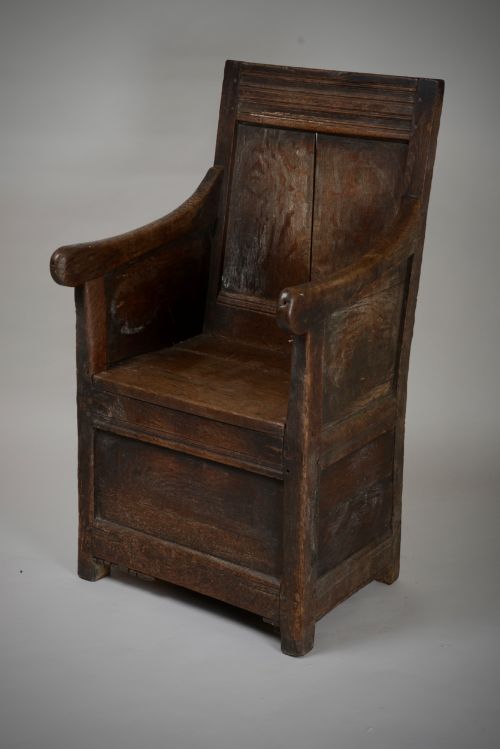
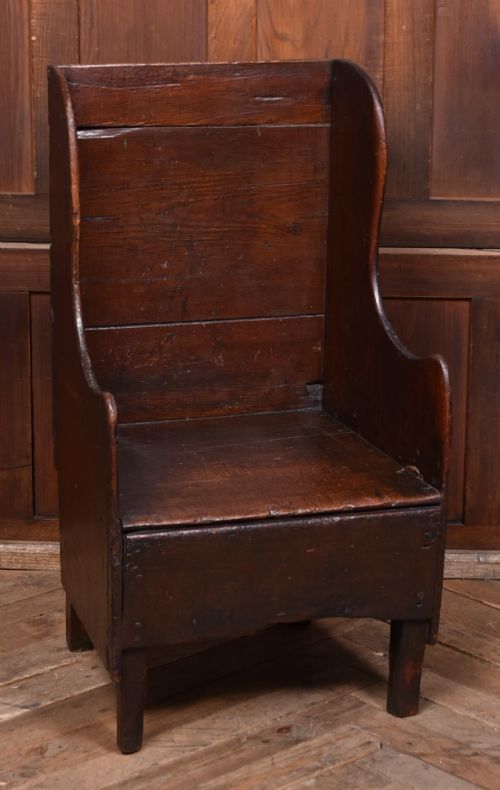
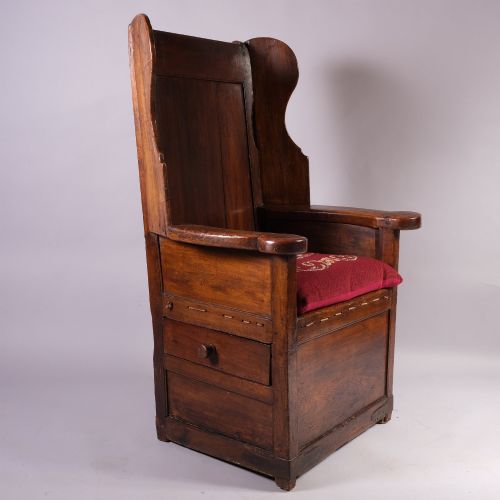
Variants range from compact child sizes and lambing chairs to large Georgian hall benches and panelled tavern settles. The timber typically develops a rich, dark patination over centuries of daily use.
Materials and construction
Construction relies heavily on solid oak, frequently paired with elm and ash for structural members or secondary panels. Joinery utilises traditional pegged mortise and tenon joints to withstand heavy household demands.
Iron hinges, latches, and straps are common additions that secure the box lids and reinforce arm joints. Surfaces are worked with hand planes and adzes, leaving tool marks that reveal the early methods of manufacture.
Brown Oak Box Settle Retail Price Guide 2026
Typical asking prices for brown oak box settle among the pieces listed under this phrase on Sellingantiques today, from the lower quarter to the upper quarter. They describe what is for sale here now, not the wider market.
Early country makers occasionally incorporated hidden side compartments into lambing chairs for storing small farm ledgers.
Judging age and craftsmanship
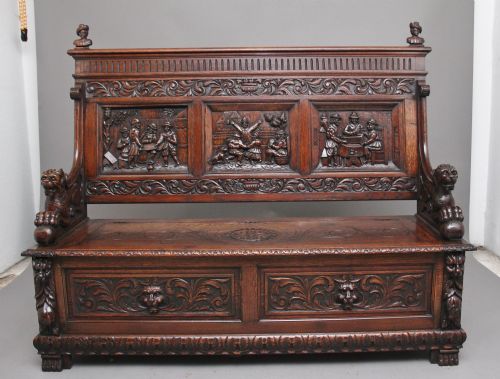
Quality rests on the depth of the timber patination, the integrity of the original joints, and the survival of the integral box base. Earlier seventeenth-century pieces display heavier panel construction and carved details, whereas later nineteenth-century examples often feature machine-sawn elements or decorative Victorian carving.
The proportion of the high back relative to the seat box dictates the visual balance of the piece. Unaltered timber surfaces without excessive modern restoration command greater interest from traditional collectors.
The Brown Oak Box Settle Glossary
- Box settle
- A wooden bench featuring a enclosed chest or compartment beneath the hinged seat. This design provided secure storage and draught protection in early domestic interiors.
- Lambing chair
- An enclosed wooden armchair with high wings designed to shield the occupant from cold draughts. These often feature solid panel construction and small side compartments.
- Panel-back
- A construction method utilising wooden frames fitted with flat or raised central boards. This technique accommodates seasonal wood movement while providing structural rigidity.
- Tavern settle
- A long high-backed bench historically utilised in public houses and inns. They are built from robust timbers to withstand heavy public use.
- Patina
- The surface sheen and colour developed by wood over long periods of handling and exposure. It serves as a key indicator of genuine antique age.
Brown Oak Box Settle: Frequently Asked Questions
What is a box settle used for?
These pieces served as multi-purpose furniture in historical homes, providing seating by the hearth and a secure chest for blankets or household stores. The high back also functioned as a barrier against cold household draughts.
Today, they suit entrance halls or living spaces where they continue to offer practical seating alongside hidden storage for bulky items.
How do I date a wooden settle?
Dating relies on examining the joinery methods, tool marks, and hardware types used in the construction. Earlier seventeenth-century examples typically show hand-split boards, pegged joints, and heavy framing.
Later nineteenth-century pieces often incorporate machine-cut timber, different hinge styles, or applied Victorian decorative carving that distinguishes them from earlier vernacular work.
Will a large settle fit in my hallway?
These benches have deep seats and high backs that project significantly into a room. Measuring both floor space and doorway clearances is essential before placement.
Consider the height of the back panel, as low ceilings or stairwell turns can complicate delivery and positioning within a modern home.
Are these benches comfortable to sit on?
Historical timber seats were built for utility rather than modern cushioned lounging. They encourage an upright posture and are well suited for short periods of sitting.
Many owners add loose squab cushions or sheepskins to the wooden seat base to soften the surface for everyday domestic use.