




High Back Monks Bench
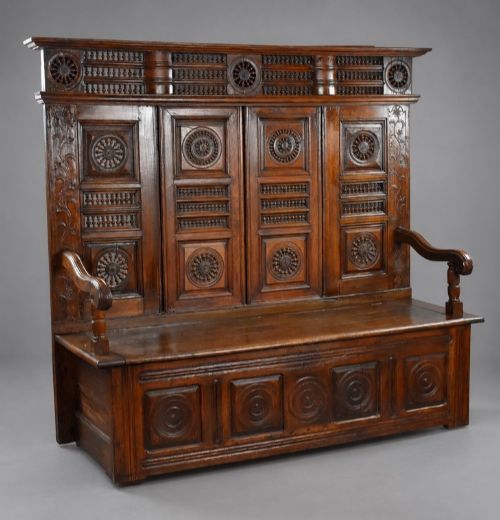
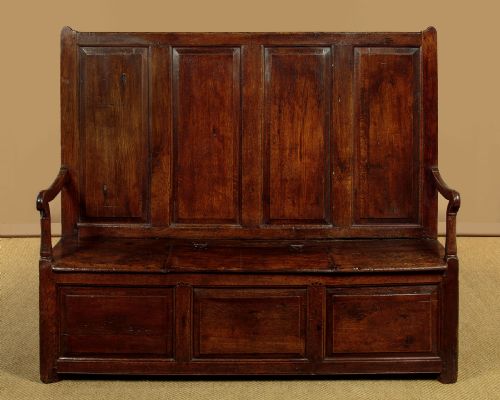
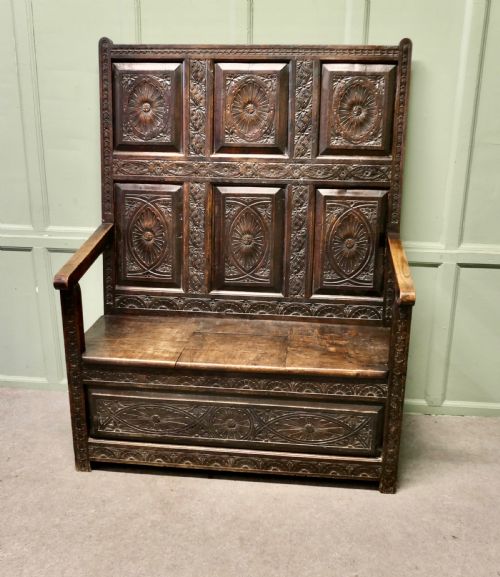
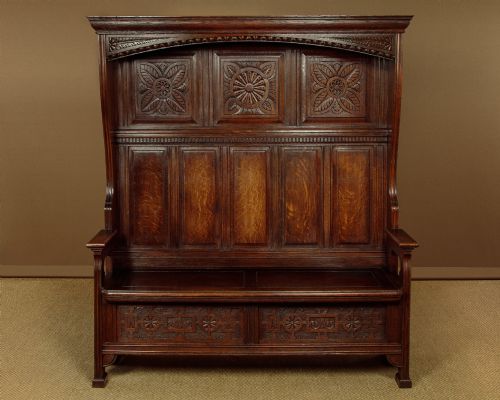
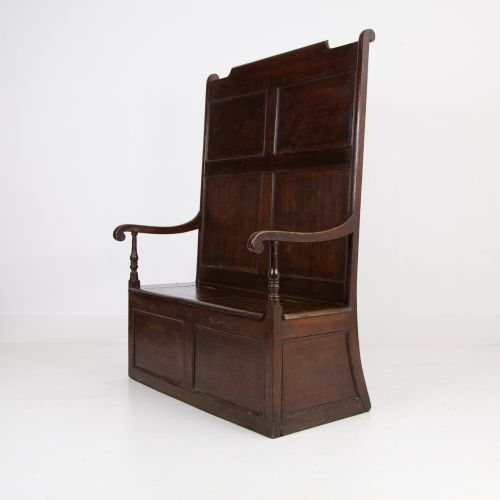
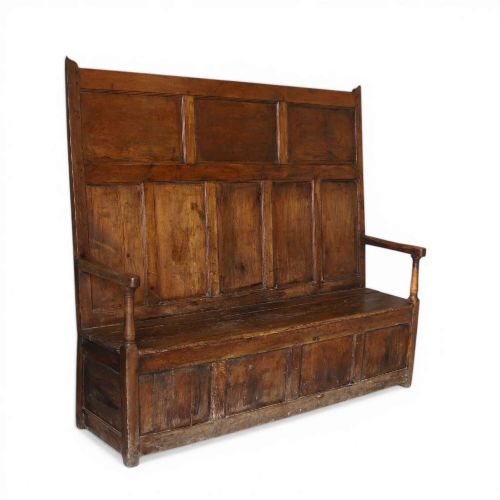
These high back monks bench pieces provide solid seating and hidden storage, offering a commanding presence in hallways and rooms.
High Back Monks Bench
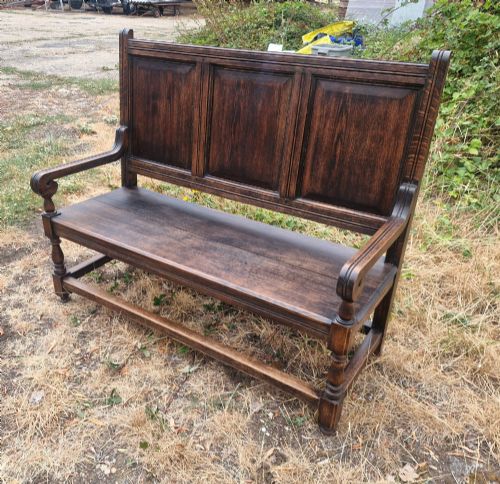
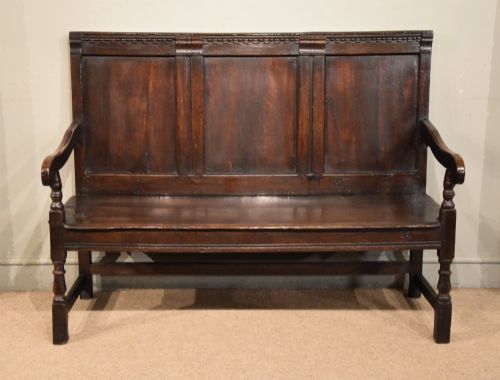
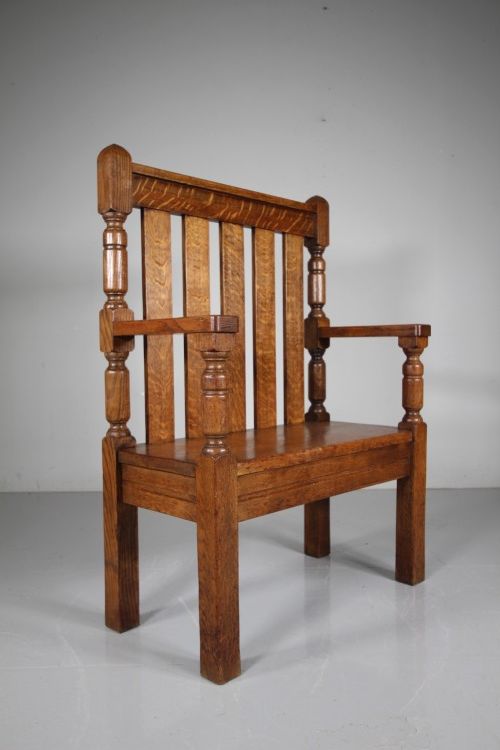
A high back monks bench serves as a substantial seat with a tall rear panel designed to block cold draughts in older rooms. Most examples met on this page date from the 17th, 18th, and 19th centuries, though Edwardian and later interpretations also appear.
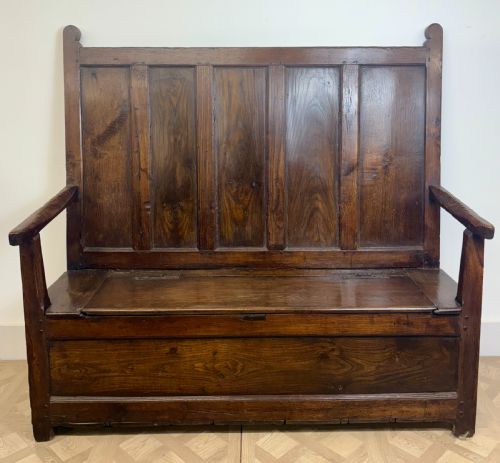
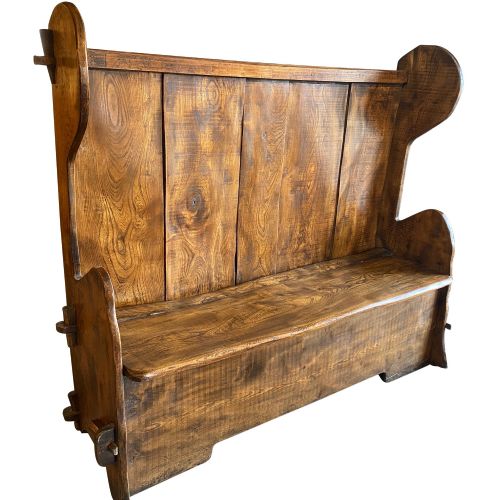
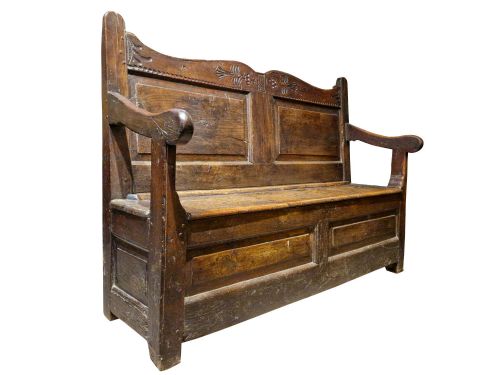
Forms include box settles with lift-up seats for storage, panel-back designs, and canopy tops. These pieces originate from various regions including England, Wales, France, and Italy, reflecting local vernacular traditions.
How They Were Made
Joiners built these frames primarily using solid oak, alongside elm, ash, pine, and walnut, often employing traditional panel and frame construction. Many examples feature hand-carved ornamentation on the high backs, displaying motifs from Jacobean, Georgian, and Arts & Crafts styles.
Secondary materials like iron hardware and fabric upholstery appear on select pieces, while others retain original paint finishes or bleached surfaces from centuries of use.
Some benches kept the shepherd warm on Catalan hillsides before finding their way indoors.
What Varies in Quality
Depth and crispness of hand-carving separate standard vernacular joinery from finer workshop productions. The integrity of the timber, the retention of original surface finishes, and structural solidity also dictate the distinction between examples.
Liberty
The High Back Monks Bench Glossary
- Box settle
- A wooden bench featuring a compartment beneath the seat accessed by lifting the lid. This storage space held blankets and household items in period homes.
- Wainscot
- A style of wooden panelling utilising pegged mortise and tenon joints. This method formed the sturdy backrests of early benches.
- Vernacular
- Architecture and furniture built by local craftsmen using regional materials and traditional designs. These pieces serve functional daily needs without high academic styling.
- Canopy top
- A projecting wooden hood built over the top of the backrest. This architectural feature protected the sitter from overhead draughts.
High Back Monks Bench: Frequently Asked Questions
What is a high back monks bench used for?
These benches provided seating by the hearth while offering a tall barrier against cold draughts in large rooms.
The integrated box seat also doubled as practical storage for textiles and household goods.
How do I tell an 18th-century bench apart from a Victorian copy?
Earlier examples exhibit natural timber ageing, hand-cut peg joins, and subtle tool marks from period hand planes.
Victorian and later revivals often display heavier, more machine-assisted carving and uniform surface patination.
Are these benches suitable for modern hallways?
Their tall backs create a strong architectural focal point while the bench seat offers a convenient place to put on shoes.
Models with box storage underneath also help keep entryways tidy.
What woods were commonly used?
Oak forms the primary material for the vast majority of these regional and revival pieces.
Elm, ash, pine, and walnut also appear across specific English, Welsh, and continental examples.