

Brown Oak Bedside Table
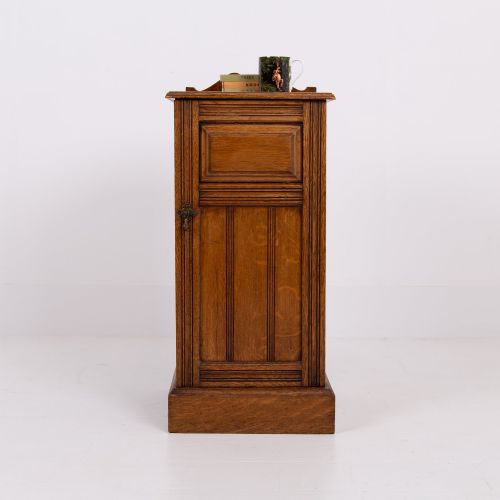
A brown oak bedside table brings deep warmth and heavy grain into a bedroom, offering a sturdy surface for a lamp and a book.
Brown Oak Bedside Table
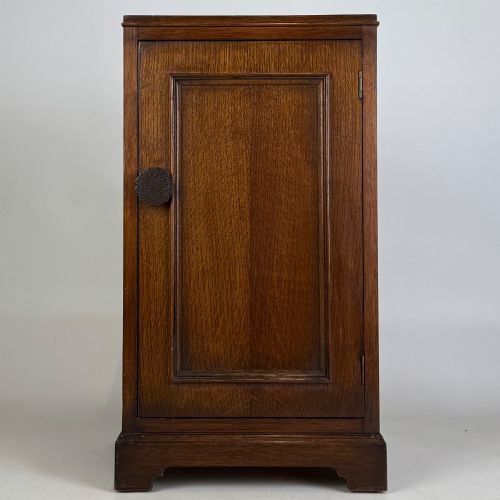
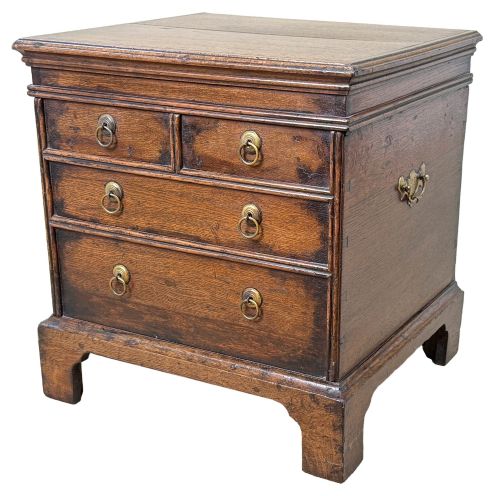
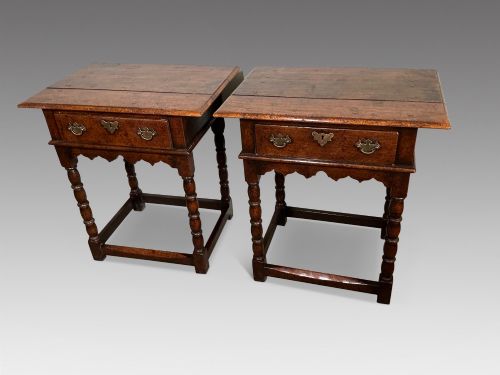
When you search for a brown oak bedside table, you are looking at small timber furniture designed to sit beside a bed, though the term covers side cabinets, cupboards, and low chests. These pieces span several centuries, reaching from the Georgian period through the Victorian era and into the Art Deco styles of the twentieth century.
You are most likely to meet twentieth-century examples, particularly from the Edwardian era and the nineteen-twenties, alongside French provincial designs and sturdy English country forms. The selection also includes functional variants such as close stools and small drawer chests adapted for bedside use.
How they were made
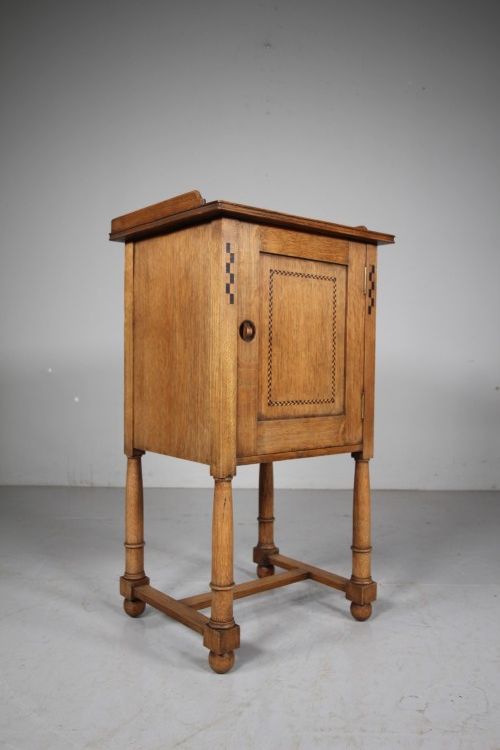
Makers utilised solid oak, often selected for its rich grain, and sometimes incorporated ebony or boxwood inlay to define the edges and panels. Many pieces rely on traditional joinery techniques, such as mortise and tenon frames, ensuring structural longevity without modern fasteners.
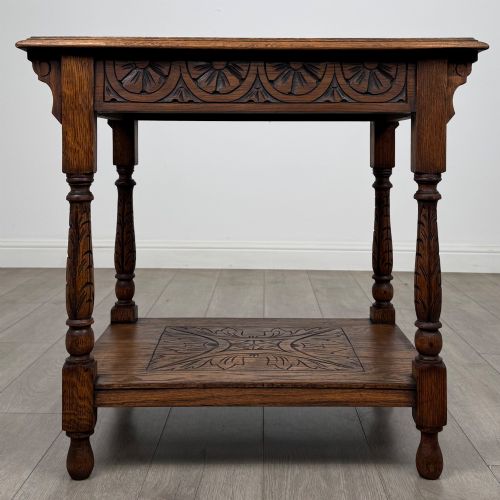
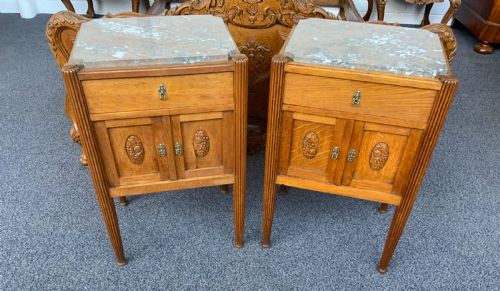
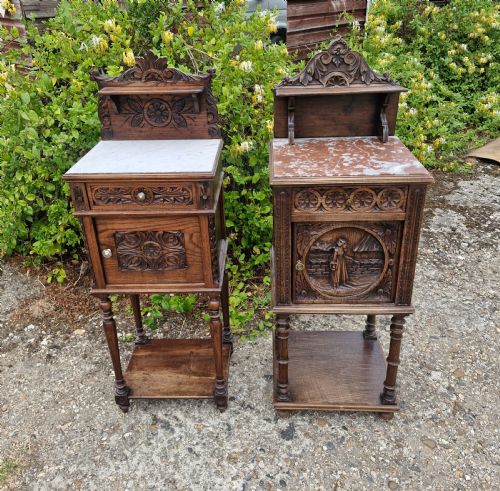
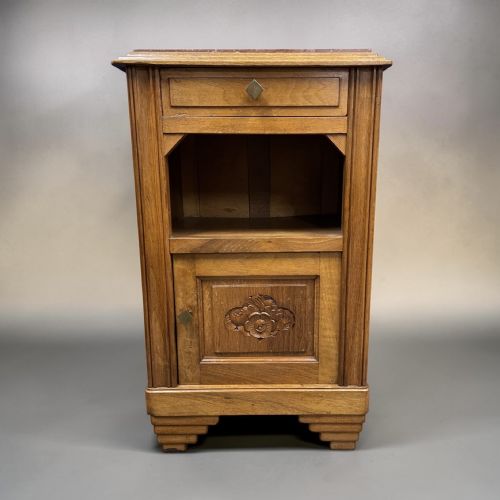
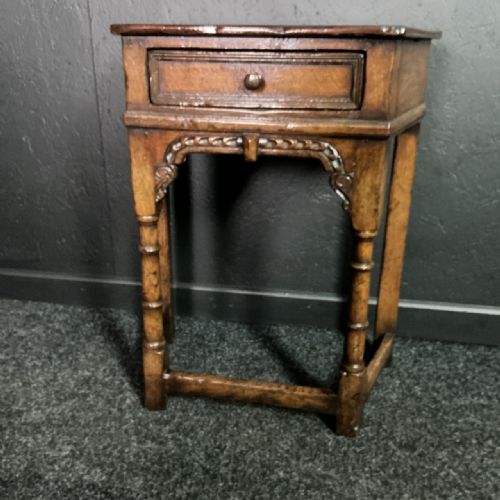
Surface detailing frequently involves hand carving on the frieze or panels, while certain French Art Deco examples introduce contrasting marble tops. Metal hardware, including brass handles and iron hinges, provides functional contrast to the warm timber.
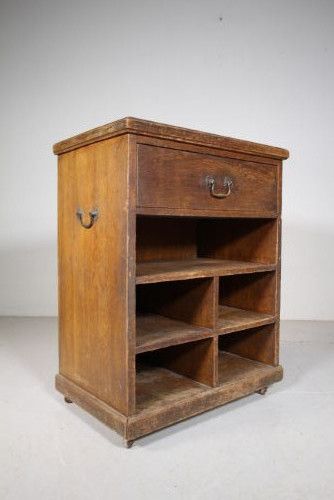
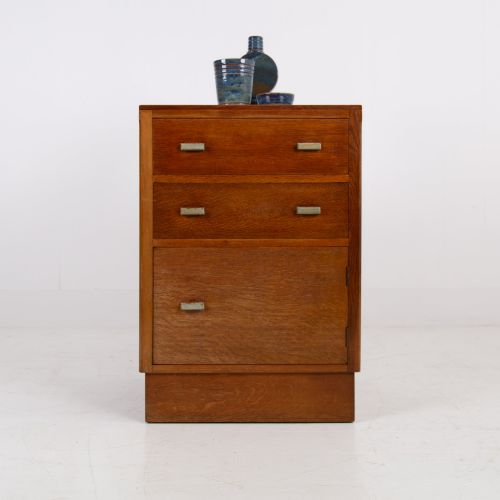
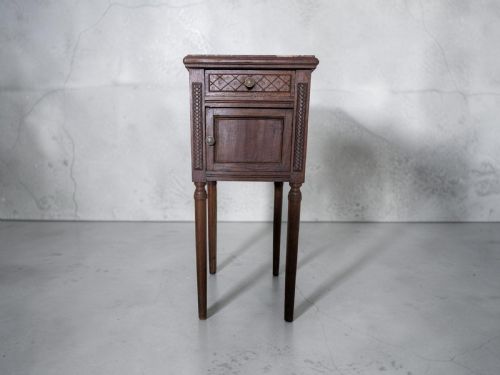
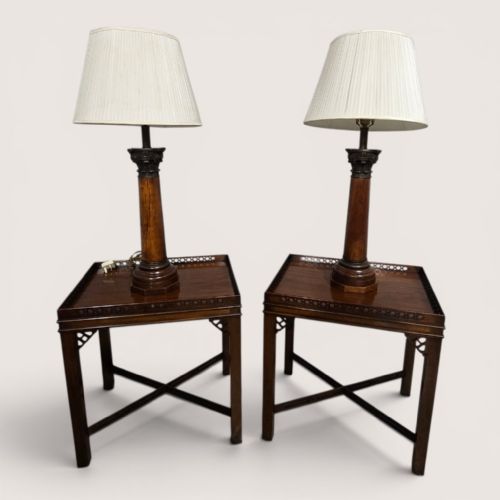
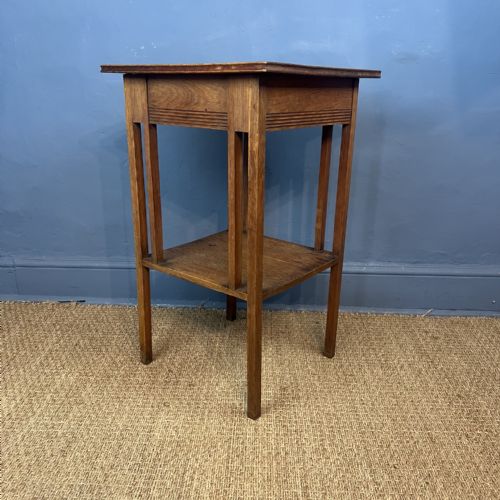
Object forms include bedside cabinets, close stools, lamp tables, and low chests of drawers.
What varies in quality
The standard of a brown oak bedside table depends heavily on the selection of the timber and the depth of its natural figuring. Superior examples display consistent colour and tight grain patterns across the primary surfaces, whereas lesser pieces use plainer timber with patched repairs.
Construction integrity also separates grades, visible in the snugness of the drawer joints and the weight of the timber. Finer pieces retain original hardware and subtle decorative carving, while lesser items show heavy alterations or clumsy replacements to the handles and hinges.
Gomme·Heals·Simpson Halifax
The Brown Oak Bedside Table Glossary
- Frieze
- The decorative horizontal band running just below the top surface of a cabinet or table. It often carries carved detailing or inlay.
- Close stool
- An enclosed piece of furniture designed historically to house a chamber pot, later repurposed as a bedside cupboard. These feature a hinged top or door hiding the interior compartment.
- Inlay
- A technique where contrasting materials like boxwood or ebony are inserted into depressions within the oak surface to create patterns. It requires high precision from the maker.
- Arts and Crafts
- A design movement prioritising traditional craftsmanship and simple forms over mass production. Pieces from this tradition display honest construction and minimal ornamentation.
Brown Oak Bedside Table: Frequently Asked Questions
What periods do brown oak bedside tables cover?
The listings span multiple eras, beginning with eighteenth-century Georgian designs and moving through nineteenth-century Victorian and Edwardian periods. Twentieth-century examples include Art Deco and nineteen-twenties production.
Makers across these periods utilised traditional oak timber, adapting forms from simple side tables to enclosed bedside cabinets.
How do I identify an Art Deco bedside table?
Art Deco pieces typically date from the nineteen-twenties and nineteen-thirties, featuring geometric lines and smooth surfaces. Some French variants incorporate marble tops alongside the oak structure.
These cabinets often emphasise clean silhouettes rather than the heavy carving seen in earlier revival styles.
Were close stools used as bedside tables?
Eighteenth-century close stools were originally built to house a chamber pot behind a small door or hinged lid. Today, buyers use them as bedside chests due to their compact proportions.
They offer concealed storage that suits modern bedroom requirements while retaining period character.
What materials accompany the oak in these tables?
Makers frequently paired oak with brass handles, iron hinges, and occasionally fabric linings in cabinet interiors. Finer pieces include boxwood or ebony inlay to accent the timber panels.
French Art Deco designs sometimes introduce marble top surfaces for durability and contrast.