

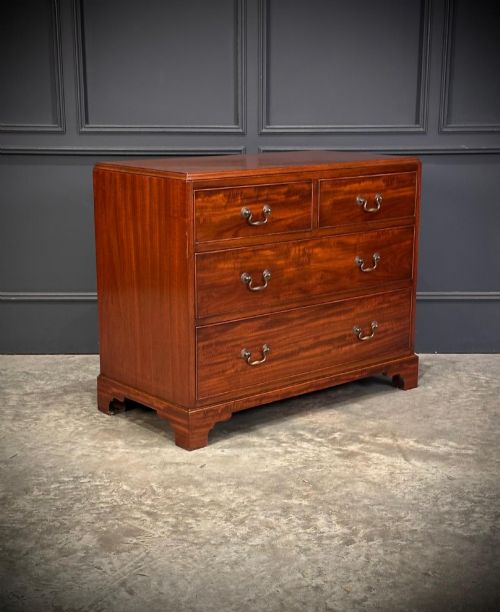
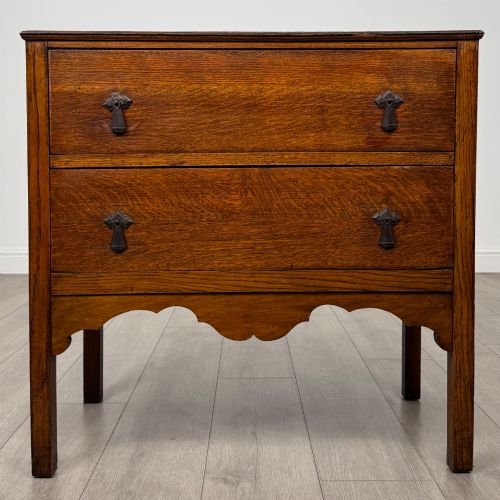
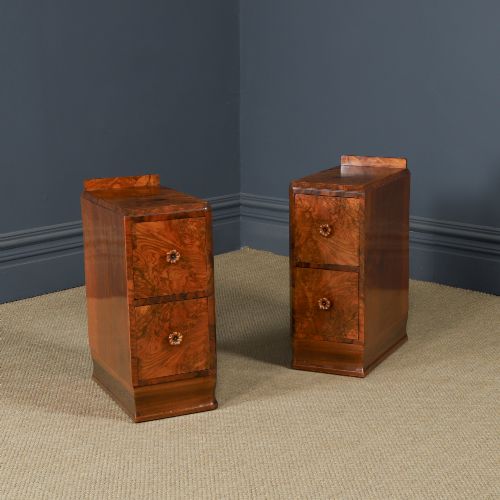
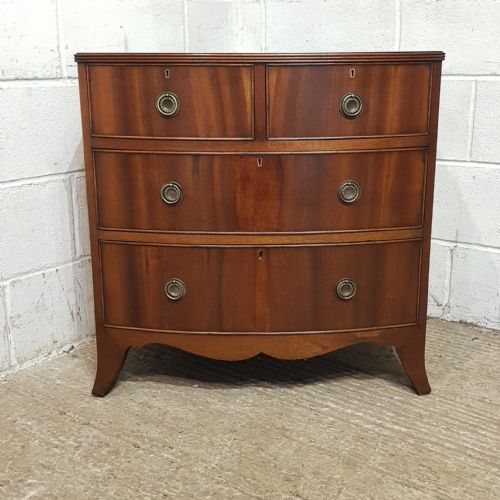
Small Two Drawer Chest
A small two drawer chest is a compact storage piece offering practical elegance, highly sought after for bringing understated character to tight corners.
Small Two Drawer Chest
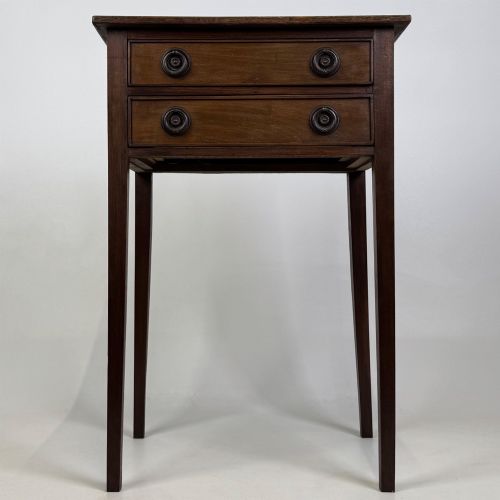
A small two drawer chest is designed to provide compact storage without dominating a room, frequently appearing as bedside tables, side tables, or miniature chests of drawers.
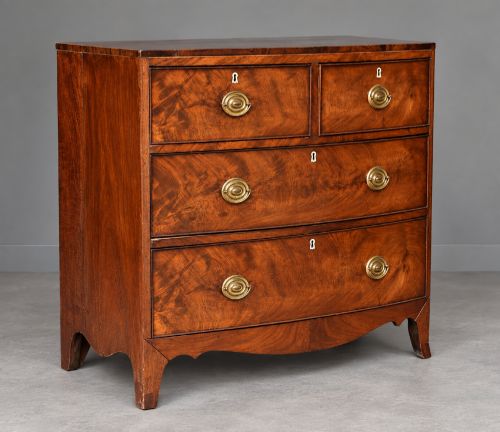
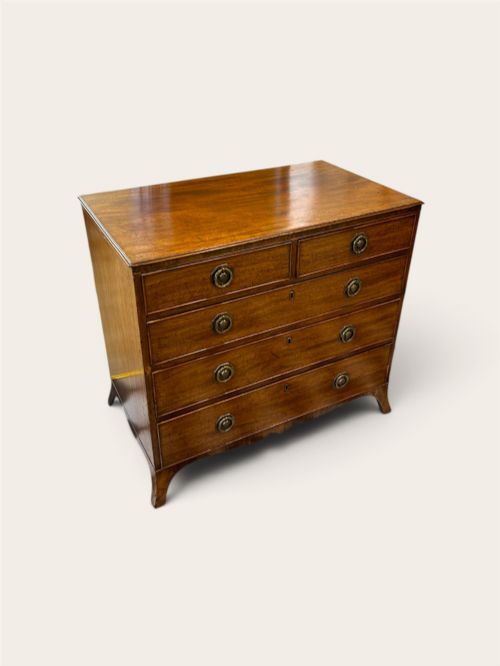
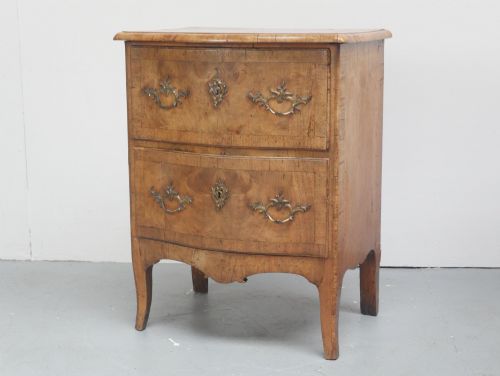
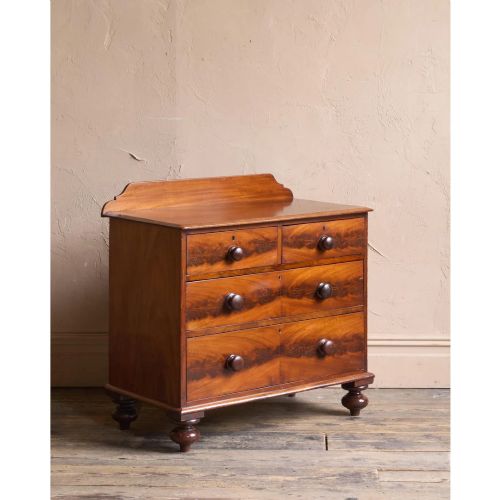
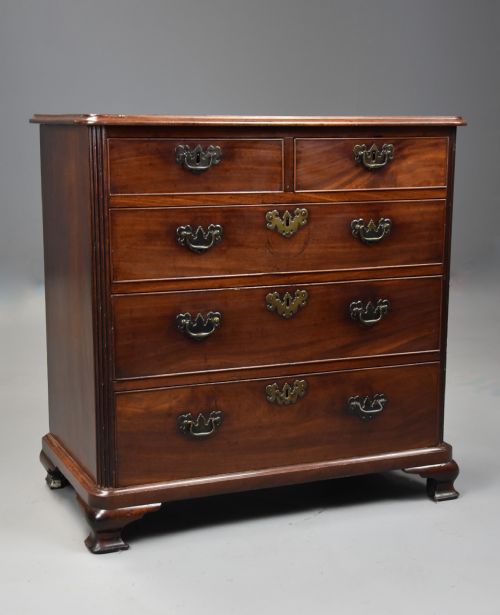
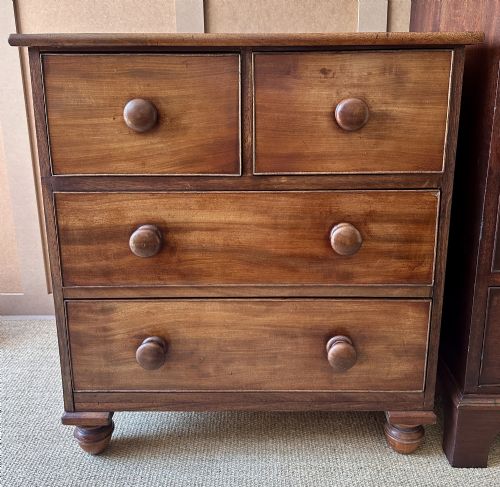
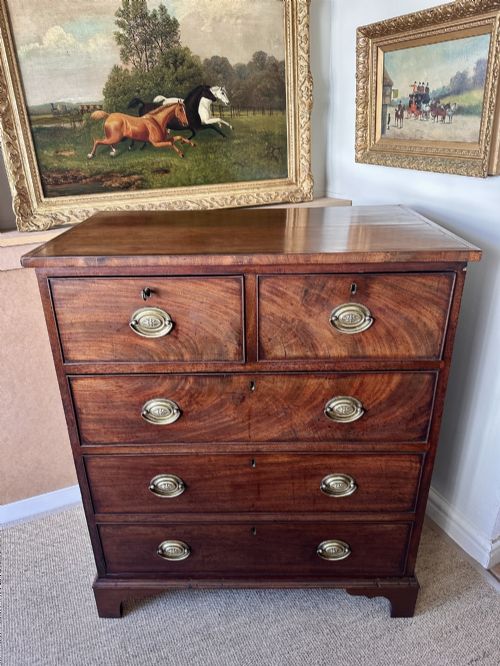
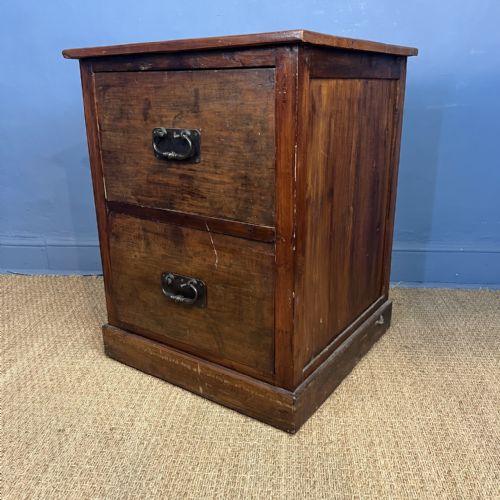
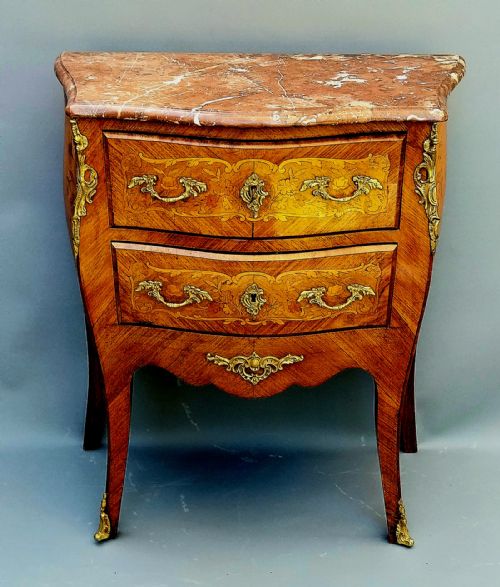
The pieces seen here span the 18th, 19th, and early 20th centuries, taking forms such as bowfronts, commodes, and serpentine side tables.
Origins range widely across English, French, Italian, and Swedish workshops, utilising proportions specifically scaled for domestic intimacy.
Materials and Construction
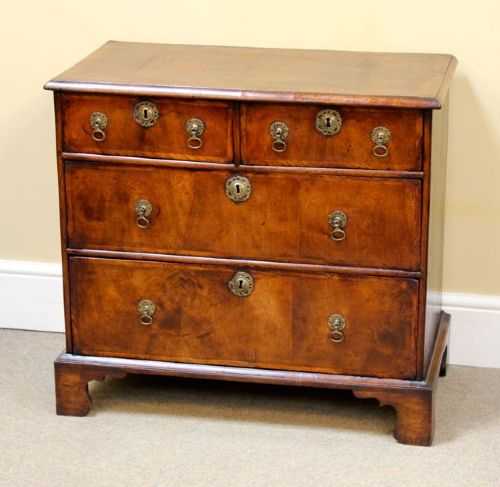
Cabinetmakers relied heavily on hardwoods such as mahogany, walnut, and oak, frequently employing burr walnut or fruitwood for decorative veneer work.
Drawer fronts often feature crossbanding and brass handles, while secondary timbers like pine appear in carcases and drawer linings.
Construction techniques include traditional dovetailing for drawers and bracket feet or bun feet to support the lower structure.
Listings feature woods including mahogany, oak, walnut, burr walnut, fruitwood, and pine across various European origins.
Assessing Quality and Execution
The finest examples display crispness in timber figure, particularly in burr walnut and flame mahogany, matched with subtle proportions.
Superior execution shows in the precision of the drawer joints and the retention of original brass hardware or working keys.
Patina and surface preservation distinguish pieces that retain their authentic historical finish from those subjected to heavy restoration.
The Small Two Drawer Chest Glossary
- Bowfront
- A convex curved cabinet front popular in Georgian and Regency design. This shape softens the corners of a room while maintaining interior capacity.
- Commode
- A low French or continental chest of drawers, often standing on relatively tall legs. They frequently feature decorative veneers or painted finishes.
- Serpentine
- A concave-convex-concave curved furniture front. This flowing line requires advanced woodworking skill to execute cleanly.
- Crossbanding
- A narrow strip of veneer laid perpendicular to the grain of the main surface. It provides a neat contrasting border around drawer fronts or tabletops.
- Patina
- The surface sheen and mellowing developed by wood and metal over decades of handling and light. It serves as a visual indicator of age.
Small Two Drawer Chest: Frequently Asked Questions
Where do you place a small two drawer chest?
These compact pieces fit easily beside a bed, in a narrow hallway, or as a small side table in a sitting room. Their reduced depth allows them to sit comfortably in spaces where standard furniture would obstruct movement.
Because they offer surface display space alongside enclosed drawer storage, they function well as lamp tables or occasional desks in smaller reception rooms.
How do I date a wooden chest?
Dating relies on observing construction methods, timber choices, and hardware styles across different eras. Georgian and 18th-century pieces often display hand-cut dovetails and specific native hardwoods, while Edwardian and later pieces utilise different manufacturing traces.
Secondary woods inside the drawers and the type of fixings used also provide reliable clues to the period of manufacture.
Are these chests suitable for daily use?
Most antique chests are robust enough for daily domestic storage when handled with reasonable care. Drawers designed to hold lighter items will withstand normal routine use without issue.
Care should be taken to protect the wooden surfaces from excessive moisture and direct heat sources to preserve the polish and timber integrity.
What is the difference between a commode and a chest?
A commode typically refers to continental European chests of drawers, often featuring decorative curved fronts and slightly taller legs. Standard chests of drawers more commonly follow British regional cabinetmaking traditions.
French and Italian commodes frequently utilise fruitwood or marble tops, setting them apart from traditional English mahogany designs.