
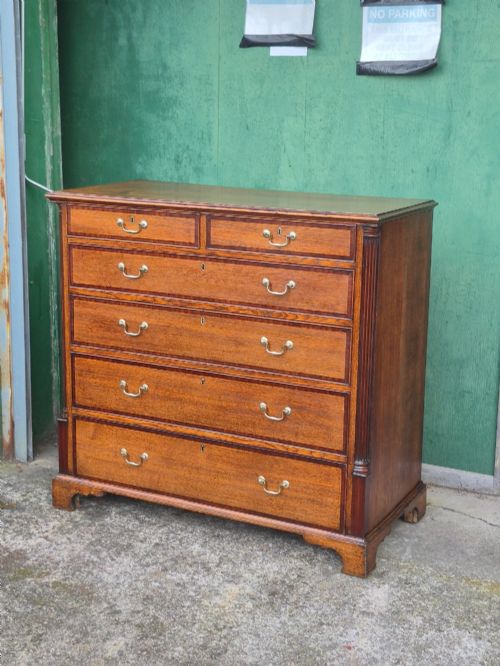
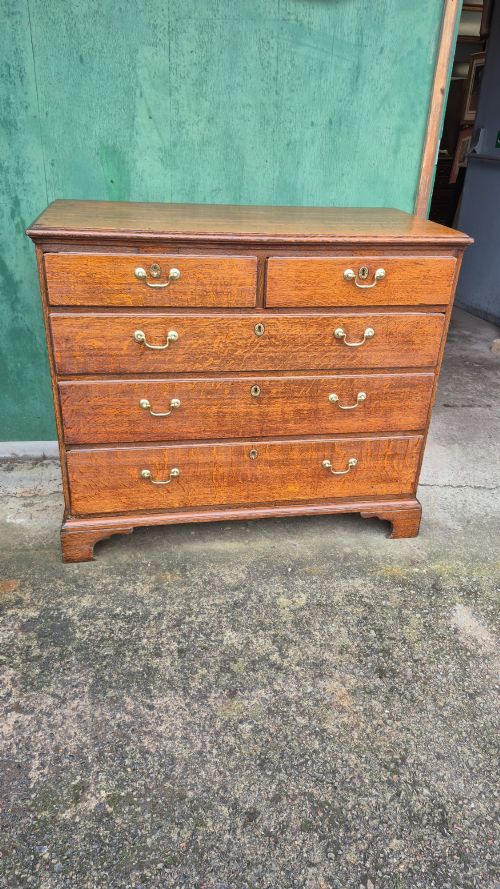
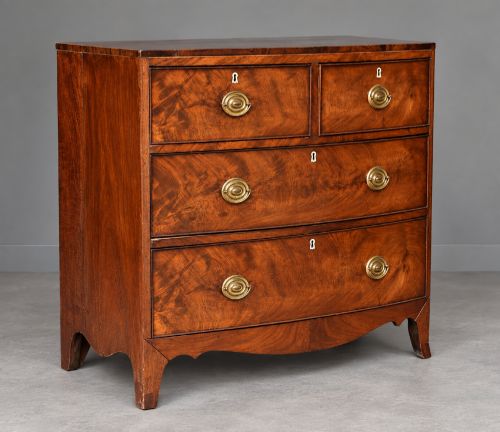
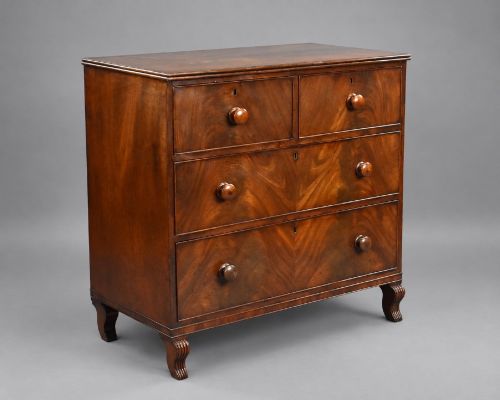
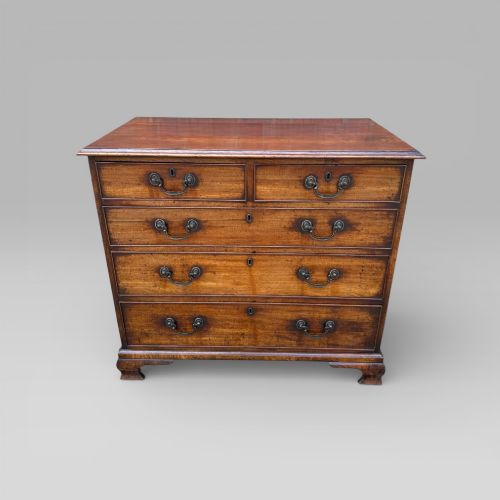
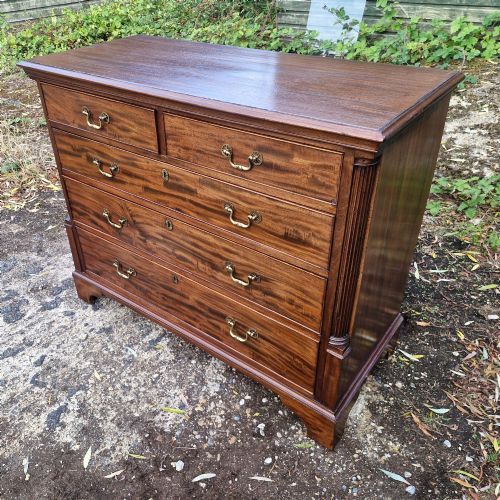
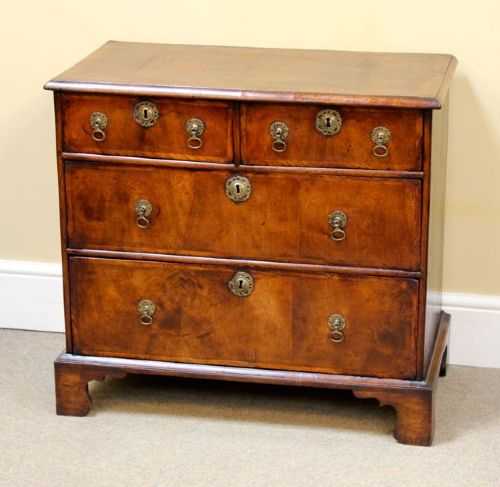
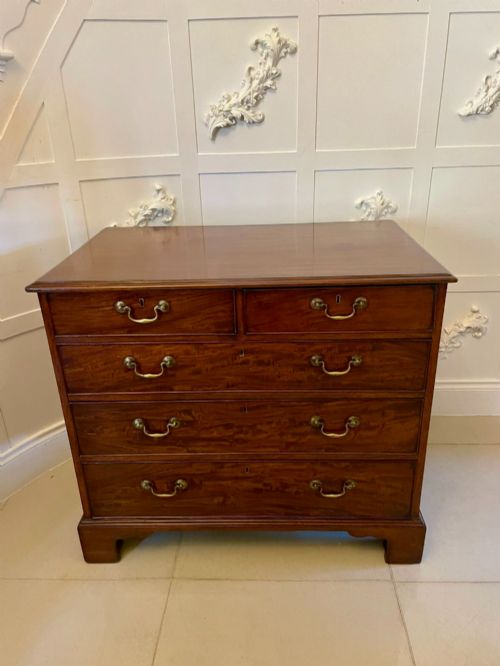
Georgian Two Drawer Chest
These pieces combine compact utility with period character, and a georgian two drawer chest brings straightforward storage into a bedroom or hallway.
Georgian Two Drawer Chest
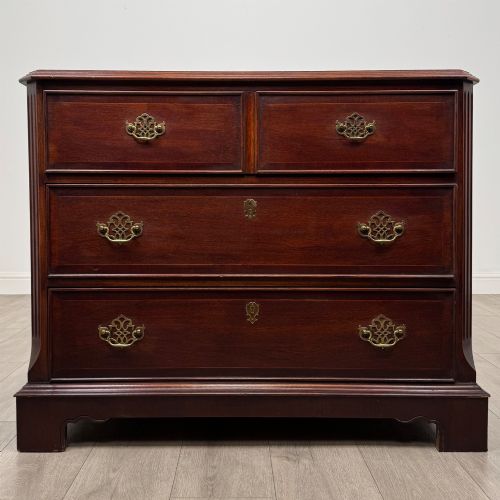
A georgian two drawer chest typically appears as a compact piece of furniture originating from the eighteenth century or the Regency era, often designed for smaller spaces or specific domestic uses.
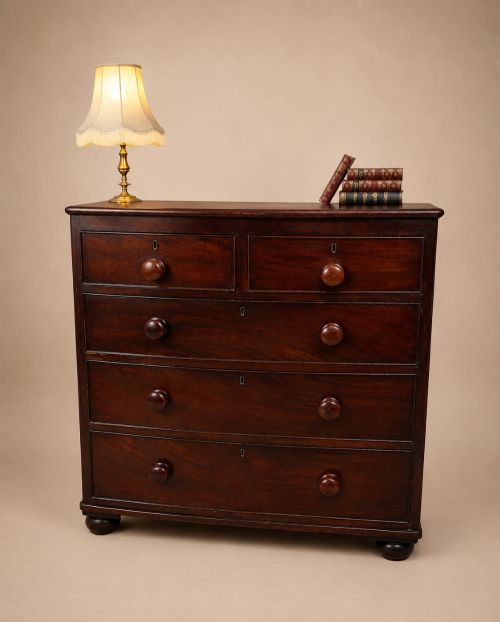
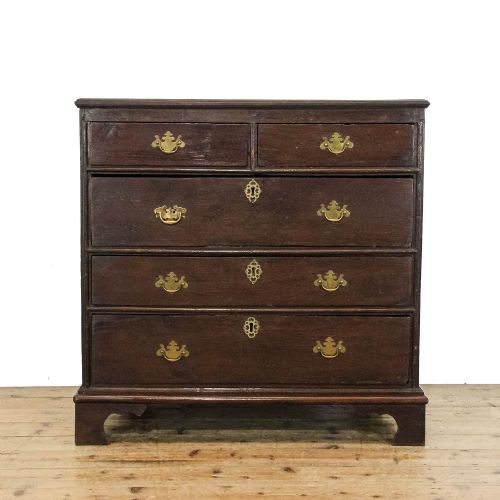
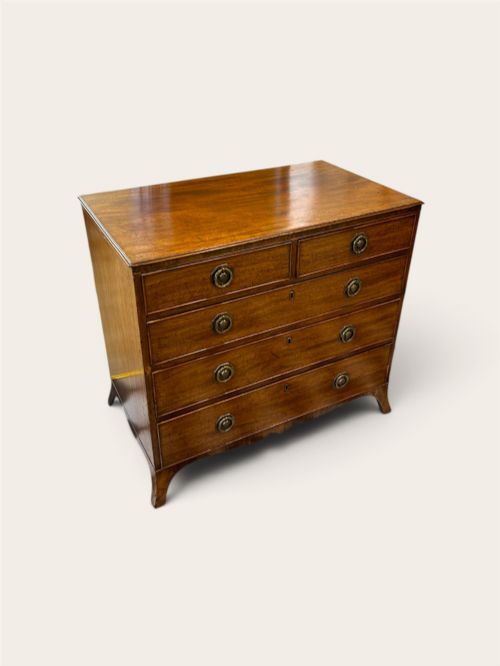
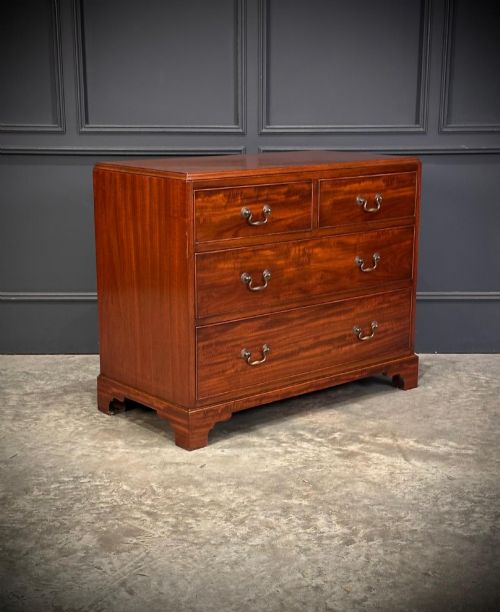
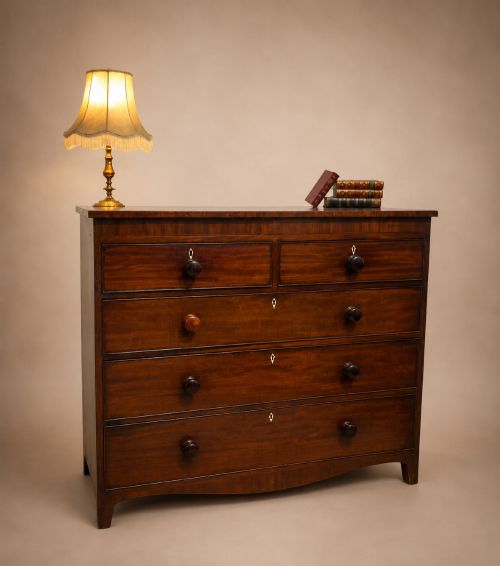
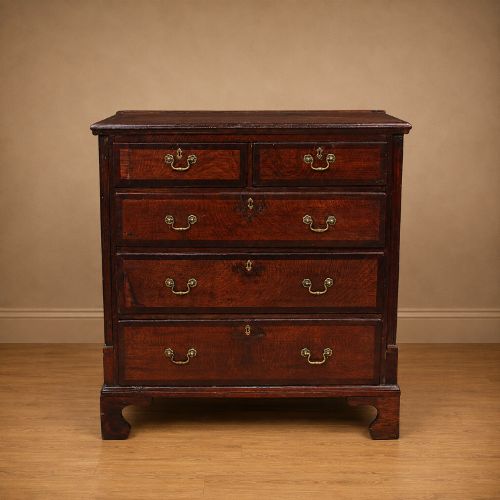
The selections span golden oak, walnut, and mahogany, with bowfront silhouettes and two-part constructions frequently meeting the eye among the pieces recorded.
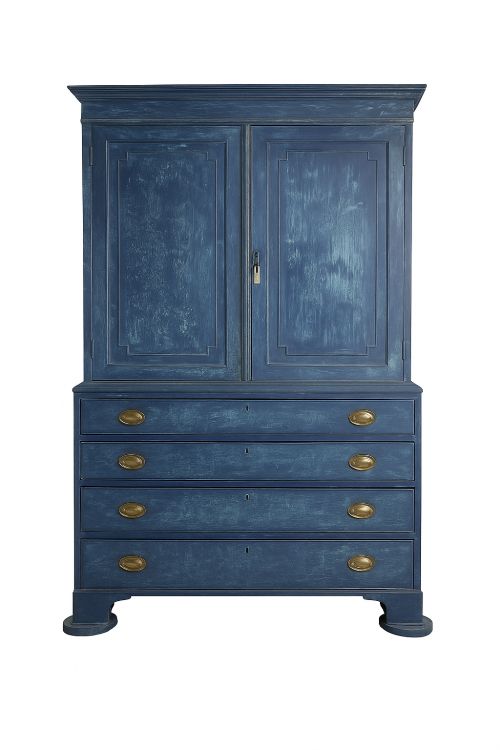
Makers and craftsmen of the period also produced variations in pine, fruitwood, and painted finishes, alongside related forms such as mule chests and linen presses.
Materials and Construction
Cabinetmakers utilised solid timbers like oak, walnut, and mahogany, frequently applying flame mahogany veneer or crossbanding to enhance the visual depth of the drawer fronts.
Construction methods involved panelled techniques, bracket feet, and the integration of brass hardware, with many larger examples built in two separate stacking sections for portability.
Quality and Character
The standard of a piece rests upon the crispness of the timber figuring, the integrity of the original handles and bracket feet, and the warmth of the surface patina.
Finer examples display careful timber selection, such as figured walnut or flame mahogany, paired with precise drawer construction and minimal structural alterations over time.
J Moorcroft
The Georgian Two Drawer Chest Glossary
- Bowfront
- A curved cabinet front that swells outward in the centre, common in Regency and later pieces. This shape softens the profile of a room.
- Crossbanding
- A border of veneer laid with the grain running perpendicular to the surrounding wood. This technique frames drawer fronts effectively.
- Patina
- The surface sheen and colour developed through age, handling, and waxing. It indicates long use and care.
- Mule chest
- A storage chest fitted with one or more drawers at the base. It bridges the transition between a traditional blanket box and a chest of drawers.
Georgian Two Drawer Chest: Frequently Asked Questions
How do I tell an 18th-century chest from a Regency one?
Eighteenth-century examples often favour solid oak or walnut with straight lines and simple bracket feet. Regency pieces frequently introduce mahogany, flame veneers, and bowfront profiles.
Hardware styles and timber treatments shift between these eras, helping to distinguish the earlier craftsmanship from the later periods.
Were these chests originally made in two parts?
Larger formats and campaign styles were frequently built in two stacked sections to ease transport. This modular approach allowed for easier movement up staircases and between houses.
Smaller domestic variations usually remained as single solid carcases.
How do I care for antique mahogany and oak?
Maintain the wood by applying a quality beeswax periodically to nourish the dry timber. Avoid placing the furniture near direct heat sources or strong sunlight.
Dust gently with a dry cloth to preserve the surface patina without stripping the historical finish.
What is the difference between a mule chest and a standard chest of drawers?
A mule chest combines a top-opening blanket box compartment with one or two operational drawers positioned at the base. Standard chests rely entirely on horizontal drawer tiers.
This hybrid design evolved to provide both hanging or folding storage above and accessible drawer space below.