
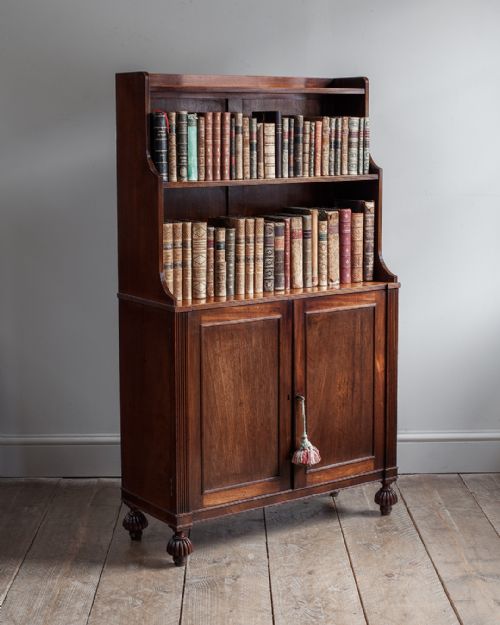
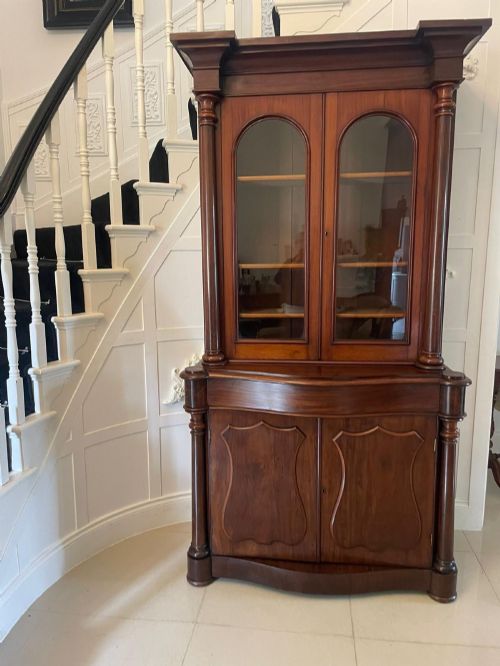
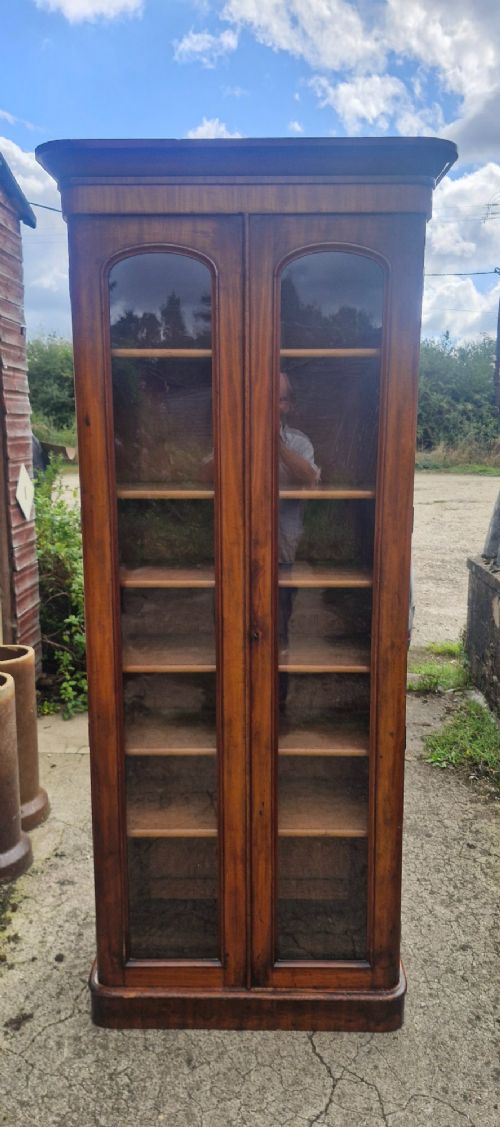
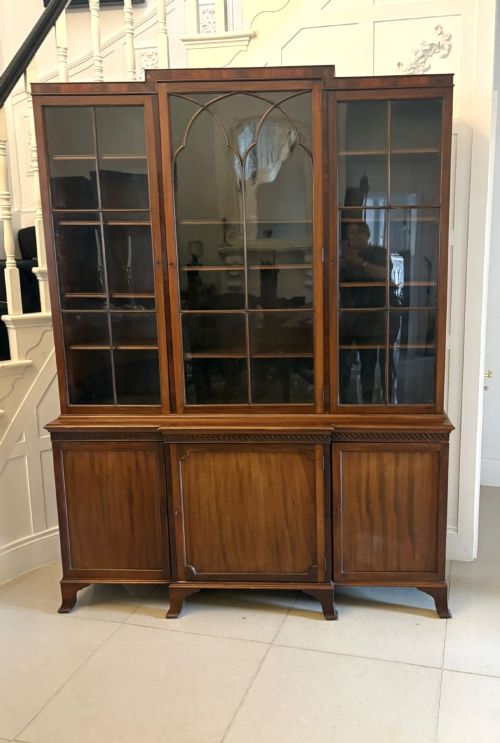


Brown Mahogany Display Bookcase
A brown mahogany display bookcase brings warmth and architectural order to a room, holding volumes behind glass panels.
Brown Mahogany Display Bookcase
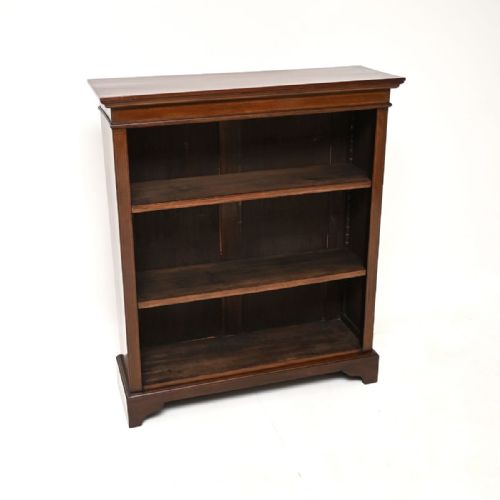
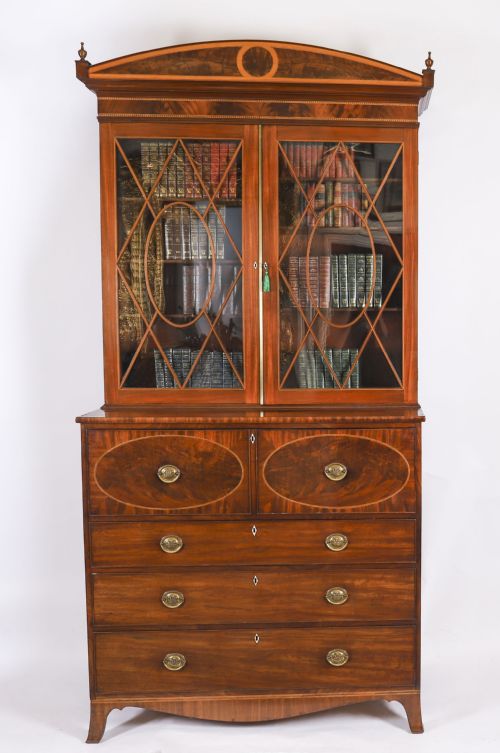
A brown mahogany display bookcase combines shelving for books with glazed doors or open tiers for cabinet storage and decorative display. These pieces originate from periods spanning the Georgian, Regency, Victorian, and Edwardian eras.
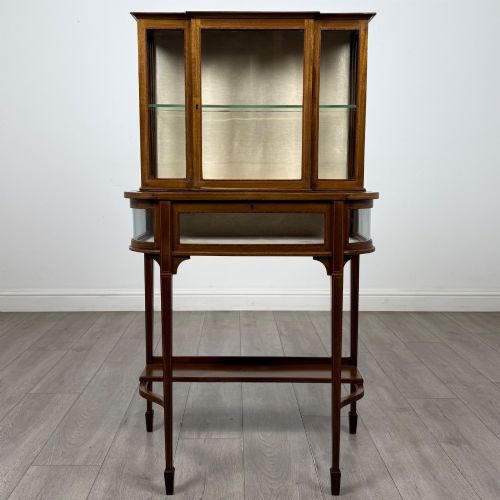
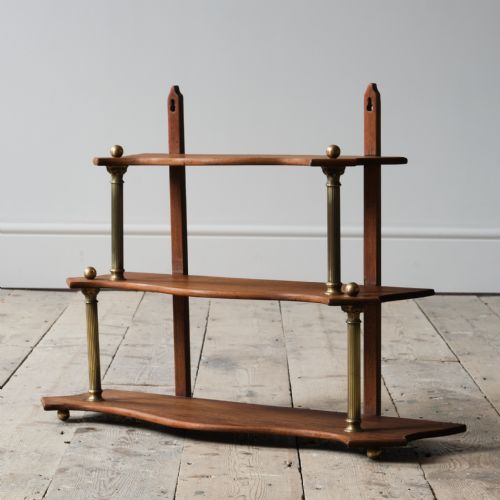
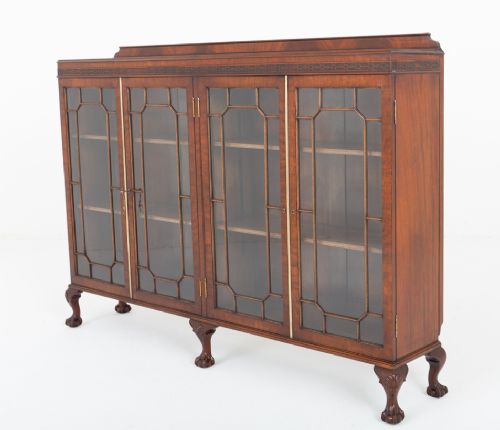
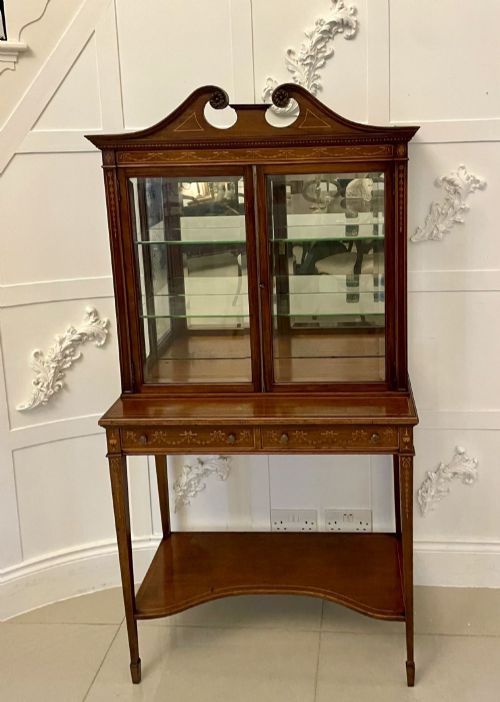
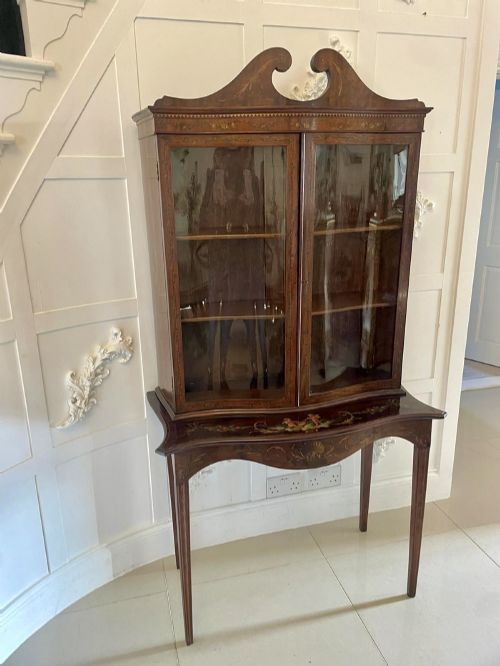
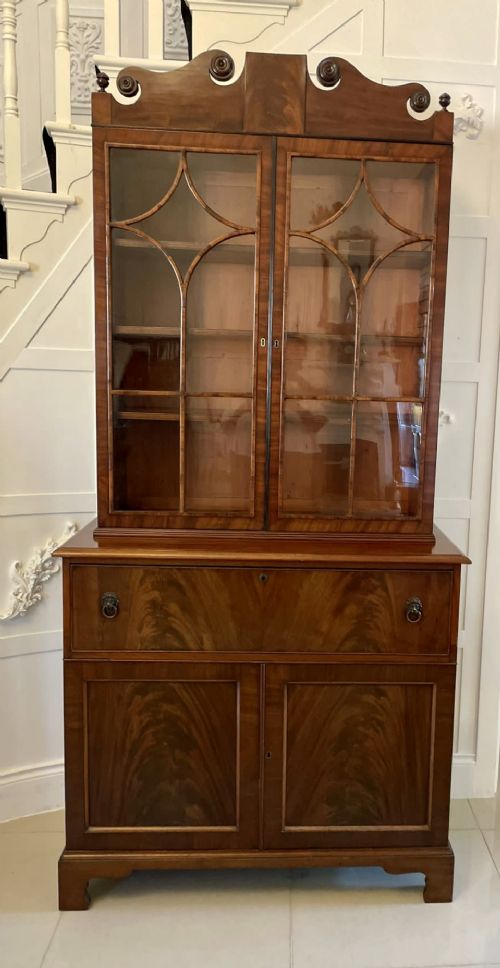
The versions met most frequently on this page include breakfront library cabinets, Edwardian inlaid display cabinets, and tall Victorian glazed bookcases. Object types range from large triple library bookcases down to small wall-hanging shelves and corner cupboards.
How they were made
Cabinet makers built these pieces using solid mahogany and figured flame mahogany veneers, often enhanced with contrasting satinwood inlay. Glass panes fitted into wooden doors protected the contents while allowing visibility for books and ornaments.
Structural details included adjustable shelves, brass castors, and occasionally bronze mounts or painted decoration. Construction dates stretch across the eighteenth, nineteenth, and early twentieth centuries.
One tiny miniature display cabinet waits on the shelves, proving that grand library presence comes in pocket sizes too.
What varies in quality
The standard of timber selection distinguishes the pieces, particularly where figured mahogany or flame mahogany veneers show rich grain patterns. Fineness in decorative inlay, such as satinwood banding, marks out superior cabinet work.
Proportion and architectural presence separate standard storage items from finer library pieces and breakfront display cabinets. Original glass, hardware like brass castors, and intact interior fittings add substance to the construction.
Gillows
The Brown Mahogany Display Bookcase Glossary
- Breakfront
- A cabinet design where the central section projects forward from the flanking wings, creating depth and architectural structure. This layout appears frequently in larger library bookcases.
- Secretaire bookcase
- A tall cabinet incorporating a fitted writing drawer with a drop-front desk surface alongside traditional book storage. These provide dual utility for writing and displaying volumes.
- Whatnot
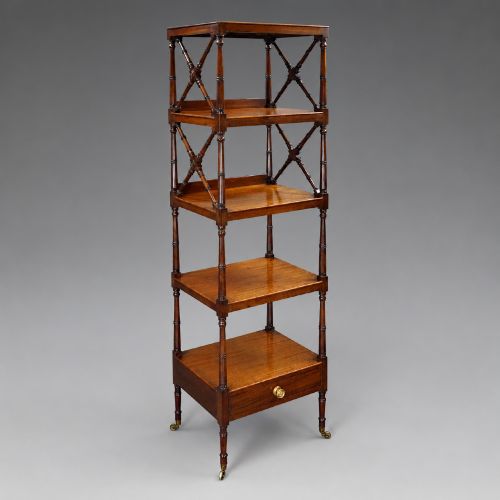
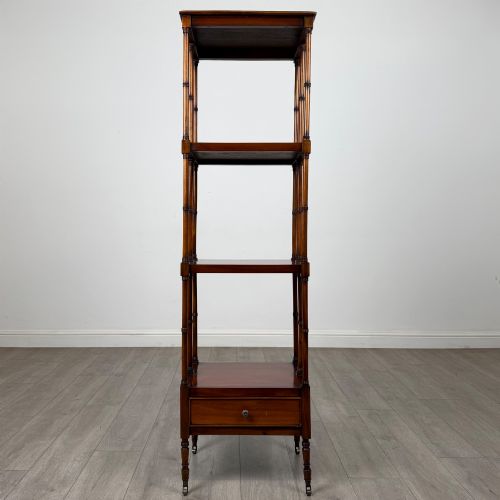
- An open, multi-tiered set of shelves designed for displaying ornaments and small objects rather than housing heavy books. They stand on upright supports or corner posts.
- Satinwood inlay
- A contrasting light-coloured timber technique used to create decorative borders, lines, or geometric patterns on mahogany cabinet surfaces. It defines much of the Edwardian output.
Brown Mahogany Display Bookcase: Frequently Asked Questions
How do I date a brown mahogany display bookcase?
Dating relies on stylistic clues, timber characteristics, and construction methods. Georgian and Regency pieces tend to show heavier architectural proportions and rich flame mahogany, while Edwardian examples frequently incorporate lighter satinwood inlay and refined glazed doors.
Hardware, such as brass castors or escutcheons, and the type of glass used also provide indicators of age. Comparing the overall form against documented periods helps narrow down the decade of manufacture.
Can shelves be adjusted inside these bookcases?
Many Victorian and Edwardian examples feature adjustable shelving supported by wooden racks or brass studs. This flexibility allows the interior height to accommodate volumes of varying sizes.
Earlier Georgian pieces often have fixed shelving integral to the interior cabinetry carcase. Checking the interior construction reveals whether the height layout can be altered.
What is the difference between a display cabinet and a bookcase?
A bookcase focuses primarily on housing reading material on open or glazed shelves, whereas a display cabinet is designed to showcase porcelain, curiosities, and decorative objects. Many surviving forms blur this distinction by combining glazed doors with library storage.
Breakfront cabinets and vitrines often serve both functions simultaneously. The presence of fine glass panels and mirrored backs usually points towards a display focus.
How do I care for mahogany and glass furniture?
Maintenance involves keeping the timber away from direct heat sources and strong sunlight to prevent the mahogany finish from fading. Regular dusting with a soft, dry cloth preserves the polished surface.
Glass panels benefit from standard glass cleaner applied sparingly to a cloth rather than sprayed directly onto the wood. Wax polish applied occasionally feeds the mahogany grain.