
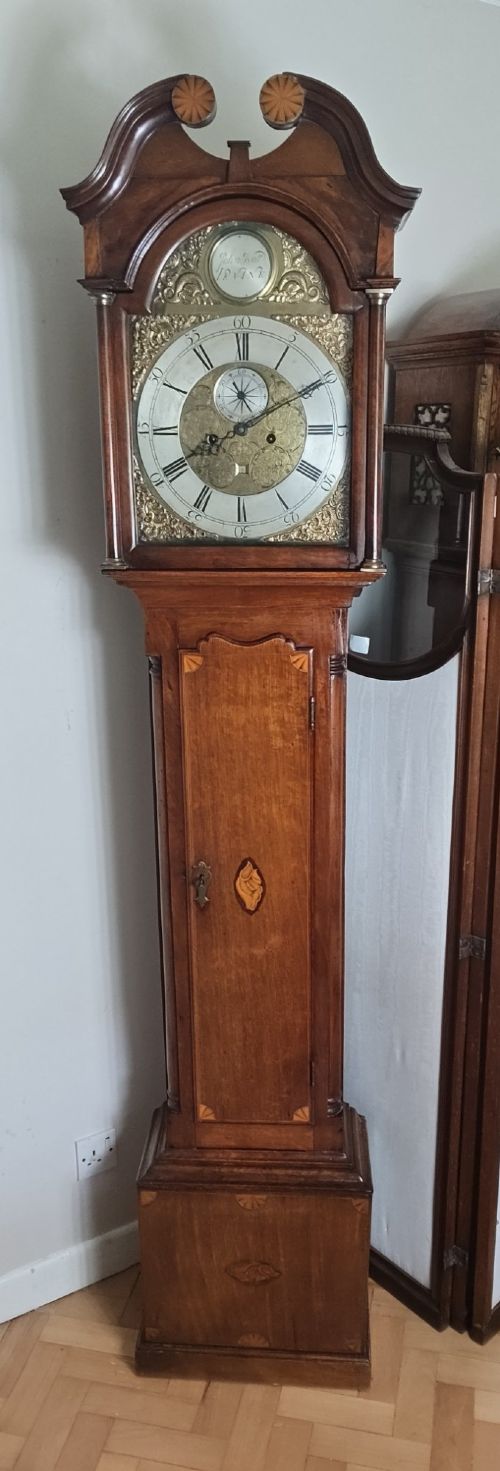
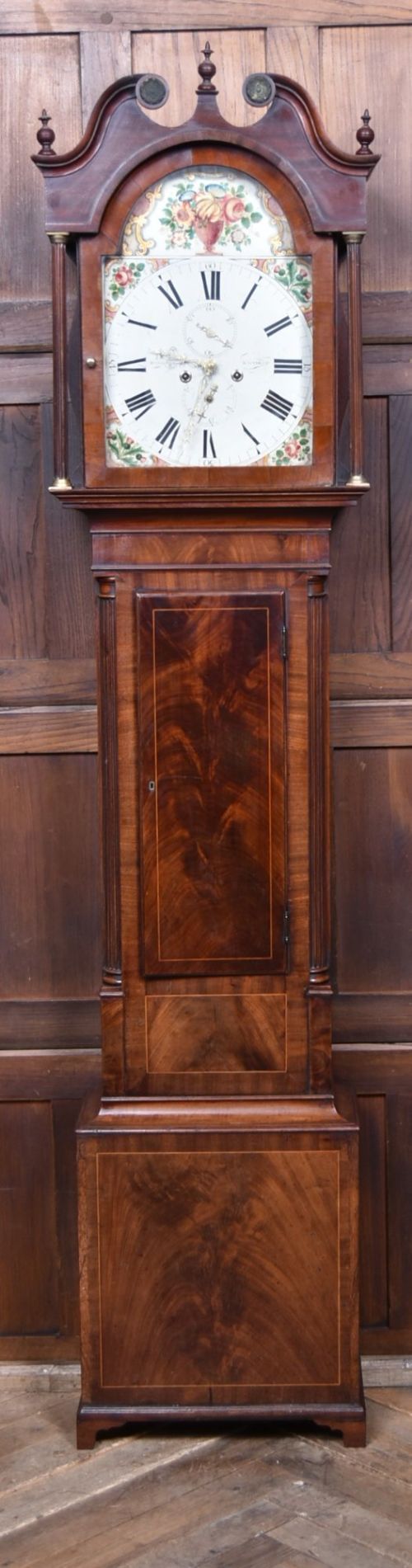
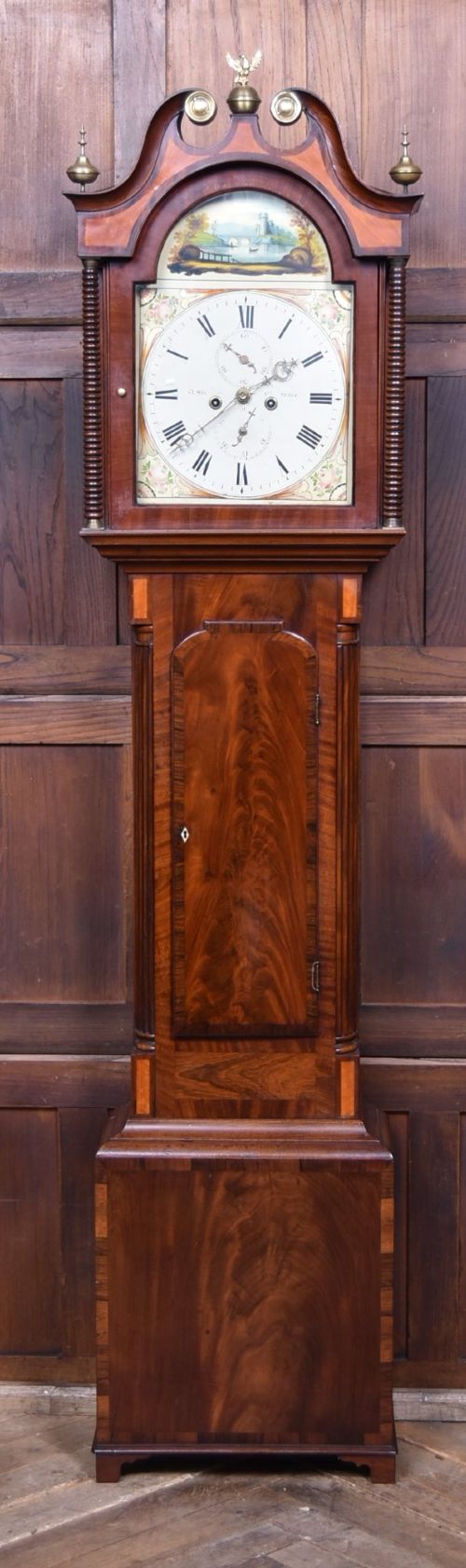
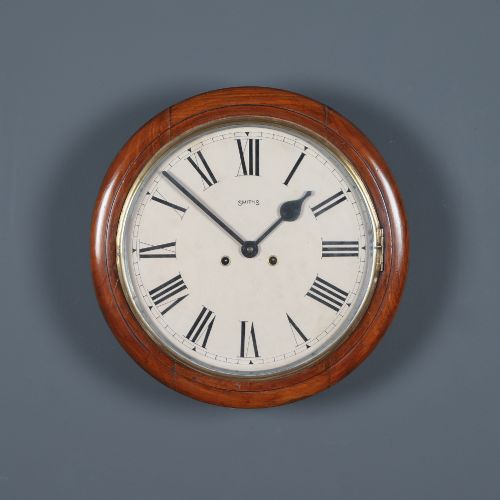
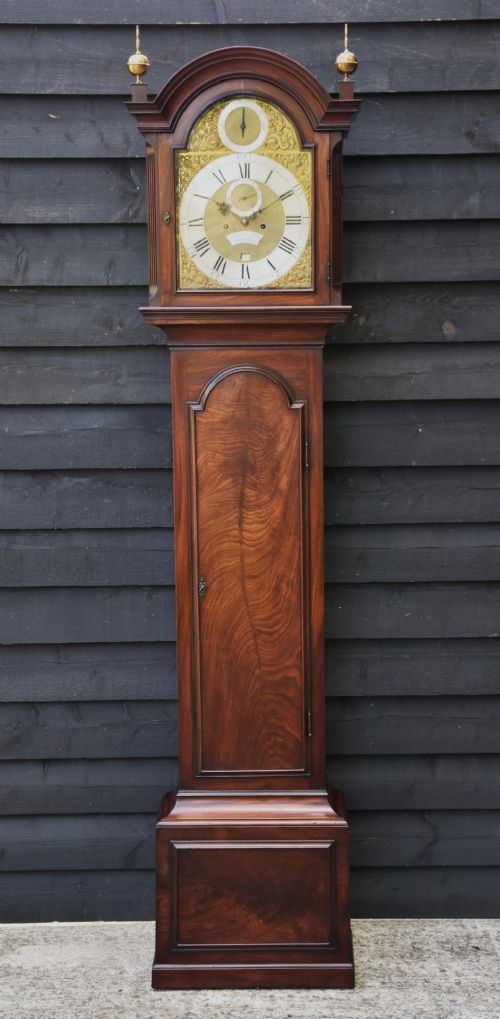
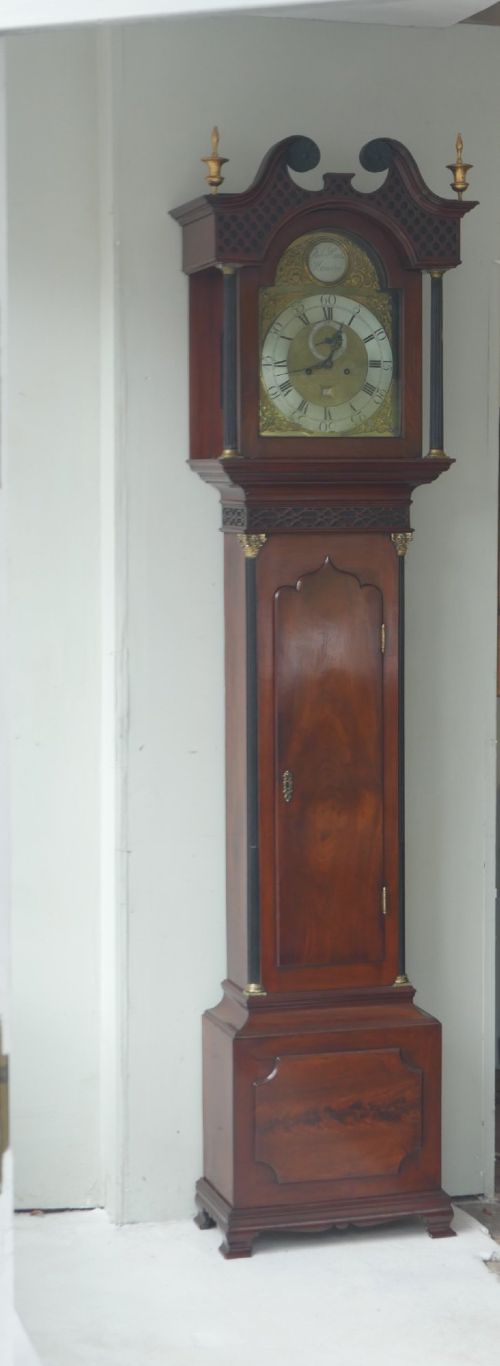
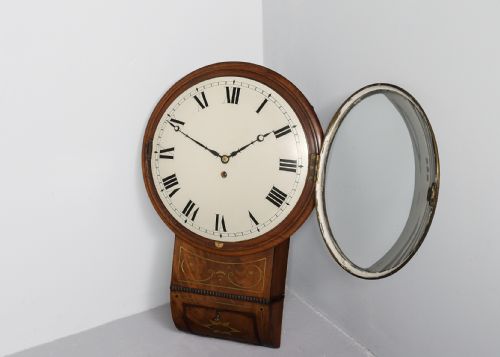
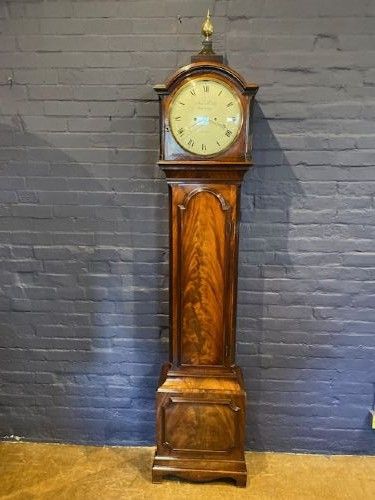
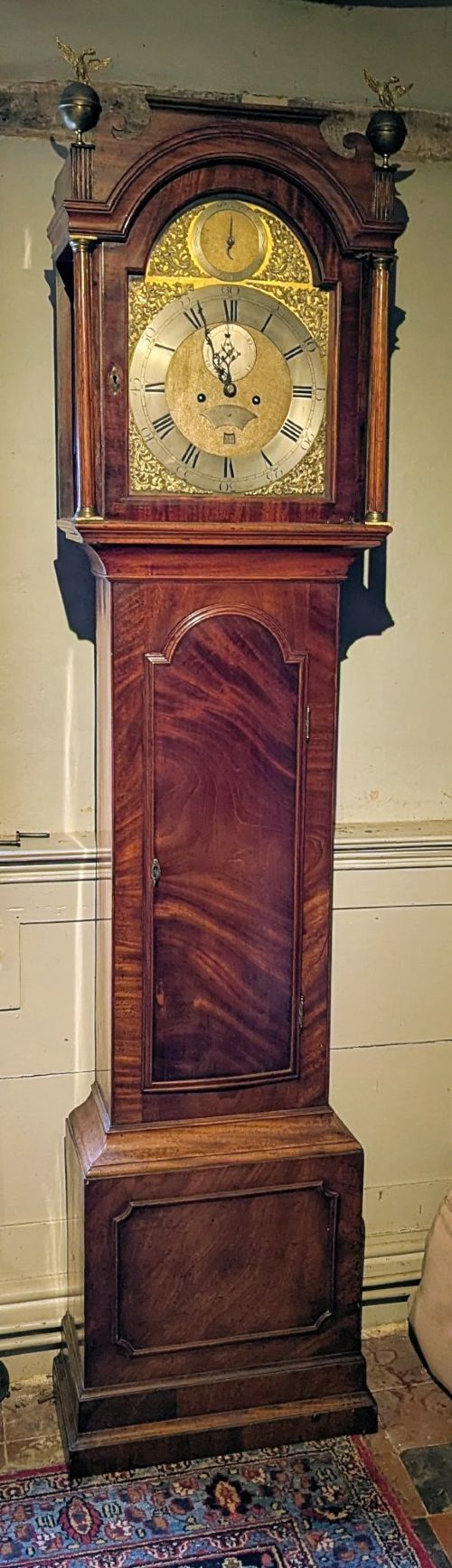
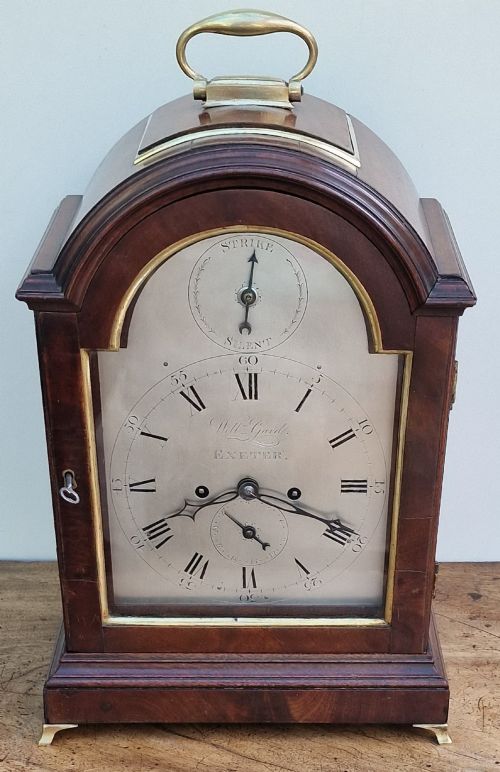
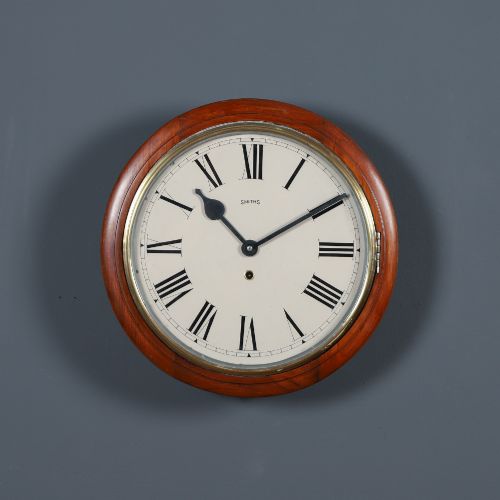
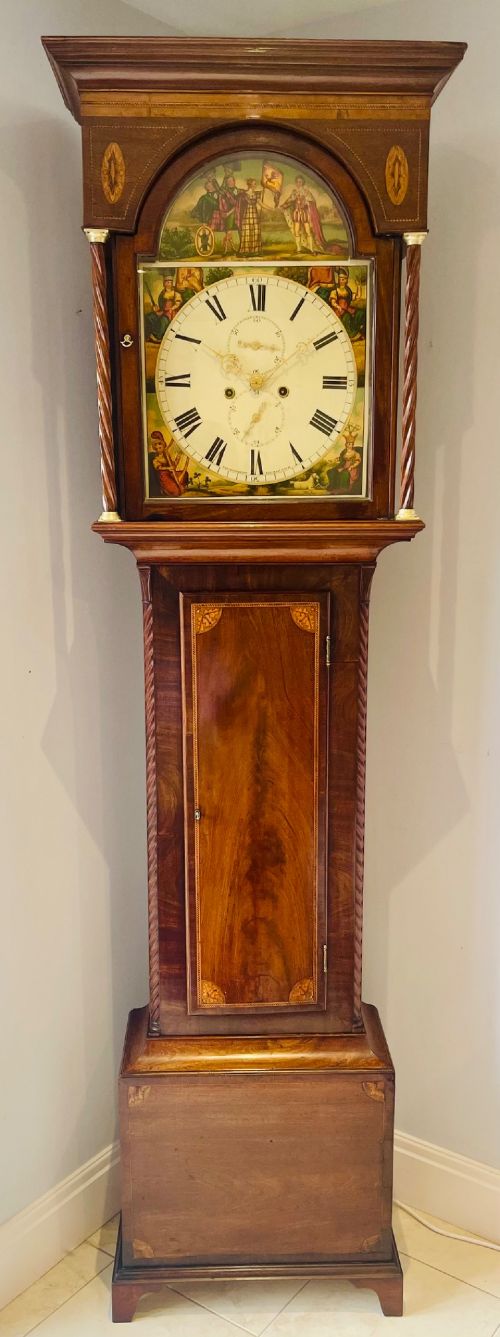
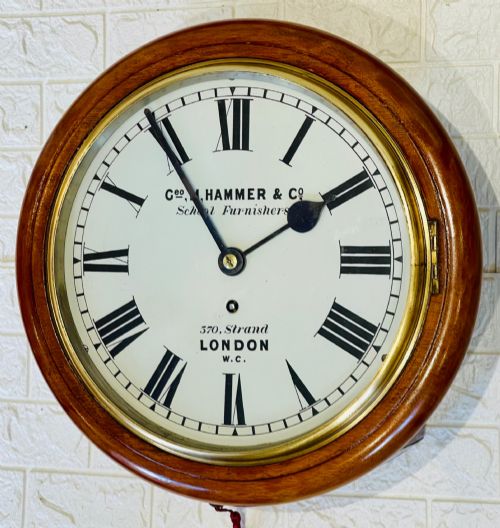
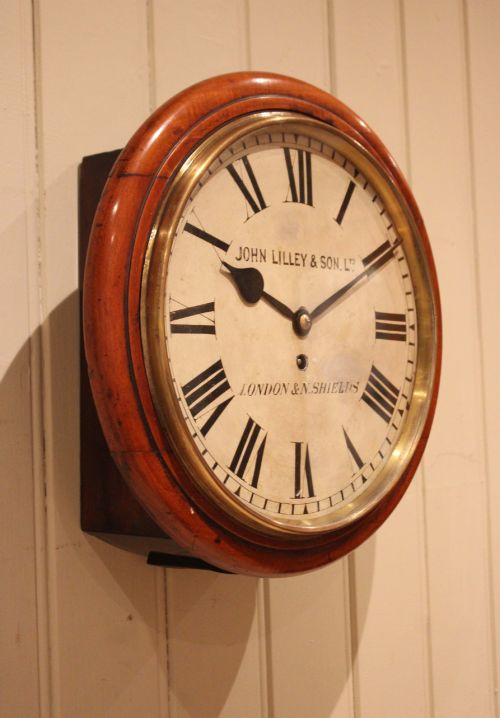
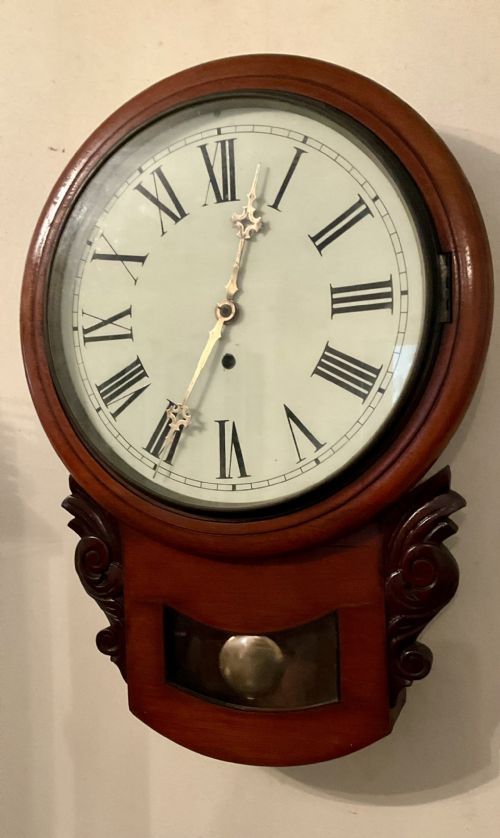
Brown Mahogany Dial Clock
A brown mahogany dial clock is a practical timepiece, bringing rich timber and clear circular faces from the Georgian era down through the Victorian period.
Brown Mahogany Dial Clock
A brown mahogany dial clock encompasses tall floor-standing longcase pieces and circular wall-mounted timepieces driven by fusee movements. The pieces on this page span the 18th century, the Georgian period, and Victorian times, alongside later 20th-century railway and school examples.
Most items you meet here are either substantial mahogany longcases with painted or brass dials or compact wall-mounted round dial clocks designed for clear reading in offices, stations, and domestic halls.
Makers ranging from provincial Scottish clockmakers to London firms contribute to the variety, employing styles from George III through to Edwardian interpretations.
How they were made
Cases combine solid and veneered mahogany timber, often accented with brass inlay, brass bezels, and iron or painted iron dials protected by curved glass covers.
Movements rely on brass gear trains, steel pivots, and weight-driven or spring-driven fusee mechanisms that regulate the pull of the mainspring for steady timekeeping.
Object forms span large floor-standing longcase grandfather clocks down to compact wall dial clocks.
What varies in quality
The sophistication of the movement dictates much of the value, distinguishing simple timepieces from those with eight-day durations, musical chimes, or moon roller phases.
Timber selection and cabinetwork set the better examples apart, visible in the grain of the mahogany, the crispness of any brass inlay, and the proportion of the hood or bezel.
Hendrie Ogg·D Straiton·James McCabe·William Gard·Ellicott Smith·D Williams·Winsor Bishop·Mappin Webb·William McEwan·Matt Wylie·John Walker
The Brown Mahogany Dial Clock Glossary
- Fusee
- A conical pulley connected to the mainspring by a chain or cord, designed to equalise the torque as the spring unwinds.
- Dial clock
- A wall-mounted timepiece featuring a prominent circular face, historically used in public spaces, railway stations, and institutions.
- Longcase clock
- A tall pendulum clock enclosed in a wooden case, commonly referred to as a grandfather clock.
- Bracket clock
- A portable table or shelf clock, originally designed to sit on a wall bracket.
- Moon roller
- A mechanism behind the dial showing the phases of the moon through a rotating painted disk.
Brown Mahogany Dial Clock: Frequently Asked Questions
How do fusee wall clocks work?
A fusee movement uses a conical pulley and a chain to maintain even tension on the gear train as the spring loses power. This mechanical arrangement ensures more accurate timekeeping throughout the running cycle.
Most wall clocks of this type require a key to wind the spring via a hole in the painted iron or enamel dial.
What is the difference between a longcase and a wall clock?
Longcase clocks stand directly on the floor, using long hanging weights and a pendulum enclosed in a tall wooden trunk. They usually run for eight days and often include striking mechanisms or calendar dials.
Wall clocks are compact circular units hung directly from a bracket or screw, driven by a spring-wound fusee movement suited to public rooms and offices.
How do I date a mahogany dial clock?
Dating relies on stylistic clues in the mahogany case, the shape of the bezel, the material of the dial, and the signature of the maker. Georgian and 18th-century pieces often feature brass dial spandrels and hand-engraved plates, while Victorian examples lean toward plain cast brass bezels and painted iron faces.
Reference books listing provincial and London clockmakers help connect named signatures to specific active working decades.
Where were these clocks originally used?
Tall longcase clocks stood in the hallways and principal rooms of domestic houses as the primary household timekeeper. Wall dial clocks hung in railway stations, schools, offices, and large public buildings where quick legibility from a distance mattered.
Smaller bracket and mantel clocks sat on shelves, desks, or mantelpieces within private parlours and studies.