


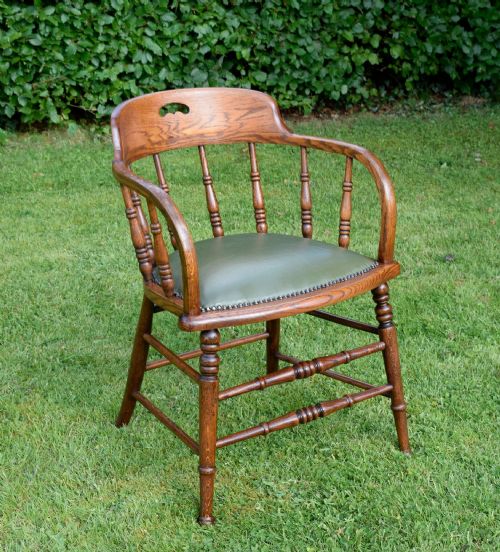
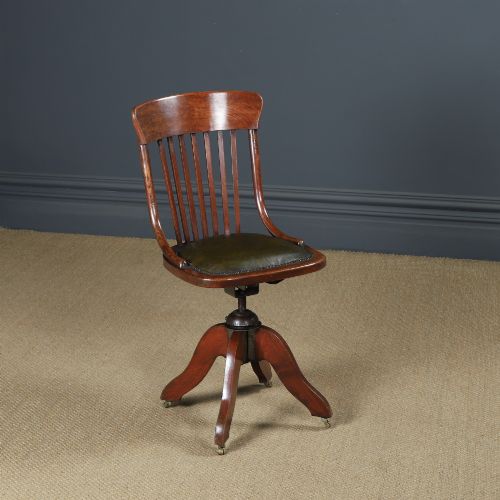
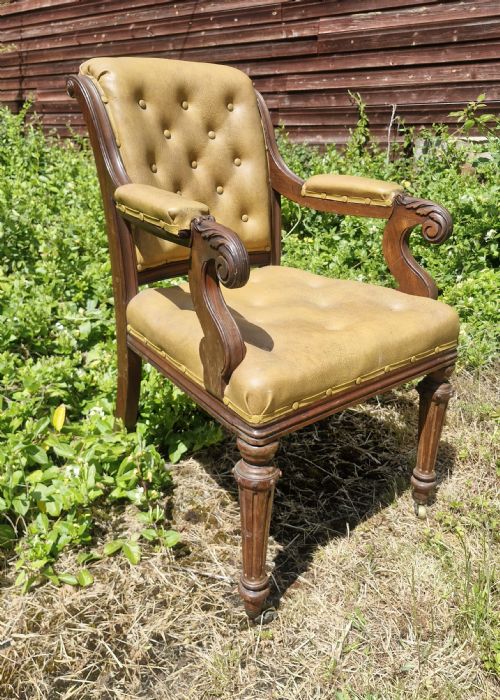


Brown Leather Office Chair
A brown leather office chair brings substance to a workspace through period timber and rich, patinated hides.
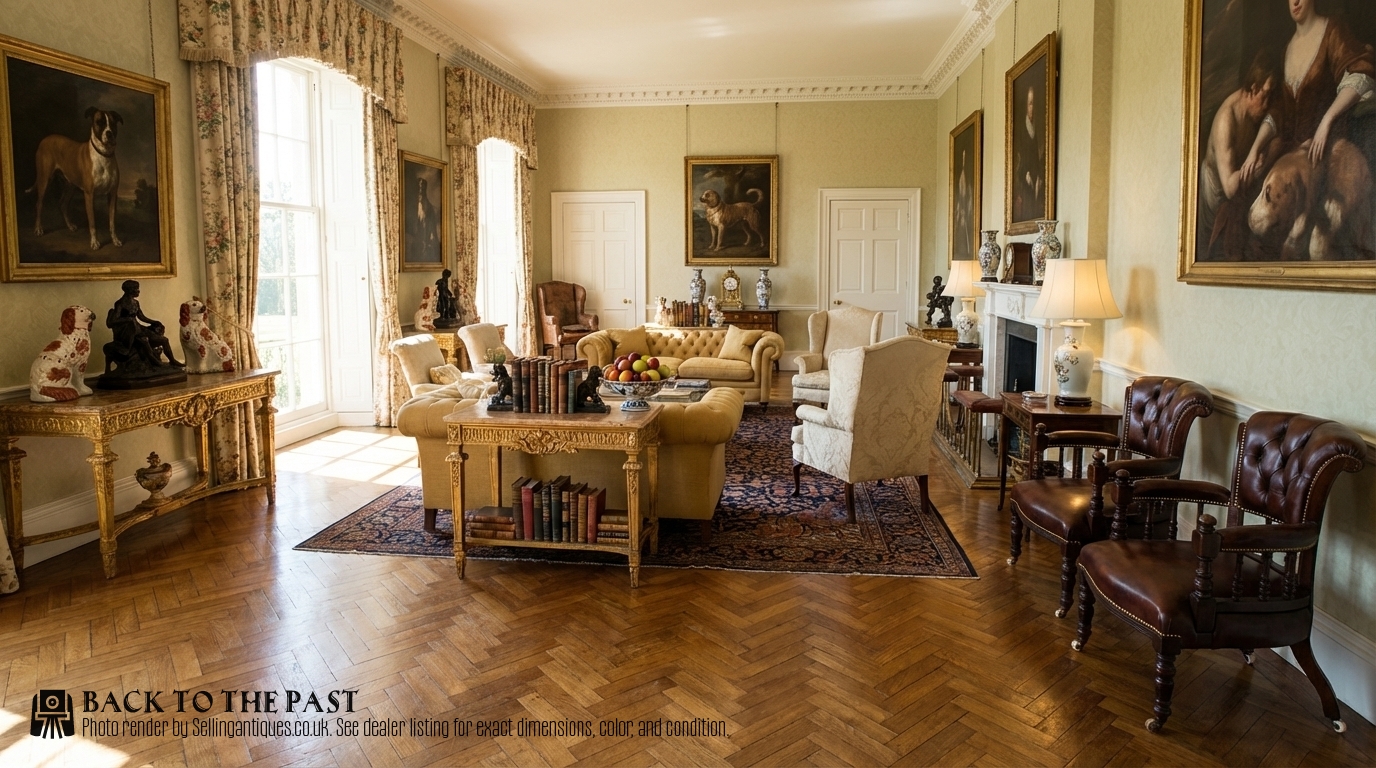
Brown Leather Office Chair
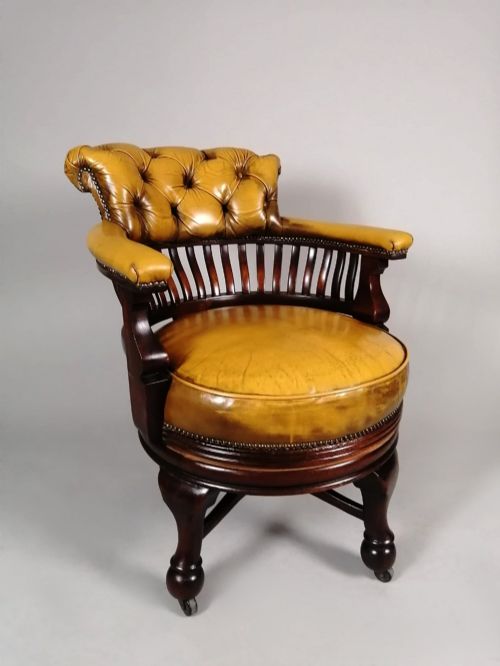
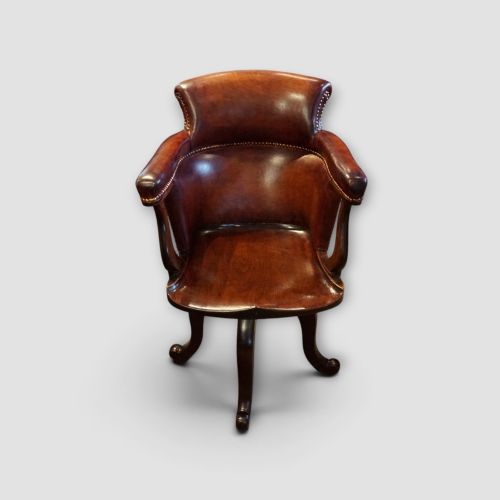
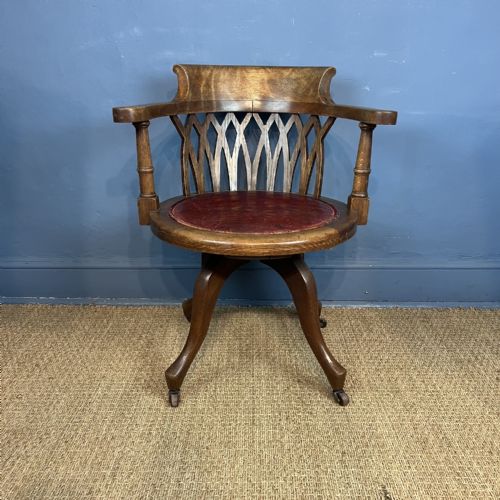
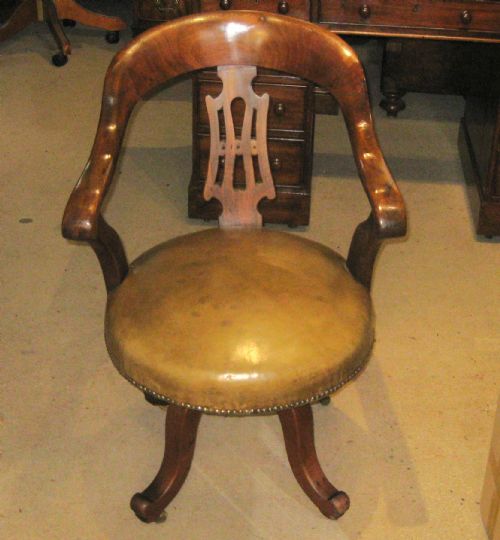
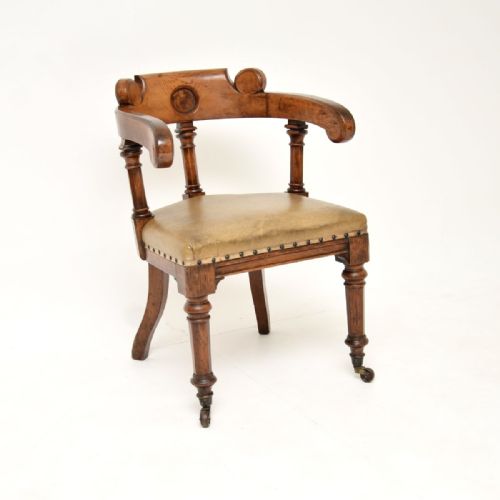
A brown leather office chair bridges the gap between historical craftsmanship and practical daily seating, drawing from nineteenth and early twentieth-century designs. Buyers encounter sturdy swivel models, revolving library armchairs, and solid wood frames built for heavy workspace use.
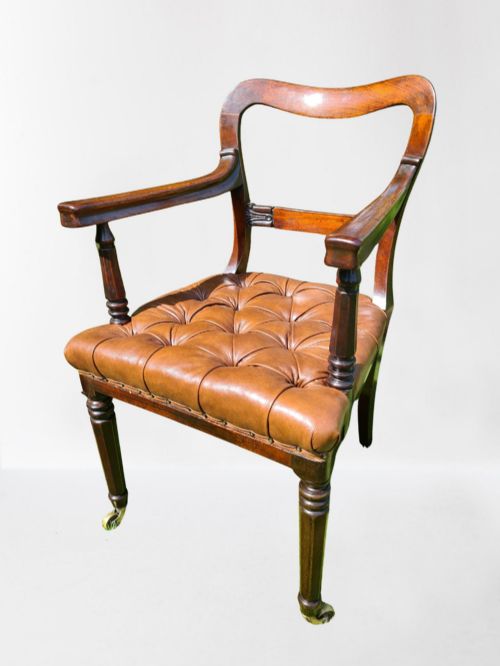
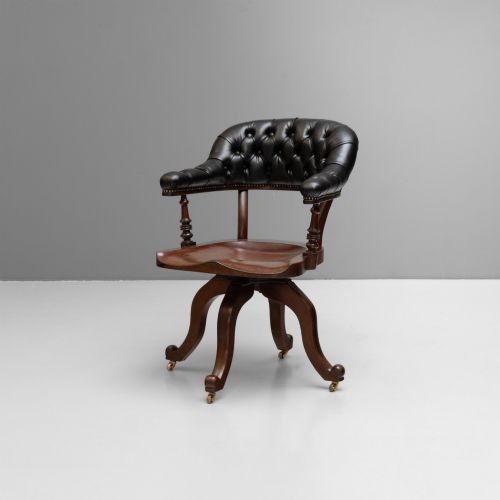
The most common versions on this page date from the Victorian and Edwardian periods, constructed in mahogany, oak, or walnut. These pieces range from simple desk armchairs to sophisticated revolving designs featuring buttoned leather upholstery.
Origins span English workshops and continental influences, incorporating styles from Gothic Revival to Sheraton and Georgian revivals. This variety ensures that each brown leather office chair serves both as a functional seat and a distinct period furnishing.
Materials and construction methods
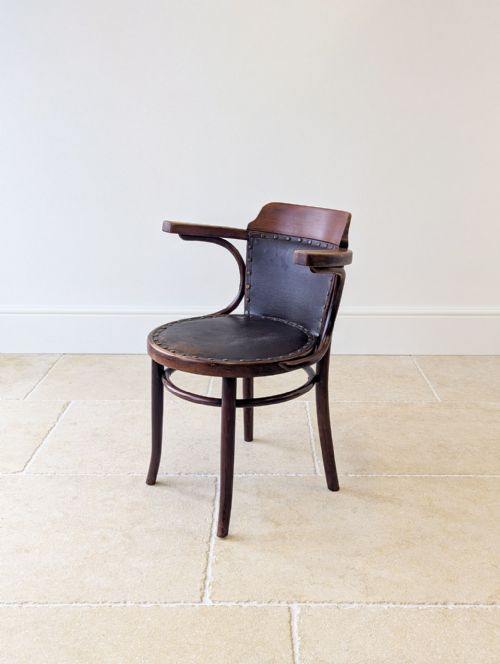
Makers relied on dense hardwoods like mahogany, oak, walnut, and beech to form the robust frames and elbow supports necessary for daily office use. These timbers were frequently turned, carved, or bent using steam methods such as bentwood techniques.
Upholstery centres on leather, often secured with brass studs and sometimes finished with deep buttoning for comfort and structure. Metal components, including cast iron and brass mechanisms, provide the swivel and adjustable height functions on revolving examples.
Period origins span from the mid nineteenth century through the Edwardian era and into the nineteen-twenties.
Distinctions in craftsmanship
The finest examples display superior timber selection, such as richly figured burr elm or deep-grained mahogany, paired with expert joinery that remains rigid over generations. Superior frames feature intricate carved detailing or documented maker attributions that elevate their standing.
The condition and quality of the leather upholstery play a major role, with supple, patinated hides retaining depth and strength compared to hardened or heavily restored surfaces. Original mechanical elements, such as smooth-operating swivel bases and castors, also distinguish higher-grade specimens.
Gillows·Kendrick and Jefferson·Maple and Co
The Brown Leather Office Chair Glossary
- Revolving desk chair
- A seat featuring a central pivot mechanism that allows the user to turn fully around while seated at a desk. These often incorporate mechanical adjustments for height.
- Captain's chair
- A sturdy wooden armchair with a rounded backrest supported by vertical spindles, frequently upholstered in leather on the seat or back.
- Gothic Revival
- A nineteenth-century design movement inspired by medieval architecture, characterised in seating by pointed arches, heavy tracery, and solid oak construction.
- Bentwood
- A technique of steaming wood until pliable and bending it into curved structural forms, popularised by makers like Thonet for lightweight yet durable frames.
- Ormolu
- Gilded bronze mounts applied as decorative ornaments to furniture surfaces, commonly seen on French-influenced Empire style pieces.
Brown Leather Office Chair: Frequently Asked Questions
Are these chairs comfortable for daily work?
Most models provide solid lower back support and generous proportions suited for extended sitting at a desk. Their sturdy wooden frames and padded leather seats combine stability with traditional ergonomics.
Revolving mechanisms and adjustable heights on many period examples add modern convenience to historical seating. Users can easily integrate them into contemporary studies without sacrificing comfort.
How do I identify a Victorian desk chair?
Victorian pieces typically feature deep-grained mahogany or oak, often accompanied by buttoned leather upholstery and heavy cast iron swivel bases. Look for darker timber tones and robust joinery characteristic of the nineteenth century.
Stylistic cues such as carved elbow rests and Gothic Revival motifs further point toward the Victorian era. Comparing the turning on the legs helps distinguish them from later Edwardian iterations.
What maintenance does old leather require?
Leather upholstery benefits from periodic treatment with appropriate conditioning balms to maintain flexibility and prevent the surface from drying out. Keeping the hide clean from dust preserves the natural patina built up over decades.
Avoiding direct sunlight and excessive heat protects the material from cracking or fading. Gentle care ensures the original character of the leather remains intact for years of use.
Can I adjust the height on these chairs?
Many revolving models from the late nineteenth and early twentieth centuries feature threaded spindle mechanisms beneath the seat. Turning the chair allows the user to raise or lower the seating position.
Fixed-height armchairs and side chairs do not possess this capability, remaining at their original static level. Checking the mechanism in the listings confirms whether a specific piece is adjustable.