


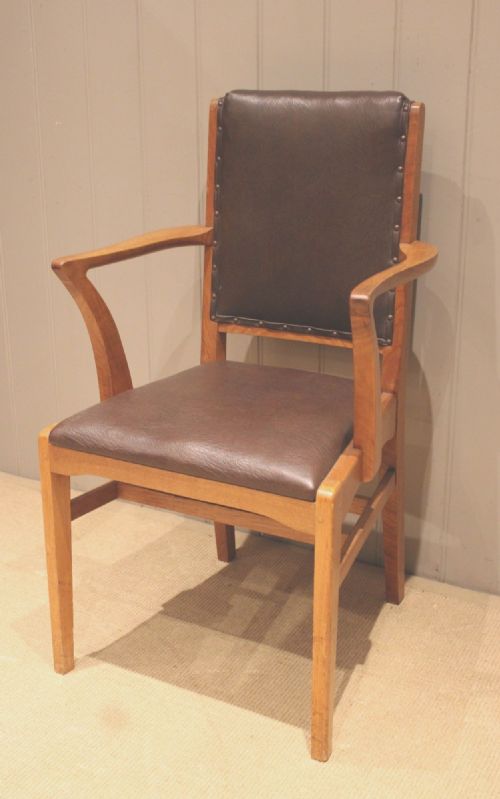


Mid Century Oak Armchair
These mid century oak armchair selections bring together centuries of solid timber framing and robust vernacular seating.
Mid Century Oak Armchair
A mid century oak armchair brings substantial timber construction and varied seating forms into a room, drawing on centuries of vernacular and formal design traditions. When you search for this phrase, you encounter everything from heavy panel-backed seating through to upholstered library chairs and streamlined modern frames.
The pieces listed on this page span several centuries, including seventeenth-century wainscot forms, eighteenth-century Windsor and corner chairs, nineteenth-century smoker's bows and campaign armchairs, alongside twentieth-century bridge and library chairs. Solid timber frames dominate, frequently paired with elm, beech, fruitwood, leather, cane, and fabric.
How they were made
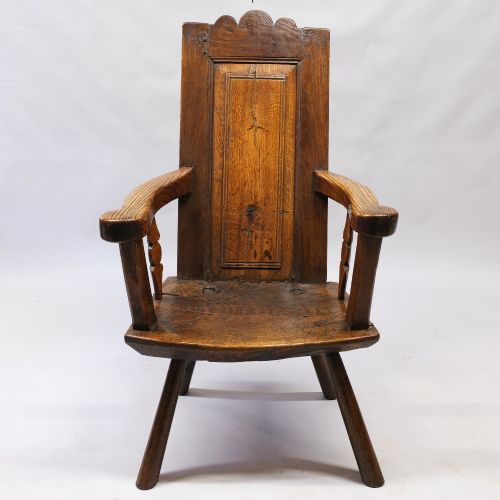
Makers built these chairs using solid oak alongside supporting timbers like elm, beech, and fruitwood, relying on pegged joints and sturdy frame construction to ensure longevity. Joinery methods varied according to the period, ranging from early wainscot panel assembly to later steam-bent rails and turned spindles.
Surface treatments and upholstery methods evolved alongside the frame styles, incorporating hand-tooled leather, woven cane, sisal, and traditional fabric coverings secured with brass detailing. Each material was chosen for durability, ensuring the structural integrity of the timber supports and seating areas over generations of use.
Materials across the selection range from solid oak and elm to brass, cane, leather, and woven sisal fibres.
What varies in quality
The distinction between standard examples and superior pieces rests on the weight of the timber, the crispness of the joinery, and the integrity of the original framing. Heavier wainscot constructions and well-proportioned vernacular chairs demonstrate superior timber selection and careful hand-shaping by the maker.
Survival of original surface finishes, patination, and authentic secondary woods further elevate a piece. Lesser examples often show excessive timber replacement or unsympathetic modern alterations that diminish the historical character of the frame.
Victor Courtray
The Mid Century Oak Armchair Glossary
- Wainscot armchair
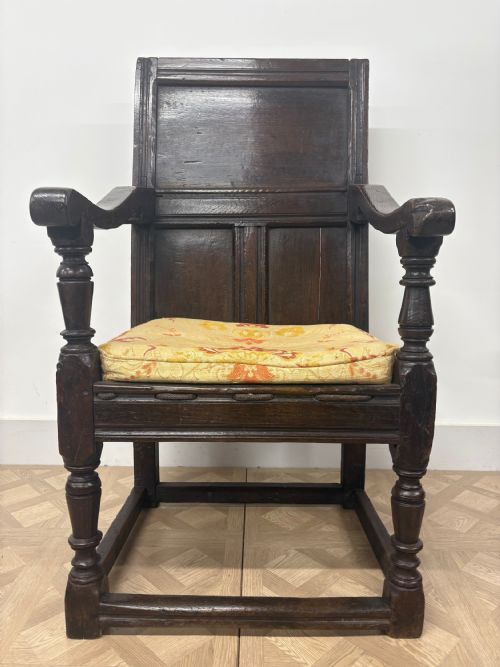
- A heavy, solid oak chair originating in the seventeenth century, featuring panelled backs and substantial armrests. These early forms showcase traditional joinery and carved wooden details.
- Smoker's bow
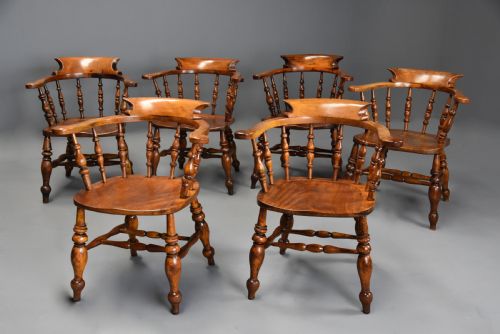
- A low-backed Windsor armchair featuring a rounded top rail supported by turned spindles, often associated with nineteenth-century tavern and domestic use. They provide robust and comfortable seating.
- Corner chair
- A chair designed with a diagonal orientation to fit into room angles, typically featuring a curved backrest supported by multiple uprights. Examples often combine oak with secondary timbers like fruitwood.
- Campaign armchair
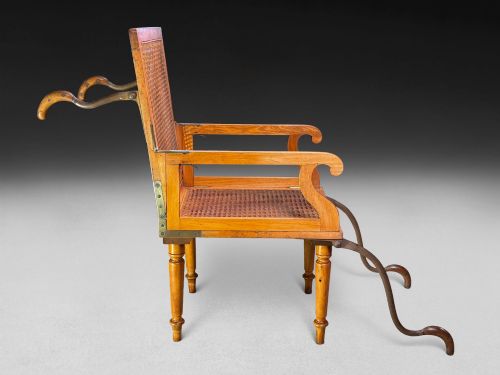
- A portable seating form designed for travel, featuring folding or dismantlable wooden frames often fitted with brass hardware and leather upholstery. They combine practicality with sturdy construction.
- Sisal
- A natural fibre derived from the agave plant, utilised for durable woven seating panels. It offers a tactile alternative to traditional leather and fabric upholstery.
Mid Century Oak Armchair: Frequently Asked Questions
What defines a wainscot armchair?
A wainscot armchair is constructed entirely from solid timber, typically featuring a high panelled back and sturdy wooden arms. These heavy seats date back to the seventeenth century and reflect early domestic woodworking traditions.
Their substantial weight and architectural joinery distinguish them from later, lighter seating forms found in subsequent centuries.
How do I identify a smoker's bow?
A smoker's bow is a type of Windsor chair characterised by a continuous curved arm rail and low spindle back. They were widely produced in the nineteenth century for everyday domestic and commercial use.
Solid wood seats are typically saddled for comfort, resting upon turned legs joined by stretchers.
Are these chairs suitable for daily desk use?
Many oak armchairs from the nineteenth and twentieth centuries adapt well to modern desk work, provided the seat height and depth suit your requirements. Solid frames offer durable support for regular seating.
Consider pairing open arm designs with appropriate desk clearances to ensure comfortable positioning.
What is a campaign armchair?
A campaign armchair is built for portability, featuring collapsible or knockdown wooden frames designed for military officers on the move. They frequently incorporate robust timbers like oak alongside brass fittings.
This functional engineering gives them a distinctive structural character distinct from static domestic furniture.