
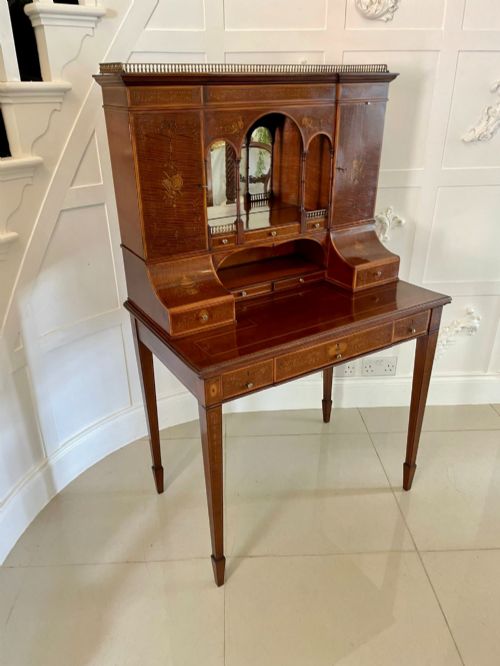
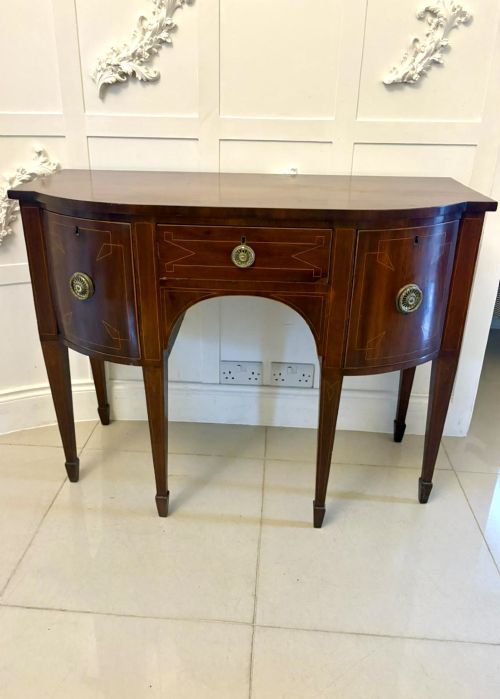
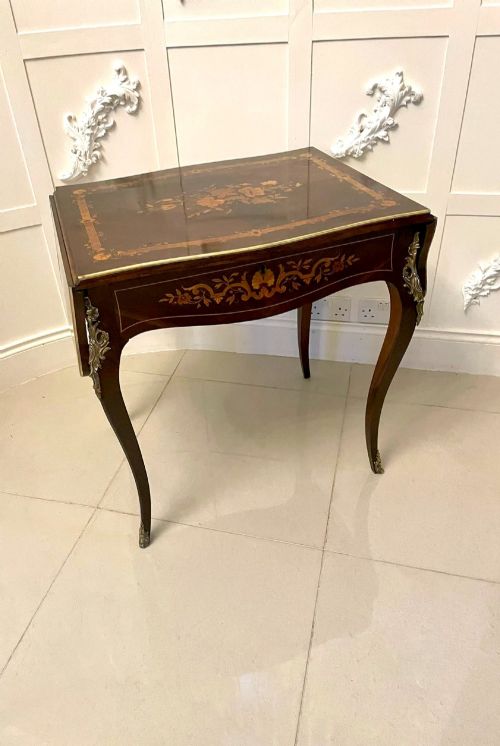
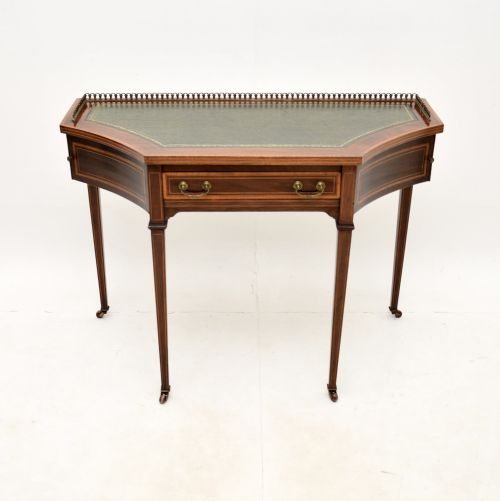


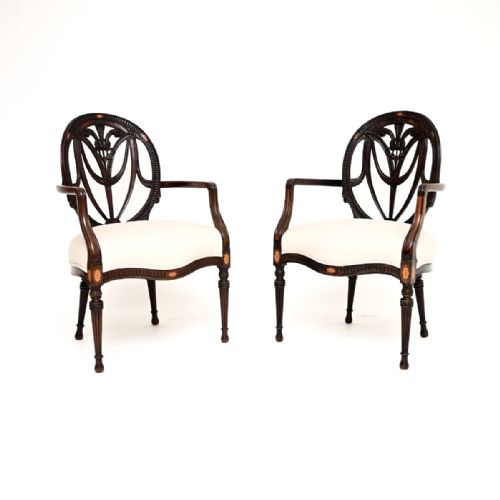
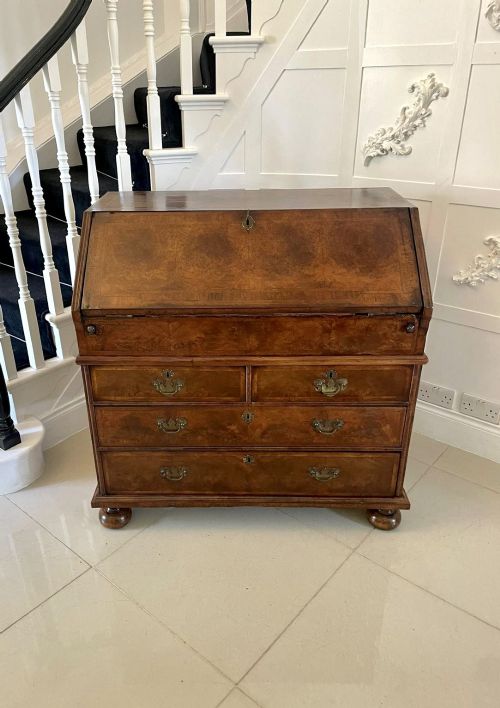
Brown Inlaid Desk
A brown inlaid desk brings together fine cabinet-making and functional writing space, offering a practical antique for the home.
Brown Inlaid Desk
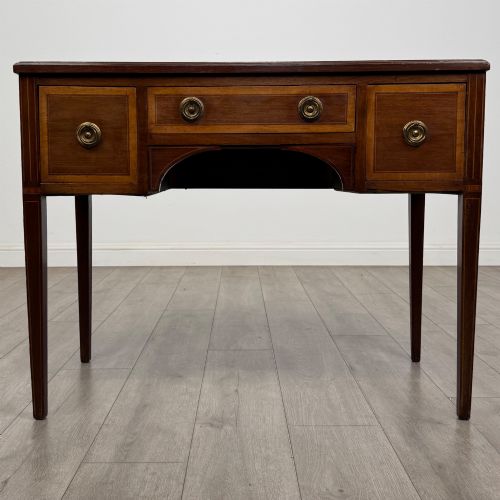
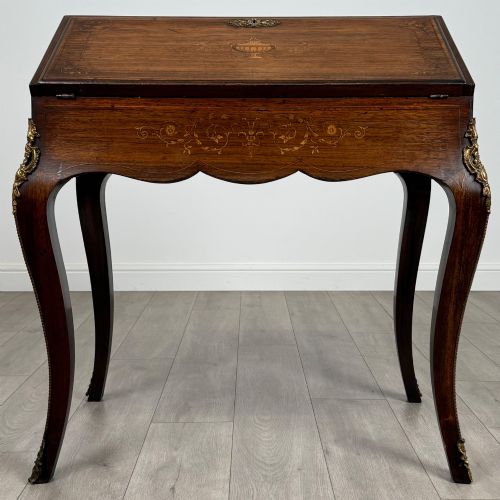
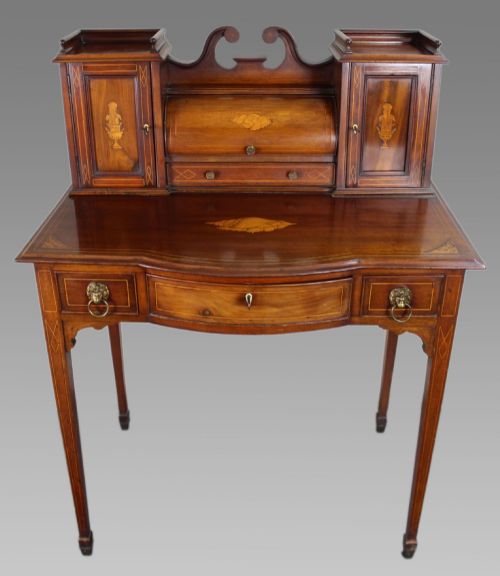
A brown inlaid desk incorporates writing tables, bureaus, and pedestal desks produced across several periods including Georgian, Victorian, and Edwardian. These pieces combine working surfaces with decorative marquetry and contrasting timber details.
Mahogany and walnut form the primary structure of these desks, frequently enhanced by satinwood, rosewood, and fruitwood. Buyers commonly encounter Edwardian and 19th-century mahogany writing tables featuring delicate decorative inlay.
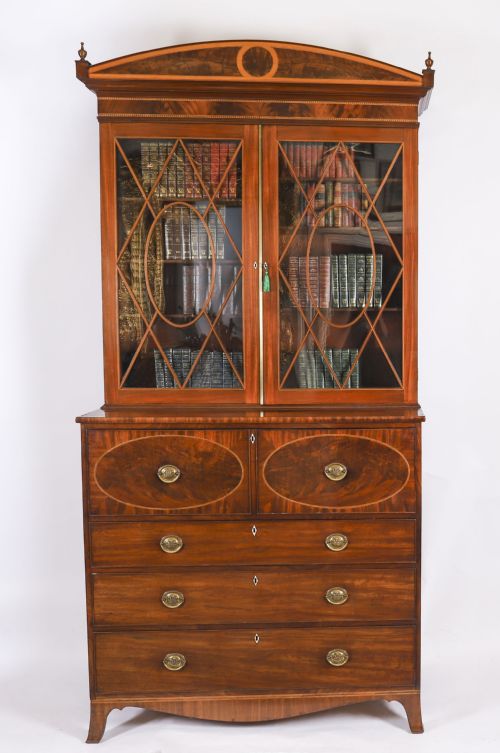
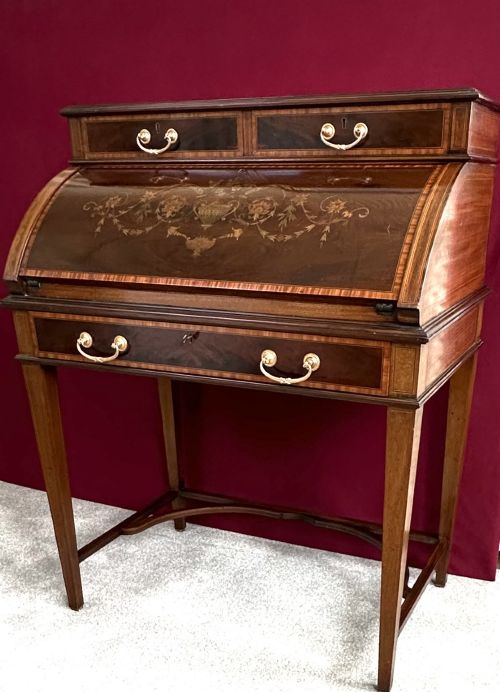
The category extends beyond standard writing tables to include bureau bookcases, fall-front bureaus, and cylinder desks. Each variation provides distinct storage compartments alongside the main writing surface.
How they were made
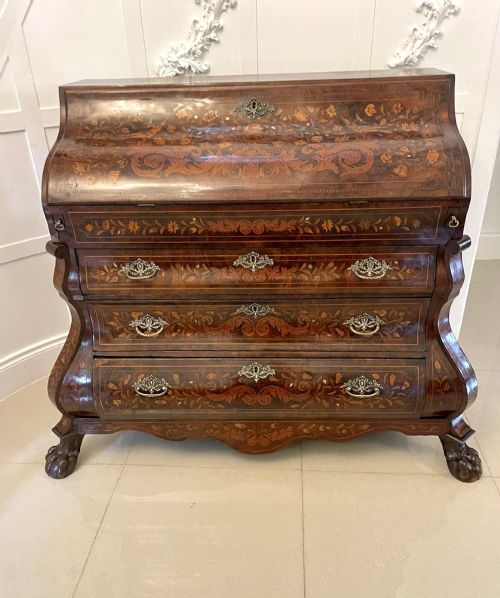
Cabinet-makers constructed the main bodies from dense timbers such as mahogany, walnut, and rosewood, applying contrasting veneers of satinwood and fruitwood for decorative surface patterns. Marquetry and parquetry techniques created intricate floral and geometric motifs across the fall fronts and top panels.
Brass fittings, including handles and key escutcheons, complemented the dark wood tones and inlaid borders. Selected pieces incorporated leather writing inserts and specialised mechanisms for drawers and writing slides.
Brown Inlaid Desk Retail Price Guide 2026
Typical asking prices for brown inlaid desk among the pieces listed under this phrase on Sellingantiques today, from the lower quarter to the upper quarter. They describe what is for sale here now, not the wider market.
Listings feature pieces spanning the 17th, 18th, 19th, and 20th centuries, utilising mahogany, walnut, rosewood, and satinwood.
What varies in quality
The precision of the marquetry and the choice of figured timber determine the visual hierarchy of the pieces. Fine examples display tightly fitted wood veneers and sharply executed floral or geometric inlays without gaps or mismatched grain.
Structural integrity and the retention of original hardware distinguish superior items. The complexity of the desk interior, such as fitted stationery compartments and secret drawers, also marks the grade of the piece.
Edwards & Roberts·Maple & Co·Jackson & Graham
The Brown Inlaid Desk Glossary
- Marquetry
- Decorative veneer work forming pictures or patterns by assembling small pieces of wood, shell, or ivory. This technique defines the ornamented surfaces of many bureau bookcases and writing tables.
- Bureau
- A sloping desk that opens to reveal internal compartments and pigeonholes. These items frequently feature fall fronts supported by pull-out wooden brackets.
- Satinwood
- A pale, lustrous timber native to India and Ceylon, used extensively for contrasting inlay and banding on mahogany furniture. It provides bright geometric highlights against darker cabinet woods.
- Parquetry
- Geometric mosaic woodwork used for flooring and furniture tops. The technique arranges rectangular or triangular veneer pieces to create repeating patterns.
- Secretaire
- A piece of furniture containing a built-in writing drawer or fold-down writing flap. These items often combine bookcase shelving above with concealed writing compartments below.
Brown Inlaid Desk: Frequently Asked Questions
How do I identify an Edwardian desk?
Edwardian desks often feature lighter mahogany frames combined with satinwood banding and subtle floral inlay. They date from the period around nineteen hundred and tend to have refined proportions.
Construction methods from this era often utilise machine-assisted joinery alongside traditional hand-finishing techniques.
What is a cylinder desk?
A cylinder desk uses a quarter-circle rolling wooden shutter to conceal the writing surface and internal compartments. Pulling out the main writing slide automatically retracts the cylinder cover.
This mechanism offers a neat way to secure correspondence while keeping writing materials organised within the desk superstructure.
Where were these desks used?
These desks served primarily in private libraries, studies, and drawing rooms of large homes. They provided a designated workspace for managing household accounts and personal correspondence.
Smaller bureau de dame examples were frequently placed in private bedrooms or boudoirs for light writing tasks.