
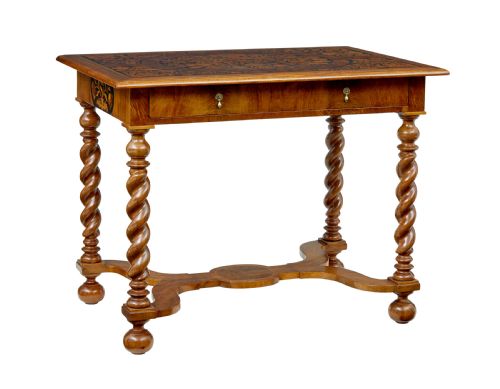
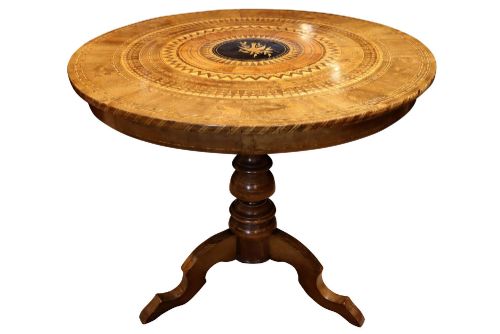
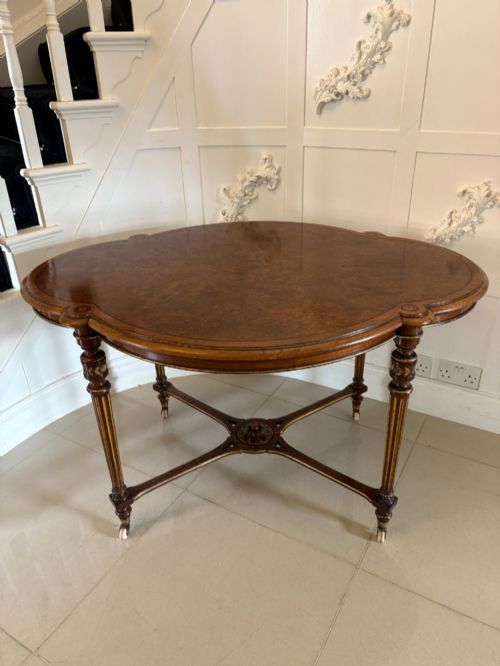
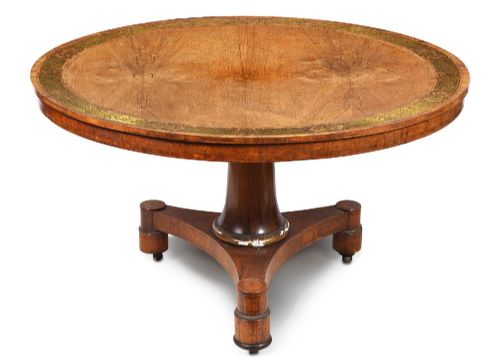
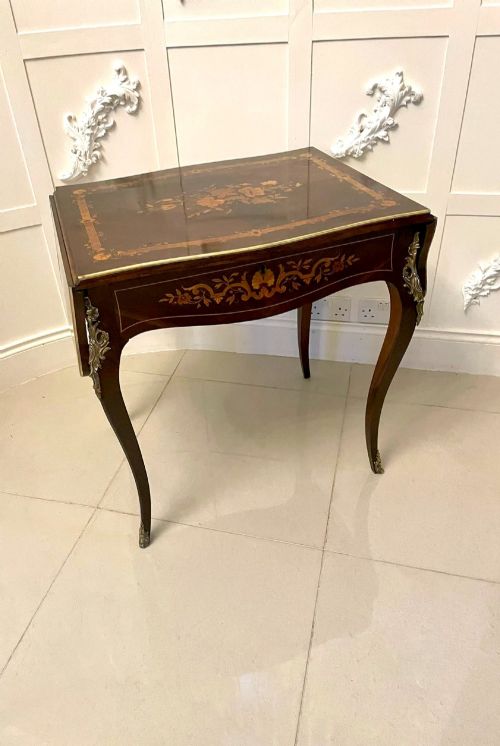
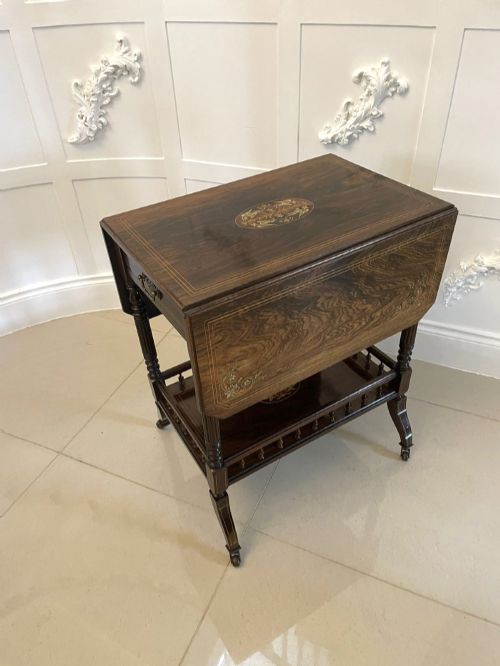

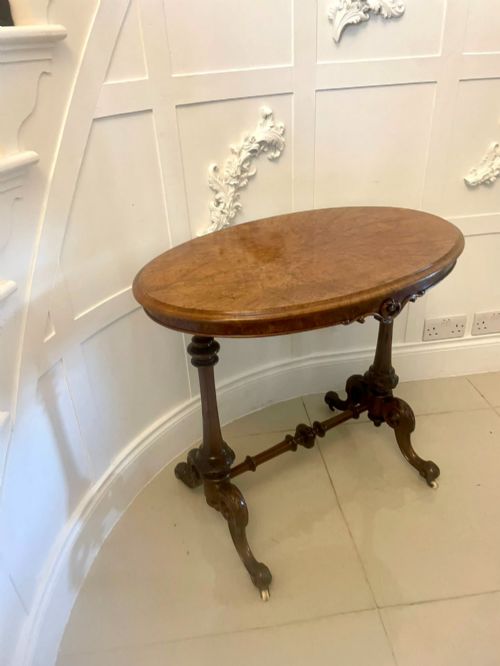
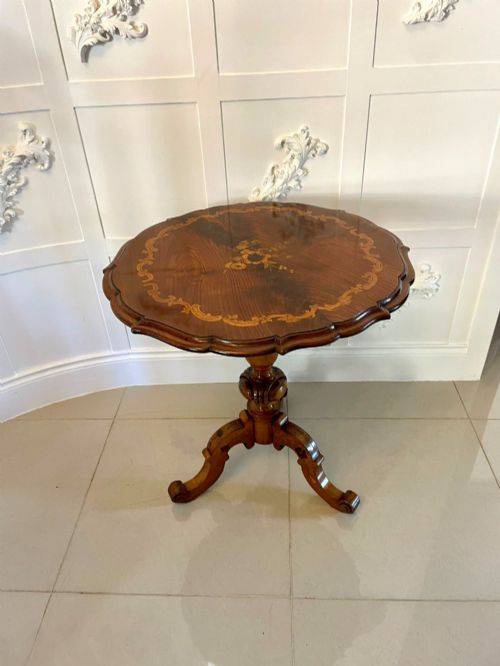
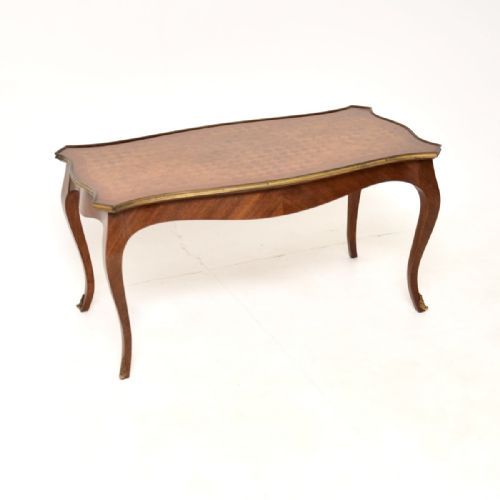
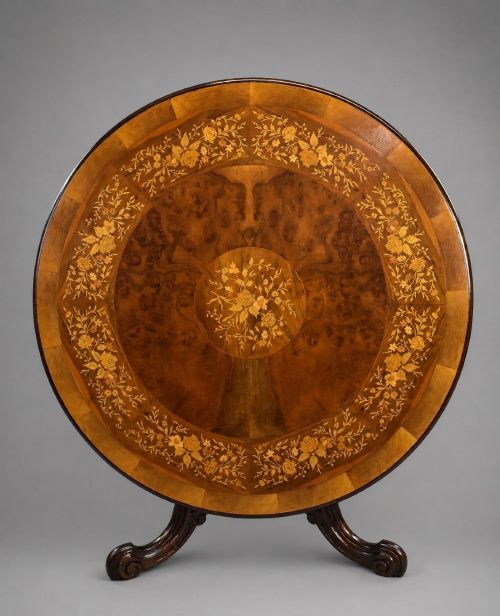
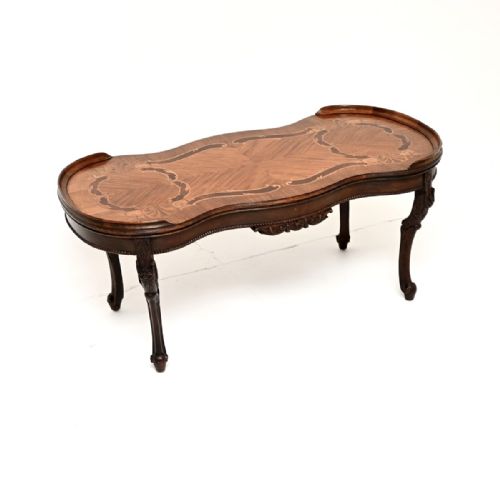
Brown Inlaid Center Table
A brown inlaid centre table brings rich timber grain and intricate surface detail to the middle of a room.
Brown Inlaid Center Table
A brown inlaid centre table serves as a decorative and functional focal point, designed to stand freely in a room rather than against a wall. The pieces gathered here draw largely from the Victorian era and the nineteenth century, alongside Edwardian and French examples.
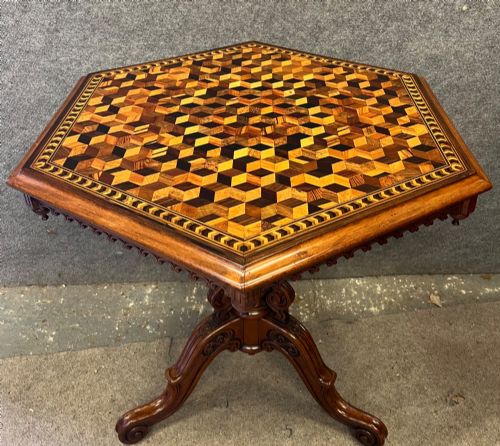
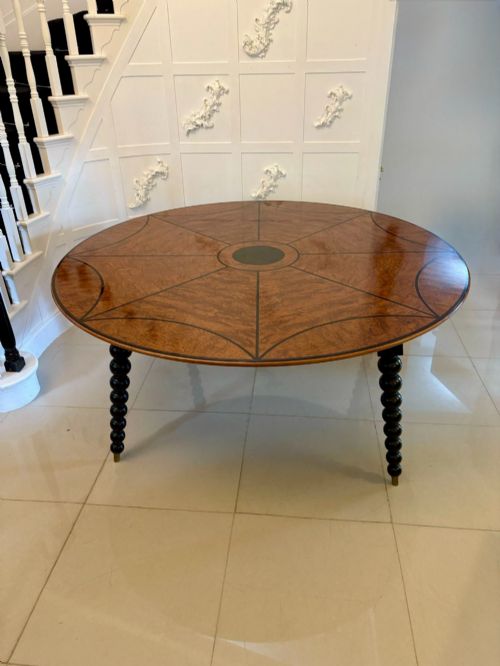
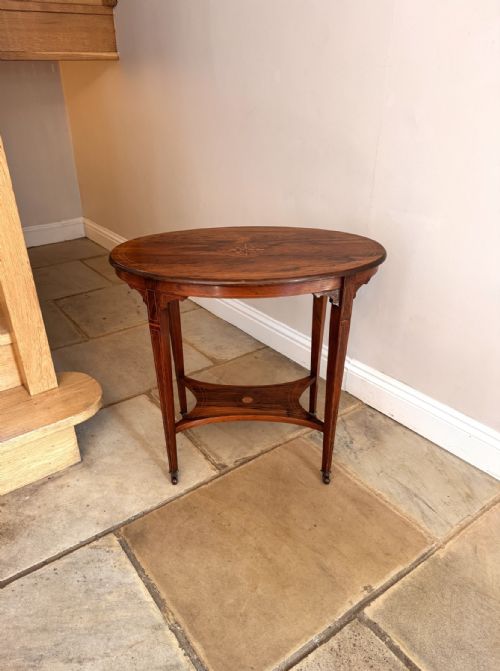
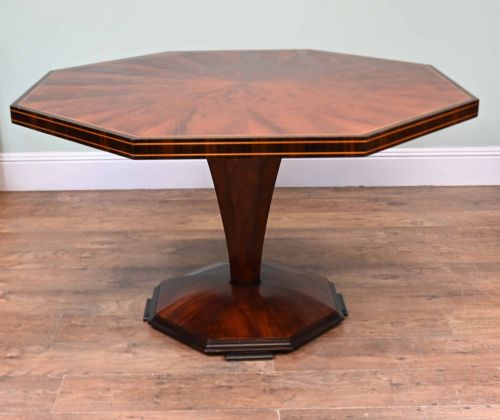
Most variations take the form of freestanding centre tables, lamp tables, and occasional tables, often featuring oval, round, octagonal, or shaped tops. These surfaces frequently incorporate contrasting woods and decorative patterns intended to catch the eye from every angle.
Origins span English workshops, French ateliers, and Irish centres such as Killarney, alongside specific expressions like Chinese export and Anglo-Indian production. Buyers will encounter walnut, burr walnut, rosewood, and mahogany as the primary foundational timbers.
Materials and construction
Cabinet makers utilised dense, figured hardwoods such as burr walnut, rosewood, and mahogany for the main body of the table. These timbers provided stable, rich brown foundations that accepted intricate decorative work.
Surface decoration relied on marquetry and parquetry inlay, employing lighter woods like satinwood, boxwood, and various exotic species to create pictorial or geometric motifs. Brass and mother-of-pearl also appear as contrasting inlay materials, while cast or applied ormolu mounts occasionally frame French designs.
Listings span the eighteenth, nineteenth, and early twentieth centuries, with Victorian burr walnut and French marquetry dominating the selection.
Distinctions in quality
The sophistication of the timber selection and the precision of the marquetry set finer examples apart from simpler pieces. Master workshops employed tightly figured burr veneers and meticulously cut contrasting inlays that fit flush into the primary wood without heavy filler.
Structural ambition also dictates standard, moving from straightforward occasional formats to exhibition-grade pedestal bases, carved chess tops, and ormolu mounts. The crispness of the carving and the fluidity of the freestanding form indicate the original maker's investment of time and skill.
Edwards & Roberts·Holmes Baldock·Egan Workshop
The Brown Inlaid Center Table Glossary
- Centre table
- A freestanding table finished on all sides, intended to be placed in the middle of a room rather than pushed against a wall. These pieces often feature decorative marquetry visible from any angle.
- Marquetry
- An art form where small pieces of veneer are assembled into pictorial or decorative patterns on a wooden surface. Craftsmen use contrasting woods to create depth and shade within the design.
- Burr walnut
- A prized timber harvested from the gnarled growths on walnut trees, yielding turbulent and highly decorative grain patterns. It forms the primary visual surface on many nineteenth-century tables.
- Ormolu
- Gilded bronze mounts applied to furniture, particularly popular on French nineteenth-century pieces. They provide decorative borders and corner accents alongside wooden inlays.
Brown Inlaid Center Table: Frequently Asked Questions
Where should a centre table go?
A brown inlaid centre table is designed to sit in the middle of a room, allowing people to walk around it and view the decorated top from all sides. They often anchor large entry halls, libraries, or drawing rooms.
Ensure there is enough clearance space around the edges for movement and seating. Because these pieces are finished on all sides, they look complete from any angle in an open space.
How do I care for inlaid wood?
Keep inlaid timber away from direct sunlight and strong heat sources to prevent the veneers and delicate boxwood lines from drying out and lifting. Dust gently with a dry or slightly damp cloth.
Avoid using silicone-based polishes or harsh chemical sprays, which can seep into the fine joints of the marquetry. Traditional wax polish, applied sparingly, helps maintain the sheen of the walnut or rosewood.
What is the difference between a centre table and a coffee table?
Traditional centre tables stand at a standard dining or writing height, typically meant for display, games, or holding lamps rather than resting feet. Many nineteenth-century examples were built as freestanding statement pieces.
Lower coffee table formats appear in later twentieth-century adaptations or alterations of older forms. Check the height dimensions if you intend to pair the table with low seating.
How do I identify Victorian marquetry?
Victorian marquetry often utilises rich burr walnut or rosewood grounds inset with floral, scroll, or geometric motifs in satinwood and boxwood. Look for the variety of natural timber tones used to create shading within the design.
Examine the edges where the inlay meets the primary wood to observe the tightness of the fit. Hand-cut nineteenth-century work usually displays subtle irregularities compared to later machine-made veneers.