



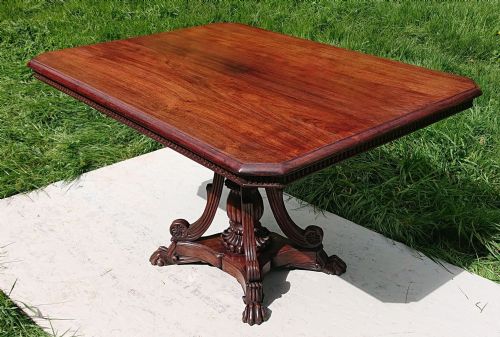

Colonial Center Table
A colonial centre table brings global craftsmanship and rich timber into a room, serving as a striking focal point for any interior.
Colonial Center Table
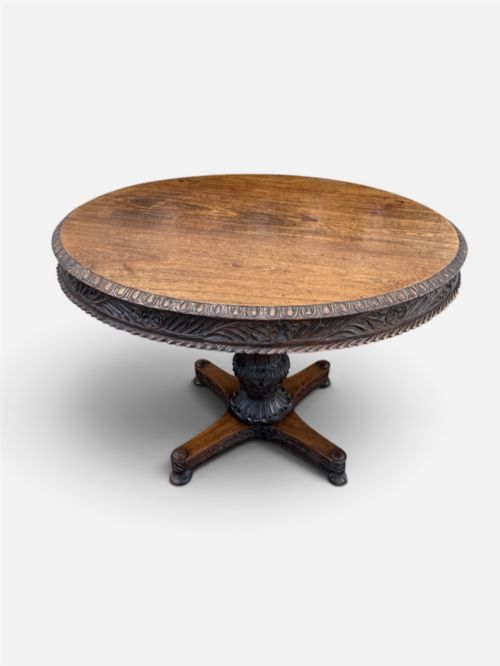
A colonial centre table serves as a freestanding focal point within a room, designed to be viewed from all sides rather than pushed against a wall. When searching for a colonial centre table, buyers encounter a diverse selection spanning the nineteenth century, including Victorian examples and earlier periods.
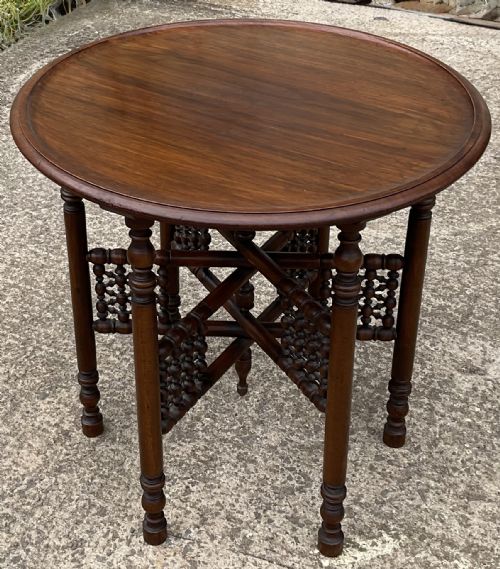
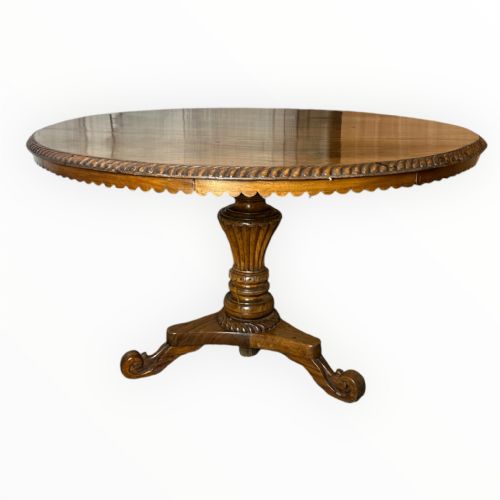
The inventory on this page showcases a rich mix of regional aesthetics, ranging from Anglo-Indian and Anglo-Burmese creations to Portuguese Baroque, Spanish walnut pieces, and Ceylonese designs. These tables appear in various forms, such as occasional tables, tilt-top tables, pedestal bases, and substantial dining or library tables.
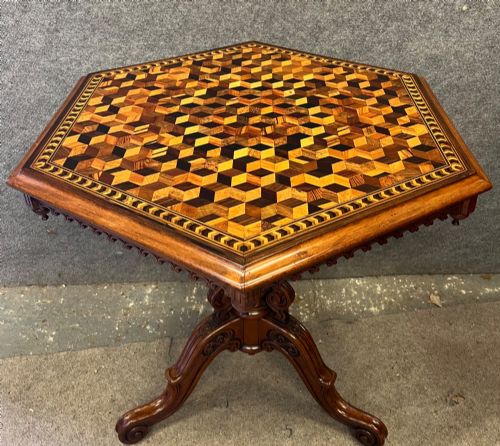
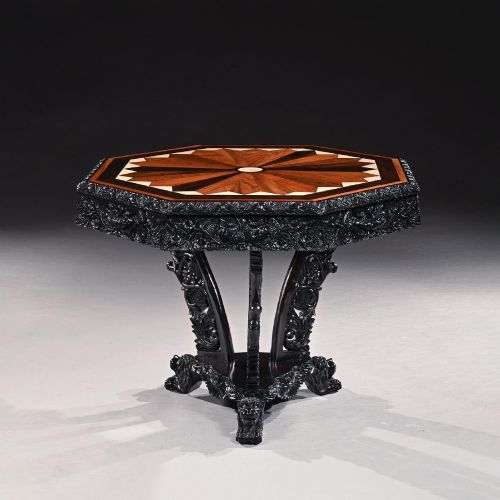
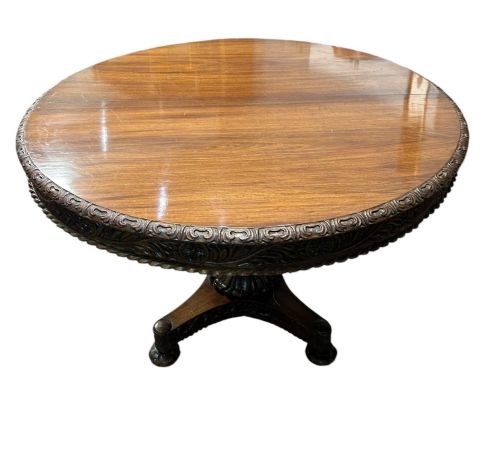
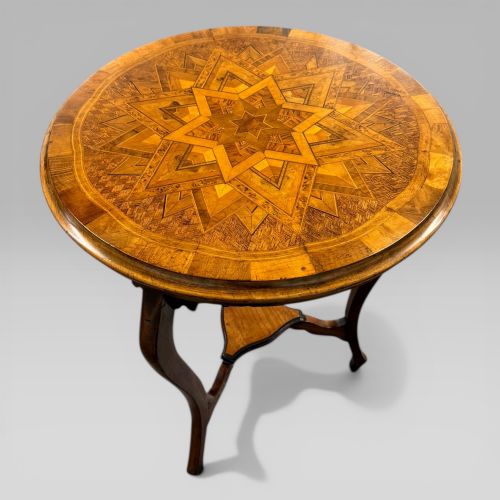
Most pieces date from the nineteenth century, featuring heavily carved details, circular tops, and occasional specimen wood marquetry. Buyers are most likely to meet circular padouk, rosewood, or teak tables originating from workshops in India, Burma, or Ceylon, alongside European provincial influences.
Materials and Construction
Craftsmen utilised dense tropical hardwoods such as padouk, rosewood, teak, ebony, mahogany, and satinwood, alongside European walnut and fruitwood. These timbers provided the structural integrity required for intricate relief carving and stable pedestal or tripod bases.
Construction techniques often involved solid timber construction, tilt-top mechanisms, and sophisticated pedestal supports, frequently enhanced by hand-carved elements, mother-of-pearl inlay, or elaborate specimen wood marquetry. Metal components like copper appeared in specialised warming or centerpiece forms.
Listings span the eighteenth to the twentieth centuries, featuring padouk, rosewood, teak, and walnut across various regional styles.
Evaluating Quality and Execution
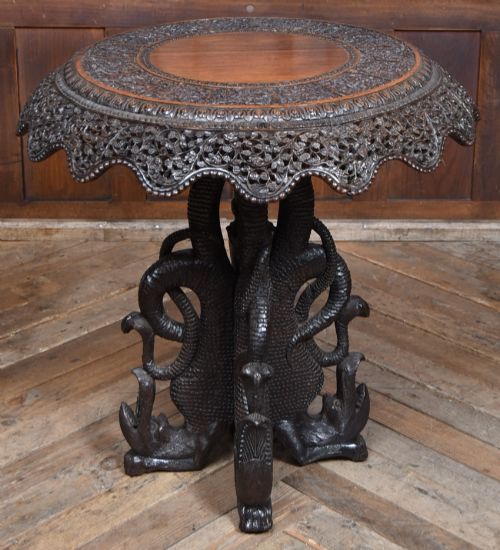
Quality rests primarily on the depth and crispness of the hand carving, the choice and figuring of the timber such as ebony or satinwood, and the structural stability of the pedestal or tripod base. Finer examples display meticulous joinery and complex decorative programmes like mother-of-pearl inlay or multi-wood specimen marquetry.
The distinction between standard utility furniture and superior workshop production lies in the handling of proportions and the precision of regional motifs, such as elephant or botanical carvings. Pieces bearing documented maker attributions or distinct regional provenance command greater interest from collectors.
Anton Seuffert·Currie and Co
The Colonial Center Table Glossary
- Tilt-top table
- A table with a hinged top that can be flipped into a vertical position when not in use. This mechanism allowed tables to be stored against walls in smaller spaces.
- Marquetry
- Decorative inlay work where small pieces of various woods are fitted into a veneer to form geometric or pictorial designs. Ceylonese and European makers utilised this technique extensively.
- Padouk
- A heavy, durable tropical hardwood with a reddish hue that darkens with age. It was a primary material for nineteenth-century Anglo-Indian furniture production.
- Pedestal table
- A table supported by a single central pillar rising from a base or feet. This design provides maximum legroom around the perimeter of the top.
Colonial Center Table: Frequently Asked Questions
What is a colonial centre table?
A colonial centre table is a freestanding table produced during the colonial era, often in regions influenced by British, Portuguese, or Spanish administration.
These pieces were designed to sit in the middle of a room rather than against a wall, featuring decorative carving or marquetry visible from every angle.
How do I identify an Anglo-Indian table?
Anglo-Indian tables typically feature dense tropical hardwoods like padouk, rosewood, or teak, combined with deep relief carving.
Many examples incorporate regional motifs such as elephants, foliage, or geometric mother-of-pearl inlay executed by local artisans during the nineteenth century.
Where were these tables made?
These tables originated across various global regions connected to colonial trade and administration, including India, Burma, Ceylon, and European provincial centres.
Specific workshops operated in regions like the Bombay area and the Galle District, blending European furniture forms with local materials and carving traditions.