






Brown Hardwood Tea Table
A brown hardwood tea table brings dense timber grain, low proportions and intricate regional carving into a room, spanning nineteenth-century Chinese export workshops and Anglo-Indian production.
Brown Hardwood Tea Table
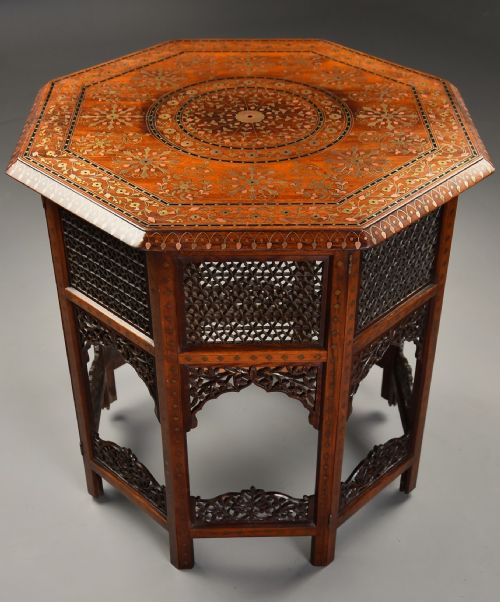
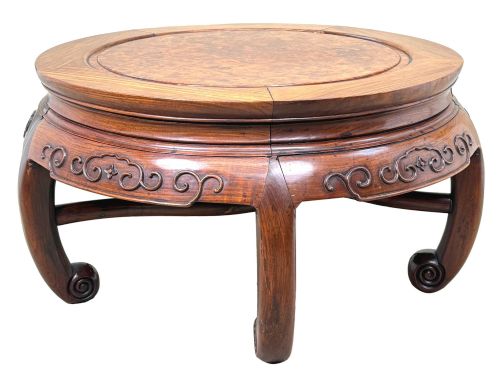
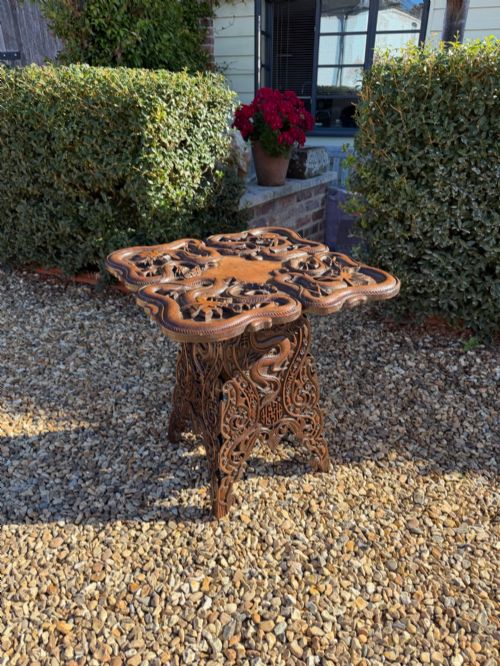
A brown hardwood tea table encompasses a variety of low tables, coffee tables, side tables and nesting sets originating from China, India, Japan and Burma during the nineteenth and early twentieth centuries. These pieces serve functional purposes in modern interiors while carrying distinct regional aesthetics ranging from Qing Dynasty scroll-ends to heavily carved Anglo-Indian motifs.
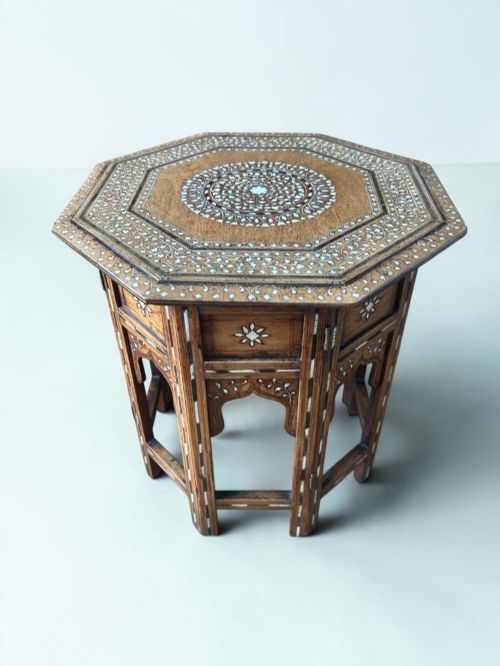
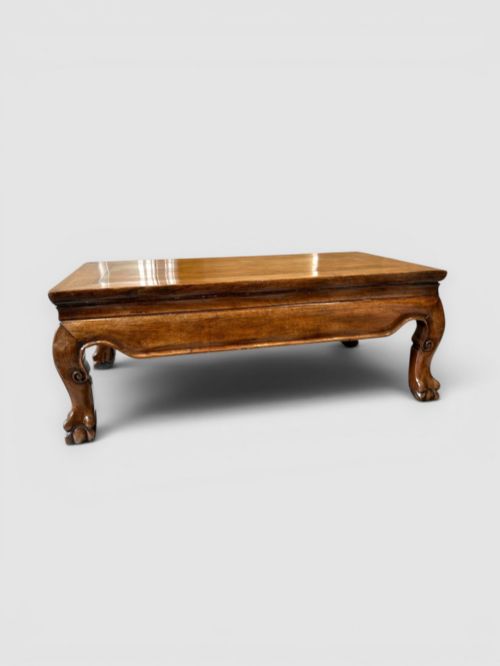
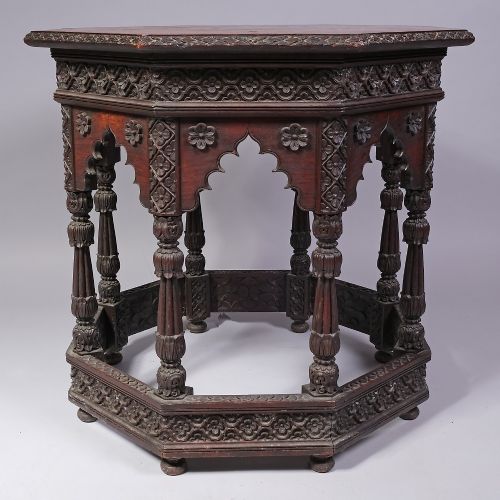
The most common examples on this page are Chinese low tables, opium tables and square occasional pieces constructed from dense oriental hardwoods. Alongside these, buyers frequently encounter octagonal tables from Hoshiarpur and nested sets utilising rosewood, teak and walnut.
Forms vary from folding coffee tables and circular centre tables to elaborate low forms intended for use on traditional platforms. Each regional variant demonstrates specific joinery and decorative traditions recorded across the nineteenth-century production centres.
Materials and construction methods
Carpenters utilised dense regional timbers including rosewood, padouk, huali and walnut, which provided the structural stability required for intricate carving and low-profile designs. These woods were selected for their deep natural colour and ability to take a smooth finish without extensive pigmentation.
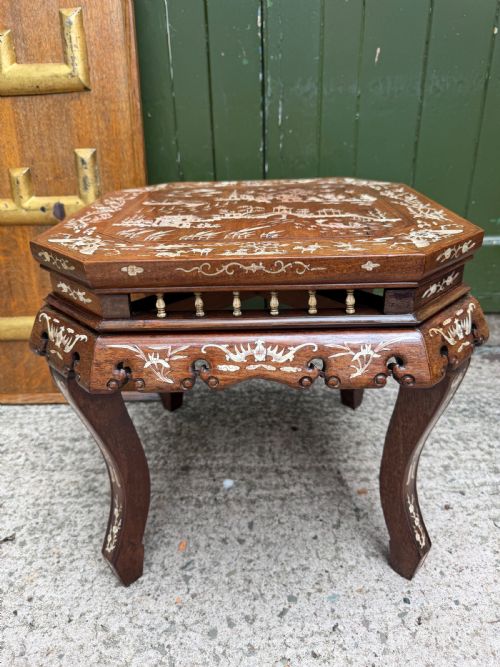
Surface decoration frequently incorporated bone and brass inlay, embedding delicate floral or geometric motifs into the hardwood top. Carving techniques ranged from shallow relief leaf patterns to deep, three-dimensional dragon motifs executed by specialist regional artisans.
Brown Hardwood Tea Table Retail Price Guide 2026
Typical asking prices for brown hardwood tea table among the pieces listed under this phrase on Sellingantiques today, from the lower quarter to the upper quarter. They describe what is for sale here now, not the wider market.
Assessing quality and execution
Quality separates pieces through the crispness of the hand-carving and the precision of the joinery, particularly where panels meet and legs join the apron. Superior examples maintain sharp relief details and stable, balanced frames without excessive shrinkage or movement in the timber.
The integrity of the surface decoration indicates the standard of workshop production. Inlaid elements sit flush with the surrounding hardwood, and timber surfaces display a deep, natural patina developed over decades of use rather than artificial finishing.
The Brown Hardwood Tea Table Glossary
- Kang table
- A low domestic table traditionally used on a heated brick platform in northern China for dining, writing or serving tea. These pieces feature short legs and often terminate in scroll-ends.
- Huali
- A fragrant, dense Chinese hardwood prized for its rich grain patterns and durability during the Qing Dynasty. Cabinetmakers utilised this material for high-status low tables and scholarly furniture.
- Opium table
- A colloquial term applied to low Chinese coffee tables with compact proportions and recessed legs. They were originally designed for domestic relaxation and tea service.
- Padouk
- A heavy, durable tropical timber with a reddish-brown hue that darkens with age. It provides a stable base for detailed carving and rectangular low tables.
- Anglo-Indian
- A descriptive term for furniture made in India during the British colonial period combining local carving traditions with European forms. These pieces often incorporate octagonal tops and dense floral decoration.
Brown Hardwood Tea Table: Frequently Asked Questions
What is a brown hardwood tea table used for today?
These low tables function effectively as coffee tables, side tables or lamp stands in contemporary living spaces. Their compact proportions allow them to anchor seating areas without dominating the floor plan.
The flat surfaces accommodate books, decorative objects and cups, while the lower height suits modern low-slung upholstery. Many buyers place them centrally or beside sofas to introduce rich timber tones and regional character.
How do I identify a Chinese opium table?
An opium table is characterised by its low height, sturdy rectangular or square proportions and recessed legs. They frequently feature subtle scroll-ends or carved aprons beneath the surface.
Originating in nineteenth-century China, these tables were built from dense hardwoods such as rosewood or padouk. Their restrained form distinguishes them from more heavily decorated Anglo-Indian or Burmese pieces.
What distinguishes Anglo-Indian tables from Chinese pieces?
Anglo-Indian tables from centres like Hoshiarpur are defined by intricate overall carving and contrasting inlay work using bone or brass. They often feature octagonal tops and dense vegetal or animal motifs.
In contrast, nineteenth-century Chinese tables rely on clean lines, carved scroll-ends, or figured wood grain rather than surface inlay. The joinery and timber species immediately signal their distinct geographic origins.
How should I care for an antique hardwood table?
Maintain the timber by keeping the table away from direct heat sources and sudden humidity changes to prevent wood movement. Dust regularly with a soft, dry cloth to protect the historic surface.
Abrasive cleaners and chemical polishes should be avoided in favour of occasional applications of traditional wax if the timber appears dry. This preserves the natural patina developed over generations of use.