

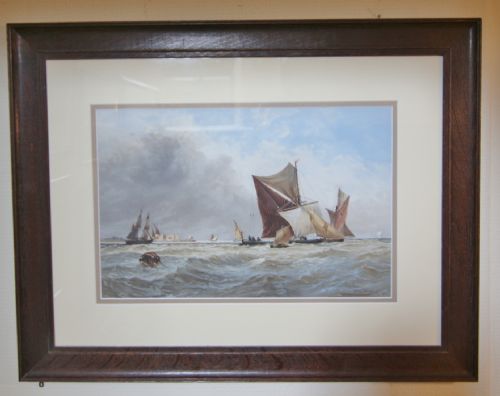
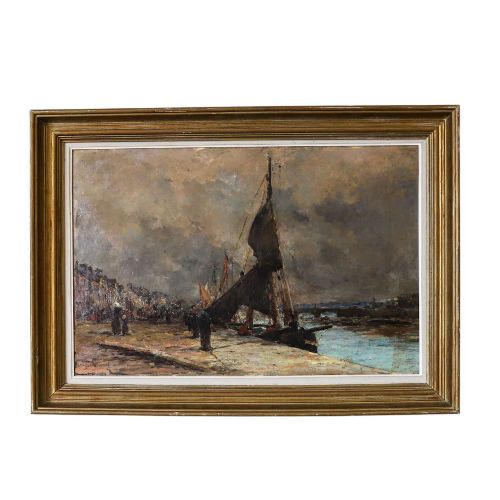
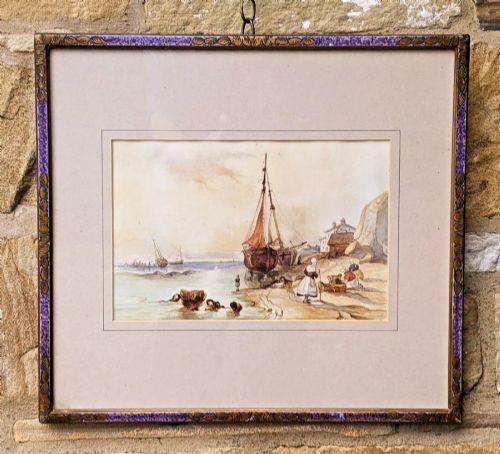
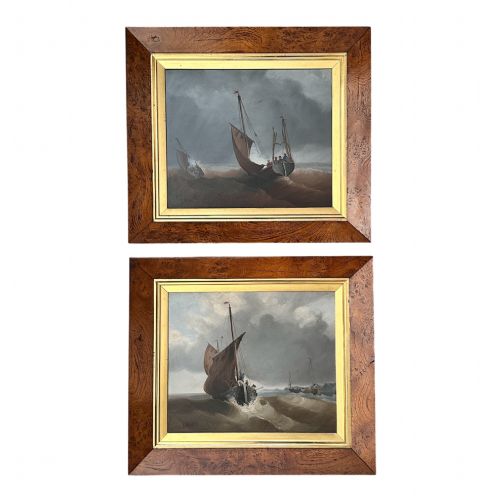
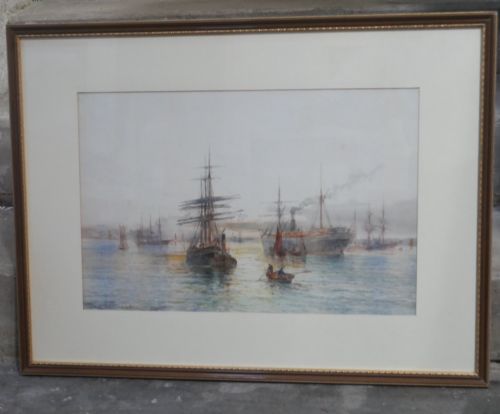
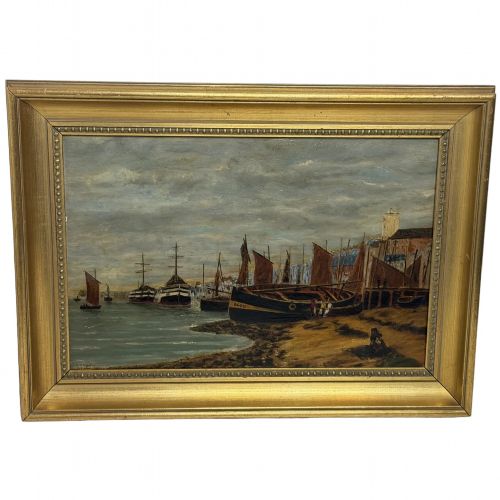
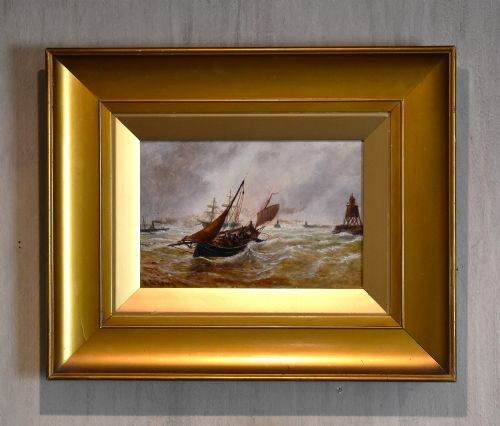
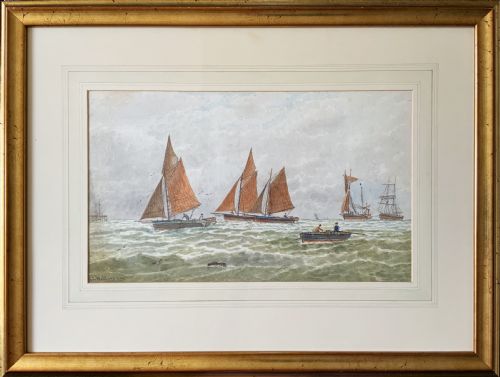

Brown Framed Marine Art
Brown framed marine art brings nineteenth-century coastal life and maritime history directly into a room through oil and watercolour.
Brown Framed Marine Art
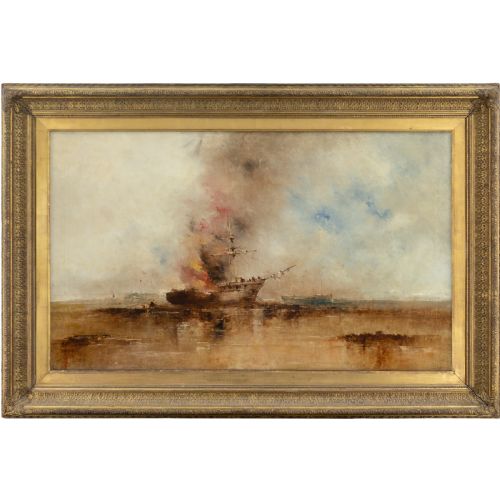
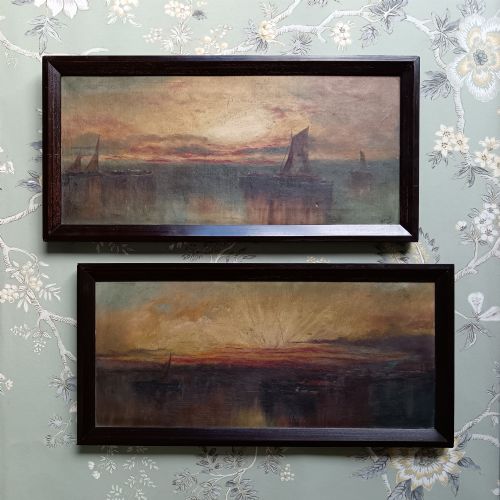
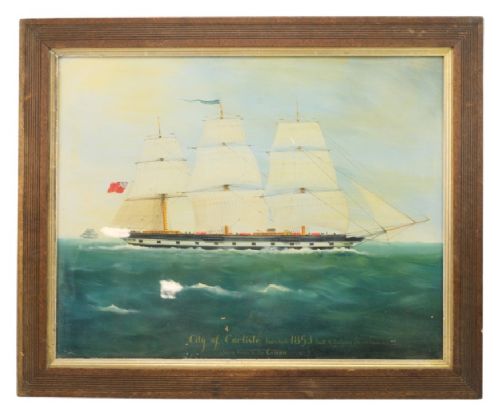
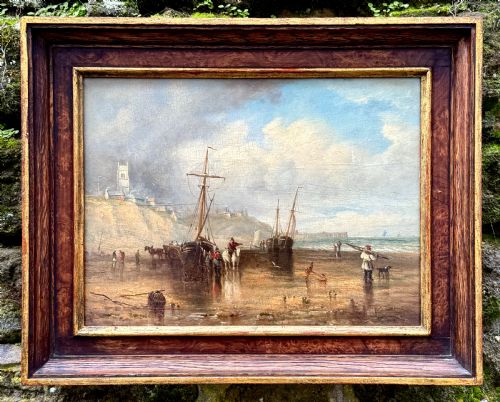
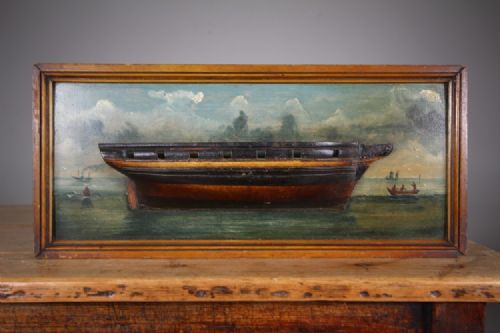
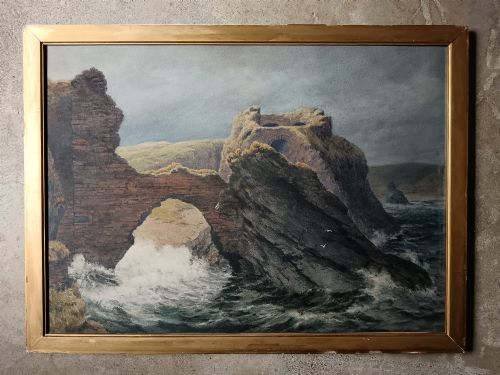
Brown framed marine art encompasses oil paintings, watercolours, and gouache works depicting seascapes, harbour scenes, and ships. These pieces capture historical moments ranging from naval engagements to quiet fishing boats returning to port.
Most examples found here date from the nineteenth century through the Edwardian period. The selection includes works by named British and European artists alongside pieces produced by the English School.
How They Were Made
Artists worked primarily with oil paint on canvas or watercolour and gouache on paper and board. These mediums allowed for detailed depictions of changing weather, rolling waves, and rigging.
Works are typically presented behind glass in watercolours or mounted in traditional wooden and gilt frames that complement the nautical subject matter.
Materials recorded across the selection include wood, paper, glass, oil on canvas, and watercolour.
What Varies in Quality
Quality rests upon the artist's ability to handle light and movement across water, distinguishing master brushwork from standard studio output. Provenance and original framing also contribute significantly to the standing of an individual piece.
James Orrock·William McAlpine·B. Nash·F. Corpuz·Thomas Creswick·TB Hardy·John Moore of Ipswich·Bernard Benedict Hemy·George Stanfield Walters·John Moxon·Alfred George Morgan·Richard Harry Carter·Gustave De Bréanski·Edward Henry Eugene Fletcher·Jonathan Couch·T.S. Wallis·Owen Bowen·R.P.Noble·George Henry Knight·William Shayer SRN
The Brown Framed Marine Art Glossary
- Seascape
- A work of art depicting the sea or marine subjects. These pieces focus on coastal views, open water, or harbour activity.
- Gouache
- An opaque method of watercolour painting. It provides solid areas of colour and sharp detail useful for ship portraits.
- Lugger
- A type of small sailing vessel with lug sails. They appear frequently in nineteenth-century coastal scenes.
- Ironclad
- A steam-propelled warship protected by iron or steel armour plates. These vessels emerge in maritime art around the later nineteenth century.
Brown Framed Marine Art: Frequently Asked Questions
What periods do these paintings cover?
The available works span from the early nineteenth century through the Edwardian era. Most examples date from the Victorian period up to nineteen hundred and ten.
This timeframe captures significant shifts in maritime history, from traditional sailing vessels to early ironclad warships.
How should I hang marine art?
Hang these pieces at eye level in spaces with controlled natural light to protect the paper or canvas. Traditional wooden frames suit studies of coastal weather and shipping.
Keep them away from direct heat sources and strong sunlight to preserve the original oil and watercolour pigments.
Are all the works signed?
Many pieces feature signatures from listed artists or include contemporary attributions to the English School. Unsigned works are often identified by style, subject matter, and period characteristics.
Documentation on the reverse or framing often provides additional clues regarding the origin of the painting.
What subjects appear most often?
Fishing boats, bustling harbours, and coastal towns dominate the selection alongside dramatic shipwrecks and naval engagements. Scenes frequently record specific British locations such as Whitby, Scarborough, and the River Tyne.
Depictions range from quiet domestic waterscapes to powerful storms out at sea.