









Brown Framed Canvas Art
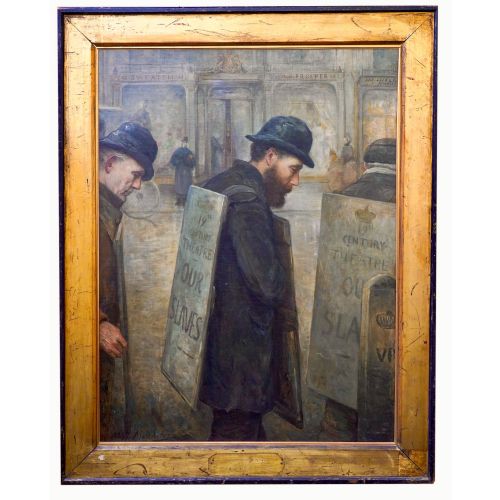
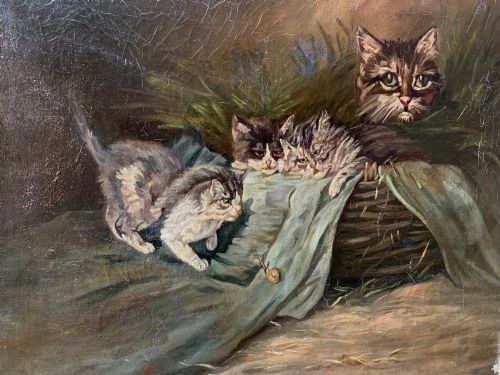
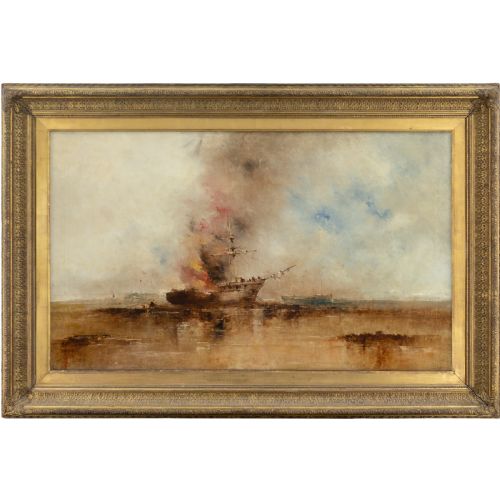
Brown framed canvas art brings centuries of traditional portraiture, landscape, and genre painting into your interior on oil-painted surfaces.
Brown Framed Canvas Art
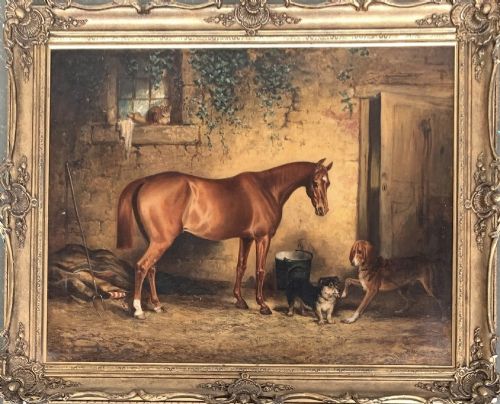
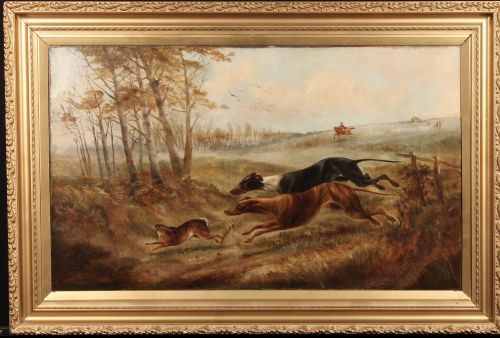
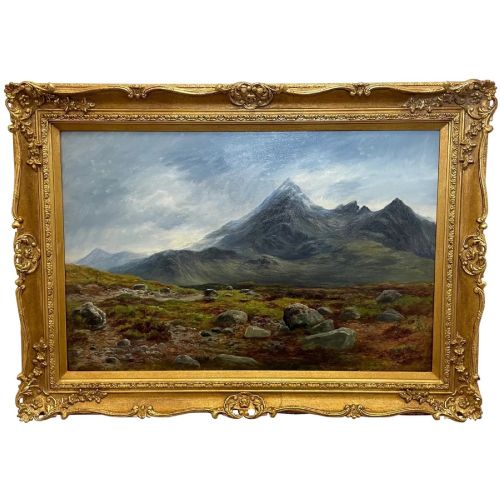
The most common examples on this page are nineteenth-century oils and earlier portraits housed in wooden frames. Subjects range from aristocratic sitters and prize livestock to marine views and woodland scenes. Each piece combines historical painting traditions with the warm tones of wood, gesso, and giltwood surrounds.
How these works were constructed
Makers applied oil paint to woven canvas supports stretched across wooden frames. Pigments were built up in layers to achieve depth, luminosity, and realistic texture, particularly in skin tones, fabrics, and landscapes. Artists frequently utilised varnishes to protect the pigment and enrich the overall palette.
Surrounding the canvas, the frames combine carved or moulded wood with gesso layers. Many incorporate gold leaf or giltwood highlights to contrast against darker painted mouldings. This pairing of canvas support and wooden frame protects the edges while framing the composition.
Several canvases capture racing pigeons, Shorthorn bulls, and prized horses alongside human aristocracy.
What distinguishes the finest examples
Quality rests in the precision of the brushwork and the anatomical or spatial accuracy of the composition. Master painters handle light, shadow, and expression with convincing realism, whereas lesser works display stiff proportions or hasty execution. The preservation of the original paint layer without extensive overpainting elevates a piece.
The relationship between the painting and its frame also dictates quality. Original period frames that complement the age and aesthetic of the canvas command greater respect than later replacements. The integrity of the canvas tension and stability of the wood further separate ordinary works from exceptional survivals.
Charles Jervas·Sir Peter Lely·Sir Godfrey Kneller·Anthony Van Dyck·Edouard Pingret
The Brown Framed Canvas Art Glossary
- Canvas
- A heavy woven fabric, typically linen or cotton, used as a support surface for oil paintings. It is stretched tightly over a wooden stretcher frame before painting begins.
- Giltwood
- Wood that has been treated with a thin layer of gold leaf or gold paint. It is frequently found on antique frames to provide decorative contrast.
- Gesso
- A white paint mixture consisting of a binder mixed with chalk, gypsum, or pigment. It is applied to wooden frames to create a smooth surface for gilding and moulding.
- Old Master
- A term for a European artist of skill who worked before about eighteen hundred. It also refers to a painting created by such an artist.
Brown Framed Canvas Art: Frequently Asked Questions
How do I date an oil painting?
Dating relies on stylistic evidence, costume details in portraits, stretcher construction, and artist signatures or exhibition records. Pigment analysis and canvas types also offer clues to the period of creation.
Comparison with documented works by the same school or artist helps narrow the decade. Frames can sometimes indicate the period, though paintings were frequently re-framed later.
Are these paintings on original canvas?
Many retain their original canvas and stretcher frames, showing appropriate age-related tension and oxidation on the reverse. Canvas texture and framing nails provide physical evidence of longevity.
Some pieces have undergone relining, a conservation process where a deteriorated canvas is attached to a new support for structural stability.
How should I hang and light an oil painting?
Hang paintings away from direct sunlight, high humidity, and rapid temperature fluctuations to protect the oil pigments and wooden frames. Secure wall fixings should match the substantial weight of framed canvas works.
Use specialist picture lights with low-heat, UV-filtered bulbs to illuminate the canvas evenly. Position the centre of the painting at standard eye level for optimal viewing.