


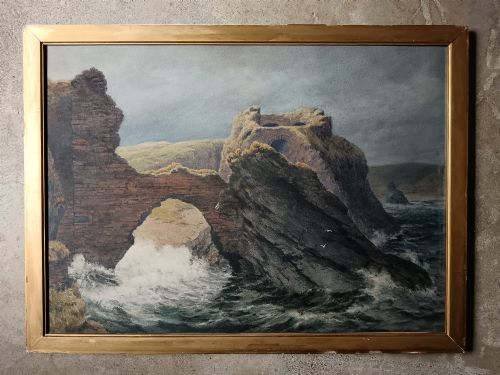

Brown Coastal Seascape Art
Brown coastal seascape art brings together maritime paintings and watercolours that capture British and European shores, harbours and fishing vessels.
Brown Coastal Seascape Art
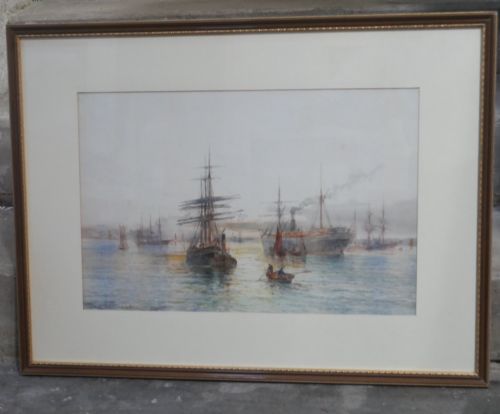
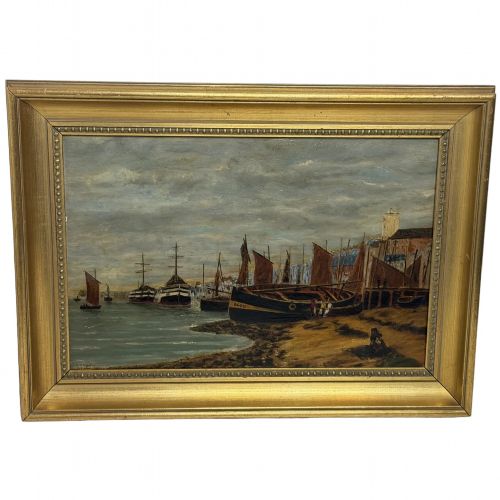
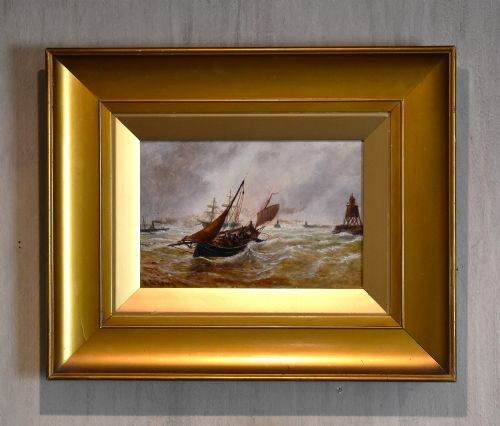
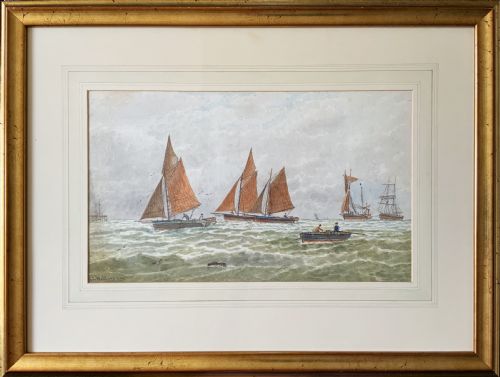
When you search for brown coastal seascape art, you encounter framed paintings and watercolours depicting shorelines, estuaries, and shipping. These works span from the early nineteenth century through the mid-twentieth century, encompassing Victorian, Edwardian, and British Impressionist movements.
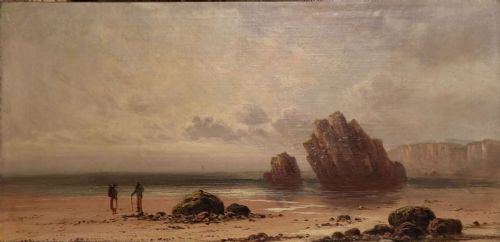
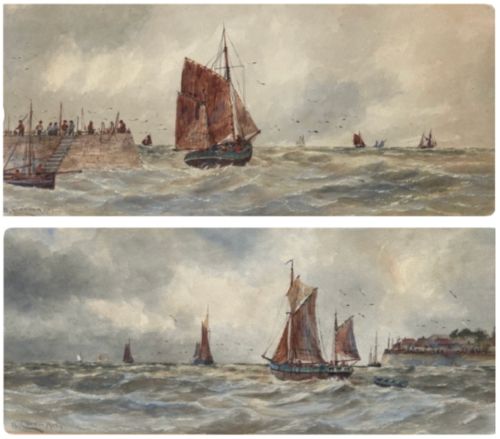
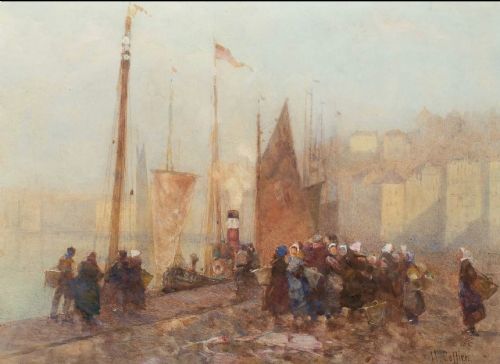
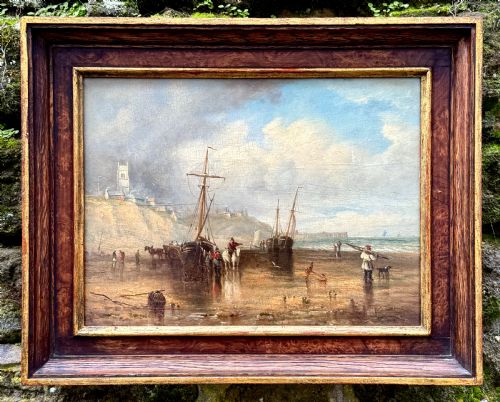
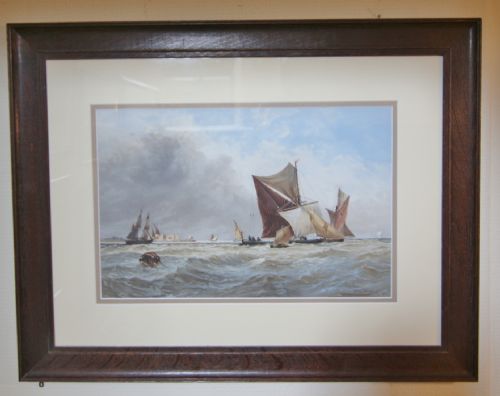
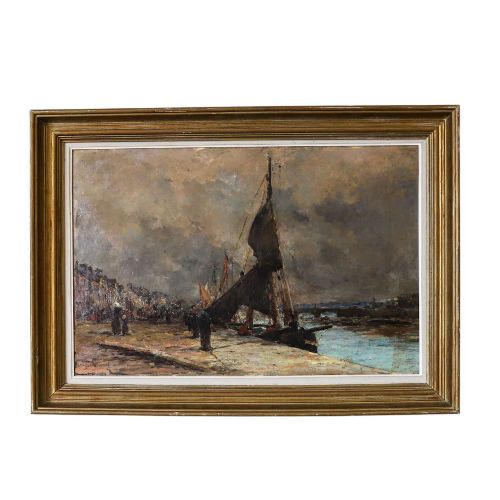
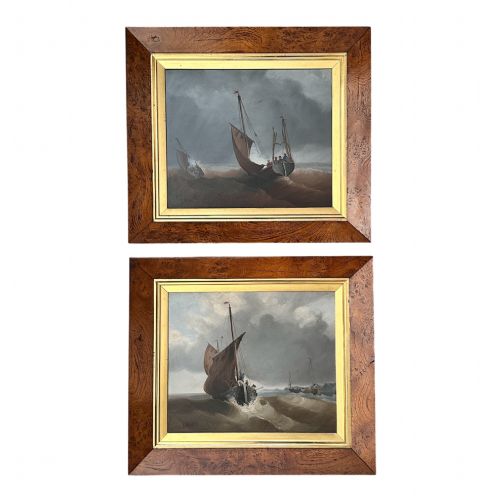
The most common examples on this page are nineteenth-century oil paintings on canvas and panel, alongside detailed watercolour paintings on paper. Subjects range from busy harbours like Whitby and Dublin Bay to quiet rocky beaches and departing fishing luggers.
Makers and artists represented include Thomas Bush Hardy, George Stanfield Walters, and Gustave de Bréanski, whose works define the maritime and coastal aesthetic of the period.
Materials and techniques
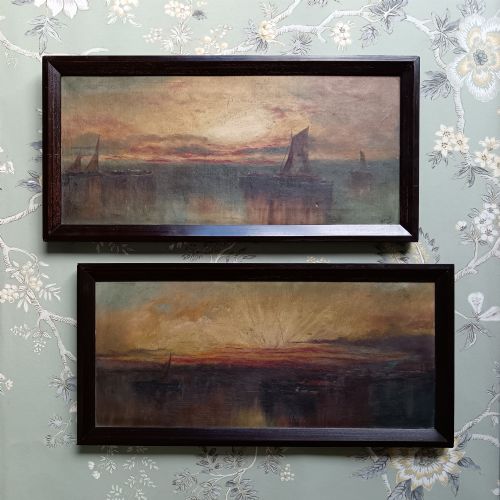
Artists relied primarily on oil on canvas and traditional watercolour pigment on paper, occasionally utilising oil on board for mid-twentieth-century compositions. Canvases are frequently housed within period gilt frames that complement the deep earth tones of the maritime scenes.
Watercolour works employ washes and fine brushwork on paper to capture shifting light on water, while oil paintings build texture through layered pigment to depict heavy seas, dramatic skies, and weathered wooden vessels.
Listings feature works from the 19th Century, Victorian period, and 1950s, utilising oil on canvas, watercolour, and paper.
Distinctions in quality
Quality rests upon the artist's ability to render atmospheric conditions, water movement, and architectural detail with conviction. Works by documented painters demonstrate superior command of tone and perspective compared to anonymous studio pieces.
The preservation of the original surface, whether the stable crackle of an oil on canvas or the unfaded pigment of a nineteenth-century watercolour, determines the visual strength of the piece.
Kenneth Cozens·James Orrock·William Cannon·Hector Caffieri·Thomas Creswick·TB Hardy·John Moore of Ipswich·Bernard Benedict Hemy·George Stanfield Walters·John Moxon·Richard Harry Carter·Gyrth Russell·Gustave De Bréanski·Thomas Bush Hardy·Sir Thomas Newenham Dean·TS Wallis·Owen Bowen·Frederick William Booty·George Henry Knight·John Callow·Julian Drummond·Edward M Elliott
The Brown Coastal Seascape Art Glossary
- Seascape
- A work of art depicting the sea, coastline, or marine vessels. These compositions often focus on weather, tides, and maritime activity.
- Watercolour
- A painting method where water-soluble pigments are suspended in a water-based solution on paper. It allows for translucent washes and delicate light effects.
- Oil on Canvas
- Pigment mixed with drying oil applied to a stretched woven fabric support. This technique provides rich colour depth and durable surface texture.
- Gilt Frame
- A wooden picture frame coated with gold leaf or metallic paint. Victorian and Edwardian frames often feature ornate moulded ornamentation.
- Marine Art
- Artistic representation of ships, ports, and naval engagements. It encompasses both calm coastal scenes and dramatic open-water storms.
Brown Coastal Seascape Art: Frequently Asked Questions
What periods do these coastal paintings cover?
The selection spans from the early nineteenth century through the Victorian and Edwardian eras, extending into the mid-twentieth century.
Most pieces date between the 1870s and the 1950s, reflecting shifts in British and regional landscape painting.
How do I care for antique watercolours?
Watercolour paintings require protection from direct sunlight to prevent pigment fading and paper degradation.
Keep them in stable indoor environments away from excessive moisture and ensure they are glazed with conservation-grade glass.
What is the difference between oils and watercolours here?
Oil paintings utilise pigmented oil on canvas or board, offering heavier texture and robust durability.
Watercolours use water-soluble pigments on paper, presenting a lighter, more translucent quality that often requires protective framing.
Are these coastal scenes historically accurate?
Many nineteenth-century marine works record specific regional harbours, shipping routes, and traditional fishing boats of the era.
Artists often painted from direct observation at locations such as Whitby, Scarborough, and the River Tyne.