



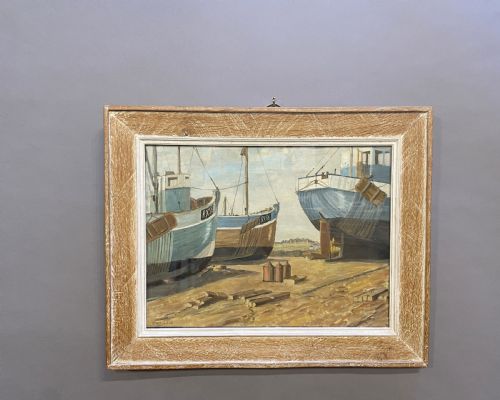


Vintage Fishing Boat Painting
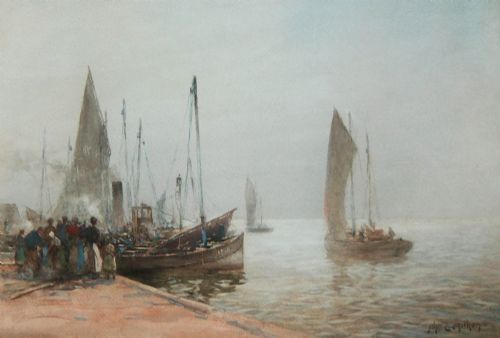
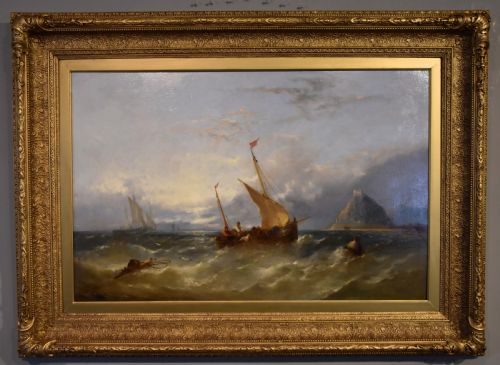
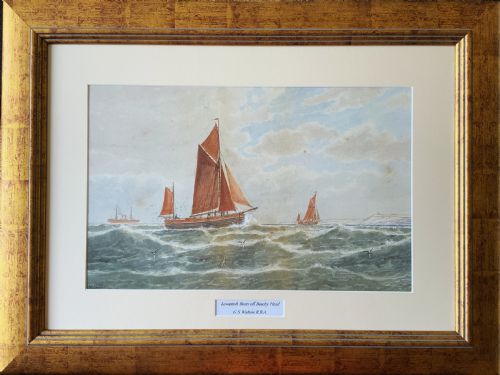
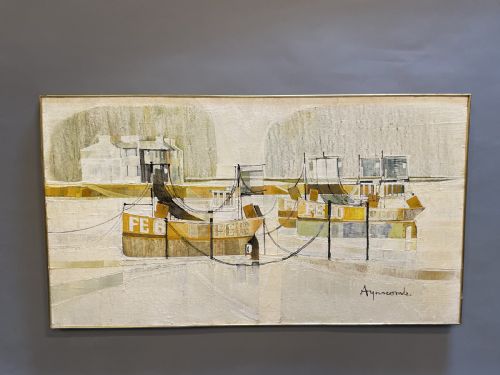
A vintage fishing boat painting captures the weathered hulls and coastal light of traditional maritime working vessels.
Vintage Fishing Boat Painting
When searching for a vintage fishing boat painting, buyers encounter works spanning from the nineteenth century through the mid-twentieth century. The selection ranges from detailed watercolours depicting Cornish harbours to robust oil paintings on canvas and board showing vessels in choppy seas.
Most pieces hail from British coastal art traditions, featuring specific locations such as St Ives, Whitby, and Mevagissey. Collectors find both intimate waterpaintings on paper and larger oil works capturing coastal villages and boat yards.
Materials and Technique
Artists relied primarily on oil paint and watercolour, applying pigments to stretched canvas, wooden board, card, or heavy paper. Oil on canvas allowed for rich texture and deep layering, particularly suited to stormy seas and heavy skies.
Watercolour works often utilised light washes on paper to capture translucent coastal atmosphere and harbour reflections. Support media such as board and card provided rigid surfaces for plein air painting along the docks and cliffs.
Listings feature works executed in oil, watercolour, and pastel on canvas, paper, board, and card.
Assessing Quality
Quality rests upon the artist's command of light, water movement, and structural proportion within the maritime setting. Stronger pieces convey the weight of wooden hulls and the motion of tides through confident brushwork rather than rigid detail.
Provenance and accurate topographical context elevate certain works, particularly those tied to established regional schools or documented coastal locations. The relationship between the vessels and their surrounding atmosphere defines the visual success of the piece.
George Stanfield Walters·Charles Napier Hemy·William Lee Hankey·Thomas Bush Hardy·Gustave de Breanski
The Vintage Fishing Boat Painting Glossary
- Watercolour
- A painting method where fine pigment is suspended in water-based solution on paper. This technique yields transparent washes and delicate tones ideal for coastal atmosphere.
- Oil on Canvas
- Pigment bound in drying oil applied to a woven fabric stretched across a wooden frame. This method permits thick impasto textures and durable coastal scenes.
- Board
- A rigid flat support made from wood or thick pasteboard used instead of canvas. Artists frequently employed board for quick outdoor studies near the harbour.
- Seascape
- A work of art depicting the sea, coastal views, ships, and shorelines. These compositions focus on maritime environments and marine weather.
- Impressionism
- A style emphasising open composition, accurate depiction of light, and visible brushstrokes. This approach appears frequently in twentieth-century harbour views.
Vintage Fishing Boat Painting: Frequently Asked Questions
How do I date a maritime painting?
Dating relies on stylistic evidence, artist lifespans, framing methods, and stretcher construction. Pigment types and canvas stamps also offer clues to the period.
Signatures and exhibition labels on the reverse often provide definitive dates or narrow the window of creation significantly.
Where should I hang a coastal artwork?
These works suit well-lit spaces away from direct sunlight to protect watercolours and oils from fading. Neutral walls allow the maritime tones and blue hues to stand out.
Consider room humidity levels, keeping paper and canvas pieces away from damp areas like unventilated bathrooms.
Are watercolours more fragile than oils?
Watercolours on paper require glazing with glass to protect the surface from dust and moisture damage. They remain sensitive to ultraviolet light over long periods.
Oil paintings on canvas or board are generally more robust but still benefit from stable indoor temperatures and secure framing.
What distinguishes regional school paintings?
Regional schools focus on specific fishing ports, local vessel types, and distinct coastal lighting conditions. Artists working in these areas shared common techniques and subjects.
Such works often document specific local harbours like St Ives or Whitby with accurate topographical detail.