

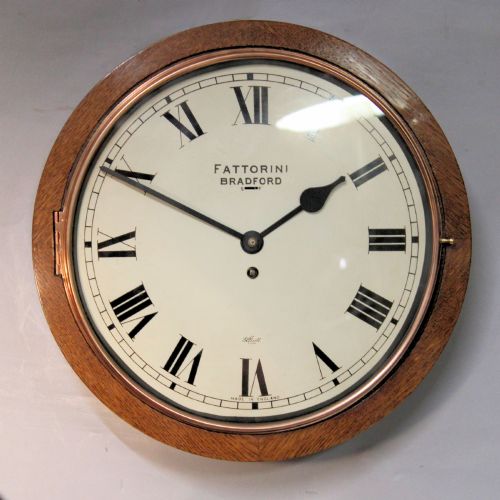
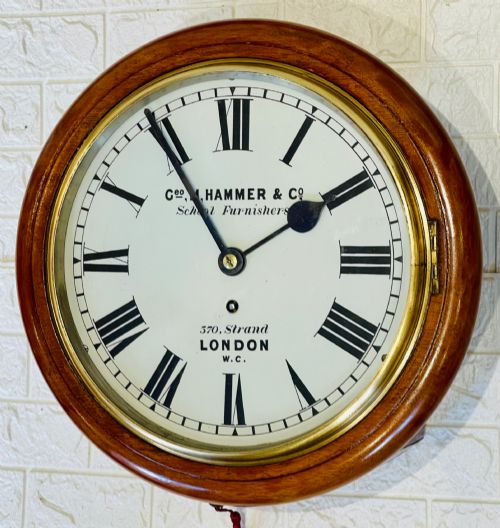
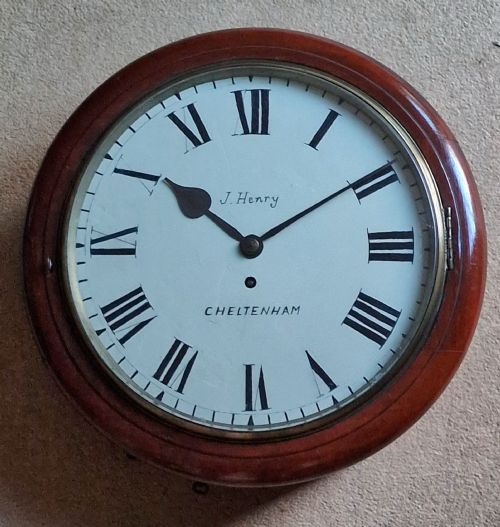
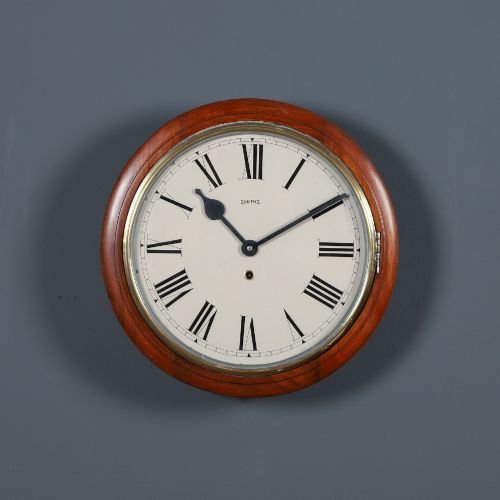
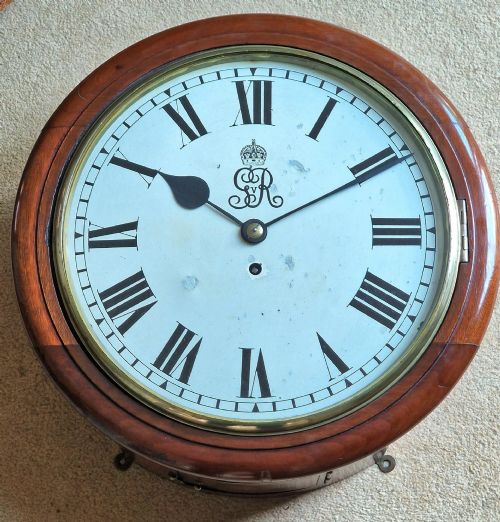

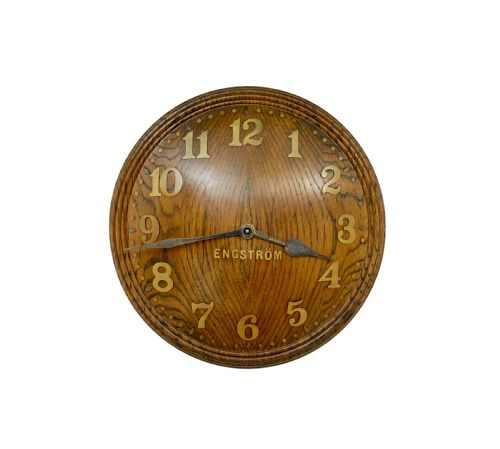

Brown Circular Clock
A brown circular clock brings utilitarian timekeeping home, offering a functional dial shaped for clarity and housed in timber or metal.
Brown Circular Clock
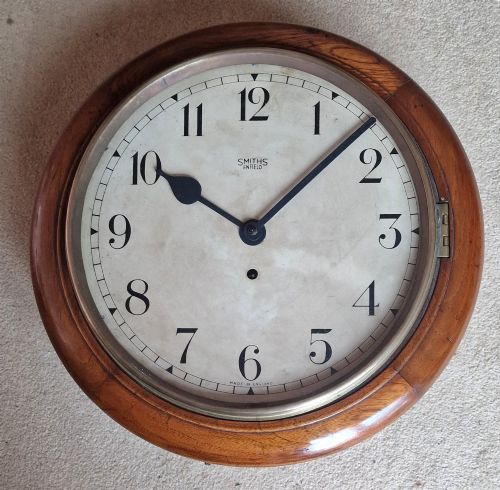
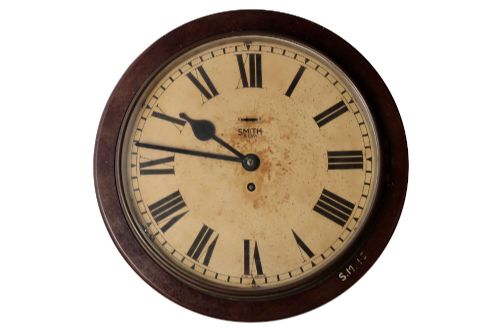
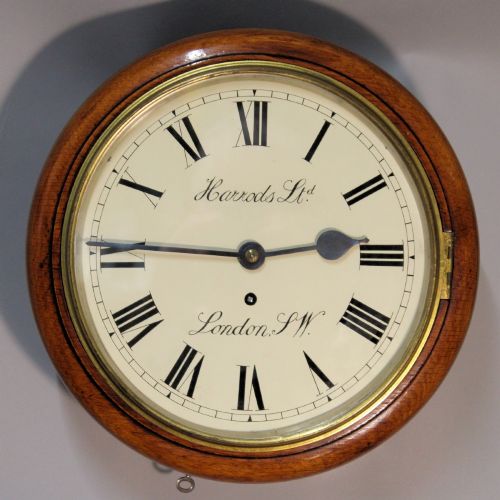
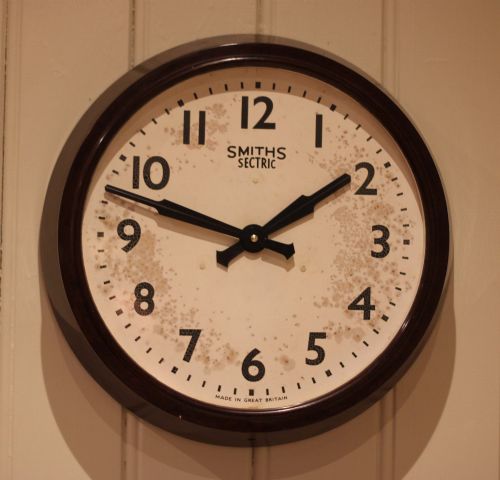
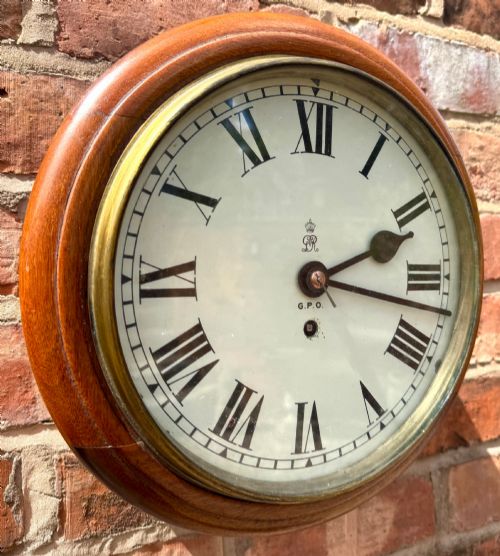
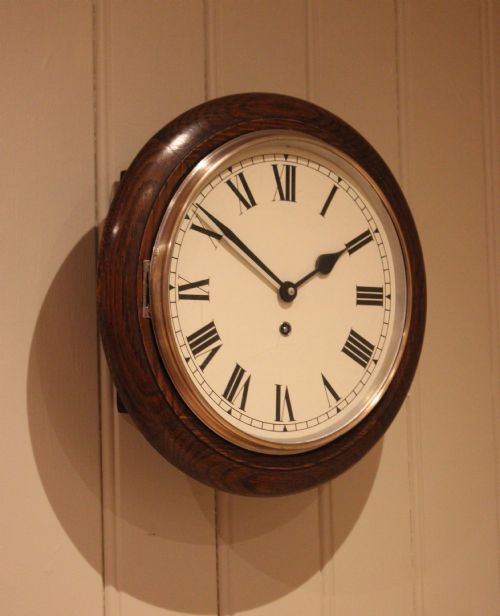
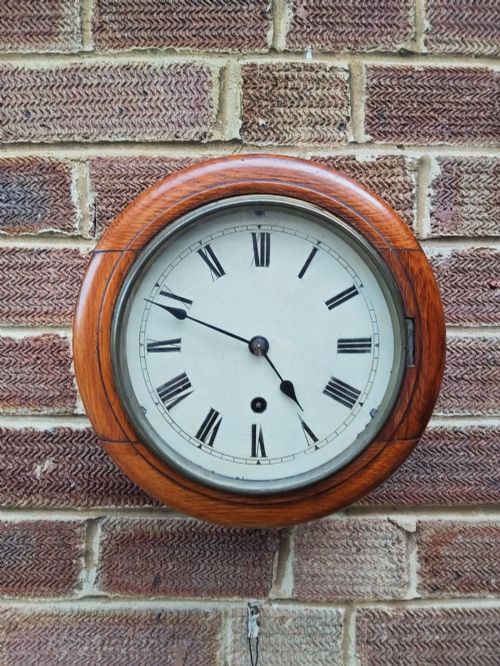
A brown circular clock is fundamentally a round timepiece designed for wall or mantel placement, frequently encountered as a dial clock or school clock across this selection. These timepieces originate from periods spanning the Georgian era through the Victorian period, Edwardian years, and into mid-century designs.
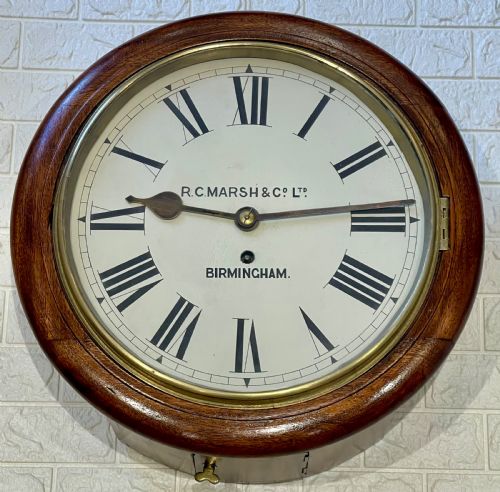
The versions most likely to meet a buyer on this page are wall-mounted dial clocks encased in oak, mahogany, or walnut. Railway stations, schools, and domestic halls provided the original settings for these circular faces.
Makers and retailers ranging from local watchmakers to major railway companies and department stores stamped their names on these dials. The physical presence combines a clear circular glass face with a robust wooden rim.
Materials and Technique
Cases rely heavily on turned timbers like mahogany, oak, and walnut, shaped into solid circular rims that protect the internal mechanism. Metal and brass components frame the glass bezels, whilst materials such as early plastics appear in twentieth-century examples.
Mechanisms housed within these circular frames utilise fusee movements, chain drives, or lever escapements to regulate time accurately. Skilled hands fitted brass dials, painted numerals, and convex glass covers into the wooden housings.
Brown Circular Clock Retail Price Guide 2026
Typical asking prices for brown circular clock among the pieces listed under this phrase on Sellingantiques today, from the lower quarter to the upper quarter. They describe what is for sale here now, not the wider market.
Some station clocks survived decades of steam trains, soot, and rushed commuters only to spend retirement keeping time in quiet kitchens.
Craft and Proportion
Quality separates through the refinement of the timber case and the sophistication of the internal movement. A fusee movement represents a higher standard of horology compared to standard spring-driven alternatives.
The crispness of the dial lettering, the weight of the cast brass bezel, and the choice of figured mahogany or quarter-sawn oak distinguish superior examples from standard utility timepieces.
Harrods·Elliott·Smiths·John Walker·Camerer Cuss and Co·Zenith
The Brown Circular Clock Glossary
- Fusee
- A conical pulley used with a cord or chain to maintain equal power as the mainspring unwinds. This mechanism ensures consistent timekeeping across the winding cycle.
- Dial clock
- A wall timepiece featuring a prominent circular face and a simple wooden case. These were standard fixtures in public buildings and offices.
- Escapement
- The mechanical linkage that translates the swing of a pendulum or balance wheel into controlled steps. It keeps the gear train moving at a measured rate.
- Bezel
- The metal or wooden ring that holds the glass cover over the dial face. It often hinges open to allow hand adjustments.
- Timepiece
- A clock that indicates the time but lacks a striking mechanism to sound the hours. Many railway and school clocks were built this way for simplicity.
Brown Circular Clock: Frequently Asked Questions
Where should I hang a brown circular clock?
These clocks suit kitchens, hallways, or studies where a clear circular dial can be read easily from a distance. The natural timber frames complement traditional and mid-century interiors alike.
Ensure the wall supports the weight of the timber case, particularly for larger mahogany or oak models housing heavy fusee movements.
How do fusee movements work?
A fusee movement uses a conical drum and a chain to regulate the pull of the mainspring. As the spring loses tension, the chain moves to a wider part of the cone to maintain steady power.
This clever mechanical design ensures the clock maintains consistent accuracy throughout its running period between windings.
What is a railway clock?
Railway clocks are robust dial timepieces commissioned by transport companies to keep strict timetables across stations and offices. They feature high-contrast dials and durable wooden cases designed to withstand heavy use.
Many bear company initials on the dial face, linking them directly to their operational history.
How do I wind my dial clock?
Most circular wall clocks require a specialised key inserted into a small hole on the dial face to tension the spring. Turn the key gently until resistance indicates the mainspring is fully wound.
Avoid over-winding the mechanism, and keep the pendulum securely seated if the clock needs to be moved.