
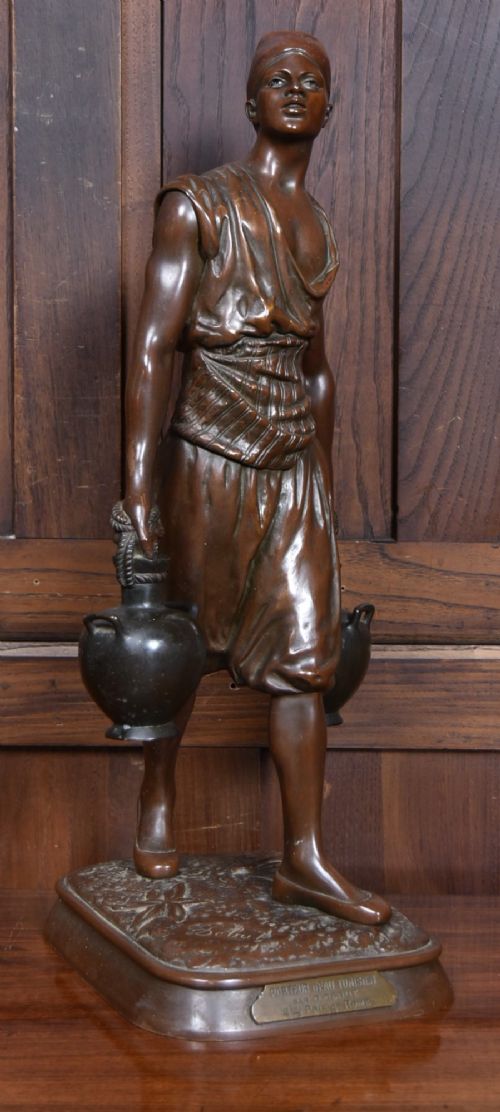
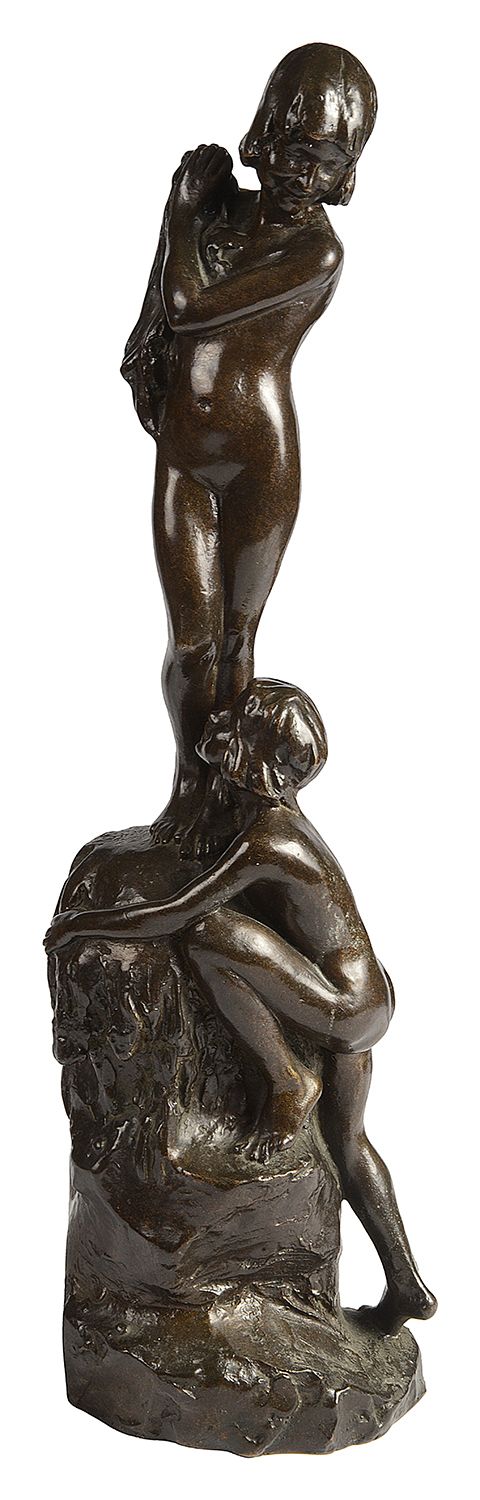
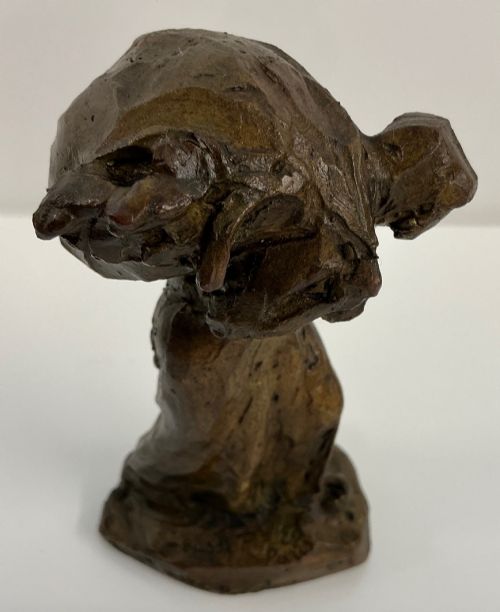


Brown Bronze Figural Statue
A brown bronze figural statue brings sculptural presence into a room, capturing classical myths, children bathing or orientalist subjects in solid cast metal.
Brown Bronze Figural Statue
A brown bronze figural statue captures human forms and mythological groups cast in metal during the nineteenth and early twentieth centuries. These pieces appear as standalone sculptures, figural table lamps, floor lamps, inkwells and vases.
Nineteenth century French workshops dominate the selections, alongside Victorian and Art Deco examples. Subjects range from classical figures like Bacchus and David to everyday street urchins and musicians.
Makers often mounted these metal figures on solid stone bases such as marble or onyx to give the cast bronze stability and height.
How they were made
Foundries cast these pieces using bronze, often applying a deliberate brown patination to the metal surface to accent muscle tone and drapery. Many works combine patinated bronze with carved wood, glass, frosted glass or ebonised wood elements.
Makers integrated functional components into the figural compositions, turning statues into lighted table lamps, floor lamps or desk inkwells. Sculptors then signed the metal before mounting the finished bronze onto heavy marble, onyx or terracotta plinths.
Listings span the nineteenth century through the Art Deco era, featuring materials such as marble, onyx, frosted glass and patinated bronze.
What varies in quality
The crispness of the metal chasing separates standard castings from exceptional sculptures. Skilled founders finished each bronze by hand to sharpen facial expressions, hair strands and fabric folds after removing the piece from the mould.
The choice and integration of secondary materials dictate the overall character of the piece. Heavy veined marble bases and intricate patination show greater ambition than plain or poorly fitted mounts.
Jules Dalou·Emile Picault·Lucien Madrassi·Alexandre Kelety·Emmanuel Villanis·Antoine Bofill·Carl Kauba·Auguste Moreau·Adrien Gaudez·Charles Anfrie·Louis Auguste Moreau·Ernest Louis Adnin
The Brown Bronze Figural Statue Glossary
- Patinated bronze
- Bronze treated with chemical solutions to produce a brown or dark surface coloration. This finish protects the underlying metal and highlights sculptural detail.
- Spelter
- A zinc alloy frequently used as a substitute for bronze in decorative figures and lamps. It takes detail well but possesses a lighter weight than genuine bronze.
- Orientalist
- An artistic style depicting scenes and people from North Africa and the Middle East. Many nineteenth century bronzes portray water carriers, snake charmers and street figures in this manner.
- Putto
- A chubby male child figure, often winged, appearing in classical mythological groups. Sculptors frequently depicted them playing with grapes or accompanying deities such as Bacchus.
- Chasing
- The manual refinement of a raw metal casting using small chisels and punches. This step restores lost texture and smooths out surface imperfections before patination.
Brown Bronze Figural Statue: Frequently Asked Questions
How do I clean a bronze statue?
Dust the surface gently with a soft, dry cloth to remove accumulated particles.
Avoid using water, commercial metal polishes or abrasive cleaners, as these substances strip away the original brown patination.
Were all these figures made in France?
French foundries and sculptors produced a large portion of the nineteenth century bronzes found here.
Other continental makers and international artists working within European traditions also contributed to these sculptural styles.
What is the difference between bronze and spelter?
Bronze is an alloy of copper and tin that yields a heavy, durable sculpture suitable for fine chasing.
Spelter is a softer, lighter zinc-based metal that was cast into decorative figures and lamps as an affordable alternative.
How can I tell the age of a bronze figure?
Examine the mounting style, the depth of the brown patina and the signature method stamped into the metal.
Nineteenth century pieces often bear founder marks or artist signatures that correspond to recorded active working dates.
Where should I display a figural lamp?
Place a bronze figural lamp on a sturdy side table, desk or console where the metalwork catches natural room light.
Ensure the integrated base rests on a level surface that easily supports the combined weight of the metal and stone.