





Allegorical French Bronze Statue
An allegorical french bronze statue captures classical and romantic ideals in metal, bringing sculptural grace and narrative depth to any interior.
Allegorical French Bronze Statue
An allegorical french bronze statue embodies personified concepts like peace, harvest, or seasons, drawing heavily on classical mythology and academic traditions.
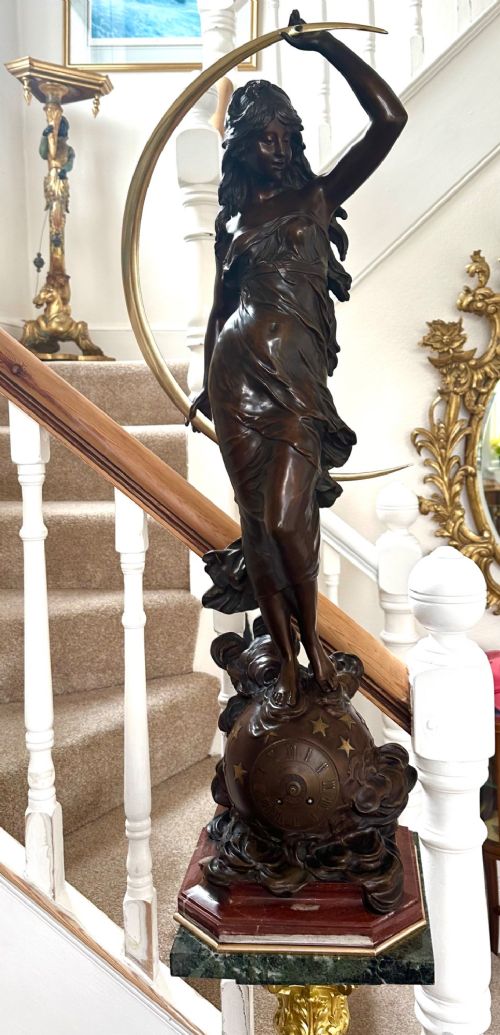
Buyers frequently encounter figures representing nature, dawn, or youth, often cast as standing statues, lamp bases, or mantle clocks from the nineteenth century.
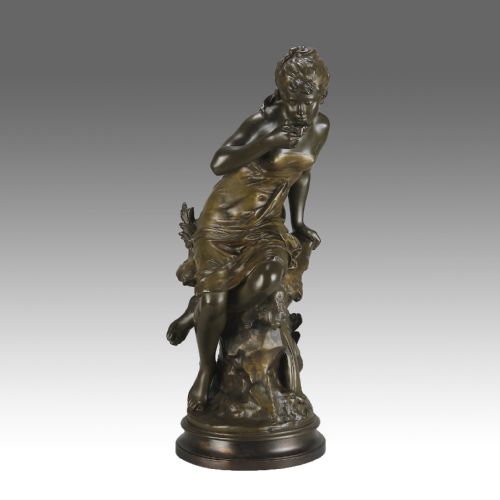
The selection ranges from intimate cabinet figurines to substantial decorative works, frequently reflecting neoclassical or art nouveau sensibilities.
How they were made
Foundries utilised the lost-wax casting method or sand casting to achieve intricate detail in bronze, capturing flowing drapery and delicate facial expressions.
Many works incorporate patination, gilding, or contrasting bases of marble and wood to enhance the visual impact of the metalwork.
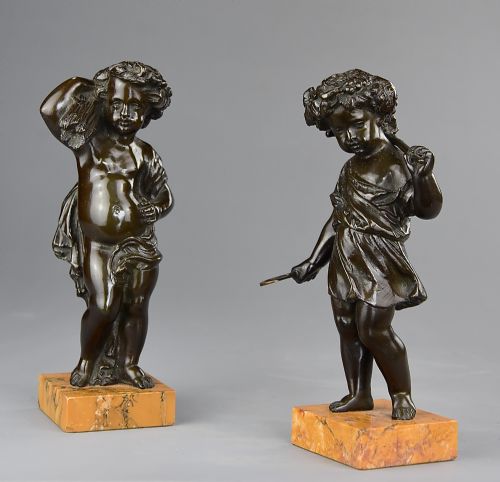
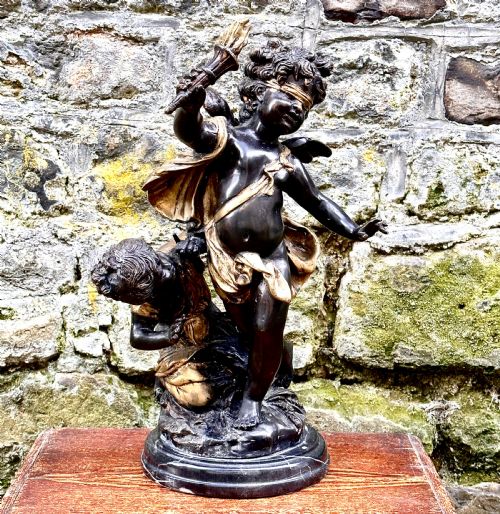
Putti frequently appear hauling wheat sheaves, proving that even mythological infants were expected to pull their weight during the harvest.
What varies in quality
The crispness of the chase work dictates how finely feathers, hair, and drapery are defined after the casting process is complete.
Superior examples demonstrate thoughtful composition and substantial weight, whereas lesser pieces may rely on alternative cast metals with simpler surface finishing.
Auguste Moreau·Mathurin Moreau·Emile Louis Picault·Ernst Barrias·Jean-Jules Cambos·Barbedienne
The Allegorical French Bronze Statue Glossary
- Spelter
- A zinc alloy commonly used as a cost-effective alternative to bronze during the nineteenth century. It often mimics the appearance of bronze through applied patination.
- Patina
- The surface coloration and sheen developed naturally over time or applied chemically by the foundry. It protects the metal and defines the contours of the sculpture.
- Neoclassical
- A style inspired by the art of classical antiquity, prioritising symmetry, restraint, and mythological themes. It heavily influenced nineteenth-century French sculpture.
- Art Nouveau
- An artistic movement characterised by organic lines, floral motifs, and sinuous plant forms. This style appears frequently in later nineteenth-century and early twentieth-century French figures.
Allegorical French Bronze Statue: Frequently Asked Questions
How do I identify the subject of my statue?
Examine the attributes held by the figure, such as wheat sheaves for harvest or chariots for dawn, which traditionally identify specific allegorical characters.
Inscriptions on the base often name the subject directly or reference the literary inspiration behind the composition.
Are these statues solid bronze?
Many nineteenth-century figures are cast hollow to save weight and metal, utilising bronze while some alternatives employ cast metal or spelter.
Checking the underside or felted base often reveals the internal casting method and metal composition.
How should I clean a bronze statue?
Dust gently with a soft, dry brush to prevent accumulation without disturbing the historic surface patina.
Avoid commercial metal polishes, as abrasive cleaners strip away the original coloration and diminish the value of the piece.
Where were these statues originally displayed?
These figures typically adorned nineteenth-century salons, libraries, and mantelpieces as symbols of cultured taste and classical learning.
Pairs were frequently placed symmetrically on furniture or incorporated into functional objects like lamps and clocks.