




Bronze Winged Putti
These bronze winged putti combine classical mythology with decorative utility, bringing sculptural charm to period interiors through figures of winged cherubs.
Bronze Winged Putti
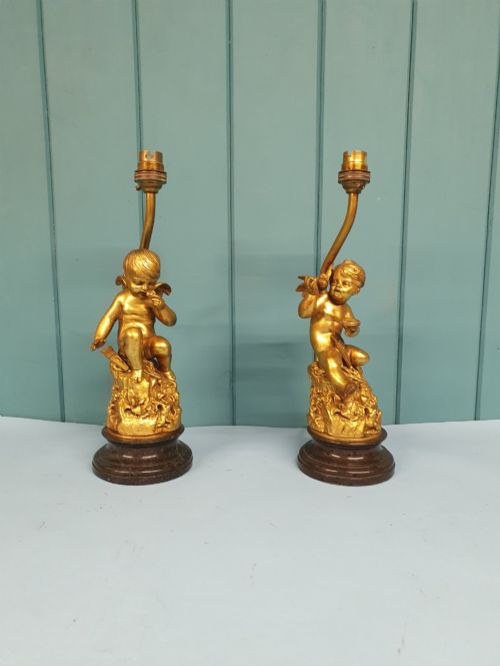
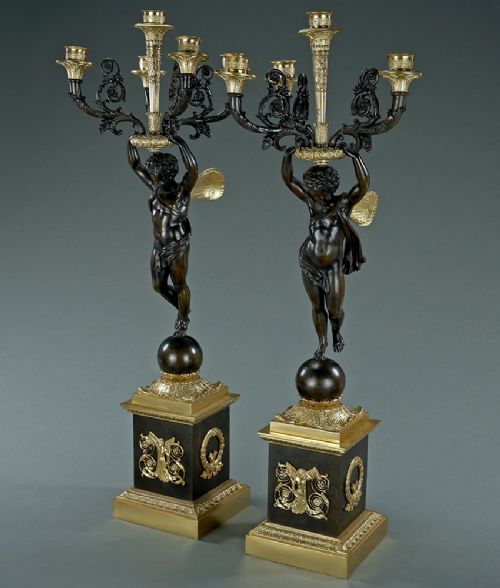
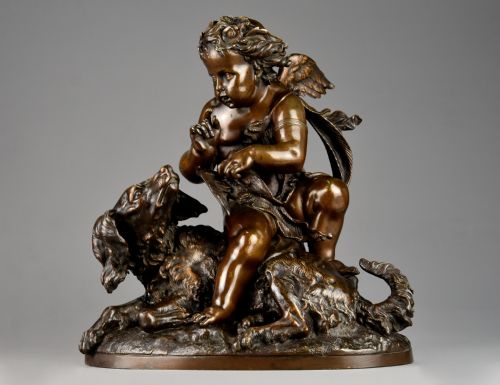
When you search for bronze winged putti, you encounter sculptural representations of winged cherubs or cupids cast primarily during the nineteenth century. These figures appear across various functional and decorative objects, including candelabra, mantel clocks, table lamps, and freestanding sculptures. Many examples originate from French workshops, reflecting revival styles such as French Empire and Rococo Revival.
The inventory on this page demonstrates that these winged figures frequently serve a supporting role on practical items like marble-based candlesticks and cut glass crystal spike chandeliers. Others stand alone as decorative bronzes, table centrepieces, or clock cases. Most pieces date from the late nineteenth century, though variations extend into the early twentieth century.
Buyers often find these putti paired with other elements, such as dogs or floral motifs, or holding bowls and lighting arms. The scale ranges from mantel clocks to large sculptural groups, all sharing the distinctive motif of the winged cherub.
How they were made
The construction of these pieces relies heavily on metal casting, utilising patinated bronze, gilt bronze, and spelter to shape the figures. Foundries employed traditional casting methods to capture the musculature, facial expressions, and feather details of the winged cherubs. Gilt finishes and patination were applied to achieve specific surface colours and lustres.
Many of these bronzes are mounted on secondary materials such as marble bases or inlaid wood. Functional items like candelabra and chandeliers incorporate cut glass and crystal components fixed to the metal frames, combining cast sculpture with lighting hardware.
Bronze Winged Putti Retail Price Guide 2026
Typical asking prices for bronze winged putti among the pieces listed under this phrase on Sellingantiques today, from the lower quarter to the upper quarter. They describe what is for sale here now, not the wider market.
Listings feature items dated from the 1870s through to the 1930s, spanning the late Victorian and Art Deco eras.
What varies in quality
The choice of materials also dictates the grade of the piece, with heavy patinated or gilt bronze commanding greater presence than lighter spelter alternatives. Additionally, the quality of associated materials, such as heavy veined marble bases or clear cut glass crystals, elevates the overall execution of the object.
Louis Auguste Moreau·Aug Moreau·Charles Cumberworth·Bellenot Paris·Ferrand
The Bronze Winged Putti Glossary
- Putto
- A representation of a human infant, usually winged, derived from classical art. In these pieces, the figure serves as a central decorative motif.
- Spelter
- An alloy of zinc and other metals often used as a cheaper alternative to bronze. It was frequently painted or gilded to imitate bronze in nineteenth-century decorative objects.
- Patinated bronze
- Bronze that has been treated with chemical solutions to produce a specific surface colour or ageing effect. This finish protects the metal and enhances shadow detail.
- Gilt bronze
- Bronze coated with a thin layer of gold or gold amalgam to give a bright, golden surface finish. It is often contrasted with darker patinated sections on the same piece.
- Candelabra
- Branched lighting fixtures designed to hold multiple candles. In this category, putti frequently form the central shaft or support the candle arms.
Bronze Winged Putti: Frequently Asked Questions
What is a putto?
A putto is a chubby, winged infant figure frequently seen in classical and revival art. They originate from classical mythology and represent winged spirits of love or mirth.
In nineteenth-century decorative arts, these figures were adapted into practical objects like lamps, clocks, and candelabra while retaining their classical association.
How do I identify bronze from spelter?
Bronze is heavier, colder to the touch, and yields a dull, resonant ring when tapped gently. Spelter is a softer zinc alloy that feels lighter and shows a greyish metal underneath worn paint.
Many nineteenth-century decorative figures were cast in spelter as an economical substitute for true bronze.
Where were these pieces made?
The majority of these pieces originate from France, particularly Paris, which served as a major centre for decorative metalwork and foundry production. Styles like French Empire and Rococo Revival dominated nineteenth-century workshop output.
English makers and founders also produced similar bronze sculptural groups during the same period.
How should I clean bronze figures?
Dust the surface regularly with a soft, dry brush to prevent dirt accumulation in the crevices of the wings and hair. Avoid using abrasive cloths, chemical cleaners, or water, which can damage patination or gilding.
Preserving the original surface finish maintains the historical and visual integrity of the metal.