


Bronze Urns on Plinths
Bronze urns on plinths bring classical dignity to a room, standing as heavy, formal focal points modelled on antique discoveries.
Bronze Urns on Plinths
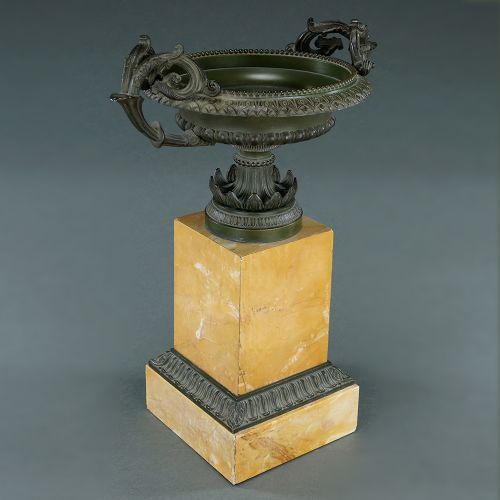
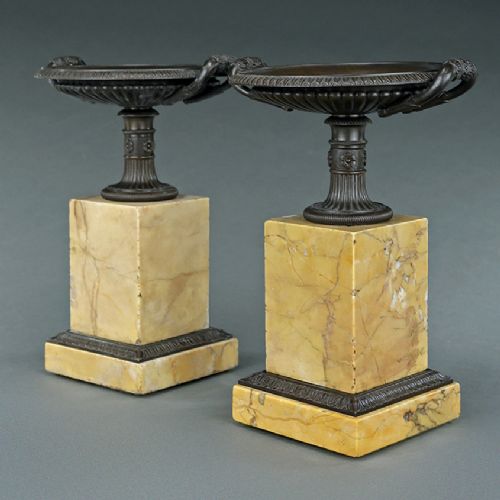
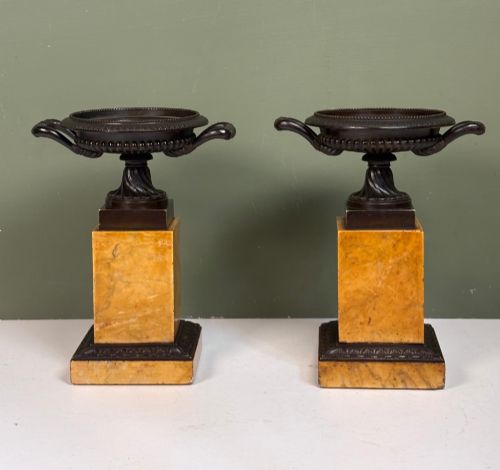
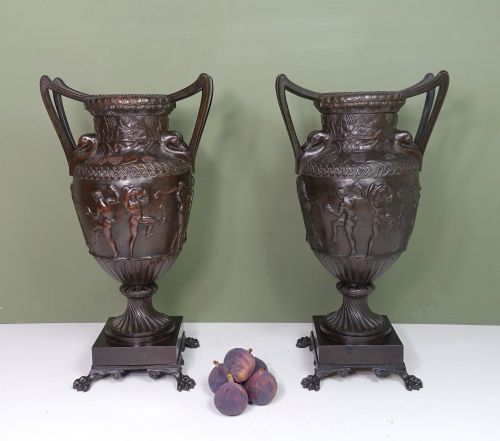
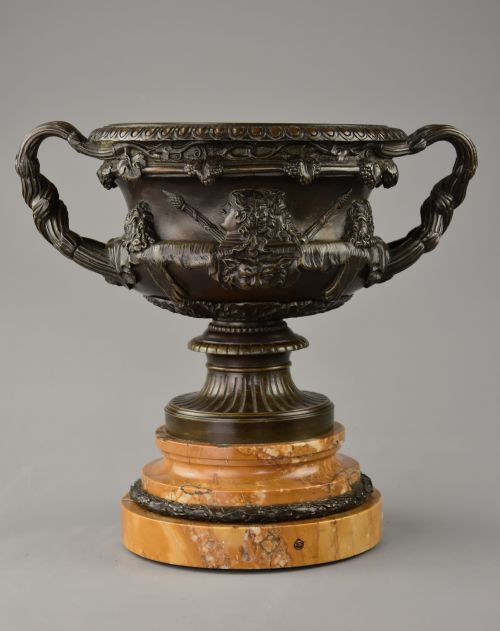
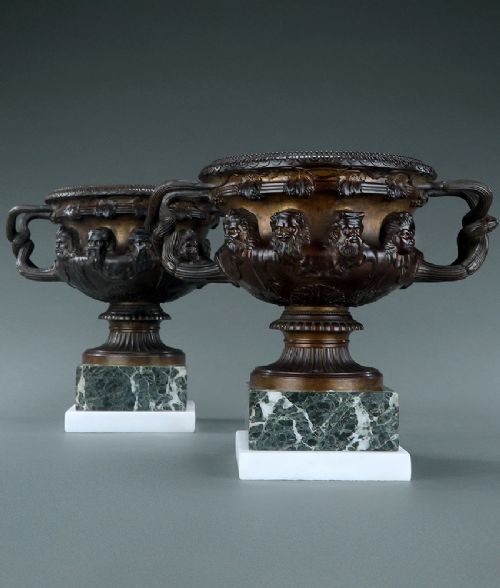
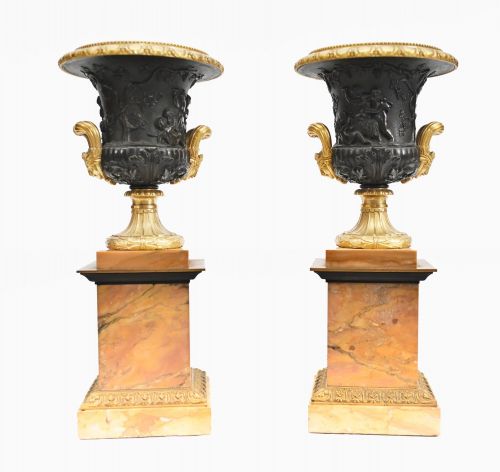
When you search for bronze urns on plinths, you encounter heavy decorative vessels cast in metal and mounted upon stone bases, predominantly originating from the nineteenth century. The pieces reflect a strong neoclassical taste, often taking the form of Campana shapes, tazzas, or reductions of famous antiquities like the Warwick and Albani vases.
Most examples belong to the Grand Tour tradition, created as souvenirs for travellers returning from Italy, or produced by French workshops in styles spanning the Empire and Classical Revival periods. You regularly find them paired as mantel or sideboard ornaments, sitting firmly on stepped bases of green or white marble.
Materials and construction methods
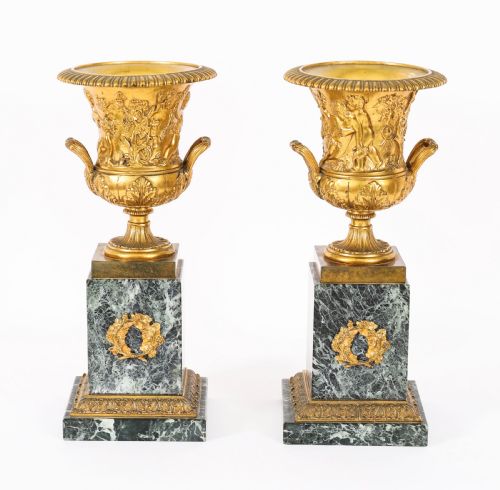
The primary bodies are cast in bronze, sometimes accompanied by gilt bronze, ormolu, or alternative metal alloys such as spelter in later decorative pieces. Castings are frequently chased to sharpen surface details like Bacchic figures, cherubs, and classical foliate friezes.
Plinths and associated mounts utilise contrasting materials, pairing dark patinated metals with polished white or green marble bases. Individual components are secured with threaded rods or internal screws, a standard nineteenth-century assembly method.
Listings span the nineteenth century, capturing periods from the eighteen-fifties through to nineteen hundred, alongside styles like Gothic Revival and French Empire.
Distinguishing quality in cast metal and stone
Quality rests upon the crispness of the original metal chasing and the depth of the dark patination or the richness of the gilding. Superior castings retain intricate facial expressions and sharp drapery lines, whereas lesser examples appear soft and muddy in the relief work.
The weight and selection of the marble plinth also dictate grade, with dense, finely veined stone bases outperforming lightweight or plain alternatives. Furthermore, the accuracy of antique reductions - such as faithful proportions in Warwick or Albani vase copies - separates superior studio work from generic commercial output.
The Bronze Urns on Plinths Glossary
- Campana urn
- An inverted bell-shaped vessel with a flared rim, widely used in classical antiquity and copied during the nineteenth century. These forms often feature twin lower handles and decorated bodies.
- Grand Tour
- A cultural journey undertaken by wealthy young Europeans through France and Italy to study classical art. Souvenirs purchased along the route included small bronzes and architectural models.
- Ormolu
- Gilded bronze produced by applying a mercury-gold amalgam to a cast bronze base and heating it to drive off the mercury. This technique creates a rich, durable golden surface.
- Tazza
- A shallow saucer-shaped vessel or cup mounted on a stem and foot, frequently utilised as a decorative centrepiece. Nineteenth-century examples often replicate excavated Roman silver or pottery.
- Reduction
- A small-scale copy of a large monumental sculpture or antiquity, produced accurately using a reducing machine. These allowed collectors to own miniature versions of famous museum pieces.
Bronze Urns on Plinths: Frequently Asked Questions
What are bronze urns on plinths?
They are decorative vessels cast in metal, often paired with marble bases, designed as ornamental objects for interiors.
Most items date from the nineteenth century and draw heavily upon classical Greek and Roman archetypes.
How were these urns used originally?
Nineteenth-century collectors displayed them on mantelpieces, sideboards, and dedicated pedestals to signal classical learning and refined taste.
They served purely as decorative focal points rather than functional containers.
Where did Grand Tour pieces originate?
Souvenir bronzes were principally manufactured in workshops located in Rome, Florence, and Paris during the nineteenth century.
Travellers bought them to commemorate extended educational tours across European cultural centres.
How do I care for bronze and marble?
Dust the metal gently with a soft dry cloth and avoid harsh chemical cleaners that strip the antique patina.
Keep marble dry and protect it from acidic substances that can etch the polished stone surface.