
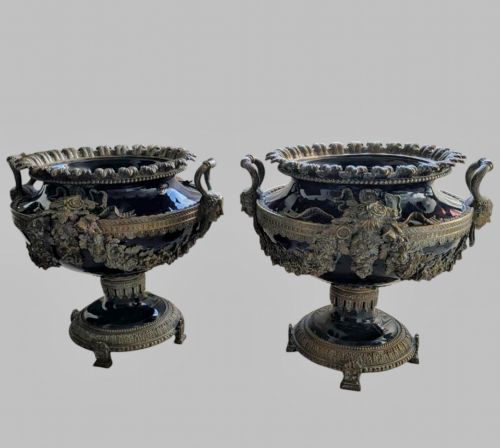


Bronze Urn Planter
A bronze urn planter brings classical form and enduring metal to interior greenery, combining ornamental presence with practical depth.
Bronze Urn Planter
When buyers search for a bronze urn planter, they encounter vessels designed to hold plants or water, drawing on centuries of classical and oriental design. The selection includes campana-shaped campana urns, Grand Tour souvenirs, and Japanese Meiji period jardinières.
The objects span the nineteenth century into the early twentieth, originating from French workshops, Italian foundries, and Japanese artisans. Forms range from heavy vessels intended for gardens to smaller cachepots for interior display.
Materials and Techniques
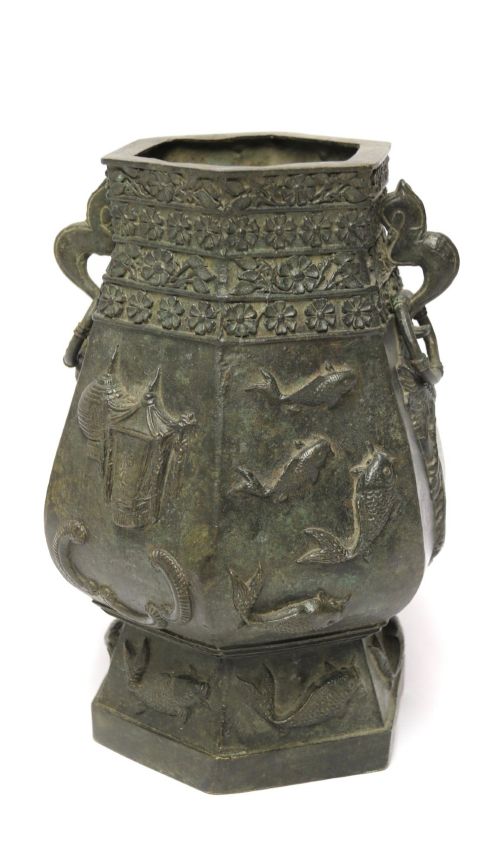
Foundries utilised cast bronze, patinated bronze, and gilt bronze, often pairing the metalwork with marble, porcelain, or enamel. Workers employed casting techniques to shape intricate handles, classical motifs, and botanical reliefs.
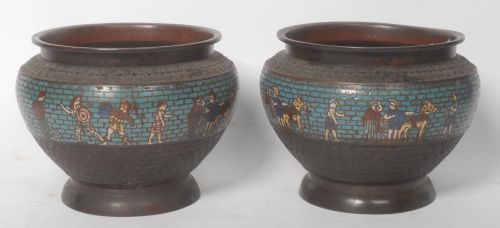
Surface treatments include champlené and cloisonné enamel, alongside chemical patination to achieve dark or aged tones on the metal.
Several heavy bronze vessels weigh over four kilograms, proving that nineteenth-century plants required exceptionally sturdy housing.
Standards of Execution
The distinction between ordinary and superior pieces rests on the crispness of the cast relief and the depth of the metalwork. Master founders produced clean lines and detailed chasing on handles and rims, whereas lesser examples show softer edges.
Weight and stability indicate the substance of the casting, while applied elements such as ormolu mounts or enamel work demonstrate the makerial ambition of the piece.
Barbedienne Paris
The Bronze Urn Planter Glossary
- Campana urn
- A bell-shaped vessel with a flared rim and pedestal foot, originating in classical antiquity and revived in European metalwork. These pieces function as planters or decorative centerpieces.
- Cachepot
- An ornamental pot used to conceal an ordinary flowerpot, frequently manufactured in porcelain, majolica, or bronze. The form protects interior surfaces from water drainage.
- Champlevé
- An enamelling technique where troughs are dug into the metal surface and filled with vitreous enamel before firing. This method creates geometric or floral patterns across the bronze body.
- Grand Tour
- A period of travel undertaken by wealthy Europeans through France and Italy, collecting classical antiquities and bronze reproductions such as Warwick vases. These souvenirs reflect neoclassical tastes of the nineteenth century.
- Jardinière
- A large ornamental receptacle designed to hold growing plants or floral arrangements, placed on tables or directly on the floor.
- Usubata
- A Japanese bronze vessel with a broad top and pedestal base, traditionally utilised in flower arranging to hold stems above water.
Bronze Urn Planter: Frequently Asked Questions
Where should I place a bronze urn planter?
These vessels suit heavy tables, pedestals, or garden settings depending on their scale and weight. Their metal construction allows them to anchor interior planting schemes.
Ensure the surface supports the considerable mass of cast bronze, particularly with larger nineteenth-century examples.
How do I identify a Grand Tour piece?
Grand Tour bronze urn planters typically replicate famous classical monuments, such as the Warwick or Borghese vases, produced in Italy or France during the Victorian era. They reflect the classical education and travel habits of the period.
The patination often mimics excavated antiquities through dark green or brown chemical finishes.
Can these planters hold live plants directly?
Many historical vessels lack drainage holes, functioning instead as cachepots to hold potted plants inside. Lining the interior or using a separate inner pot protects the metal from moisture.
Standing water left inside unlined bronze vessels can alter the patina over time.
How do I distinguish Japanese Meiji period bronze?
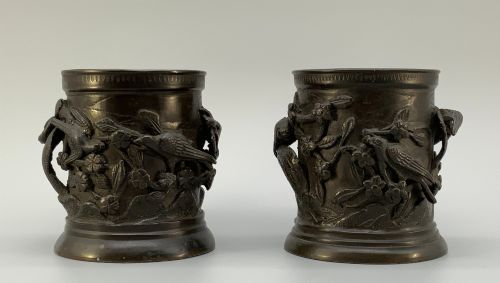
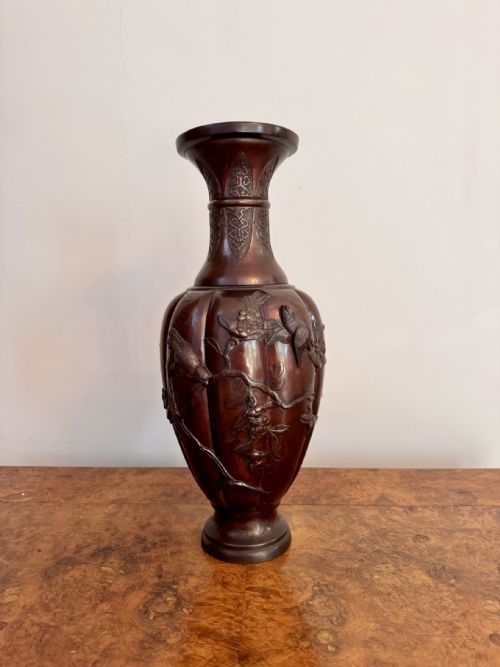
Meiji period vessels frequently incorporate naturalistic motifs such as birds, blossom, and dragons rendered in high relief or inlaid with other metals. The craftsmanship reflects the opening of Japanese trade to Western markets after eighteen sixty-eight.
Signatures or seals cast into the base sometimes identify the specific workshop or artist.