
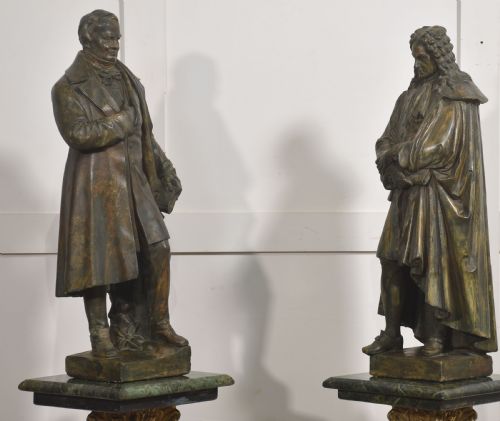

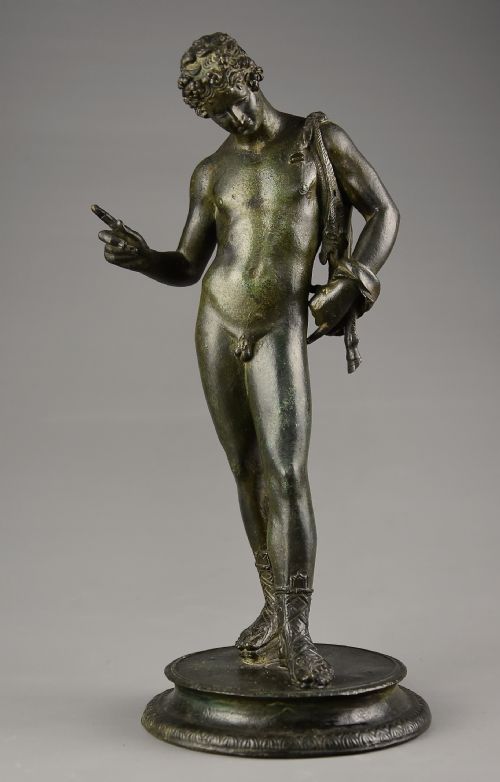

Bronze Sculpture Stand
When you search for a bronze sculpture stand, you encounter dedicated plinths, bases and integral mounts designed to elevate figural metalwork.
Bronze Sculpture Stand
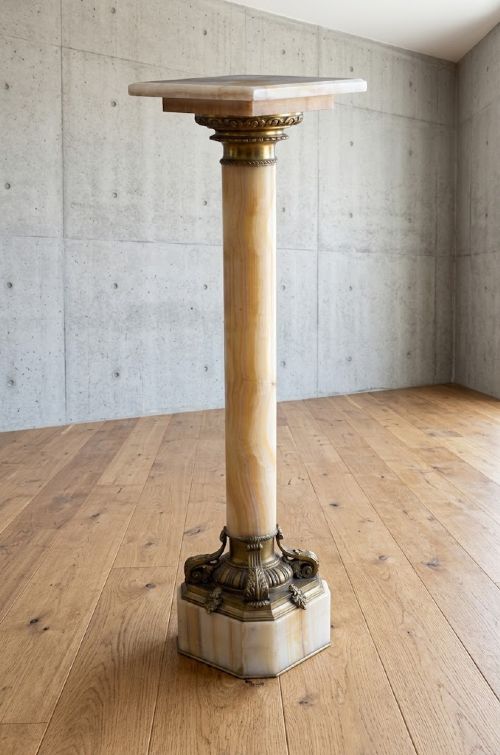
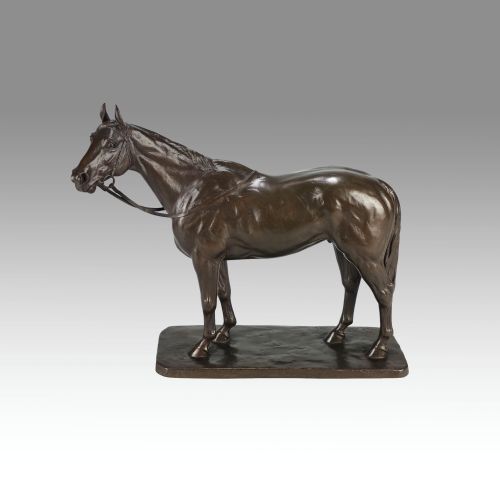
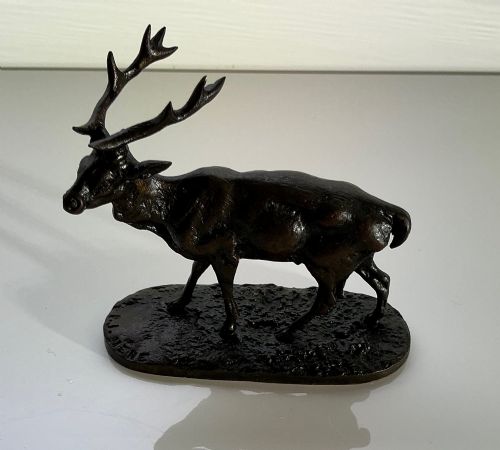
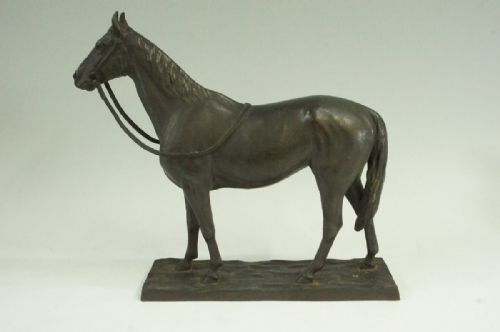
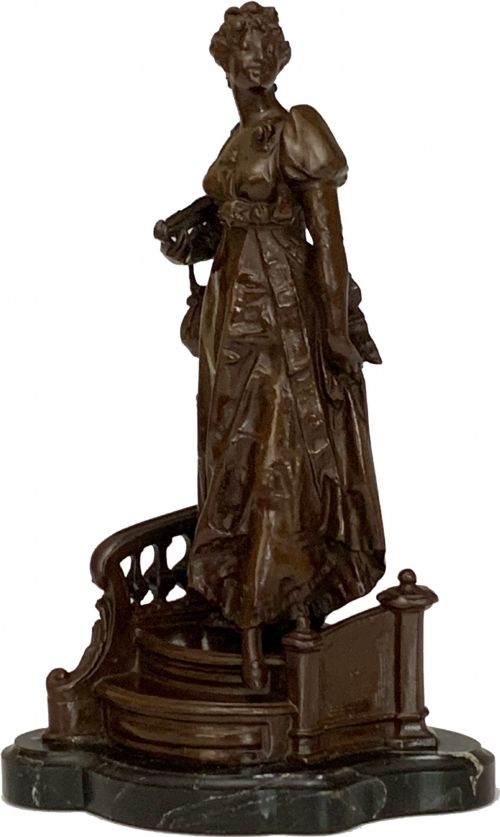
A bronze sculpture stand encompasses distinct support pieces including marble plinths, onyx columns, and integrated bases upon which standing figures, animals and busts are displayed.
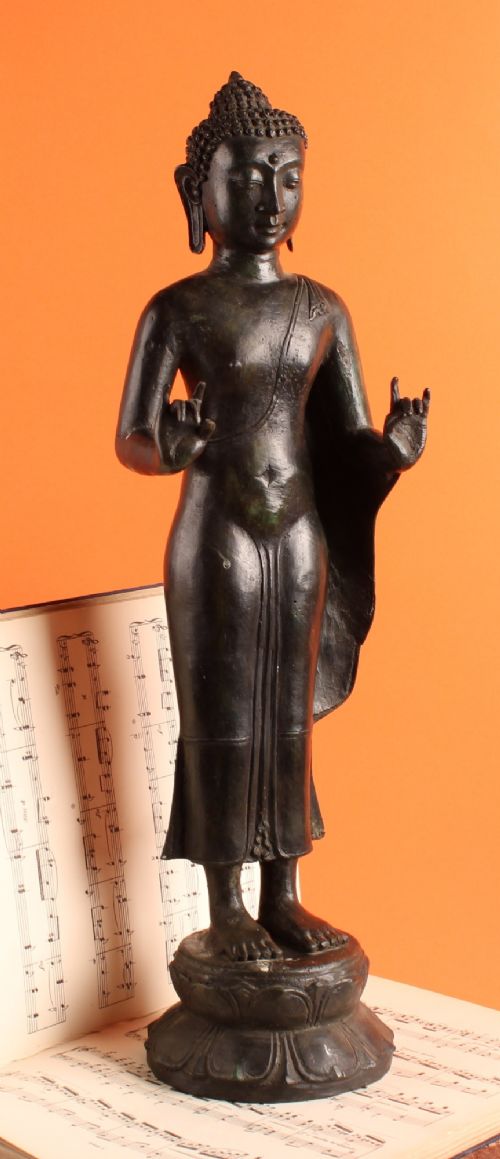
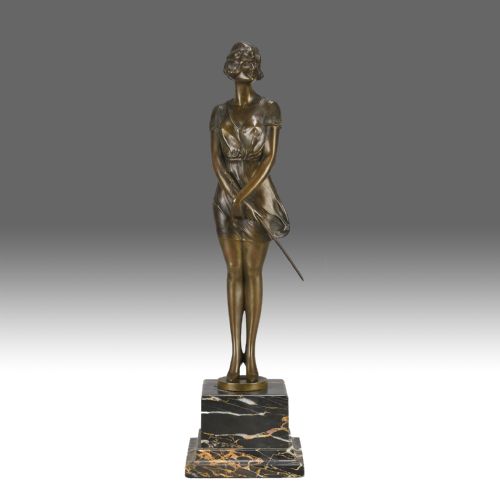
The selections span nineteenth-century French salon bronzes, Art Deco studies, and Asian cast figures where the relationship between the sculpture and its foundational support defines the piece.
Buyers find everything from simple marble pedestals to elaborate ormolu-mounted torchieres and fitted inkstands acting as structural bases.
Materials and Techniques
The construction combines cast bronze, patinated metal and spelter with supporting elements carved from marble, onyx, amboyna and carved ebony.
Foundries utilised lost-wax casting alongside cold-painting and chemical patination to achieve deep dark green, brown and gilt finishes on both figures and their architectural mounts.
Medieval characters perched rather precariously upon tall stilts.
Assessing Standards
Quality rests upon the crispness of the bronze chase work, the density and figuring of the supporting marble or onyx, and the harmony between the sculpture and its plinth.
Superior examples exhibit deliberate foundry marks, tight joins in ormolu mounts, and stable patination that has matured evenly across decades.
Bruno Zach·Kunio Itô·Georges Van Der Straeten·Franz Bergman·PJ Mene·Barbedienne·Edith Parsons·Antonin Mercié
The Bronze Sculpture Stand Glossary
- Patination
- The chemical or natural surface coloration developed on bronze over time. This process creates tones ranging from bright gilt to dark green and black.
- Ormolu
- Gilt bronze applied as decorative mounts to furniture, columns and sculpture bases. It provides a bright golden contrast to darker stones and metals.
- Plinth
- A heavy block or base acting as the bottom support for a statue, urn or column. They are frequently carved from contrasting marble or exotic woods.
- Cold-Painted
- A technique where paint is applied to cold bronze without heat firing. This method was favored by Viennese workshops for vivid animalier and figural subjects.
- Animalier
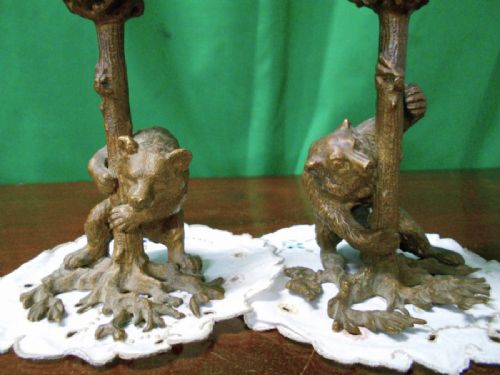
- A nineteenth-century artistic genre focusing on the realistic portrayal of animals. These sculptures frequently stand on naturalistic bronze or stone bases.
Bronze Sculpture Stand: Frequently Asked Questions
What materials make up these stands?
The structural supports typically combine cast bronze, brass and ormolu with natural stones such as marble and onyx.
Selected examples also incorporate carved hardwoods like amboyna and ebony to create elevated platforms.
How do I care for bronze and marble?
Dust the surfaces regularly with a soft cloth and avoid chemical polishes that strip original patination.
Keep marble and stone dry, protecting them from oils and acidic substances that etch polished surfaces.
Are the stands fixed to the sculptures?
Many nineteenth-century and Art Deco sculptures are permanently secured to their marble plinths via threaded bolts.
Other examples rest upon independent columns and torchieres where the sculpture remains completely removable.
How are different periods identified?
Nineteenth-century pieces often display naturalistic patinas, classical subjects and foundry stamps associated with French workshops.
Early twentieth-century works shift toward Art Deco geometry, cold-painted finishes and stylized animal studies.