
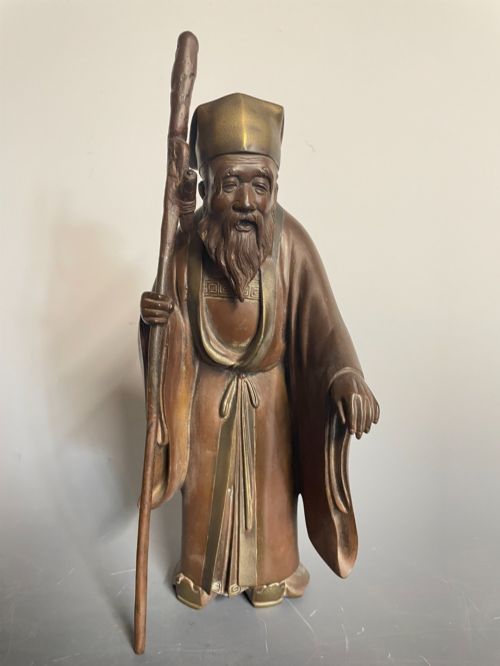

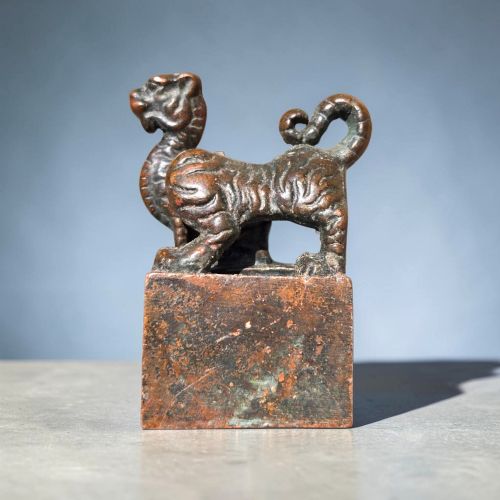


Bronze Scholar Statue
These bronze scholar statue pieces bring learning and philosophy into the room, cast in solid metal through centuries of tradition.
Bronze Scholar Statue
A bronze scholar statue represents figures of learning, poetry, and philosophy, emerging from various traditions across the globe. When exploring these works, one encounters representations ranging from traditional Chinese scholars and animals associated with wisdom to European figures of poets and writers.
The objects take diverse forms on this page, including desk sculptures, okimono, and scholar's seal sets. Pieces span multiple eras, with nineteenth-century examples and earlier works appearing alongside early twentieth-century creations.
Origin points vary widely, encompassing Japanese Meiji period workshops, Ming dynasty pieces, and European studios influenced by neoclassical or orientalist styles. Each object captures a specific cultural perspective on scholarship and contemplation.
Materials and Casting Methods
Foundry work relies primarily on bronze, brass, copper, and copper alloy, often enhanced through patination to achieve deep surface tones. Makers utilise mixed metals and gold inlay to create contrasting highlights on garments and accessories.
Cold-painting techniques appear on specific figures, applying pigment directly onto the finished metal surface. Casting methods range from finely detailed small-scale works to heavier sculptural studies requiring precise mould preparation.
Listings feature works in bronze, brass, copper, and mixed metals, originating from the sixteenth century through the early twentieth century.
Assessing Workmanship and Detail
The distinction between standard and exceptional pieces rests upon the crispness of the casting and the subtlety of the surface finish. Finer works display meticulous attention to facial expressions, hand gestures, and the intricate texturing of robes.
Material application also dictates quality, particularly where mixed metals, gold inlay, or delicate cold-painted details are integrated into the design. Masterful patination adds depth and natural shadow, elevating the sculptural presence of the figure.
Franz Bergman·Leofanti Adolphe
The Bronze Scholar Statue Glossary
- Bronze
- An alloy consisting primarily of copper, traditionally combined with tin, prized for its strength and ability to hold fine detail in casting.
- Patinated Bronze
- Metal treated with chemical solutions to produce a specific surface coloration and aged appearance.
- Okimono
- A Japanese decorative object designed for display, typically placed in a tokonoma alcove or on a shelf.
- Ming Dynasty
- A historical period of Chinese rule known for significant cultural achievements and refined metalwork.
- Cold-Painted Bronze
- Sculpture painted with non-heat-set pigments after the casting and patination processes are complete.
Bronze Scholar Statue: Frequently Asked Questions
What is a bronze scholar statue?
A bronze scholar statue is a figurative sculpture depicting learned individuals, poets, or symbolic figures associated with study and philosophy. These pieces originate from diverse cultural traditions, including Chinese, Japanese, and European workshops.
They serve both decorative and contemplative functions, often taking the form of desk sculptures, okimono, or scholar's objects meant for a study or library.
How do I identify the period?
Dating relies on stylistic markers, casting techniques, and material composition characteristic of specific eras like the Ming dynasty or the Meiji period. Nineteenth-century and early twentieth-century pieces often reflect distinct regional aesthetics and manufacturing standards.
Examining the patina and wear patterns also helps establish the age and historical context of the metalwork.
Where should I place these statues?
These statues suit studies, libraries, desks, or display shelves where their detailed craftsmanship can be appreciated up close. Pairing them with traditional wooden stands or placing them near natural light enhances their patinated surfaces.
Because many are compact, they integrate easily into various interior schemes alongside books and antiquities.
What materials are used?
The primary material is bronze, though works frequently incorporate brass, copper, and copper alloy. Some examples feature mixed metals, gold inlay, or delicate cold-painted pigments.
These varied materials allow makers to create contrasts in colour and texture between robes, accessories, and skin tones.