




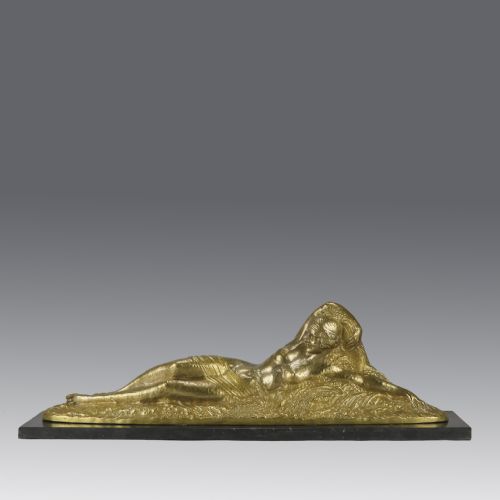



Bronze Reclining Female
These bronze reclining female figures bring classical form and Art Deco line into a room.
Bronze Reclining Female
A bronze reclining female search brings up sculptural figures stretched across surfaces, ranging from classical nudes to Art Deco interpretations. Most examples on this page date from the nineteenth century or the nineteen-twenties and thirties.
The nineteenth-century pieces lean towards classical mythology and French academic sculpture, often featuring subjects like Ariadne or classical nymphs. Twentieth-century versions embrace Art Deco styling with stylised clothing, Egyptian revival themes like Cleopatra, or unclad modernist forms.
Makers utilised various display formats, from standalone cabinet sculptures to pairs of heavy bookends supporting volumes on a shelf. The reclining posture dictates the horizontal composition of each piece, frequently mounted upon a contrasting stone base.
Materials and casting methods
Foundries cast these figures in bronze or spelter, often finishing the metal with patination or gilding to alter the surface tone. Patinated bronze yields deep brown and green hues, whereas gilt bronze presents a bright golden sheen.
Makers mounted many of these metal sculptures onto heavy plinths and bases cut from marble, onyx, or slate. These stone mounts anchor the horizontal weight of the reclining figure and provide a clean architectural contrast to the metal.
Listings span the nineteenth century through the nineteen-thirties, recording materials that include bronze, marble, onyx, and slate across various sculptural forms.
Distinguishing quality in metal figures
The choice of secondary materials marks another tier, as solid bronze and substantial marble bases indicate higher production standards than spelter figures mounted on simpler slate. The integration between the reclining figure and its stone base reveals the care taken during assembly.
Demetre Chiparus·Josef Lorenzl·Sibylle May·Edmond Leveque·James Pradier·Susse Freres·Ugo Cipriani
The Bronze Reclining Female Glossary
- Patinated bronze
- Bronze treated with chemical solutions to produce a specific surface colour, ranging from dark brown to deep green. This treatment protects the metal and defines the shadows of the sculptured form.
- Spelter
- A zinc alloy utilised as a less expensive alternative to bronze for sculptural figures. It takes plating and patination well, though it remains softer and lighter than genuine bronze.
- Gilt bronze
- Metal coated with a thin layer of gold or gold-coloured alloy to give a rich metallic finish. This technique highlights decorative details on nineteenth-century and Art Deco pieces.
- Bookends
- A matched pair of heavy objects placed at either end of a row of books to keep them upright. In this context, the figures are adapted with flat bases or weighted blocks to serve this dual function.
Bronze Reclining Female: Frequently Asked Questions
Are these figures solid bronze?
The listings include both solid bronze and spelter sculptures, alongside patinated and gilt metal finishes. Each entry specifies the exact medium used by the maker.
Heavier pieces generally indicate solid bronze construction, whereas lighter figures often point towards spelter or hollow casting techniques.
How do I display a reclining figure?
These horizontal sculptures suit deep mantelpieces, sideboards, or large tables where their length can be appreciated from multiple angles. Many incorporate fitted marble or slate bases that help them rest securely on flat surfaces.
When utilised as bookends, they anchor heavy volumes while maintaining a decorative sculptural presence on the shelf.
How do I distinguish nineteenth-century pieces from Art Deco examples?
Nineteenth-century sculptures typically draw on classical mythology, naturalistic human proportions, and academic French casting traditions. They often depict historical or mythological narratives such as Ariadne.
Art Deco works from the nineteen-twenties and thirties favour stylised geometry, distinct costume elements, and modern interpretations of the female form.
What is spelter?
Spelter is a zinc-based alloy commonly utilised for decorative figures and bookends as a cost-effective alternative to bronze. It accepts surface patination and metallic paint readily.
Objects cast in spelter are lighter than bronze items and require careful handling to preserve the surface finish.