






Bronze Onyx Desk Ornament
A bronze onyx desk ornament brings tactile mineral weight and sculptural metalwork to a surface, offering the crisp definition of early twentieth-century design.
Bronze Onyx Desk Ornament
A bronze onyx desk ornament combines a stone plinth with a metal figure or vessel, uniting contrasting textures. These pieces function as small sculptures, pin trays, and figural groups designed for working surfaces.
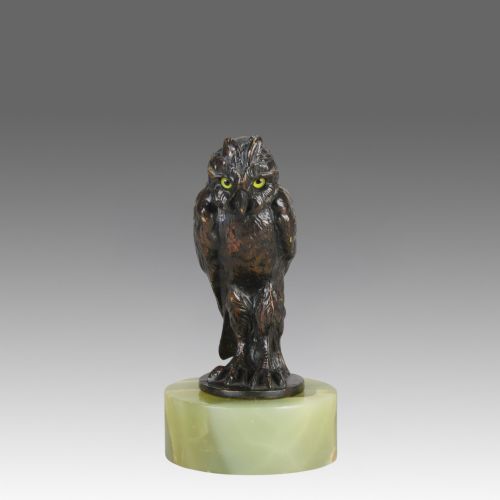
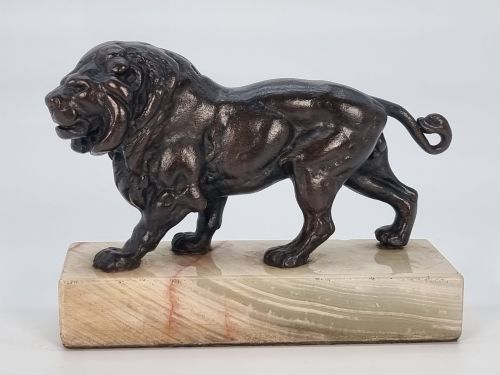
The bronze onyx desk ornament category draws heavily on the Art Deco movement alongside Animalier and Austrian Vienna bronze traditions. Subjects range from prowling lions and wildfowl to dancers and female nudes.
Pieces from this selection predominantly date from the late nineteenth century through the nineteen-thirties. The most frequent configurations pair a polished stone base with cold-painted metal or cast spelter figures.
Materials and Construction
Makers shaped the heavy bases from natural quarried stones, utilising green onyx and standard onyx alongside select marble. These plinths provide a solid, weighty foundation that grounds the lighter metal elements above.
Metal components rely on traditional foundry methods, casting genuine bronze, silvered bronze, gilt bronze, or zinc-based spelter. Artisans often applied cold-paint finishes by hand directly onto the cast metal details.
Figures and animal studies are secured directly to the stone plinths using threaded rods or pins. This mixed-media construction demands precise alignment between the cold stone and the warm metal.
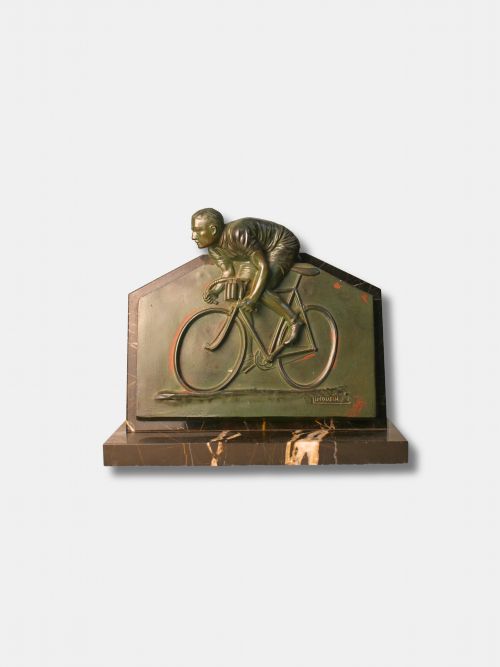
A stoic drake mallard duck shares desk space with prowling lions, racing cyclists, and dancing ladies.
Evaluating Quality and Detail
Quality rests upon the crispness of the metal casting and the depth of the hand-applied cold paint. Finer examples retain complex polychrome pigments and sharp anatomical definition in human and animal subjects.
The stone base itself dictates value through its mineral grain, polish, and free-from-blemish integrity. Dense green onyx with varied veining elevates the presence of the mounted sculpture.
Signed works by named sculptors carry distinct artistic authority over anonymous foundry output. The harmony between the proportions of the metal figure and the scale of the stone plinth defines the overall success of the piece.
P. Sega·Josef Lorenzl·Pierre Le Faguays
The Bronze Onyx Desk Ornament Glossary
- Cold Painted
- Metalwork decorated with non-firing paint applied after casting. This technique allows for detailed polychrome surface decoration on bronze and spelter figures.
- Animalier
- A nineteenth-century artistic style focusing on realistic depictions of animals. These sculptures capture creatures in motion or repose.
- Spelter
- A zinc alloy used as a cost-effective alternative to bronze. It accepts patination and metallic paint finishes closely resembling higher-value metals.
- Plinth
- A heavy stone base supporting a sculpture or ornament. In these pieces, polished onyx or marble provides stability and visual contrast.
Bronze Onyx Desk Ornament: Frequently Asked Questions
What is a bronze onyx desk ornament?
A bronze onyx desk ornament is a small decorative sculpture or functional tray mounted on a stone base. These items combine metal casting with polished mineral plinths.
They emerged primarily during the Art Deco and early twentieth-century periods to adorn writing desks and tables.
How do I clean a bronze onyx desk ornament?
Dust the piece gently with a soft, dry brush to protect delicate cold-painted surfaces. Avoid chemical cleaners that can strip patination or damage the stone.
Wipe the onyx base with a slightly damp cloth and dry it immediately to preserve the polished mineral finish.
Are these desk ornaments solid bronze?
Metal components vary across the selection between genuine bronze, gilt bronze, silvered bronze, and spelter. Spelter is a zinc-based alloy commonly utilised during the Art Deco period.
The heavy base is consistently carved from natural stone such as standard onyx, green onyx, or marble.
How can I tell the period of the piece?
Stylistic indicators such as Art Deco geometric lines, Animalier realism, and artist signatures point towards specific decades. Nineteenth-century examples often display different patination and mounting methods compared to nineteen-thirties pieces.
Examining the fasteners beneath the onyx base also helps determine the manufacturing era.