
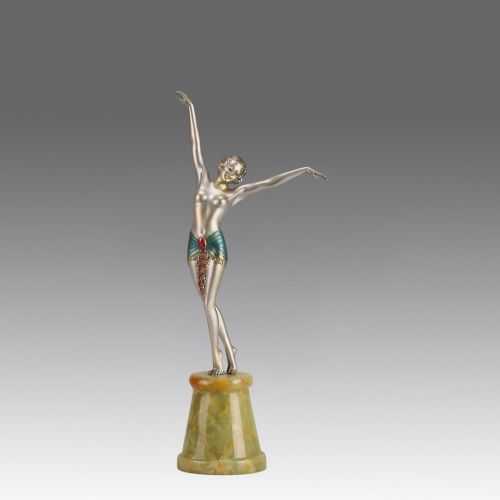
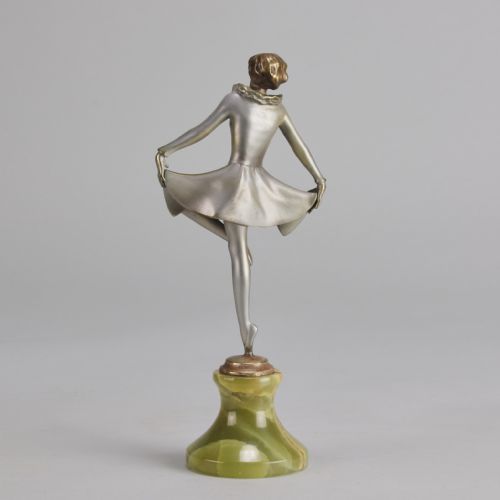


Vintage Dancer Statuette
A vintage dancer statuette captures movement in bronze, spelter, or porcelain, bringing the theatrical energy of the early twentieth century directly into your home.
Vintage Dancer Statuette
When you search for a vintage dancer statuette, you are looking at figural sculptures created primarily during the early twentieth century, spanning from the late Victorian classical revival through the height of the Art Deco period. The pieces you will most commonly encounter here are French and Austrian works depicting female dancers in motion, captured in bronze or spelter.
The subjects range from named figures like the Egyptian Dancer, Trouser Girl, and Starfish Dancer to allegorical representations such as harvest dancers and hoop dancers. These sculptures take the form of tabletop figurines and statuettes, frequently mounted upon heavy bases of marble, onyx, or alabaster to anchor the dynamic poses.
How they were made
Foundries produced these sculptures using traditional metal casting techniques, predominantly working in bronze or utilising spelter as a more accessible alternative metal. Many examples received surface treatments including cold painting, silvering, or gilding to accentuate the garments and hair of the figures.
Makers paired the metal figures with stone bases, securing the sculptures to plinths of marble, onyx, or alabaster. Certain pieces also incorporated delicate details in enamel or utilised porcelain as seen in factory-produced ceramic figurines.
Listings span three distinct decades: 1900, 1920, and 1930, with the vast majority originating from the Art Deco period.
What varies in quality
The quality of the mounting further defines the piece, with dense marble or onyx bases providing stability and proportion that lesser productions lack. Signature placement and the reputation of the foundry or artist also elevate the standing of a statuette within the field.
Josef Lorenzl·Demetre H. Chiparus·Colinette·Rene Andre Varnier·Bruno Zach·Mario Korbel·Pierre le Faguays
The Vintage Dancer Statuette Glossary
- Spelter
- A zinc alloy frequently utilised as a cost-effective substitute for bronze in decorative figures. It accepts patination and metallic paint finishes well.
- Cold-painted bronze
- A method where paint is applied to a bronze sculpture without subsequent firing or heat treatment. This technique allows for vibrant polychrome details on garments and skin.
- Art Deco
- The dominant design style of the 1920s and 1930s characterised by streamlined forms, geometric symmetry, and dynamic depictions of movement. It heavily influences the posture and styling of these figures.
- Silvered bronze
- Bronze metal treated with a silver finish or plating to create a bright, reflective surface. This treatment was favoured by specific sculptors to highlight modern aesthetics.
- Alabaster
- A fine-grained, translucent stone utilised for sculptural bases. Its soft appearance complements the metallic sheen of the figures mounted upon it.
Vintage Dancer Statuette: Frequently Asked Questions
What materials are these statuettes made from?
The listings show these sculptures cast primarily in bronze or spelter, occasionally utilising silvered bronze, gilt bronze, or porcelain. Many figures feature hand-applied cold paint or enamel details.
These metallic figures are almost universally mounted on heavy stone bases. The most common foundation materials are marble, onyx, and alabaster.
How do I distinguish bronze from spelter?
Bronze is a heavy, durable copper alloy that maintains a resonant ring when struck and accepts intricate chisel work during finishing. Spelter is a softer, lighter zinc-based metal that tends to feel less substantial.
Examination of the underside or areas of wear often reveals the greyish metal beneath the surface finish of a spelter piece. Bronze examples generally display a warmer, deeper patination.
Which periods do these dancer statuettes come from?
The evidence places these works firmly in the early twentieth century, specifically clustered around the 1920s and 1930s during the Art Deco movement. A small number of pieces originate from around 1900 under the Victorian classical revival style.
Most statuettes reflect the modernist energy and streamlined aesthetics of the interwar decades. The clothing, hair styling, and dance postures directly mirror the fashion of this era.
How should I display a stone-based statuette?
Place the sculpture on a stable, level surface such as a sideboard or mantelpiece where the heavy marble or onyx base can support the weight safely. Ensure the location avoids direct sunlight to protect any cold-painted finishes or enamel work.
Dust the piece gently with a soft, dry cloth without applying harsh chemical polishes to the metal or stone. The integrated stone plinth is designed to keep the dynamic figure balanced during display.