


Bronze Dancer Onyx Base
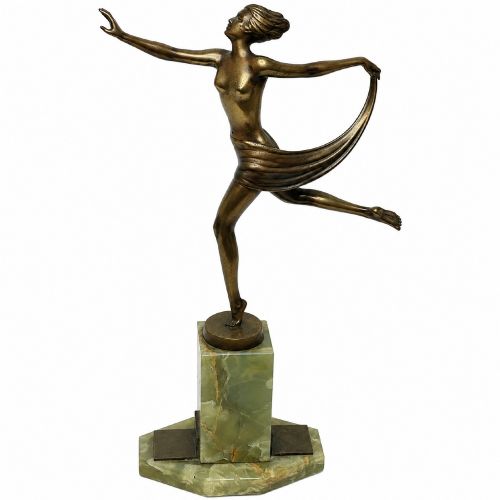
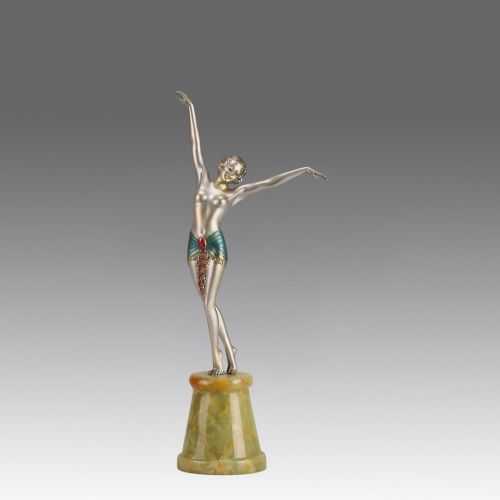
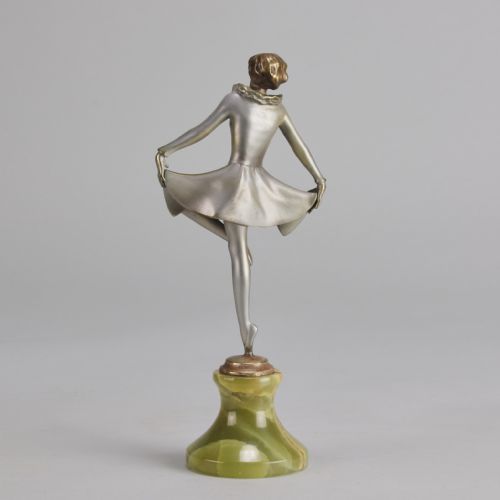
These bronze dancer onyx base sculptures capture the energetic grace of Art Deco movement, offering striking figures mounted on polished stone.
Bronze Dancer Onyx Base
When you search for a bronze dancer onyx base, you are looking at Art Deco sculptures from the early twentieth century, specifically from the decades of nineteen twenty and nineteen thirty. These pieces depict female dancers, ballerinas, and female figures in motion, frequently mounted upon contrasting stone plinths.
The versions you are most likely to encounter on this page span several material variations, including cast bronze, cold-painted surfaces, gilt bronze, silvered bronze, and spelter. Alongside standard sculptural statues and figurines, the selection occasionally includes functional objects such as table lighters.
The overall aesthetic reflects the distinct styling of the Art Deco period, capturing theatrical subjects like Egyptian dancers, Russian dancers, and scarf dancers. Figures often stand or lean directly upon rectangular or circular bases made of onyx or marble.
Materials and Technique
The figures are cast using traditional methods in bronze or spelter, capturing intricate details of drapery, pose, and expression. Many examples feature applied surface treatments such as cold-painting, silvering, or gilding to enhance the visual texture of the costumes and hair.
The supporting plinths utilise natural stone materials, predominantly onyx and marble, cut and polished into geometric or stepped forms typical of the era. These heavy stone bases provide both a stable foundation and a decorative contrast to the metallic sheen of the figures.
Current listings feature pieces exclusively from the periods of nineteen twenty and nineteen thirty, created in bronze, spelter, and onyx.
Assessing Quality
The choice of material significantly dictates the tier of the piece, with solid cast bronze and intricate chryselephantine work occupying the upper end, and spelter or base metal alternatives representing more commercial production. Additionally, the selection and polish of the onyx or marble base contribute to the overall refinement of the work.
Josef Lorenzl·Paul Philippe·Pierre Le Faguays·Demetre Chiparus·Claire Colinet·Ignacio Gallo
The Bronze Dancer Onyx Base Glossary
- Art Deco
- A design style of the nineteen twenties and nineteen thirties characterised by streamlined geometric forms and stylised representations of figures. It heavily influenced sculpture and decorative objects of the period.
- Cold-Painted
- A technique where paint is applied to a bronze or metal sculpture without heat firing. This finish is delicate and can show wear over time.
- Chryselephantine
- A term describing statues made from a combination of bronze and ivory. These pieces frequently feature carved ivory faces and hands paired with metal bodies.
- Spelter
- A zinc alloy utilised as a less expensive alternative to bronze for casting figures. It is often painted or patinated to resemble bronze.
- Onyx
- A banded variety of chalcedony used extensively for decorative stone bases in twentieth-century sculpture. Its natural translucence and banding vary from piece to piece.
Bronze Dancer Onyx Base: Frequently Asked Questions
What is the difference between bronze and spelter?
Bronze is a durable copper alloy that takes fine detail well and holds a traditional patina over decades. Spelter is a softer zinc-based metal used for more commercial figures.
Pieces cast in spelter are lighter and frequently feature painted finishes rather than traditional patination. Inspecting the underside or areas of wear can help identify which metal was utilised.
Are all these figures from the Art Deco period?
The listings consist entirely of pieces originating from the early twentieth century, specifically dated to nineteen twenty and nineteen thirty. The sculptural forms and base materials strictly align with the Art Deco aesthetic.
Makers working during this era produced both limited artistic editions and wider commercial runs. Every item on this page reflects the design characteristics of those two decades.
How were table lighters used?
Table lighters combined decorative sculpture with a functional mechanical insert placed directly into the onyx base or the figure's setting. They were designed to sit on living room tables during the nineteen twenties and thirties.
Guests would use them in social settings where smoking accessories were displayed openly. Today, collectors appreciate them for their dual role as miniature bronzes.