

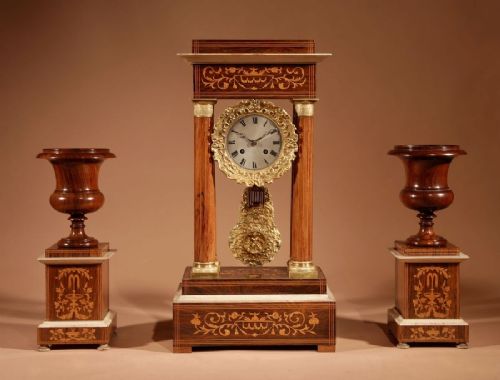
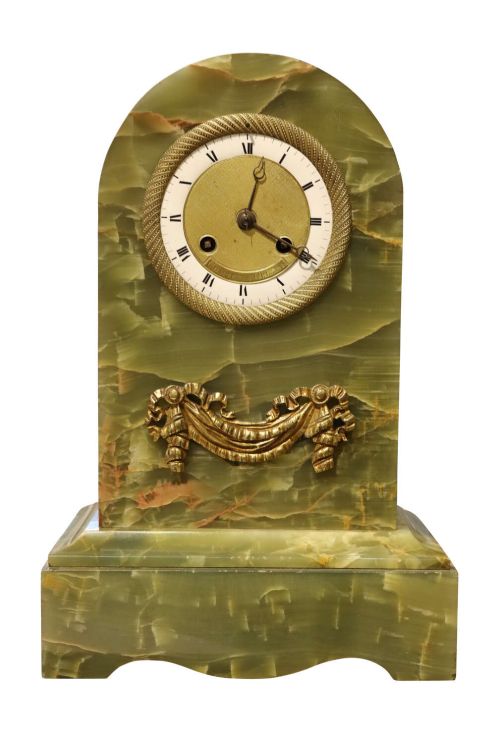
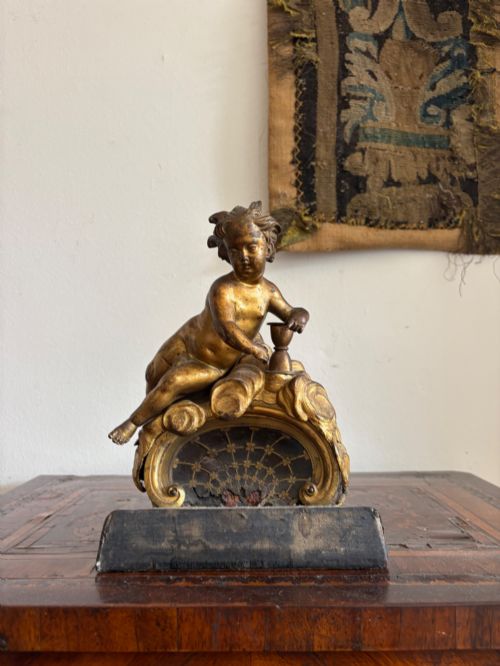
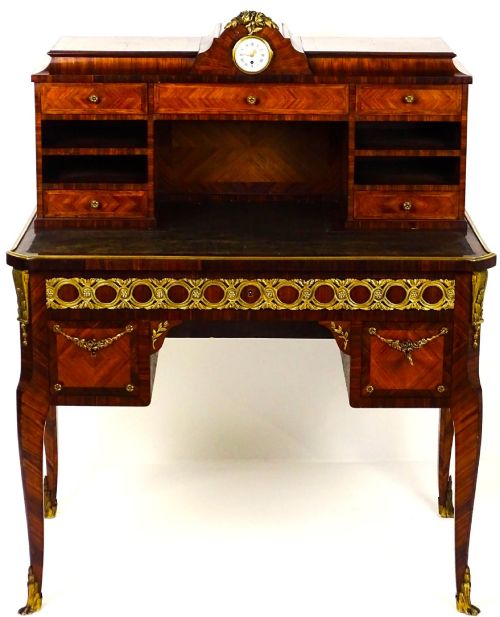


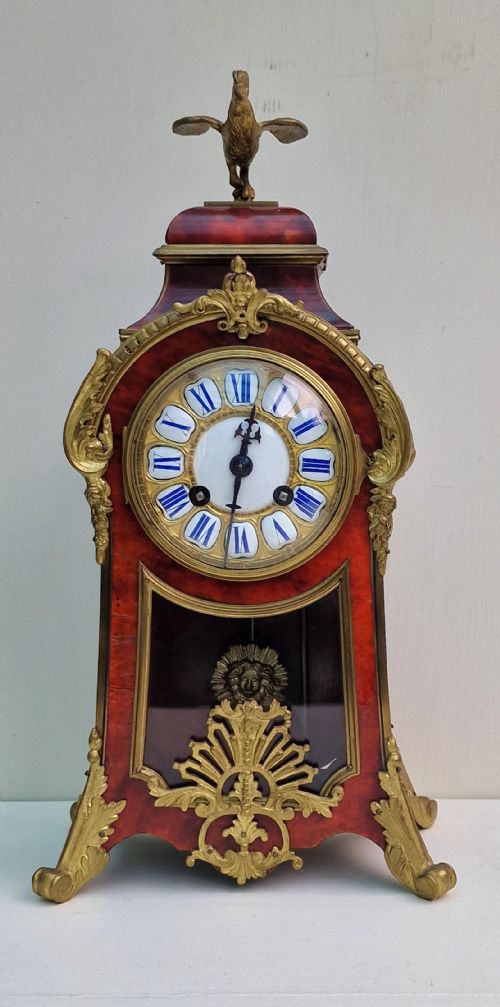
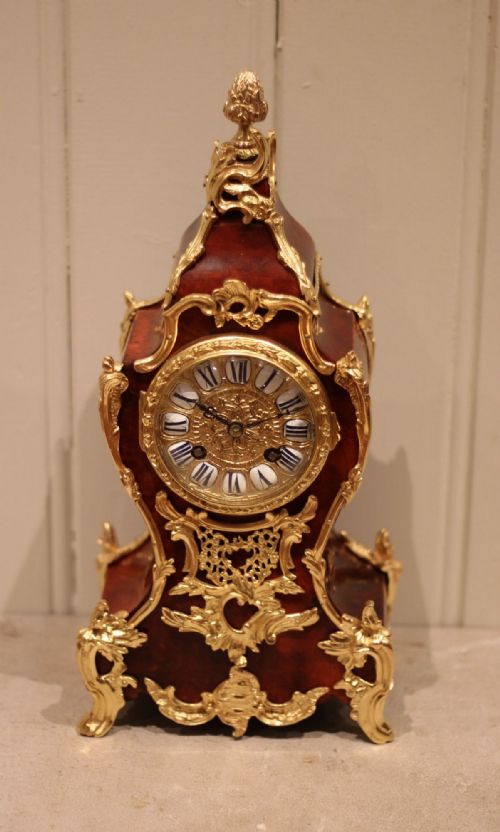


Bronze Mounted Clock
A bronze mounted clock brings architectural presence and precision casting into a room, uniting functional horology with ornamental metalwork.
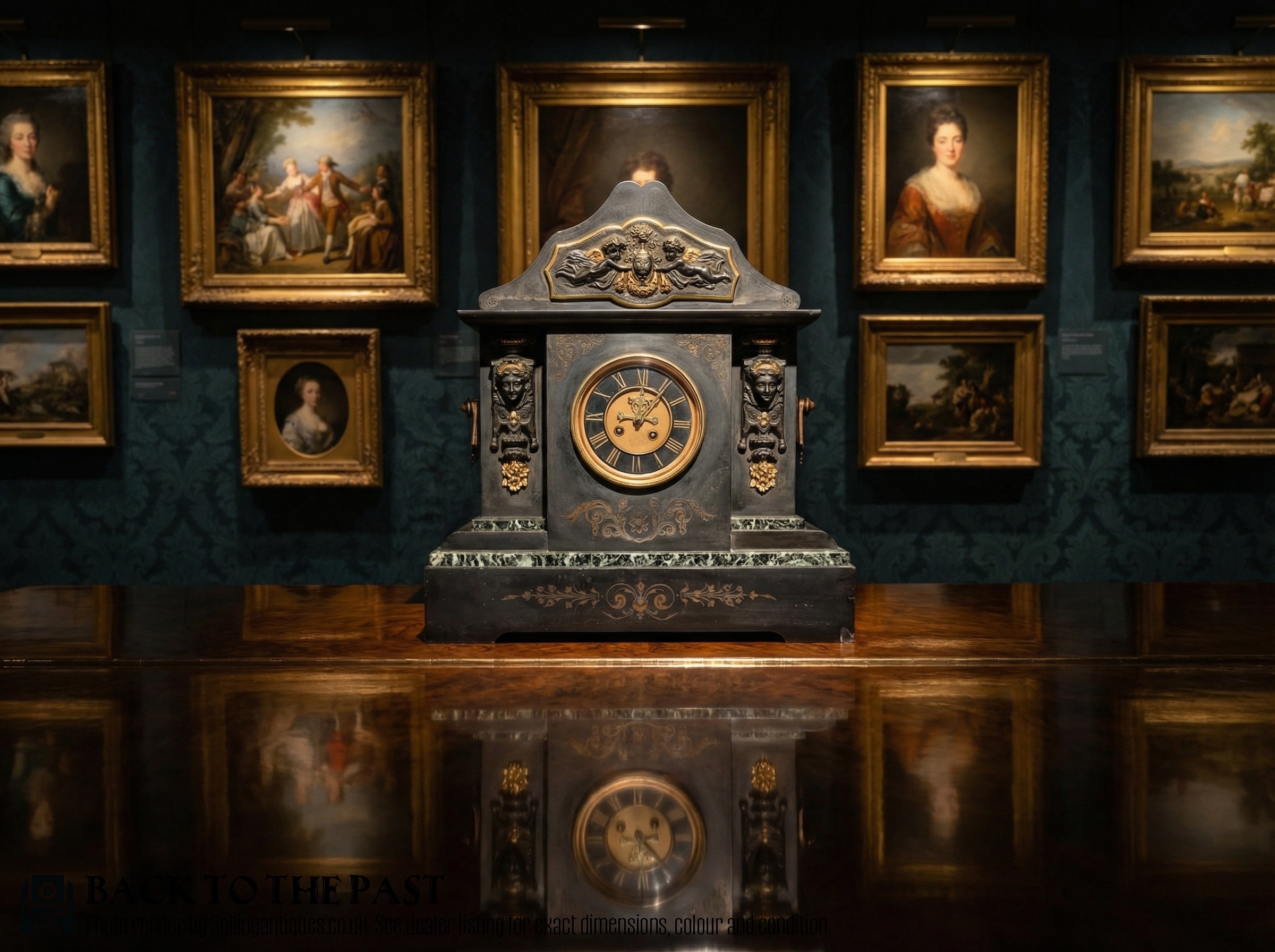
Bronze Mounted Clock
A bronze mounted clock combines a time-keeping housing with cast metal decorative elements, predominantly seen in nineteenth-century French mantel pieces and garnitures.
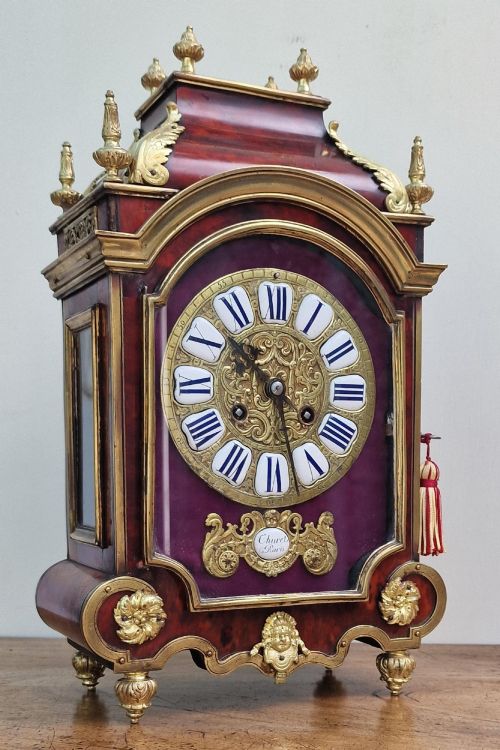
Makers housed movements within cases formed from marble, onyx, burr walnut, ebonised wood, or tortoiseshell, secured with cast metal mounts.
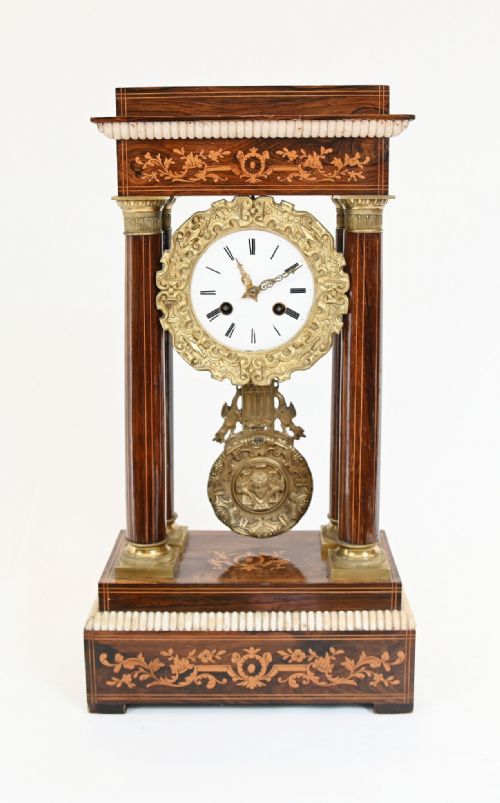
The aesthetic draws heavily on Louis XIV, Louis XV, Louis XVI, Empire, and Rococo revivals, alongside distinctive portico and lyre-shaped forms.
Materials and construction
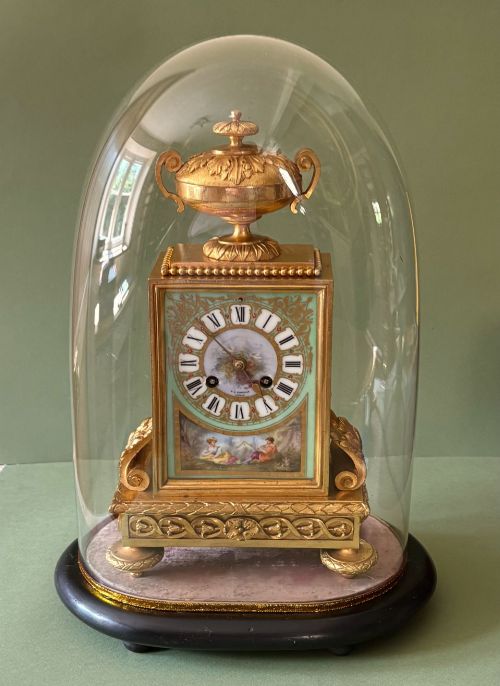
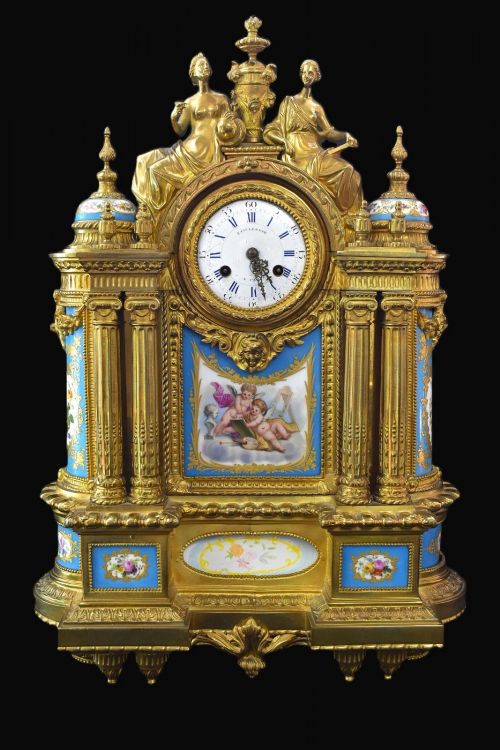
Foundry workers cast mounts in bronze or brass, applying fire-gilding to create ormolu surfaces with lasting lustre.
Cabinet makers constructed wooden carcasses from kingwood, walnut, and oak, often applying intricate tortoiseshell and brass Boulle marquetry.
Clockmakers fitted mechanical movements, ranging from standard eight-day pendulums to fusee systems and quarter-chiming configurations.
Listings feature movements by notable makers alongside diverse materials including marble, tortoiseshell, porcelain, and ormolu.
Assessing craftsmanship and execution
Superior examples display crisp chasing on the ormolu mounts, where hand-tooling defines fine details rather than leaving them flat from the sand-cast mould.
The integration of the decorative mounts to the marble or wooden body indicates the maker's care, with mounts following the precise contours of the case.
Signatures on enamel dials and backplates from established horologists denote higher workshop standards compared to unsigned or mass-produced alternatives.
Charles à Orléans·Paul Sormani·Lenzkirch·Payne and Co·Achille Brocot·Charles Frodsham·Samuel Marti
The Bronze Mounted Clock Glossary
- Ormolu
- Gilt bronze produced by applying a mercury-gilding amalgam to cast bronze, creating a rich golden finish. This technique was widely utilised by French makers during the eighteenth and nineteenth centuries.
- Boulle
- Marquetry technique utilising tortoiseshell and engraved brass inlaid in opposing patterns. Named after the royal cabinet maker André-Charles Boulle, it defines grand decorative cases.
- Garniture
- A set comprising a central clock accompanied by matching decorative objects such as vases or candelabra. These matched sets were designed to display symmetrically on a mantelpiece.
- Fusee
- A conical pulley fitted within mechanical clocks to equalise the declining power of the mainspring as it unwinds. This mechanism ensures more accurate timekeeping throughout the running cycle.
- Portico clock
- A clock featuring a architectural case supported by four columns, resembling a classical temple facade. Popular in the early nineteenth century, these often housed delicate pendulum arrangements.
Bronze Mounted Clock: Frequently Asked Questions
How do I wind my clock?
Most mechanical pieces utilise a key inserted into specific winding holes on the enamel dial to tension the springs.
Carefully turn the key until resistance is felt, avoiding overwinding to protect the internal gear train.
Are these clocks still accurate?
Period mechanical movements can keep reliable time when properly serviced and correctly levelled on a stable surface.
Variations can occur with temperature changes, and professional adjustment may be required to maintain precision.
How should I clean ormolu mounts?
Dust gilt bronze surfaces gently with a soft, dry brush to prevent accumulation in recessed chased details.
Harsh chemical polishes must be avoided entirely, as they strip away the historic fire-gilded surface layer permanently.