





Bronze Mantle Ornament
A bronze mantle ornament brings sculptural presence to a room, ranging from French academic figures to Art Deco dancers.

Bronze Mantle Ornament
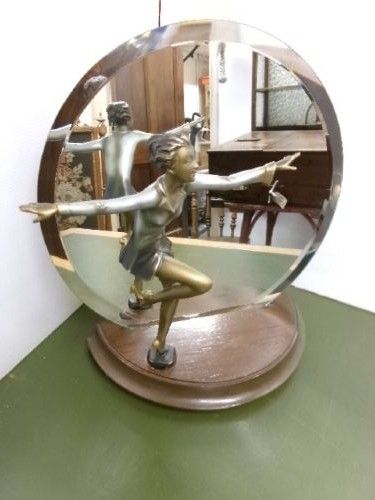
A bronze mantle ornament comprises sculptural figures, animal studies, and garniture sets designed to sit upon a fireplace mantel or decorative shelf. These pieces emerge from the nineteenth century and extend through the Art Deco period, capturing subjects from classical academic art to sporting scenes and domestic animals.
Buyers frequently encounter French school casts alongside Victorian works in bronze and spelter, often mounted upon bases of marble or onyx. The selection spans single figures such as sporting jockeys and hunting dogs to paired garniture sets and figural groups.
How they were made
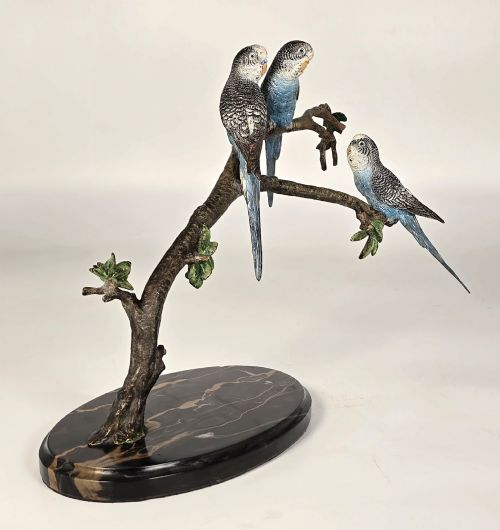
Maker workshops utilised traditional casting methods for bronze and spelter, often applying patinated, gilded, or cold painted finishes to enhance surface detail. Many figures receive hand-painted colour, particularly on avian and botanical subjects.
Sculptures are mounted upon structural bases formed from natural materials including marble, onyx, wood, and glass. These heavy bases provide stability for the metal figures above them.
Listings feature works spanning from the Victorian era through the Art Deco period of nineteen thirty.
What varies in quality
The refinement of the casting and the crispness of the chiselling separate standard production from superior work. Finer examples display meticulous anatomical accuracy in human and animal subjects, alongside subtle patination.
The quality of the mounting base contributes significantly to the piece. Dense, well-polished marble and onyx elevate the overall presence of the metalwork.
Bruno Zach·Charles Anfrie·Lavergne·Henri Plé·L.Bureau
The Bronze Mantle Ornament Glossary
- Spelter
- A zinc-based alloy used as an accessible alternative to bronze for sculptural casting. It frequently takes patinated finishes to resemble heavier metals.
- Garniture set
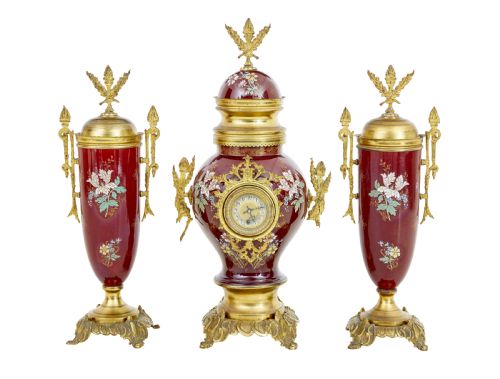
- A matched group of decorative ornaments, typically comprising a central clock or large sculpture flanked by matching side pieces. These were designed to sit symmetrically on a mantlepiece.
- Patinated bronze
- Bronze treated with chemical solutions to produce a specific surface colour or aged finish. This process protects the metal while accentuating sculptural contours.
- Cold painted
- A decorative technique where paint is applied to metal without heat-firing. It appears frequently on detailed animal and bird figures.
Bronze Mantle Ornament: Frequently Asked Questions
Where should I place a bronze mantle ornament?
These pieces suit fireplace mantels, console tables, and deep bookshelves where their three-dimensional form can be viewed from multiple angles. Ensure the surface is level and capable of supporting the combined weight of the metal figure and its stone base.
Keep them away from direct heat sources and strong moisture to preserve the metal patination and any cold painted surface details over time.
How do I clean a bronze mantle ornament?
Dust the piece gently with a dry, soft microfiber cloth to prevent particulate buildup in the recessed areas of the casting. Avoid using water, abrasive cleaners, or chemical solvents, as these can strip the original patina or paintwork.
Professional restoration is rarely needed if the piece receives regular, gentle maintenance with a dry brush for intricate corners.
What is the difference between bronze and spelter?
Bronze is a durable copper alloy capable of holding exceptionally sharp casting details and developing a rich natural patina over centuries. Spelter is a softer zinc alloy that offers a lighter weight and was widely utilised for decorative figures during the Victorian and Art Deco eras.
Examining the underside or areas of wear often reveals the distinct colour and weight differences between the two metals.
Are these ornaments part of sets?
Some pieces form part of larger garniture sets designed to be displayed together as a symmetrical arrangement on a mantle. Others function entirely as standalone sculptures or figural groups.
Single figures usually depict animals, human athletes, or narrative characters meant to command attention on their own.