
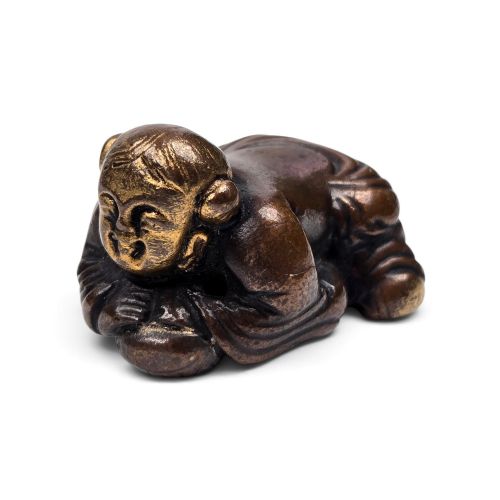
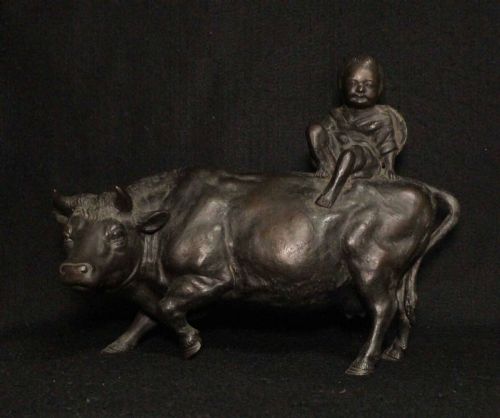
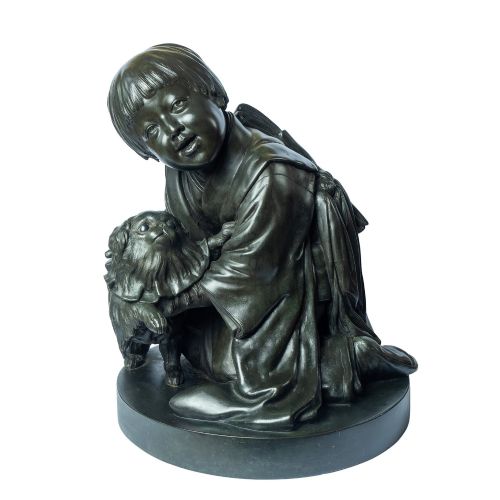


Cast Bronze Boy Sculpture
These cast bronze boy sculpture pieces span centuries of international foundry work, offering collectors characterful figurative studies in metal.
Cast Bronze Boy Sculpture
A cast bronze boy sculpture encompasses figural works ranging from desk paperweights to garden statues and mantel busts. Buyers searching for a cast bronze boy sculpture encounter depictions of scholars, riders, snake charmers, and schoolboys across various global traditions.
The selections on this page draw heavily from nineteenth-century European realism, French ateliers, Meiji period Japanese okimono, and Ming dynasty Chinese scholar works. Nineteenth-century French academic figures and Asian cast metal traditions dominate the forms available here.
Objects appear as standalone tabletop sculptures, functional paperweights, okimono, and garden statuary. Patinated plaster studies also emerge alongside the metal works, providing classical forms in alternative sculptural mediums.
Evaluating sculptural quality
The distinction between standard foundry production and superior work lies in the crispness of the chasing and the subtlety of the surface finish. Skilled chasing after the cast removes seams and sharpens anatomical details such as hair, fingers, and drapery.
The depth and longevity of the applied patina reveal the care taken during finishing, with superior pieces showing nuanced tonal variations. The integration between the bronze figure and its stone or marble base further indicates the workshop standard.
Listings feature works spanning from the sixteenth-century Ming dynasty up through the nineteenth and early twentieth centuries.
Giuseppe Renda·Joaquim Angles·Antoine Bofill·Auguste Moreau·Charles Anfrie·Emile Victor Blavier·Lavergne·Eugene Laurent·Masaaki
The Cast Bronze Boy Sculpture Glossary
- Okimono
- A Japanese ornamental statue designed for display on a traditional tokonoma alcove or shelf. These small-scale carvings and castings depict figures, animals, and historical scenes.
- Patina
- The surface coloration and sheen developed naturally over time or applied chemically by the foundry. It protects the metal and defines the visual texture of the sculpture.
- Fire-gilding
- A decorative process applying an amalgam of gold and mercury to a metal surface before heating to evaporate the mercury. This leaves a permanent, rich gold layer on the bronze.
- Chasing
- The manual refinement of a raw metal casting using small punches and hammers to clean up details and texture the surface. Fine chasing distinguishes high-tier studio bronzes from mass commercial output.
- Scholar's desk paperweight
- A small, portable object placed upon a writing table to secure loose sheets of paper. In traditional Chinese contexts, these took specific figurative or symbolic forms.
Cast Bronze Boy Sculpture: Frequently Asked Questions
How do I clean a bronze sculpture?
Dust the surface gently with a soft, dry brush to prevent particulate accumulation. Avoid using chemical polishes or water, which can strip the historic patina.
Apply a very thin coat of microcrystalline wax periodically if the metal requires protection from atmospheric moisture. Buff the wax gently with a clean cloth after application to maintain a stable finish.
What is an okimono?
An okimono is a Japanese decorative sculpture traditionally sized for interior display on household shelves or display ledges. These pieces often portray everyday subjects, legendary figures, or animals with high naturalistic detail.
Unlike religious statues intended for worship, okimono served purely aesthetic purposes. Nineteenth-century examples frequently combine intricate bronze casting with signature marks from individual artisans.
How can I date a 19th-century bronze?
Examine the underside of the sculpture for casting seams, foundry marks, and the method used to secure the figure to its base. Nineteenth-century European works often feature distinct artist signatures and foundry cachets directly on the bronze.
The style of the clothing, hair, and base materials like carved marble also provide chronological indicators. Patination techniques and wear patterns further help establish the age of the metalwork.
Where should I display my sculpture?
Position the piece on a stable, level surface away from direct sunlight and excessive humidity shifts. Heavy bronze figures require robust furniture or dedicated pedestals to support their weight securely.
Keep pieces clear of direct heat sources such as radiators to prevent thermal shock to stone bases or drying out of patinas. Ensure adequate clearance around tabletop works to prevent accidental tipping.