




Bronze Jardiniere Planter
A bronze jardiniere planter brings weight and botanical display together, ranging from French reception rooms to Japanese display halls.
Bronze Jardiniere Planter
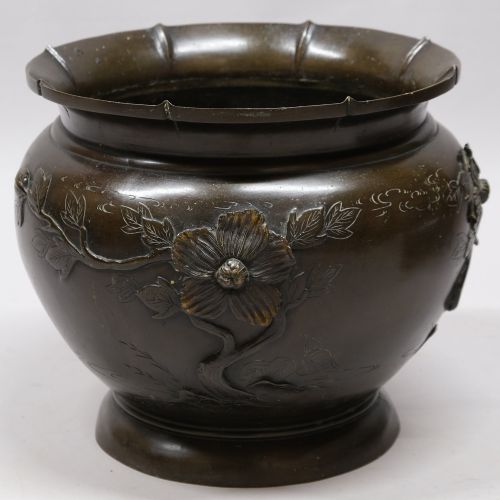
A bronze jardiniere planter serves as a decorative vessel designed to hold potted plants, flowers, or water arrangements inside domestic interiors. These pieces appear frequently in nineteenth-century European and East Asian contexts, taking forms that range from simple table bowls to elaborate floor-standing tables.
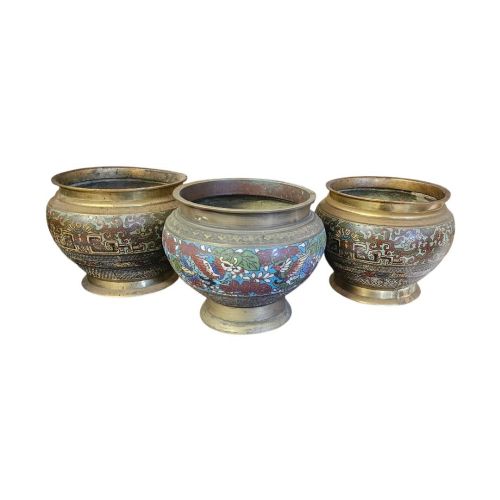
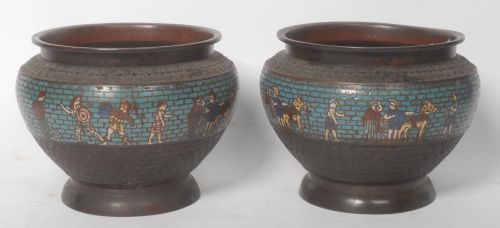
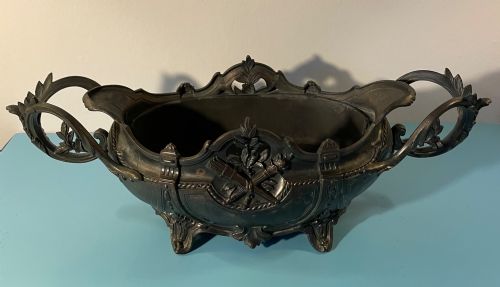
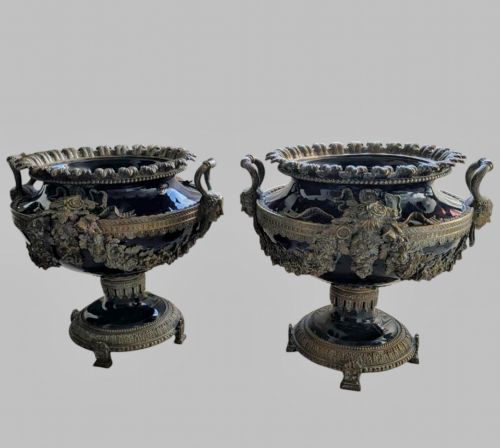
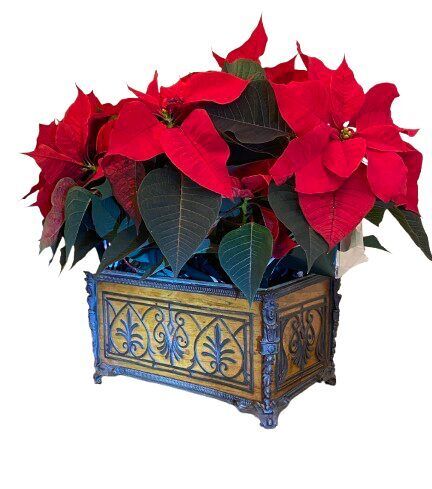
The versions most commonly met on this page include nineteenth-century Japanese bronzes from the Meiji and Edo periods, alongside French revival cachepots and stands. Buyers encounter heavy cast vessels decorated with patination, champleve enamel, or cloisonne work, as well as timber stands mounted with ormolu.
European examples often draw on Louis XV, Louis XVI, and Rococo revival vocabularies, pairing metalwork with kingwood, walnut, or porcelain plaques. East Asian pieces emphasise sculptural casting, Buddhist tearai forms, and intricate floral or avian motifs rendered in relief.
How they were made
Maker workshops relied on traditional lost-wax casting for bronze vessels, producing thick-walled bowls that were subsequently chased, engraved, or patinated by hand. Japanese works from the Meiji period demonstrate precise metalworking techniques, sometimes incorporating inlaid silver or gold wire details.
Enamelled pieces utilised champleve and cloisonne methods, fusing coloured vitreous pastes into recessed metal channels or wire compartments under high heat. French cabinetmakers combined cast ormolu and gilt bronze mounts with timber carcases of kingwood, burr walnut, ebonised wood, or satinwood, securing the metalwork with threaded pins.
Table and floor-standing variants frequently incorporated secondary materials such as cut glass liners, ceramic plaques from Sevres-type traditions, or blue ceramic bodies to hold moisture safely away from the decorative wooden frames.
The inventory records French revival styles alongside Japanese Meiji and Edo periods, incorporating champleve enamel and marquetry.
What varies in quality
The thickness and definition of the bronze casting set the baseline for quality, distinguishing crisp, deeply chased relief from soft, generalized moulding. In Asian bronzes, the uniformity of the patination and the precision of any enamel work indicate the skill of the foundry.
For European pieces, the integration between the metal mounts and the timber body reveals the standard of manufacture. Well-made examples feature heavy, fire-gilt ormolu or cast brass that fits the contours of the wood precisely, alongside durable interior linings and secure joinery.
The Bronze Jardiniere Planter Glossary
- Jardiniere
- A decorative container for holding plants or flowers. These vessels sit on tables or pedestals within nineteenth-century interiors.
- Cachepot
- An ornamental pot used to conceal an ordinary flowerpot. The term translates from French as hiding pot.
- Champleve
- An enamelling technique where artists scoop troughs into a metal surface to hold coloured glass paste. Firing fuses the paste permanently into the channels.
- Cloisonne
- Enamelling work created by soldering thin metal wires onto a metal base to form compartments. Artisans fill these cells with enamel before firing.
- Ormolu
- Gilded bronze mounts applied to furniture and decorative objects. The technique uses a mercury amalgam or gold leaf layer over cast bronze.
- Suiban
- A shallow Japanese basin used for displaying bonsai, stones, or ikebana arrangements. These ceramic or bronze vessels frequently double as planters.
Bronze Jardiniere Planter: Frequently Asked Questions
What is a bronze jardiniere planter?
A bronze jardiniere planter is a decorative vessel cast from bronze, brass, or gilt metal to hold indoor plants or floral arrangements.
They emerged in various stylistic revivals during the nineteenth century, reflecting both European cabinet-making traditions and East Asian metalworking arts.
How were these planters used historically?
Historically, these vessels stood on dining tables, side tables, or dedicated pedestals in drawing rooms and parlours to display ferns or flowering plants.
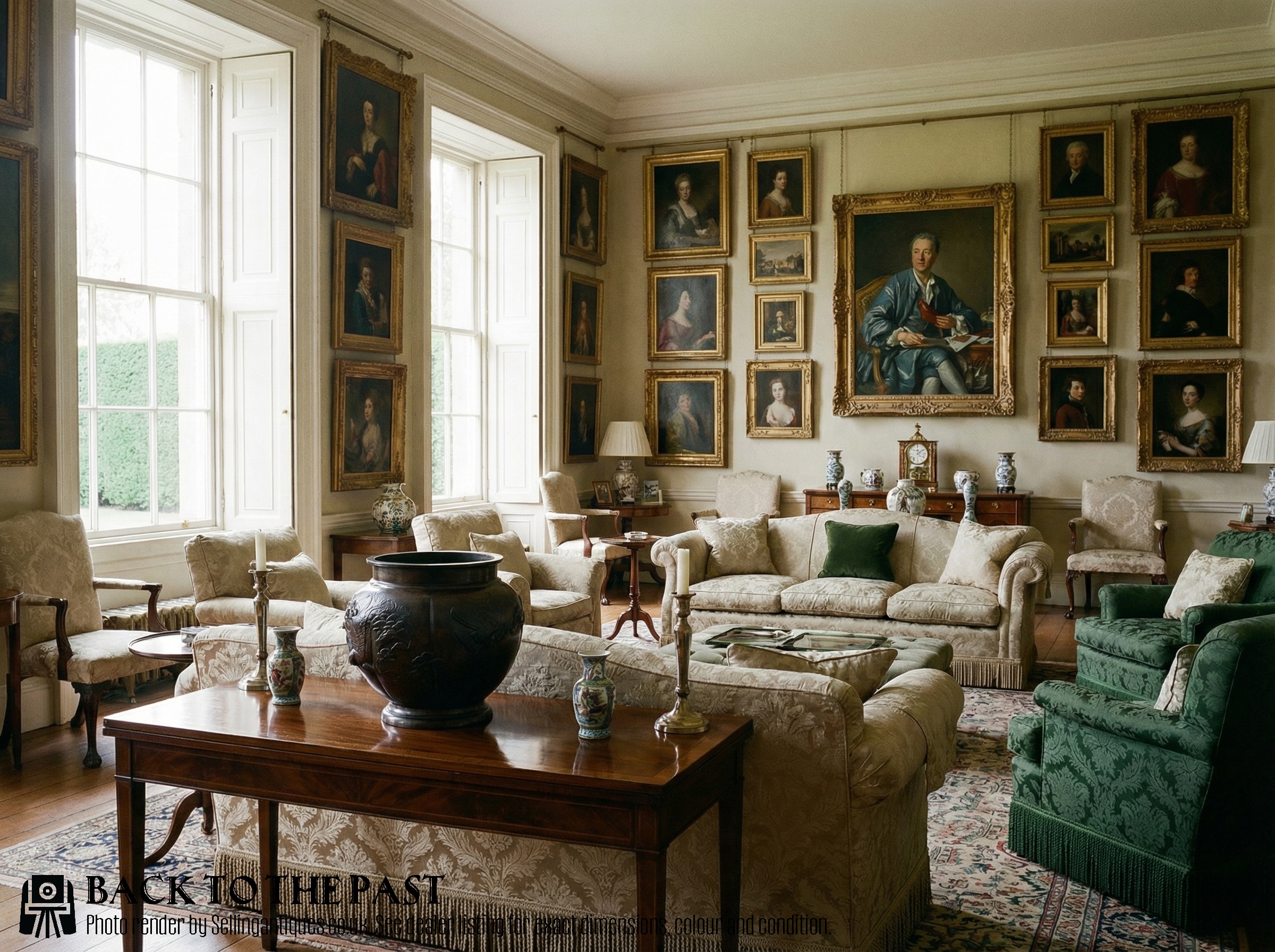
Larger floor-standing examples functioned as focal points in grand reception spaces, sometimes doubling as wine coolers or cellarettes.
How do I identify Meiji period bronzes?
Meiji period bronzes typically date from the late nineteenth or early twentieth century, displaying exceptional mastery in casting, patination, and surface relief.
They often feature motifs of birds, flowers, or dragons, and may include signature panels or artisan marks on the underside.