


Japanese Bronze Cachepot
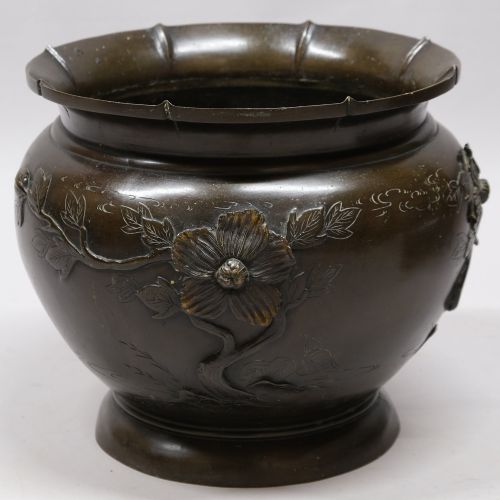
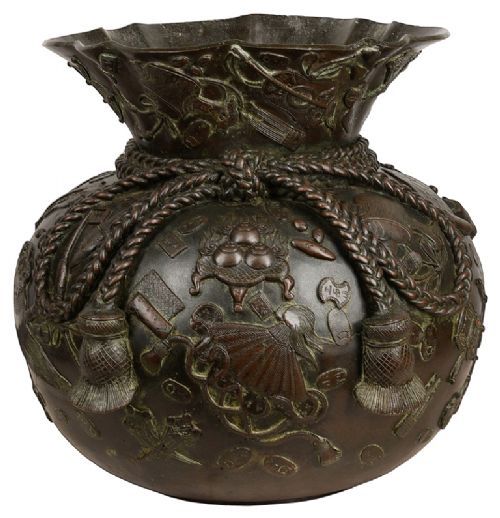
These japanese bronze cachepot vessels are heavy, decorative plant containers made to hold indoor pots during the Meiji and Edo periods.
Japanese Bronze Cachepot
A japanese bronze cachepot is primarily encountered as a jardiniere, planter bowl, or vase designed for floral displays. These items appear across the 19th century, with significant representation from the Meiji and Edo periods, alongside Victorian era classifications.
The style spans authentic Japanese Meiji and Edo periods as well as later Victorian interpretations and Japonisme influences. Each vessel serves to hold potted plants while displaying distinct patination and surface decoration.
Materials and construction methods
Makers utilised cast bronze as the primary metal, sometimes complemented by brass, gilt bronze, and enamel detailing. Certain pieces incorporate porcelain elements, notably in related Imari styles.
Metalsmiths employed traditional casting techniques to achieve substantial wall thickness and robust structural weight. Surface patination was carefully controlled to produce deep, aged tones characteristic of the period.
One hefty specimen tips the scales at over two kilograms of solid bronze, proving Victorian plants took their interior design very seriously.
Indicators of superior execution
Quality rests in the precision of the casting and the depth of the metalwork relief. Heavy weight and balanced proportions distinguish finer examples from standard decorative pieces.
The finish of the patination and the clarity of decorative surface details separate standard production from exceptional works. Well-preserved patination indicates careful historical maintenance.
Samson Imari
The Japanese Bronze Cachepot Glossary
- Jardiniere
- An ornamental pot or stand for holding plants or flowers. This term is frequently used interchangeably with planter in period listings.
- Cachepot
- An ornamental container used to put a flowerpot in, hiding the plain pot. It differs from a direct planting vessel by holding an inner pot.
- Meiji Period
- A Japanese era lasting from 1868 to 1912. Metalwork from this time often shows advanced casting and patination techniques.
- Edo Period
- A period in Japanese history spanning from 1603 to 1867. Pieces attributed to this era reflect earlier traditional craftsmanship.
- Patina
- A green or brown film on the surface of bronze produced by oxidation over time. Natural patination adds depth to the metal surface.
Japanese Bronze Cachepot: Frequently Asked Questions
What is a japanese bronze cachepot used for?
These vessels are designed to hold potted plants and flowers inside the home. They function primarily as decorative cachepots to conceal standard nursery pots.
Historically, they formed part of interior plant display arrangements in nineteenth-century drawing rooms.
How do I date a japanese bronze cachepot?
Dating relies on stylistic markers associated with the Meiji and Edo periods, alongside nineteenth-century production traits. Listings often reference Victorian cataloguing when pieces were imported to Britain.
Examining the casting method and the composition of the bronze helps determine the likely period of manufacture.
Are these planters heavy?
Many examples are substantial, with larger specimens weighing several kilograms. The thick bronze casting provides necessary stability for holding heavy plants.
Weight is a reliable indicator of the amount of metal used in the original construction.
Can I plant directly inside the cachepot?
Using an inner pot is recommended to protect the historic bronze interior from moisture and soil acidity. Direct planting can lead to corrosion over time.
Keeping plants in separate containers preserves the metal surface and original patination.
What is the difference between Meiji and Edo pieces?
Edo period pieces originate from an earlier era of traditional Japanese craftsmanship, lasting until 1867. Meiji period items reflect the subsequent opening of trade and industrial development up to 1912.
Both periods utilise bronze casting, but Meiji items often show distinct decorative influences suited for export.