


Bronze Hunting Dog
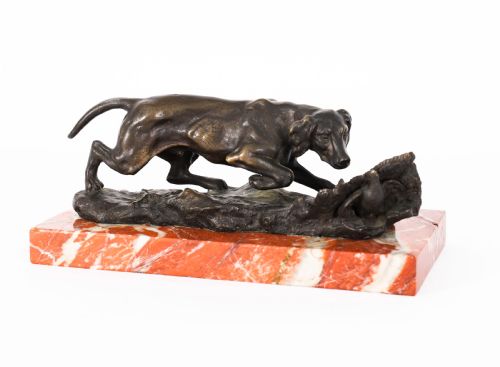
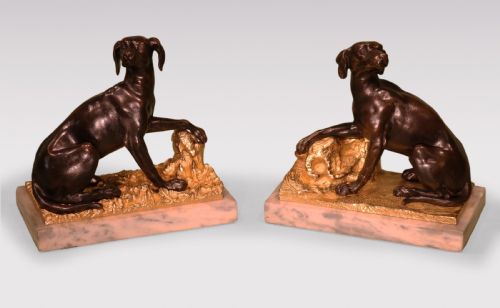
A bronze hunting dog captures the muscle, tension and alertness of setters, hounds and pointers in solid metal.
Bronze Hunting Dog
When you search for a bronze hunting dog, you encounter sculptural works depicting setters, pointers, hounds, and retrievers in various poses. These pieces capture the anatomy and movement of working dogs, often shown resting, standing alert, or interacting with game such as pheasants and hares.
The objects appear predominantly as freestanding sculptures on marble or onyx bases, alongside occasional figural inkwells, plaques, and fireside statues. Most examples originate from nineteenth-century French workshops, reflecting a strong tradition of animalier art that celebrated domestic and sporting animals with intense realism.
You will also find later twentieth-century interpretations, including Art Deco pieces cast in spelter alongside traditional bronze. The subjects range from individual resting hounds to dynamic groups of hunting dogs following a scent or flushing birds.
How they were made
Foundries utilised the lost-wax casting method or sand casting to create these metal sculptures, allowing intricate muscle definition and fur texture to transfer directly from the model. Molten alloy poured into moulds yielded solid or heavy hollow forms that required meticulous hand-chiselling and filing after release.
Makers applied patinas ranging from deep dark brown to warm golden tones, and occasionally employed cold-painted pigments to add naturalistic colour to the surface. Many figures were mounted onto heavy marble or onyx plinths to provide stability and visual contrast to the dark metal.
Materials across these listings include bronze, spelter, marble, onyx, and ormolu.
What varies in quality
Quality rests in the fidelity of the anatomical modelling and the crispness of the chase work executed after casting. Superior pieces retain sharp details in the fur, claws, and facial expressions without blurring the underlying musculature.
The depth and complexity of the composition also separate standard castings from exceptional ones. Single resting figures contrast with intricate groupings involving multiple dogs, prey, and naturalistic base elements that demand greater technical skill from the foundry.
Carl Kauba·Jules Moigniez·Delabrierre·C Masson·Auguste Nicholas Cain·Antoine Louis Barye·Christophe Fratin·Pierre-Jules Mene·Dubucand·L Bureau·Buchinger·Clovis Edmond Masson·Fritz Diller·Richard
The Bronze Hunting Dog Glossary
- Animalier
- A nineteenth-century artistic movement dedicated to the realistic representation of animals, particularly in sculpture. Practitioners focused heavily on the anatomy and behaviour of wildlife and working dogs.
- Patina
- The surface coloration and sheen developed naturally over time or applied chemically by the foundry. This finish protects the metal and enhances the visual depth of the sculpture.
- Spelter
- A zinc-based alloy often utilised as a more economical alternative to bronze during the late nineteenth and early twentieth centuries. It accepts patination and metallic finishes to mimic heavier metals.
- Ormolu
- Gilded bronze applied as decorative mounts or accents on sculptural bases. It provides a bright golden contrast to patinated animal figures.
Bronze Hunting Dog: Frequently Asked Questions
What is an animalier bronze?
An animalier bronze is a nineteenth-century sculpture focused specifically on the realistic depiction of animals. These works highlight the physical power and natural postures of creatures like sporting dogs.
Artists studied live animals closely in menageries and fields to translate their observations into metal. This genre valued anatomical accuracy above idealised forms.
Why are many mounted on marble?
Marble and onyx bases provided necessary weight and stability for heavy metal sculptures. They also offered a clean architectural boundary between the organic form of the dog and the display surface.
Dark patinated metal contrasts sharply with pale or variegated stone plinths. This presentation method became standard practice in nineteenth-century European studios.
How do I identify spelter from bronze?
Spelter is a lighter zinc-based alloy that feels softer and shows a duller sound when tapped gently compared to bronze. You can sometimes spot grey metal beneath worn areas of the surface finish.
Bronze exhibits greater weight, tensile strength, and durability. It takes rich chemical patinas that age with a warm translucent depth.
Were these dogs used as inkwells?
Some sculptural models incorporated functional elements such as hinged lids covering glass ink inserts. These pieces combined desk utility with decorative sporting art.
Desk accessories shaped like hunting hounds remained popular in studies and libraries. The dog figures served as sculptural handles or companions on the writing desk.